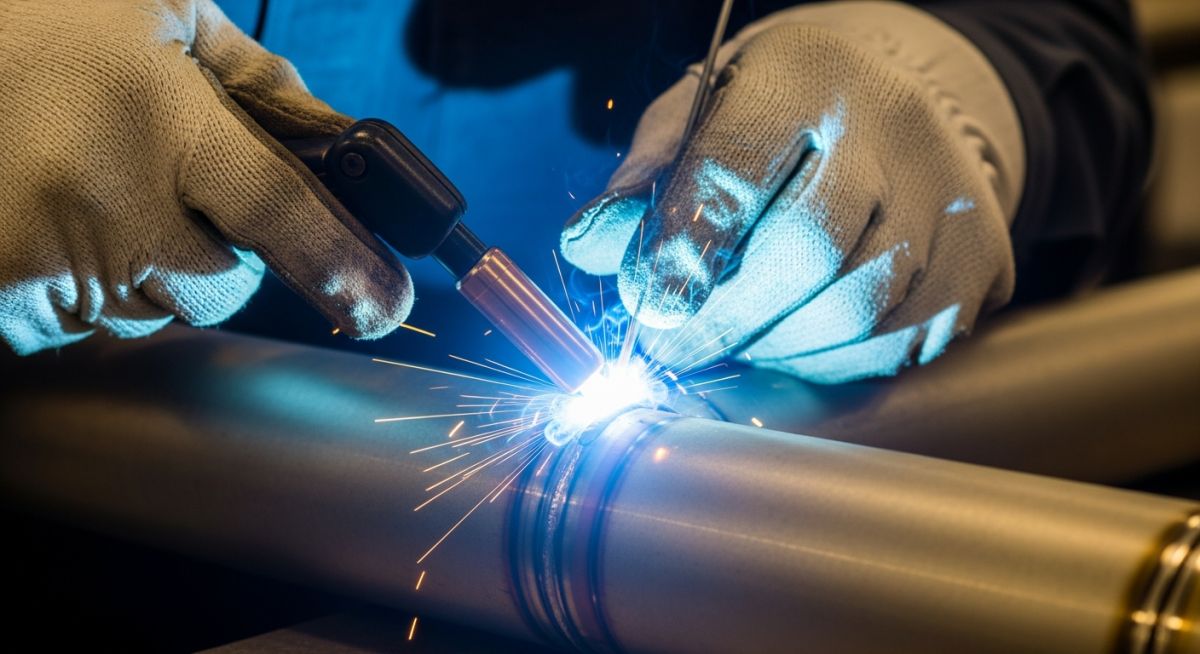
Best Methods for Welding Stainless Steel in Industrial Piping
In my 20 years of managing piping projects, I have seen more field failures due to poor stainless steel welding than almost any other fabrication error. It is not just about making a visually appealing bead; it is about preserving the chemistry of the steel. When you weld stainless steel, you are fighting a constant battle against carbide precipitation, warping, and loss of corrosion resistance. If you do not control your heat input and shielding gas, you will turn an expensive, corrosion-resistant alloy into something that rusts as fast as carbon steel.
I always tell my field crews that welding stainless steel requires a completely different mindset than welding carbon steel. You cannot just “burn it in.” You must be meticulous about cleanliness, heat management, and gas purging. In this guide, I will share the exact methods, parameters, and field-tested strategies that I rely on to ensure high-integrity, code-compliant welds on industrial stainless steel piping systems.
Key Engineering Takeaways
- Heat Input Control: Keep heat input below 1.5 kJ/mm for austenitic grades to prevent sensitization and loss of corrosion resistance.
- Purging is Mandatory: Always use 99.99% pure argon back purging for root passes to prevent “sugaring” or heavy oxidation.
- Zero Carbon Contamination: Use dedicated stainless steel tools to avoid cross-contamination from carbon steel.
- Ferrite Balance: Maintain a weld metal ferrite content between 3 and 10 Ferrite Number (FN) to prevent hot cracking.
Why is Welding Stainless Steel Highly Challenging?
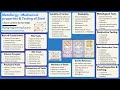
Stainless Steel Metallurgy: The high thermal expansion and low thermal conductivity of austenitic stainless steels demand strict heat input limits to prevent distortion and carbide precipitation.
To understand why stainless steel behaves the way it does under an arc, we must look at its physical properties. Austenitic stainless steels (such as 304L and 316L) have approximately 50% higher thermal expansion and about one-third the thermal conductivity of carbon steel. This means heat stays concentrated near the weld zone, causing rapid, localized expansion. If the joint is not properly jigged or tacked, this localized expansion leads to severe warping and high residual stresses.
The Danger of Sensitization
The most critical metallurgical threat during welding is sensitization. When austenitic stainless steel is held in the temperature range of 425 to 815 degrees Celsius, chromium and carbon combine to form chromium carbides along the grain boundaries. This process depletes the adjacent areas of chromium, dropping the local chromium content below the 10.5% threshold required to maintain the passive chromium oxide layer. This leaves the grain boundaries highly susceptible to intergranular corrosion, a phenomenon often called “weld decay.”
Never use carbon steel wire brushes, grinding wheels, or storage racks for stainless steel fabrication. Cross-contamination introduces free iron particles into the stainless steel surface, which destroys the passive chromium oxide layer and initiates rapid pitting corrosion in service.
Calculating Weld Heat Input
To prevent sensitization and grain growth, we must calculate and control the weld heat input. The formula for heat input is:
The thermal efficiency factor (eta) varies by welding process:
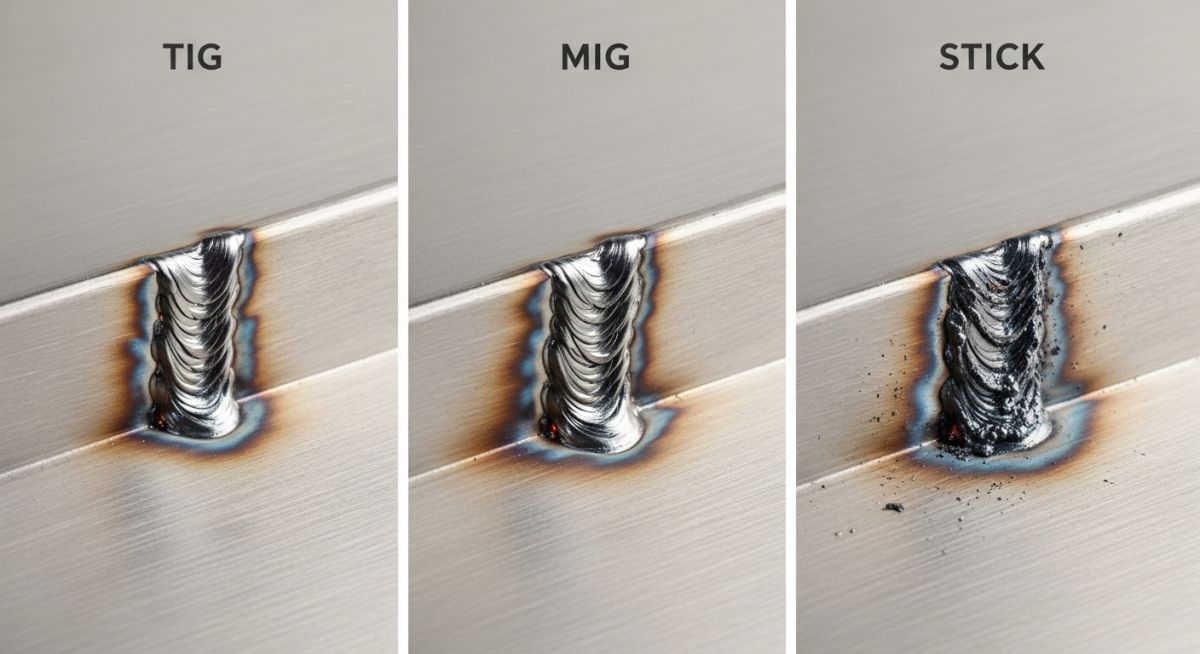
- Gas Tungsten Arc Welding (GTAW / TIG): 0.6
- Shielded Metal Arc Welding (SMAW / Stick): 0.8
- Gas Metal Arc Welding (GMAW / MIG): 0.8
Let us look at a practical field example. If a welder is using GTAW to weld a 316L pipe joint at 12 Volts, 110 Amps, with a travel speed of 120 mm per minute, the calculation is:
Heat Input = (79,200) / (120,000) x 0.6
Heat Input = 0.66 x 0.6 = 0.396 kJ/mm
This value of 0.396 kJ/mm is well within the safe limit of 1.5 kJ/mm for austenitic stainless steels, ensuring that the corrosion resistance of the heat-affected zone remains intact.
The Role of Shielding and Purging Gases
Atmospheric oxygen is the enemy of hot stainless steel. When the root pass is welded, the inside of the pipe must be completely purged of oxygen to prevent “sugaring”—a heavy, porous oxide scale that ruins the corrosion resistance and flow characteristics of the pipe. I require my teams to use 99.99% pure argon for back purging, maintaining an oxygen level below 50 parts per million (ppm) before striking the arc. This is verified using a calibrated purge monitor.
For the torch shielding gas, pure argon is standard for GTAW. For GMAW, a mixture of argon with 2% carbon dioxide or a helium-argon-carbon dioxide “tri-mix” is preferred to stabilize the arc and improve wetting without causing carbon pickup in the weld pool. All procedures must be qualified in accordance with ASME Section IX.
Which Welding Stainless Steel Parameters Work Best?
Welding Parameter Selection: Optimal voltage, amperage, and gas flow rates must be calibrated to material thickness to prevent burn-through and maintain mechanical integrity.
Selecting the correct parameters is a balancing act. Too much current leads to overheating and sensitization; too little current results in lack of fusion or incomplete penetration. The table below outlines the baseline parameters I have established for welding austenitic stainless steel piping across different processes and thicknesses.
| Material Thickness | Welding Process | Filler Metal / Size | Current (Amps) | Voltage (V) | Shielding / Purge Gas | Gas Flow (L/min) |
|---|---|---|---|---|---|---|
| 2.0 mm (14 Ga) | GTAW (TIG) | ER308L / 1.6 mm | 60 – 85 (DCEN) | 10 – 12 | 100% Argon / 100% Argon | 8 – 12 |
| 6.0 mm (1/4″) | GTAW (TIG) | ER316L / 2.4 mm | 110 – 140 (DCEN) | 12 – 15 | 100% Argon / 100% Argon | 10 – 14 |
| 6.0 mm (1/4″) | GMAW (MIG-P) | ER316LSi / 1.2 mm | 140 – 180 (DCEP) | 21 – 24 | 98% Ar + 2% CO2 / None | 12 – 16 |
| 12.0 mm (1/2″) | SMAW (Stick) | E316L-16 / 3.2 mm | 85 – 115 (DCEP) | 22 – 26 | None (Flux Shielded) | N/A |
Technical Mapping & Specifications Matrix
To ensure full compliance with international engineering standards, the following matrix maps key metallurgical terms, physical parameters, and their governing codes.
| Entity / Acronym | Technical Definition | Physical Parameter | Governing Standard |
|---|---|---|---|
| GTAW | Gas Tungsten Arc Welding process utilizing a non-consumable tungsten electrode. | Heat input range: 0.4 to 1.2 kJ/mm | AWS D1.6 |
| PREN | Pitting Resistance Equivalent Number calculated from alloy composition. | PREN = %Cr + 3.3%Mo + 16%N | ASTM G48 |
| Sensitization | Precipitation of chromium carbides at grain boundaries under high heat. | Occurs between 425 and 815 °C | ASME Section IX |
| Ferrite Number (FN) | Magnetic measurement of delta ferrite content in austenitic weld metal. | Target range: 3 to 10 FN | AWS A4.2 |
How to Verify Stainless Steel Welds?
Quality Assurance Verification: Systematic inspection protocols including visual examination, liquid penetrant testing, and ferrite number measurement ensure compliance with industrial piping codes.
Quality control on a stainless steel piping project is not something you do only at the end of the job. It must be integrated into every step of the fabrication sequence. I have developed this site verification checklist over years of managing refinery and chemical plant turnarounds. It ensures that the welding crew is executing the work in strict compliance with ASME B31.3.
Field Quality Control Checklist
-
Material Verification: Cross-reference material test reports (MTRs) with pipe stencils. Ensure filler metal matches base metal chemistry (e.g., ER316L for 316L base metal).
-
Joint Preparation & Cleanliness: Verify bevel angles are between 30 and 37.5 degrees. Clean the joint inside and out to at least 25 mm from the weld prep using dedicated stainless steel wire brushes and solvent (acetone).
-
Purge Gas Verification: Confirm back purging is active using 99.99% pure argon. Verify oxygen levels are below 50 ppm using a calibrated oxygen analyzer before starting the root pass.
-
Interpass Temperature Control: Monitor interpass temperature using calibrated infrared pyrometers or temp sticks. Ensure temperature does not exceed 150 °C for austenitic grades.
-
Post-Weld Visual Inspection: Inspect for undercut, lack of fusion, surface porosity, and excessive reinforcement. Root profile must show no signs of oxidation (sugaring).
-
Non-Destructive Testing (NDT): Perform Liquid Penetrant Testing (PT) on the root and completed cap per ASME Section V Article 6 to detect surface-breaking defects.
-
Ferrite Measurement: Measure the delta ferrite content of the completed weld using a calibrated Feritscope. Target range is 3 to 10 FN to prevent hot cracking.
Field Case Study: Real-World Application
The Problem: Premature Weld Failures in Acidic Slurry Piping
During a routine inspection at a chemical processing facility, the plant operator discovered multiple pinhole leaks along the weld joints of a newly installed 316L stainless steel piping system. The system was carrying an acidic slurry at 85 degrees Celsius. Within six months of commissioning, the welds had failed.
I was brought in to investigate. Metallurgical analysis of the failed joints revealed severe intergranular corrosion (sensitization) in the heat-affected zone and heavy “sugaring” on the root side of the welds. The original mechanical contractor had failed to use back purging, claiming that “tight fit-ups” made purging unnecessary, and had welded the joints with high-amperage SMAW without monitoring interpass temperatures, resulting in heat inputs exceeding 2.5 kJ/mm.
The Outcome: Remediation and Process Control
We cut out all sensitized weld joints and established a strict welding procedure specification (WPS) qualified under ASME Section IX. The remediation plan included:
- Mandating 99.99% pure argon back purging with oxygen levels monitored and maintained below 20 ppm before and during the root pass.
- Switching the process to pulsed GTAW (TIG) to minimize heat input, keeping it strictly below 1.1 kJ/mm.
- Capping the interpass temperature at 120 degrees Celsius, verified with infrared pyrometers.
- Performing post-weld pickling and passivation using a nitric-hydrofluoric acid paste to restore the passive chromium oxide layer.
The remediated piping system was put back into service. After five years of continuous operation, ultrasonic thickness testing and visual inspections have shown zero signs of corrosion, pitting, or weld degradation.
This case study proves that cutting corners on stainless steel welding procedures is a recipe for rapid, expensive failure. Following the correct metallurgical protocols is not an option; it is a fundamental requirement for plant safety and reliability.
Frequently Asked Engineering Questions
Why is back purging necessary when welding stainless steel?
What is the ideal ferrite content for austenitic stainless steel welds?
Can you weld stainless steel to carbon steel?
How do you prevent warping and distortion during welding?
What is the difference between 308L, 316L, and 347 filler metals?
Why is post-weld pickling and passivation required?
===FAQ_BLOCK===
Complete Course on
Piping Engineering
Check Now
Key Features
- 125+ Hours Content
- 500+ Recorded Lectures
- 20+ Years Exp.
- Lifetime Access
Coverage
- Codes & Standards
- Layouts & Design
- Material Eng.
- Stress Analysis