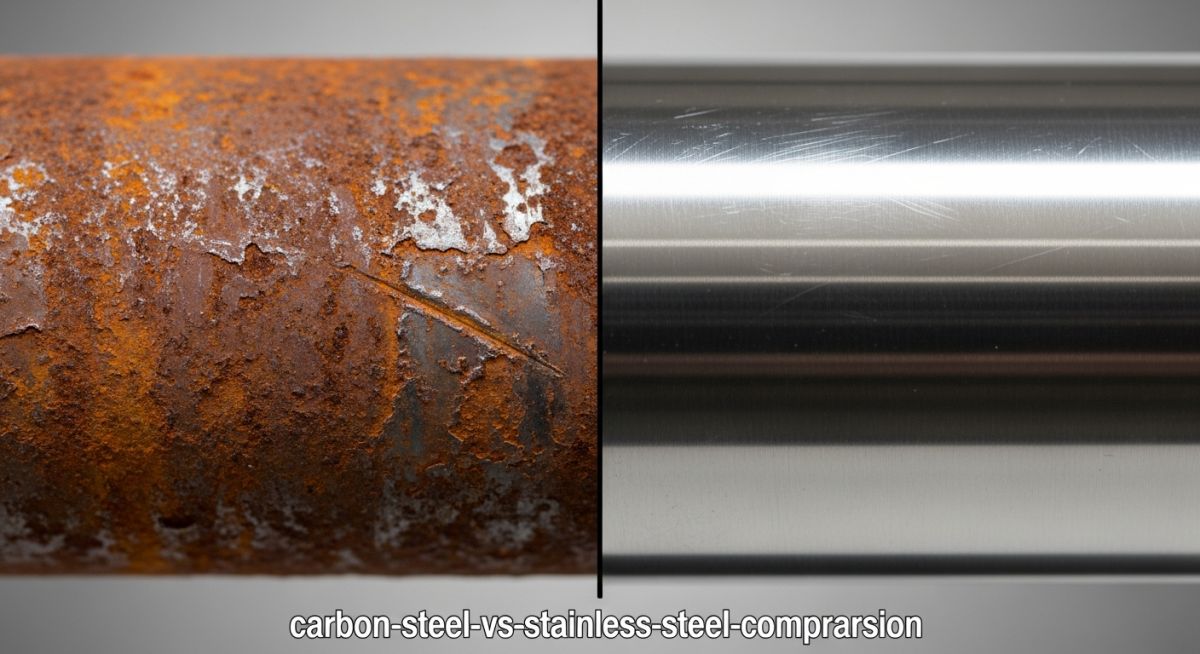
Carbon Steel vs Stainless Steel: Differences Every Engineer Must Understand
In my 20+ years of piping and EPC project experience, one of the most critical and often misunderstood decisions is selecting between carbon steel vs stainless steel. I’ve seen projects save money upfront by choosing carbon steel—only to incur massive failures due to corrosion. On the other hand, I’ve also seen stainless steel fail simply because the wrong grade was selected.
The truth is, neither carbon steel nor stainless steel is universally “better”. The right choice depends entirely on your service conditions, environment, temperature, and lifecycle expectations. This guide breaks down the real engineering differences—not textbook theory—so you can make decisions confidently in your projects.
✅ Key Takeaways (Quick Engineering Insight)
- Carbon steel is strong and cost-effective but prone to corrosion.
- Stainless steel offers superior corrosion resistance due to chromium content.
- Material selection must consider environment, temperature, and fluid type.
- Stainless steel is not fully corrosion-proof—chloride environments can still cause failure.
- Total lifecycle cost is more important than initial material price.
Carbon steel vs stainless steel comes down to cost versus corrosion resistance. Carbon steel is cheaper and stronger in many cases, but rusts easily. Stainless steel contains chromium, making it highly resistant to corrosion. The best choice depends on application conditions, especially environment, temperature, and exposure to chemicals.
Interactive Engineering Quiz
Test your practical understanding of Carbon Steel vs Stainless Steel based on real engineering scenarios.
Q1. Which material is most prone to corrosion in open atmospheric conditions?
Complete Course on
Piping Engineering
Check Now
Key Features
- 125+ Hours Content
- 500+ Recorded Lectures
- 20+ Years Exp.
- Lifetime Access
Coverage
- Codes & Standards
- Layouts & Design
- Material Eng.
- Stress Analysis
What is Carbon Steel?
In my piping projects across industrial plants, carbon steel has always been the default choice for cost-sensitive applications. Carbon steel is essentially an iron-carbon alloy where the carbon content determines its strength and hardness. It typically contains less than 2% carbon and negligible alloying elements.
It is widely used in pipelines, structural frameworks, and pressure vessels governed under ASME Codes , particularly ASME B31.3 for piping systems.
What is Stainless Steel?
Stainless steel is an alloy steel containing a minimum of 10.5% chromium, which forms a passive oxide layer that resists corrosion. Depending on grade (304, 316, duplex), additional elements like nickel and molybdenum are added.
Standards such as ASTM A312 define stainless steel piping requirements widely used in EPC projects.
Carbon Steel vs Stainless Steel: Key Differences
From an engineering standpoint, choosing between carbon steel vs stainless steel is not about “better or worse”—it’s about application fitness. Below are the most critical differentiators I evaluate during project execution.
Corrosion Resistance
Stainless steel outperforms carbon steel due to its chromium oxide barrier. However, I have seen 304 stainless steel fail in chloride environments, proving that grade selection is equally critical.
Physical Properties
Carbon steel generally has higher density and thermal conductivity, making it ideal for structural load-bearing systems, whereas stainless steel offers superior oxidation resistance.
Mechanical Properties
Carbon steel typically offers higher tensile strength for the cost, but stainless steel provides better ductility and impact resistance in aggressive environments.
Temperature Capability
In high-temperature applications, material selection must align with standards like ASME B31.3 Process Piping . Carbon steel loses strength significantly above 400°C, whereas stainless steels maintain integrity.
Cost Comparison
Carbon steel is significantly cheaper upfront, but when lifecycle cost is considered—especially maintenance and corrosion failures—stainless steel often becomes more economical.
Machinability and Welding
Carbon steel is easier to machine and weld. Stainless steel requires stricter welding procedures to prevent sensitization and corrosion at joints.
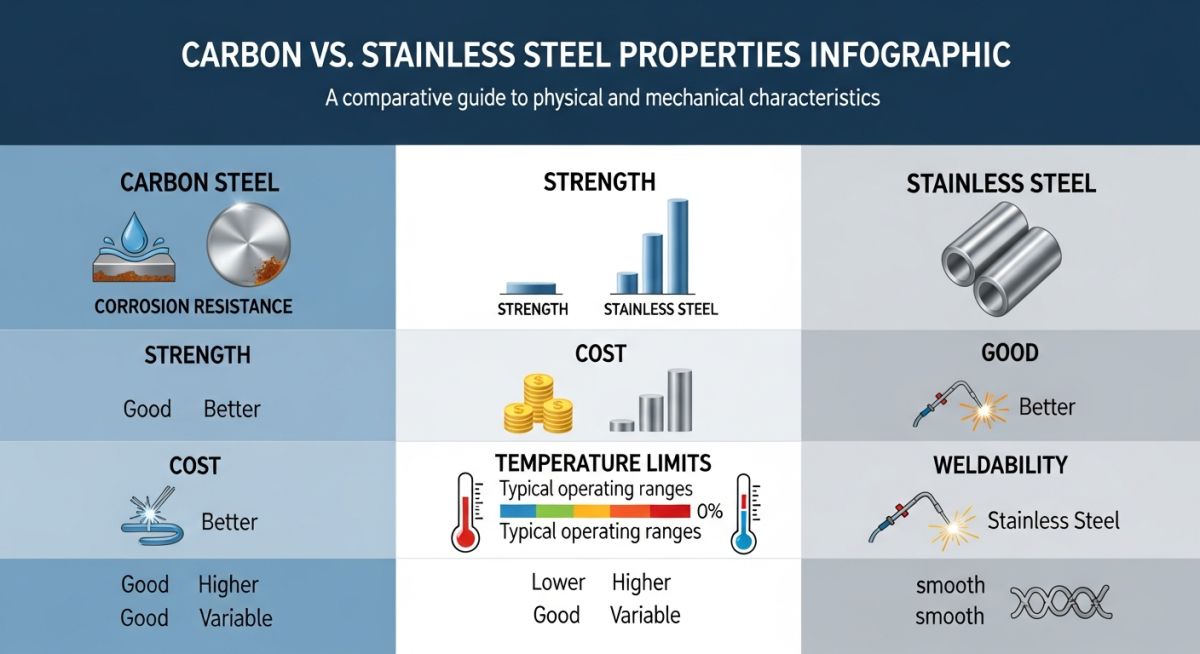
| Property | Carbon Steel | Stainless Steel |
|---|---|---|
| Corrosion Resistance | Low (requires coating) | High (with chromium oxide layer) |
| Strength | High tensile strength | Moderate to high |
| Cost | Low | High |
| Temperature Resistance | Up to ~400°C | Higher thermal stability |
| Weldability | Easier | Requires controlled procedures |
| Applications | Pipelines, structures | Chemical, marine, food industries |
Field Case Study: Real-World Application
🔴 Problem: Cooling Water Line Failure
During one of my site executions for a process plant, a contractor opted for carbon steel piping in an open-loop cooling water system to reduce upfront cost. Within just 10–12 months, severe internal corrosion led to leakage across multiple sections.
In my professional experience, decisions in carbon steel vs stainless steel selection should always align with fluid chemistry, exposure conditions, and maintenance accessibility. Referencing design codes like ASME B31.3 Process Piping ensures safe and compliant systems.
When to Use Carbon Steel vs Stainless Steel
- Use Carbon Steel When: Budget constraints dominate and corrosion risk is low or controlled through coatings.
- Use Stainless Steel When: Corrosive fluids, hygiene requirements, or marine/coastal environments are involved.
- Hybrid Approach: Combine both materials strategically to optimize CAPEX and OPEX.
The real engineering decision is not “which is better,” but rather “which is fit for purpose.” That mindset separates a successful EPC execution from a failure-prone design.
Frequently Asked Engineering Questions
Which is better carbon steel or stainless steel?
What is more expensive stainless steel or carbon steel?
Is carbon steel or stainless steel better for cooking?
Is steel stronger than stainless steel?
Why does stainless steel resist corrosion?
When should stainless steel not be used?