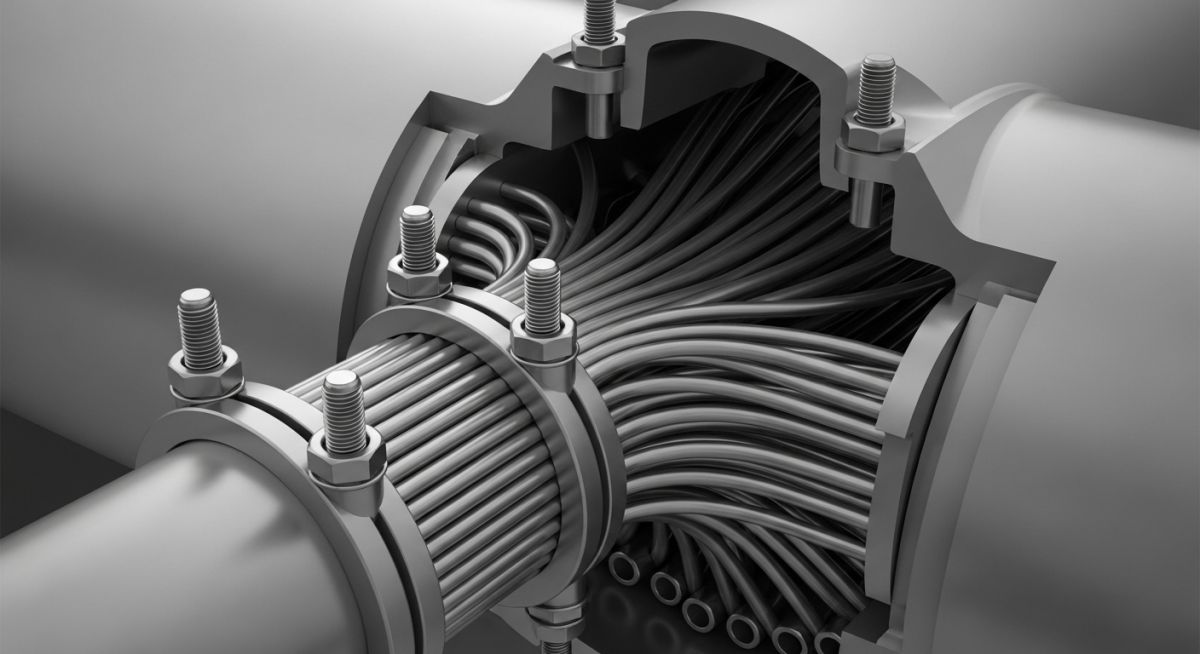
Collar Bolts To Maintain Removable Bundles in Heat Exchangers
In my two decades of field experience, I have seen far too many turnarounds derailed by damaged tube bundles. When dealing with removable bundles, the transition from operational status to maintenance extraction is the most vulnerable phase of the lifecycle. Collar bolts are not merely fasteners; they are precision-engineered tools that maintain the integrity of the floating head and bundle assembly during the high-stress extraction process.
Without proper collar bolt management, the bundle can shift, leading to catastrophic damage to the shell-side baffles or the sealing gaskets. This guide explores the technical requirements for selecting, installing, and managing these components to ensure your maintenance operations remain within ASME Section VIII compliance.
Key Takeaways for Maintenance Engineers:
- Ensure collar bolt material matches the thermal expansion coefficient of the bundle assembly.
- Verify thread engagement depth meets the minimum requirements for the specific bundle weight.
- Implement a standardized torque sequence to prevent uneven loading during extraction.
- Regularly inspect collar bolt threads for galling or deformation after every turnaround.
Technical Mechanics of Collar Bolts in Heat Exchangers
Collar Bolt Structural Integrity: These components function as critical load-bearing interfaces that maintain the geometric stability of the tube bundle during the transition from the shell to the extraction equipment.
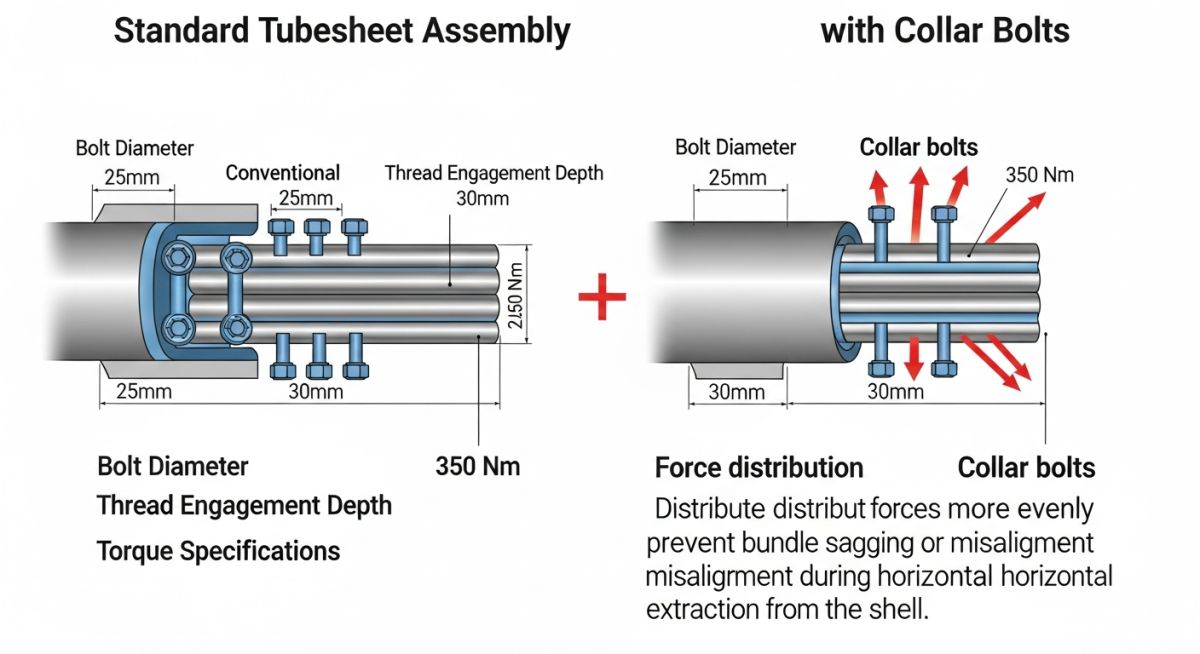
When we discuss the extraction of a removable bundle, we are essentially managing a massive, cantilevered load. The collar bolts serve as the primary connection point between the bundle puller and the floating head. In my experience, the most common failure mode is not the bolt snapping, but the thread stripping due to improper engagement or excessive side-loading during the initial pull.
To calculate the required bolt strength, we must first determine the total weight of the bundle, including the fluid holdup if the bundle is not fully drained. The formula for the required tensile load per bolt is defined by the total bundle weight divided by the number of collar bolts, multiplied by a dynamic load factor (typically 1.5 to 2.0 for extraction equipment). We must also account for the friction coefficient between the bundle and the shell, which can increase significantly if there is internal fouling or corrosion.
Field Warning: Thread Engagement Limits
Never rely on partial thread engagement. For standard carbon steel or stainless steel collar bolts, the minimum engagement length must be at least 1.5 times the nominal bolt diameter. If the threads are damaged, the bolt must be discarded immediately; field re-tapping is rarely sufficient to restore the original load-bearing capacity required by ASME PCC-1 guidelines.
The material selection for collar bolts is equally critical. In high-temperature services, we must account for thermal expansion differences. If the collar bolt expands at a different rate than the floating head, the resulting preload loss can lead to vibration-induced loosening during operation. I always recommend using bolting materials that match the thermal expansion characteristics of the flange material, typically adhering to ASTM A193 Grade B7 or B8M depending on the corrosive environment.
During the extraction process, the collar bolts are subjected to a combination of axial tension and shear stress. The shear stress is induced by the misalignment of the bundle puller. To mitigate this, I insist on using guide pins in conjunction with the collar bolts. The guide pins take the initial shear load, allowing the collar bolts to focus primarily on the axial tension required to slide the bundle out of the shell.
Collar Bolt Operational Trade-offs: Evaluating the mechanical benefits against the logistical requirements of using collar bolts for bundle maintenance.
Advantages
- Provides a secure, positive connection point for bundle pullers.
- Prevents accidental bundle dropping during extraction.
- Allows for precise alignment of the bundle within the shell.
- Reduces the risk of damaging internal shell-side baffles.
- Simplifies the attachment of rigging and lifting gear.
Disadvantages
- Requires precise machining of the floating head.
- Susceptible to thread galling in corrosive environments.
- Adds time to the initial bundle disassembly phase.
- Requires specialized storage to prevent thread damage.
- Potential for over-torquing if not properly calibrated.
Collar Bolt Industrial Deployment: Strategic implementation of collar bolt systems across various high-pressure and high-temperature process environments.
Refinery Crude Pre-heat Trains
In crude oil pre-heat trains, frequent fouling requires regular bundle extraction. Collar bolts enable rapid, repeatable removal of these heavy bundles, significantly reducing the critical path time during refinery turnarounds.
High-Pressure Ammonia Synthesis
Ammonia synthesis loops operate under extreme pressures where seal integrity is paramount. Collar bolts ensure that the floating head remains perfectly aligned during maintenance, preventing damage to the high-pressure gasket seating surfaces.
Petrochemical Feedstock Fractionation
Fractionation units often utilize large-diameter heat exchangers that are difficult to maneuver. Collar bolts provide the necessary structural support to extract these massive bundles without risking shell wall contact or internal component deformation.
When selecting collar bolts for heat exchanger bundle maintenance, engineers must prioritize material compatibility and load-bearing capacity to prevent thread galling and structural failure during extraction. The following table outlines standard material grades and their respective yield strengths, which are critical for calculating the maximum allowable extraction force during turnaround operations.
These specifications align with ASME Section II material requirements. Always ensure that the selected bolt grade matches the thermal expansion coefficient of the tubesheet to avoid localized stress concentrations during high-temperature service cycles. Proper lubrication, such as nickel-based anti-seize, is mandatory for all high-strength alloy steel bolts to maintain consistent torque-tension relationships.
| Bolt Material Grade | Yield Strength (ksi) | Service Temperature Limit | Primary Application |
|---|---|---|---|
| ASTM A193 B7 | 105 | Up to 750 F | Standard Hydrocarbon Service |
| ASTM A193 B8M | 30 | Up to 1500 F | Corrosive/High Temp |
| ASTM A320 L7 | 105 | Down to -150 F | Cryogenic Applications |
Engineers should note that the yield strength values provided are minimums at ambient temperature. For elevated service temperatures, derating factors must be applied according to ASME Section VIII Division 1, Table UCS-23. Failure to account for these thermal derating factors can lead to premature bolt elongation or thread stripping during the critical bundle extraction phase.
The following matrix maps the critical technical entities involved in the design and deployment of collar bolts for heat exchanger maintenance. By standardizing these parameters, maintenance teams can ensure that the extraction hardware is fully compatible with the existing pressure boundary components, thereby minimizing the risk of damage to the tubesheet or shell flange.
This matrix serves as a cross-reference tool for mechanical integrity teams when reviewing maintenance procedures. It highlights the relationship between the mechanical hardware, the governing industry standards, and the physical constraints encountered during field operations. Each entity is linked to its respective regulatory or design requirement to ensure full compliance with site safety protocols.
| Entity | Standard Reference | Critical Parameter |
|---|---|---|
| Collar Bolt | ASME B1.1 | Thread Engagement Length |
| Tubesheet | ASME UHX | Shear Load Capacity |
| Extraction Force | API 660 | Friction Coefficient |
The integration of these entities is essential for a successful bundle pull. When the extraction force exceeds the calculated shear capacity of the collar bolt threads, the risk of catastrophic failure increases significantly. Always verify that the thread engagement length is at least 1.5 times the bolt diameter to ensure the bolt fails in tension rather than stripping the threads from the tubesheet.
Collar Bolt Maintenance Verification: Before initiating any bundle extraction, the mechanical integrity team must perform a rigorous site verification of the collar bolt assembly. This process ensures that the hardware is capable of handling the static and dynamic loads imposed during the removal of the heat exchanger bundle from the shell.
-
01.
Verify that all collar bolts are free from corrosion and thread damage. Any bolt showing signs of pitting or deformation must be replaced immediately. -
02.
Confirm that the thread engagement length meets the minimum requirement of 1.5 times the nominal bolt diameter to prevent stripping. -
03.
Apply a high-temperature, nickel-based anti-seize lubricant to the threads to ensure smooth operation and prevent galling during the extraction process. -
04.
Check the alignment of the collar bolt holes with the tubesheet pull-holes. Misalignment can cause uneven load distribution and potential bolt failure. -
05.
Ensure that the extraction equipment (hydraulic jacks or pullers) is calibrated and that the load capacity does not exceed the bolt rating.
Following this checklist is mandatory for all turnaround activities involving removable bundles. If any step fails verification, the extraction must be halted, and the mechanical lead must re-evaluate the load path. Documentation of these checks should be maintained in the project file to satisfy ASME Section VIII quality assurance requirements.
The Problem: Unexpected Thread Stripping During Extraction
During a routine turnaround, a maintenance team attempted to extract a heavy-duty heat exchanger bundle using standard collar bolts that had been reused from a previous cycle without proper inspection.
- Inadequate thread engagement due to accumulated debris in the tubesheet holes.
- Use of non-lubricated bolts leading to excessive friction and torque requirements.
- Misalignment between the hydraulic puller and the collar bolt axis.
- Failure to verify the yield strength of the aged bolts against the required extraction force.
The Outcome: Successful Bundle Removal Following Corrective Action
After the initial failure, the team implemented a revised extraction protocol that restored the mechanical integrity of the operation.
- Complete cleaning of all tubesheet pull-holes using specialized wire brushes.
- Replacement of all suspect bolts with new, certified ASTM A193 B7 hardware.
- Implementation of a controlled, multi-point hydraulic pulling sequence to ensure even load distribution.
- Reduction of the extraction force by 20 percent through the application of high-performance lubricants.
The recommendation for future operations is to treat collar bolts as critical-path consumables rather than reusable hardware. By implementing a strict replacement policy and ensuring thorough hole preparation, the risk of extraction failure is virtually eliminated, saving significant time and cost during critical plant turnarounds.
What is the minimum thread engagement for collar bolts?
The industry standard for thread engagement in structural applications, including heat exchanger bundle extraction, is a minimum of 1.5 times the nominal bolt diameter. This ensures that the bolt material reaches its full tensile capacity before the threads fail in shear.
- Always verify the thread pitch matches the tubesheet tap to prevent cross-threading.
- Ensure the bolt is fully seated to the bottom of the tapped hole before applying any extraction force.
- Consult ASME B1.1 for specific thread tolerance classes.
Why is anti-seize lubricant required for collar bolts?
Anti-seize lubricant is essential to prevent galling, a common failure mode where metal surfaces weld together under high pressure. In the context of collar bolts, galling can make it impossible to remove the bolts after the bundle is extracted, or worse, cause the bolt to snap during the pull.
- Use nickel-based lubricants for high-temperature service environments.
- Lubricant reduces the friction coefficient, allowing for more predictable tensioning.
- Always clean threads thoroughly before applying fresh lubricant to avoid grit contamination.
Can I reuse collar bolts after a turnaround?
While technically possible, reusing collar bolts is generally discouraged in high-criticality applications. The cyclic loading and potential for micro-cracking during extraction make it difficult to guarantee the structural integrity of used bolts.
- Perform a dye-penetrant inspection (DPI) if reuse is absolutely necessary.
- Check for any signs of thread deformation or elongation using a thread pitch gauge.
- If the bolt has been subjected to near-yield loads, it should be discarded immediately.
How do I calculate the required extraction force?
The extraction force is primarily a function of the bundle weight and the friction between the shell and the baffle plates. Engineers must account for the static friction coefficient, which can increase significantly due to fouling or corrosion.
- Estimate the force by multiplying the bundle weight by a friction factor (typically 0.3 to 0.5).
- Ensure the total capacity of the collar bolts exceeds the maximum hydraulic puller force.
- Always include a safety factor of at least 2.0 when sizing the extraction hardware.
What is the impact of misalignment on bolt failure?
Misalignment introduces bending moments into the collar bolt, which significantly reduces its effective tensile capacity. When a bolt is loaded in both tension and bending, the combined stress can easily exceed the material yield strength.
- Use spherical washers to accommodate minor angular misalignments.
- Ensure the hydraulic puller is perfectly centered on the bolt axis.
- Stop the operation if the bolt appears to be bowing or shifting during the pull.
Which ASME standard governs heat exchanger maintenance?
While ASME Section VIII Division 1 covers the design and construction of pressure vessels, maintenance procedures are often guided by API 660 and site-specific mechanical integrity programs.
- Always refer to the original equipment manufacturer (OEM) drawings for specific bolt requirements.
- Ensure all maintenance activities comply with the site’s Pressure Equipment Directive (PED) or equivalent.
- Document all repairs and replacements to maintain the vessel’s certification status.
Complete Course on
Piping Engineering
Check Now
Key Features
- 125+ Hours Content
- 500+ Recorded Lectures
- 20+ Years Exp.
- Lifetime Access
Coverage
- Codes & Standards
- Layouts & Design
- Material Eng.
- Stress Analysis
