Site Grading Design for Green Hydrogen Plants
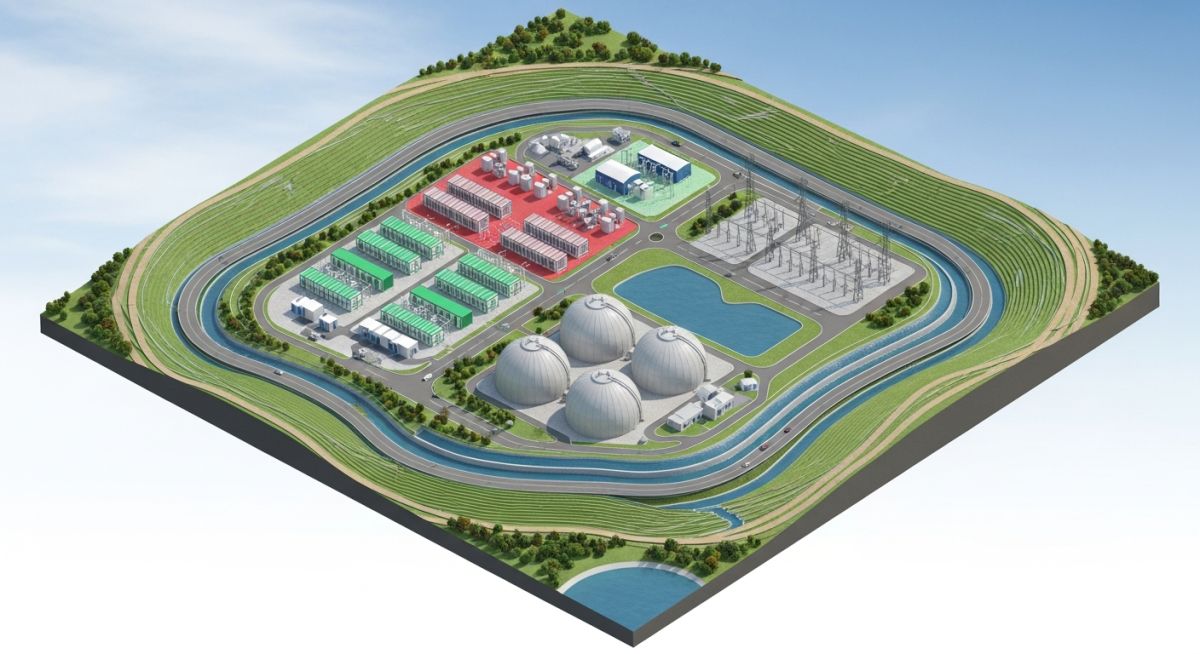
In my two decades of experience managing industrial site development, I have found that the foundation of a successful green hydrogen project begins long before the first electrolyzer is set. Site grading design for green hydrogen plants is a complex balancing act between geotechnical constraints, hydraulic efficiency, and the stringent safety requirements dictated by the handling of high-pressure gases.
Unlike traditional petrochemical facilities, hydrogen plants require specific elevation profiles to prevent the accumulation of lighter-than-air gases in low-lying areas. My approach focuses on creating a “positive-drainage” environment that integrates utility corridors with storm-water management, ensuring that every square meter of the site contributes to both operational uptime and environmental compliance.
Key Takeaways for Site Grading:
- Prioritize gas dispersion through strategic slope management.
- Integrate ASME B31.12 piping corridor elevations with site grading.
- Ensure 100-year flood protection via elevated platform design.
- Minimize earthwork volumes through balanced cut-and-fill analysis.
Technical Foundations of Site Grading Design
Site Grading Design: The technical methodology for establishing site topography to manage surface runoff, support heavy equipment foundations, and mitigate hazardous gas accumulation risks.
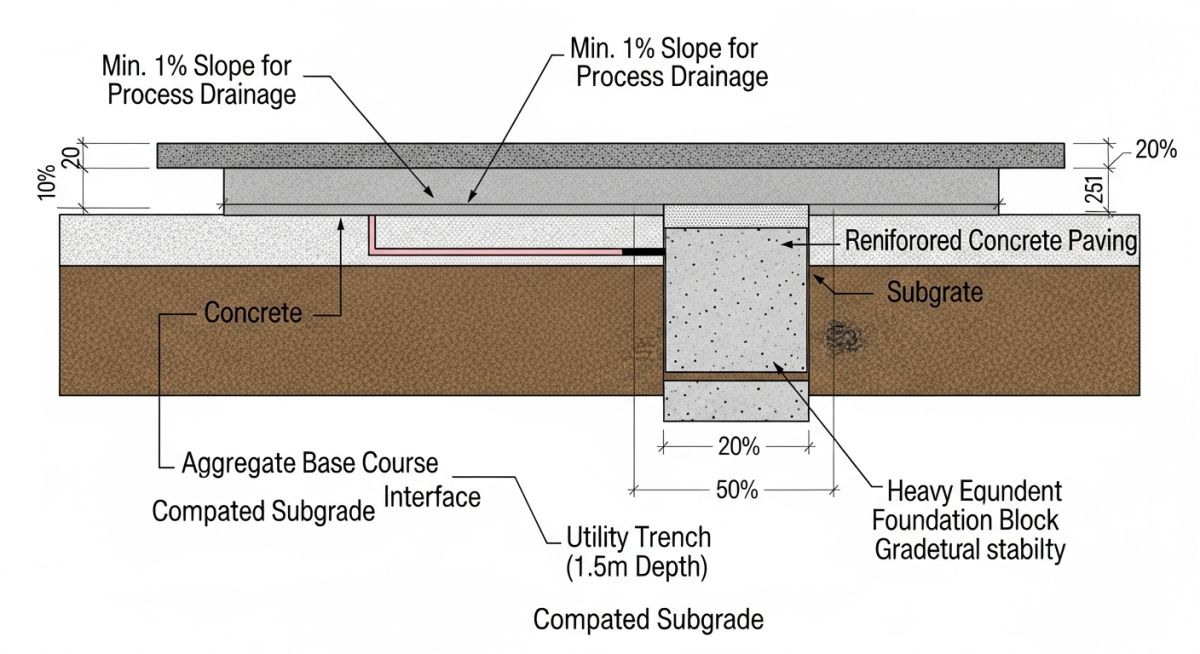
When designing the grading for a green hydrogen facility, I start by establishing the “Finished Floor Elevation” (FFE) based on the 100-year flood plain plus a minimum freeboard of 300mm. The primary objective is to create a site that sheds water away from critical process units, such as electrolyzer skids and hydrogen storage vessels, at a minimum slope of 1% for paved areas and 2% for unpaved areas.
Hydraulic Calculations and Slope Management
To calculate the required drainage capacity, I utilize the Rational Method: Q = CiA, where Q is the peak runoff rate, C is the runoff coefficient, i is the rainfall intensity, and A is the drainage area. For hydrogen plants, the C-value is typically high (0.90 to 0.95) due to extensive concrete paving required for fire safety and equipment access.
Field Warning: Gas Accumulation Risks
Never design “dead-end” depressions or pockets in your grading plan. Hydrogen is highly buoyant; any low point in the site topography can trap leaking gas, creating an explosive atmosphere. Always ensure continuous, uninterrupted drainage paths leading to designated hazardous area collection points.
Utility Corridor Integration
Utility corridors must be graded to allow for gravity-fed drainage while maintaining the minimum cover requirements for underground electrical and instrument conduits. I typically design these corridors with a longitudinal slope of 0.5% to 1.0%. This ensures that water does not pond above sensitive underground infrastructure, which could lead to soil saturation and potential settlement issues for heavy equipment foundations.
Furthermore, the interaction between the grading plan and the ASME B31.12 hydrogen piping requirements is critical. I ensure that all pipe racks are elevated sufficiently to allow for proper site drainage beneath them, preventing the creation of “dams” that would disrupt the overall site hydraulic flow.
Grading Optimization: The strategic evaluation of site topography to maximize operational safety and minimize long-term maintenance costs for hydrogen infrastructure.
Advantages
- Enhanced safety through rapid dispersion of leaked hydrogen gas.
- Reduced structural maintenance by preventing water ponding near foundations.
- Optimized earthwork costs through precise cut-and-fill balancing.
- Improved site accessibility for heavy maintenance equipment.
- Compliance with environmental storm-water discharge regulations.
Disadvantages
- High initial capital expenditure for extensive site earthwork.
- Complex coordination required between civil and process disciplines.
- Potential for soil erosion if slopes are not properly stabilized.
- Increased complexity in underground utility routing and depth.
- Strict regulatory oversight regarding site runoff quality.
Industrial Site Grading: The application of civil engineering principles to prepare diverse industrial landscapes for hydrogen production and storage integration.
Electrolyzer Array Platforms
These platforms require extremely precise grading to ensure that the modular electrolyzer skids remain level within strict tolerances. I design these areas with a slight crown to ensure water sheds away from the skid base, preventing corrosion of the structural steel supports.
High-Pressure Storage Tank Farms
Grading for hydrogen storage requires a “containment-first” approach, where the site is sloped to direct any potential spills or leaks toward a dedicated hazardous area drainage system. This ensures that the storage area remains dry while providing a clear path for emergency response vehicles.
Utility Corridor and Pipe Rack Routing
Effective grading in utility corridors prevents the accumulation of water that could compromise the integrity of underground electrical grounding systems. By maintaining a consistent slope, we ensure that the entire corridor remains accessible for inspection and maintenance throughout the plant’s lifecycle.
Effective site grading for green hydrogen facilities requires a precise balance between operational accessibility and hydraulic efficiency. In my experience, the following table outlines the standard slope requirements for various site features, ensuring that surface water is directed away from critical infrastructure like electrolyzer skids and hydrogen storage vessels while maintaining safe gradients for heavy transport vehicles.
These values are derived from ASCE guidelines for industrial site development. Adhering to these specific gradients prevents ponding, which is a significant safety risk in areas housing high-pressure electrical equipment and hydrogen compression systems. Always verify these slopes against local geotechnical reports, as soil bearing capacity and settlement potential may necessitate more conservative grading designs in specific regions.
| Feature Type | Minimum Slope (%) | Maximum Slope (%) | Primary Purpose |
|---|---|---|---|
| Paved Access Roads | 0.5% | 6.0% | Vehicle safety and drainage |
| Equipment Pads | 1.0% | 2.0% | Prevent water accumulation |
| Unpaved/Grass Areas | 2.0% | 25.0% | Erosion control and runoff |
| Utility Corridors | 0.3% | 1.5% | Gravity flow for conduits |
The integration of civil infrastructure with hydrogen process requirements demands a rigorous mapping of technical entities. This matrix correlates key engineering components with their respective design standards and physical constraints, providing a roadmap for multidisciplinary coordination during the front-end engineering design phase.
By aligning these entities, we ensure that the site grading design supports the long-term integrity of the hydrogen production facility. Each entity listed below represents a critical node where civil, mechanical, and electrical disciplines intersect, requiring unified design criteria to mitigate risks associated with site-wide water management and structural stability.
| Entity | Standard Reference | Constraint |
|---|---|---|
| Stormwater Management | EPA SWPPP | Peak flow attenuation |
| Electrolyzer Foundation | ACI 318 | Differential settlement |
| Hydrogen Piping | ASME B31.12 | Thermal expansion/grade |
| Site Earthworks | ASTM D698 | Compaction density |
Before finalizing the grading plan for a green hydrogen plant, I always conduct a comprehensive site verification. This process ensures that the theoretical design aligns with the physical realities of the terrain, soil composition, and existing environmental constraints. Failure to verify these items often leads to costly rework during the construction phase, particularly when dealing with the precise leveling required for electrolyzer skids.
-
Geotechnical Validation: Confirm soil bearing capacity meets ASTM D698 standards for all heavy equipment foundations. -
Hydraulic Modeling: Verify that the 100-year flood elevation is accounted for in the site grading design to prevent inundation of critical hydrogen storage. -
Utility Interference: Cross-reference the grading plan with underground utility corridors to ensure minimum cover depths are maintained per ASME B31.12. -
Drainage Outfall: Confirm that the site drainage system connects to a permitted outfall point with sufficient capacity for peak storm events. -
Erosion Control: Ensure temporary and permanent erosion control measures are in place to comply with local environmental regulations.
Each checkpoint above is vital for maintaining the safety and operational efficiency of the plant. I recommend documenting the verification results in a formal site report, signed off by the lead civil engineer, to provide a clear audit trail for project stakeholders and regulatory bodies.
Problem: Inadequate Drainage in High-Rainfall Region
A green hydrogen facility in a high-precipitation zone faced significant operational delays due to standing water around the electrolyzer skids, which threatened the integrity of the electrical grounding systems.
- Initial grading design failed to account for extreme storm intensity.
- Insufficient slope on the concrete pads led to water pooling.
- Underground drainage pipes were undersized for the catchment area.
- Lack of secondary containment grading caused runoff to mix with potential contaminants.
Outcome: Successful Remediation and Site Optimization
By implementing a revised grading strategy, the project team successfully mitigated the drainage issues and ensured long-term site stability.
- Regraded the site to a consistent 1.5% slope away from all critical equipment.
- Installed a high-capacity trench drainage system with oil-water separators.
- Increased the elevation of the main process platform by 0.5 meters.
- Achieved full compliance with local environmental and safety standards.
My recommendation for similar projects is to prioritize hydraulic modeling during the early design stages. Never underestimate the impact of local weather patterns on site grading; a proactive approach to drainage design is far more cost-effective than retrofitting a facility after construction is complete.
What is the primary goal of site grading for hydrogen plants?
- Directing surface runoff away from high-voltage electrical components.
- Maintaining precise gradients for gravity-fed drainage systems.
- Ensuring accessibility for heavy transport and maintenance vehicles.
- Mitigating the risk of soil erosion around critical infrastructure foundations.
How does ASME B31.12 influence site grading design?
- Ensures piping slopes are maintained to prevent liquid accumulation.
- Requires specific clearance from grade to avoid corrosion and mechanical damage.
- Influences the depth of underground utility corridors to protect piping integrity.
- Mandates that grading supports the structural stability of pipe racks and supports.
What are the risks of poor site drainage?
- Increased risk of electrical shorts in equipment skids.
- Foundation settlement due to soil saturation and loss of bearing capacity.
- Corrosion of underground piping and structural steel components.
- Potential for environmental contamination if runoff is not properly contained.
How do I optimize grading for utility corridors?
- Aligning corridors with natural site contours to minimize excavation.
- Ensuring consistent slopes for gravity-fed drainage lines.
- Providing adequate cover depth to protect against surface loads.
- Grouping utilities to simplify maintenance and future expansion.
What is the role of flood protection in grading?
- Establishing a site grade above the 100-year flood elevation.
- Designing berms or levees to divert floodwaters away from the plant.
- Ensuring that site drainage can handle extreme storm events without backing up.
- Protecting critical hydrogen storage vessels from inundation and buoyancy risks.
How often should site grading be verified?
- During the initial site survey and geotechnical investigation.
- Following major earthworks and before foundation construction.
- After significant storm events to check for erosion or settlement.
- As part of the annual facility maintenance and safety audit.
Complete Course on
Piping Engineering
Check Now
Key Features
- 125+ Hours Content
- 500+ Recorded Lectures
- 20+ Years Exp.
- Lifetime Access
Coverage
- Codes & Standards
- Layouts & Design
- Material Eng.
- Stress Analysis