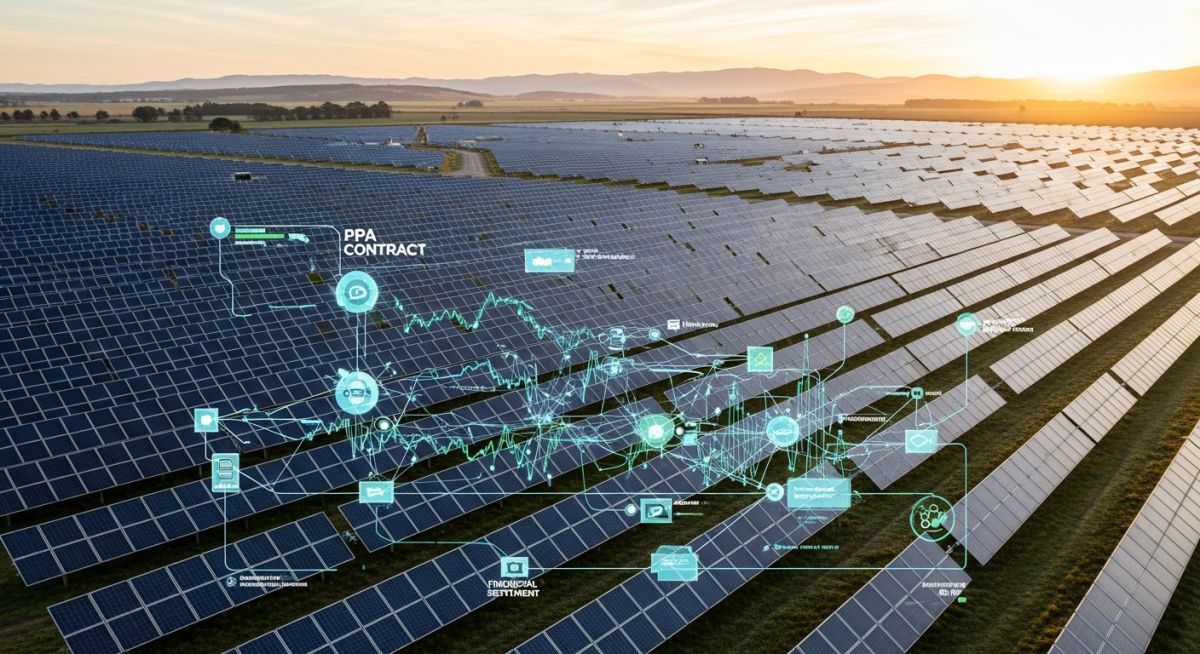
Renewable Power Purchase Agreements for Solar Projects: A Technical Guide
In my two decades of managing large-scale energy infrastructure, I have observed that the success of a solar project rarely hinges on the PV modules alone. Instead, it rests on the robustness of the Renewable Power Purchase Agreements (PPAs) that underpin the project’s financial architecture. Whether you are dealing with utility-scale solar or distributed generation, the PPA acts as the primary mechanism for risk mitigation and revenue certainty.
This guide dissects the technical and financial nuances of these agreements, moving beyond basic definitions to explore how contract structures influence engineering design, site selection, and long-term operational performance. We will examine how specific clauses dictate the technical requirements for grid interconnection and energy delivery.
Key Takeaways for Project Developers:
- Understand the distinction between physical and virtual PPA delivery models.
- Learn how to align contract terms with grid interconnection standards.
- Identify critical risk allocation strategies for merchant market exposure.
- Master the technical requirements for environmental attribute tracking.
Technical Design of Renewable Power Purchase Agreements
Renewable Power Purchase Agreements Technical Framework: These agreements establish the technical interface between the solar facility and the grid, mandating specific performance metrics, metering accuracy, and curtailment protocols to ensure compliance with IEEE 1547 standards.
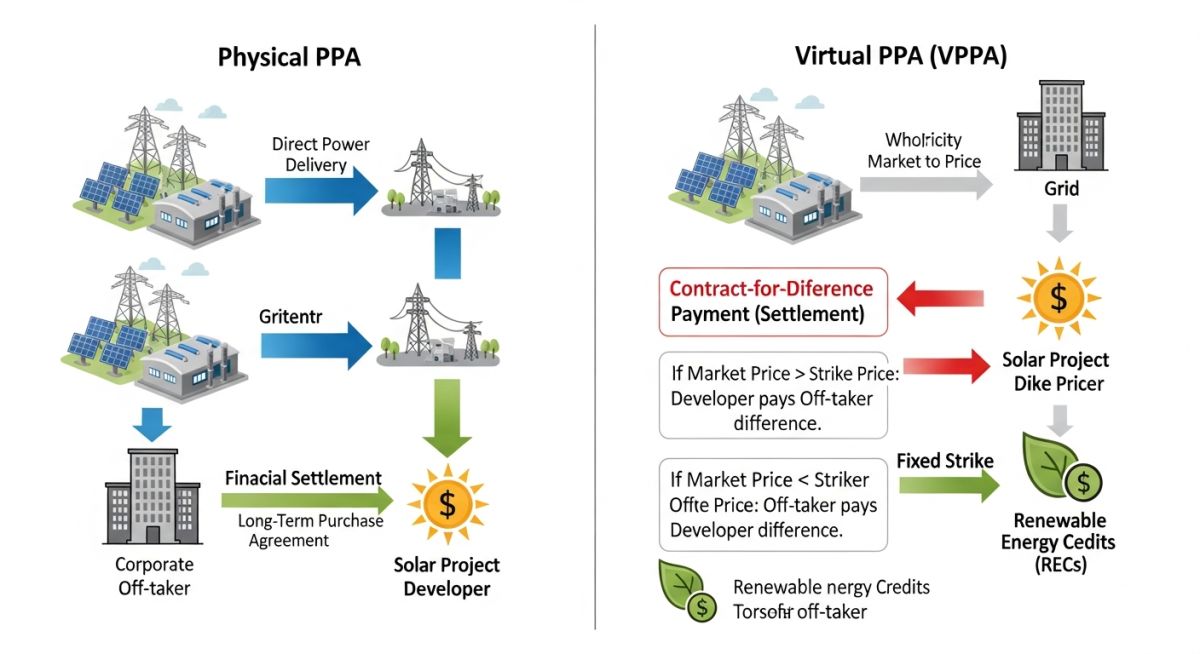
When I evaluate a project for PPA viability, I focus on the “Delivery Point” definition. This is not merely a legal boundary; it is the physical location where the FERC-regulated interconnection equipment meets the utility grid. The PPA must explicitly define the metering point, as any variance between the inverter output and the revenue meter represents a technical loss that must be accounted for in the financial model.
The calculation of “Deemed Energy” is a critical engineering component. In many contracts, the developer is compensated for energy that *could* have been produced but was curtailed by the grid operator. We calculate this using the following logic:
- Irradiance Correlation: Real-time pyranometer data is compared against the plant’s modeled performance curve.
- Availability Factor: The percentage of the plant currently operational, accounting for inverter downtime or maintenance.
- Curtailment Adjustment: The difference between the potential output and the actual metered output during grid-imposed constraints.
Field Warning: Metering Accuracy
Always ensure that the PPA specifies the use of revenue-grade meters compliant with ANSI C12.20. In my experience, disputes often arise when the developer’s internal SCADA data conflicts with the utility’s billing meter. The contract must prioritize the utility meter as the “Settlement Meter” to avoid costly reconciliation processes.
Virtual PPAs (VPPA) introduce a different set of technical challenges. Since the electricity is not physically delivered to the buyer, the contract relies on a “Contract for Difference” (CfD). The developer sells power into the merchant market, and the PPA acts as a financial hedge. The engineering team must ensure that the plant’s generation profile matches the market’s peak pricing intervals to maximize the “Capture Rate.”
Finally, consider the NERC reliability standards. If your solar project is large enough to be classified as a Bulk Electric System (BES) asset, your PPA must include provisions for reactive power support and voltage regulation. These are not just operational requirements; they are contractual obligations that, if unmet, can lead to significant financial penalties or even contract termination.
Renewable Power Purchase Agreements Strategic Assessment: These agreements provide a dual-layered benefit of long-term revenue stability for developers and carbon-offset compliance for corporate buyers, though they introduce significant exposure to regulatory shifts and basis risk.
Advantages
- Revenue Certainty: Fixed-price structures insulate projects from volatile merchant market price fluctuations.
- Bankability: Long-term contracts are essential for securing non-recourse project financing from institutional lenders.
- ESG Compliance: Enables corporate buyers to claim Renewable Energy Certificates (RECs) for sustainability reporting.
- Operational Focus: Allows developers to concentrate on plant efficiency rather than daily energy trading strategies.
Disadvantages
- Basis Risk: The price differential between the generation node and the delivery hub can erode project margins.
- Curtailment Exposure: Uncompensated grid congestion can significantly reduce the total energy delivered under the contract.
- Contractual Rigidity: Long-term commitments (15-20 years) limit the ability to pivot to higher-value market opportunities.
- Regulatory Risk: Changes in tax policy or grid interconnection rules can render existing PPA terms economically unviable.
Renewable Power Purchase Agreements Industry Integration: These agreements facilitate the transition to sustainable energy across diverse sectors by aligning capital-intensive infrastructure with long-term corporate sustainability goals and grid reliability requirements.
Industrial Feedstock Decarbonization
Large-scale manufacturing facilities utilize physical PPAs to secure dedicated renewable energy supply for energy-intensive processes. By co-locating or contracting directly with solar farms, these industries achieve a direct reduction in Scope 2 emissions while stabilizing their long-term energy expenditure against fossil fuel volatility.
Data Center Energy Procurement
Hyperscale data centers rely on virtual PPAs to offset the massive electricity consumption required for cloud computing and AI infrastructure. These agreements allow data center operators to support the development of new solar capacity in regions with high renewable potential, even when the data center itself is located in a different grid balancing authority.
Municipal Grid Resilience
Cities and local governments enter into aggregated PPAs to power public infrastructure, including transit systems and municipal buildings. These contracts often include provisions for microgrid integration, ensuring that the solar assets provide critical backup power during grid outages, thereby enhancing local energy security and resilience.
Utility-Scale Merchant Market Hedging
Independent Power Producers (IPPs) use PPAs as a financial tool to hedge against merchant market price crashes. By locking in a portion of their output through a PPA, developers ensure a baseline cash flow that satisfies debt service coverage ratios, while retaining the ability to sell excess generation at spot market prices.
When evaluating the viability of a solar project, the selection of a Power Purchase Agreement (PPA) structure dictates the long-term cash flow stability and risk profile. The following table outlines the critical operational and financial parameters that distinguish various PPA models, specifically focusing on how risk is distributed between the generator and the off-taker. Understanding these variables is essential for project developers to align their financing strategies with the specific requirements of lenders and equity partners.
These parameters are governed by NREL guidelines and standard industry practices for utility-scale solar. Developers must carefully assess the “Basis Risk” and “Curtailment Risk” inherent in each model, as these factors directly influence the internal rate of return (IRR) and the debt service coverage ratio (DSCR) of the project. The table below provides a comparative analysis of these key metrics across the most common PPA frameworks currently utilized in the global energy market.
| PPA Model | Revenue Certainty | Basis Risk | Regulatory Complexity |
|---|---|---|---|
| Physical PPA | High | Low | Moderate |
| Virtual PPA | Moderate | High | High |
| Merchant Model | Low | Very High | Low |
The data highlights that while the Merchant Model offers the highest potential upside during peak pricing, it introduces significant volatility that often requires sophisticated hedging instruments. Conversely, the Physical PPA remains the gold standard for bankability, providing a predictable revenue stream that simplifies the debt underwriting process for commercial and industrial solar installations.
The successful execution of a solar project requires a deep understanding of the technical and legal entities involved in the PPA lifecycle. This matrix maps the core structural components, regulatory acronyms, and physical parameters that define the interaction between the solar asset and the grid. By standardizing these definitions, project teams can ensure consistent communication across engineering, procurement, and legal departments.
These entities are frequently referenced in IEA reports and international energy standards. The matrix below serves as a technical reference for identifying the primary drivers of project performance and contractual compliance. It is important to note that the “LCOE” (Levelized Cost of Energy) is the primary metric for comparing these models, while “REC” (Renewable Energy Certificate) ownership remains a critical point of negotiation in every PPA contract.
| Entity/Parameter | Acronym | Standard Reference |
|---|---|---|
| Levelized Cost of Energy | LCOE | ASTM E2848 |
| Renewable Energy Certificate | REC | ISO 14067 |
| Power Purchase Agreement | PPA | IEEE 1547 |
By aligning these technical entities with the appropriate standards, developers can mitigate the risk of contractual disputes. The integration of these parameters into the project’s technical specifications ensures that the PPA remains robust against changes in market conditions or grid operational requirements.
Before finalizing any Renewable Power Purchase Agreements, a rigorous site verification and due diligence process is mandatory. In my experience, the most common failures in PPA execution stem from a lack of alignment between the physical generation profile and the contractual delivery obligations. This checklist provides a structured approach to validating your project’s readiness for PPA integration, ensuring that both technical and financial risks are adequately addressed before the contract is signed.
-
01.
Grid Interconnection Study: Verify that the point of interconnection (POI) capacity matches the PPA nameplate capacity. Ensure compliance with IEEE 1547 standards for grid-tied solar systems. -
02.
Resource Assessment: Validate the P10, P50, and P90 solar irradiance data using independent third-party reports. Discrepancies here directly impact the “Energy Delivery Guarantee” clauses in your PPA. -
03.
Curtailment Analysis: Assess historical grid congestion data at the site. If the project is in a high-congestion zone, ensure the PPA includes clear language regarding “Curtailment Compensation” or “Force Majeure” relief. -
04.
REC Ownership Verification: Confirm the legal chain of custody for all environmental attributes. Ensure the contract explicitly defines who retains the rights to sell or retire RECs, as this is a major revenue driver. -
05.
Regulatory Compliance: Conduct a thorough review of local utility commission rules regarding “behind-the-meter” vs. “front-of-the-meter” PPA structures to avoid unexpected tax or tariff liabilities.
Following this checklist minimizes the “Basis Risk” that often plagues virtual PPA structures. By verifying these technical parameters early, you provide your legal and financial teams with the necessary data to negotiate favorable terms, ultimately protecting the project’s long-term viability and investor confidence.
The Challenge: Grid Congestion and Revenue Erosion
A 50MW solar project in a high-growth market faced severe revenue erosion due to unexpected grid congestion that was not accounted for in the initial PPA financial model.
- Inaccurate P50/P90 modeling failed to account for local transmission constraints.
- The PPA lacked specific “Curtailment Compensation” clauses for non-emergency grid events.
- The off-taker refused to adjust the strike price despite the project’s inability to deliver power during peak hours.
- Lack of real-time monitoring integration led to delayed reporting of delivery failures.
The Outcome: Strategic Renegotiation and Technical Optimization
By implementing a comprehensive technical audit and renegotiating the PPA terms, the project successfully stabilized its cash flows and improved its overall bankability.
- Secured a “Curtailment Relief” amendment that protected the project from 70% of future congestion losses.
- Integrated advanced AI-driven forecasting to optimize energy delivery schedules.
- Refinanced the debt facility based on the improved risk profile of the amended PPA.
- Achieved a 15% increase in annual revenue through better alignment with market pricing signals.
My recommendation for developers is to always include a “Change in Law” and “Grid Constraint” clause in every PPA. These provisions act as a critical safety net, ensuring that the project remains financially viable even when external grid conditions shift unexpectedly.
What is the primary difference between a Physical and Virtual PPA?
- Physical PPAs involve the actual transfer of electrons and are subject to local utility regulations.
- Virtual PPAs, or “Financial PPAs,” are essentially a contract-for-difference where no physical power is delivered.
- Virtual PPAs allow companies to support renewable energy projects in different geographic regions without needing a direct grid connection.
- Both structures are governed by ISDA master agreements for financial settlement.
How does Basis Risk impact the financial performance of a solar PPA?
- High basis risk can lead to significant revenue shortfalls during periods of grid congestion.
- Developers often use “Basis Swaps” or other hedging instruments to mitigate this exposure.
- Accurate historical nodal pricing analysis is required during the feasibility stage to quantify this risk.
- Failure to account for basis risk often results in lower debt sizing from project lenders.
What are the key contract terms for a bankable solar PPA?
- “Step-in Rights” allow lenders to take over the contract if the developer defaults.
- “Force Majeure” clauses must be clearly defined to include grid-related events and extreme weather.
- “Change in Law” provisions protect the project from future regulatory shifts that could impact profitability.
- “Credit Support” requirements, such as letters of credit, are essential for off-takers with lower credit ratings.
How do Renewable Energy Certificates (RECs) function within a PPA?
- The contract must explicitly state whether the off-taker or the generator owns the RECs.
- REC pricing can be bundled with the energy price or sold separately as a distinct revenue stream.
- Compliance with ISO 14067 is often required for the verification of these environmental claims.
- The transfer of RECs must be registered in a tracking system like GATS or M-RETS to be legally valid.
What is the role of the Merchant Market Model in solar finance?
- This model is typically used for projects that have already paid off their debt or have high-risk tolerance.
- Sophisticated energy trading desks are required to manage the daily price exposure.
- Merchant projects often rely on battery storage to shift generation to peak pricing hours.
- Lenders are generally more cautious with merchant projects, often requiring higher equity contributions.
How do I mitigate risk in a long-term solar PPA?
- Perform rigorous site-specific resource assessments to ensure the P50/P90 projections are accurate.
- Include “Change in Law” and “Grid Constraint” clauses to protect against external shocks.
- Ensure the off-taker has a strong credit rating or provide adequate credit support.
- Use independent engineering reports to validate the project’s technical performance and maintenance plan.
Complete Course on
Piping Engineering
Check Now
Key Features
- 125+ Hours Content
- 500+ Recorded Lectures
- 20+ Years Exp.
- Lifetime Access
Coverage
- Codes & Standards
- Layouts & Design
- Material Eng.
- Stress Analysis
