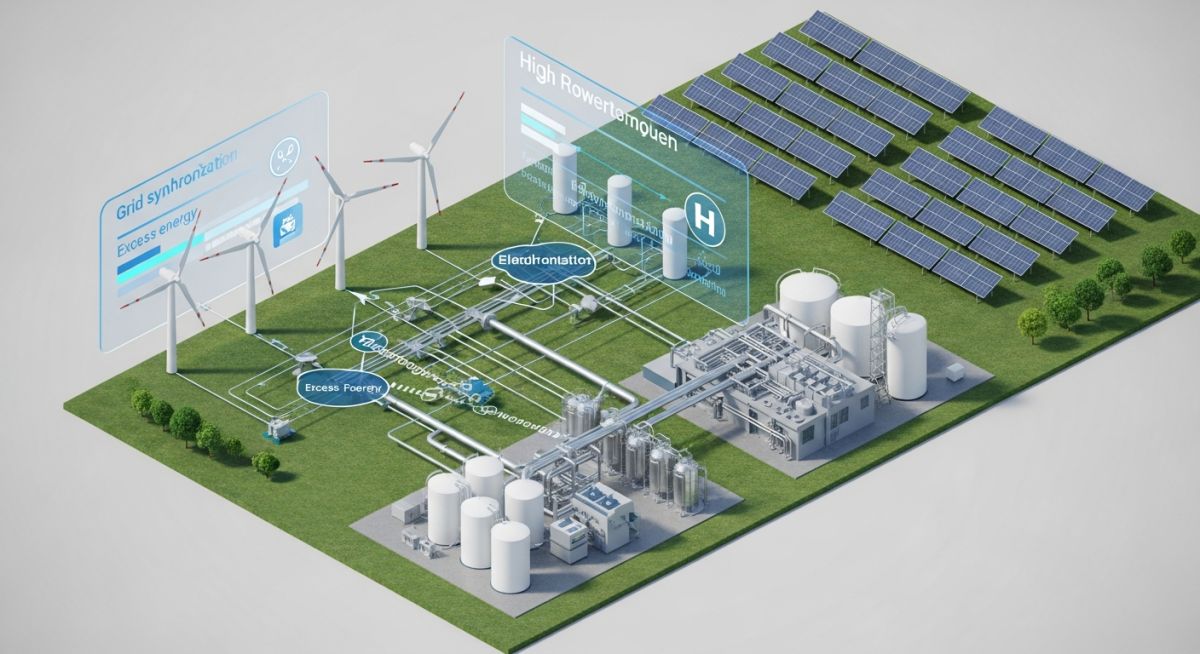
Renewable Electricity Procurement for RFNBO Hydrogen Projects
In my two decades of managing complex industrial piping and energy infrastructure, I have rarely encountered a regulatory framework as demanding as the EU’s requirements for green hydrogen. Achieving RFNBO compliance is not merely a matter of buying green certificates; it requires a fundamental redesign of how we source, track, and integrate renewable electricity into our electrolysis plants. As engineers, we must move beyond simple procurement and understand the physics of grid interaction, the nuances of hourly matching, and the rigorous documentation required to prove additionality.
Key Takeaways for Project Success:
- Master the three pillars of RFNBO compliance: Additionality, Temporal Correlation, and Geographical Correlation.
- Evaluate the technical feasibility of direct-line connections versus grid-based Power Purchase Agreements (PPAs).
- Implement robust energy management systems to track hourly electricity consumption against renewable generation profiles.
- Mitigate financial risk by aligning PPA structures with the specific operational load profiles of PEM or Alkaline electrolyzers.
Complete Course on
Piping Engineering
Check Now
Key Features
- 125+ Hours Content
- 500+ Recorded Lectures
- 20+ Years Exp.
- Lifetime Access
Coverage
- Codes & Standards
- Layouts & Design
- Material Eng.
- Stress Analysis
Technical Framework for Renewable Electricity Procurement
Renewable Electricity Procurement: A technical process involving the validation of renewable energy sources through strict adherence to EU RED III standards, focusing on the hourly matching of generation and consumption to ensure true carbon neutrality in hydrogen production.
To achieve RFNBO status, the electricity used for electrolysis must be sourced from renewable installations that are not fully depreciated and are not receiving operating aid. This is the core of the “additionality” principle. From an engineering perspective, this requires a deep dive into the load profile of your electrolyzer stack. If your electrolyzer operates at a high capacity factor, you cannot rely on intermittent wind or solar without significant storage or a highly sophisticated PPA structure that accounts for the hourly mismatch between generation and demand.
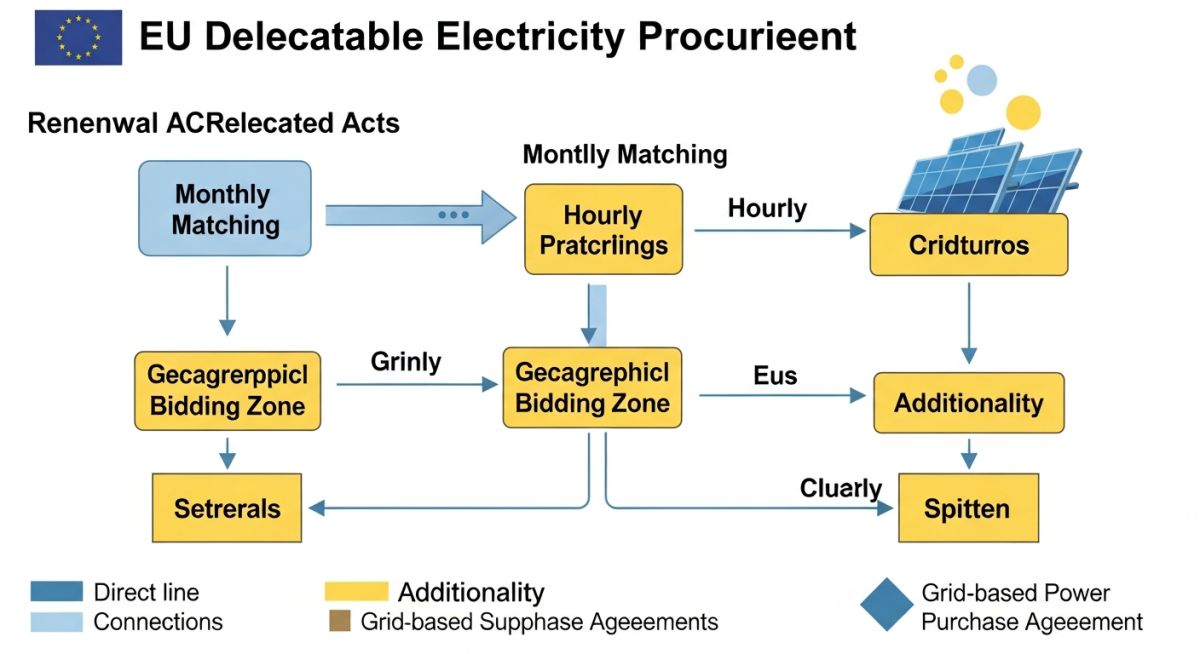
The calculation of the carbon intensity of the electricity input is governed by the formula: CI = (E_grid * CF_grid + E_ren * CF_ren) / Total_H2_Output. However, under the Delegated Act, the CF_ren (Carbon Factor of Renewable) is effectively zero only if the electricity meets the strict criteria of temporal and geographical correlation. We must perform a nodal analysis of the grid to ensure that the renewable installation is located in the same bidding zone as the electrolyzer. If the grid is congested, the electricity cannot be considered “delivered,” even if the PPA is in place.
For onsite generation, the engineering challenge shifts to the integration of the DC-DC converters and the management of power quality. When connecting an electrolyzer directly to a wind farm, the voltage fluctuations can lead to premature degradation of the membrane in PEM electrolyzers. We must design robust power conditioning systems that can handle the ramp rates of renewable sources while maintaining the steady-state current required for stable hydrogen production. This often involves the installation of buffer batteries or supercapacitors to smooth out the power input, which adds complexity to the balance of plant (BoP) design.
Procurement Strategy Evaluation: A comparative analysis of onsite generation versus grid-based PPA models for RFNBO compliance.
Advantages
- Direct-line connections eliminate grid fees and transmission losses, improving overall system efficiency.
- Onsite generation provides total control over the energy source, simplifying the proof of additionality.
- Long-term PPAs hedge against volatile electricity market prices, stabilizing the levelized cost of hydrogen (LCOH).
- Strategic selection of renewable assets allows for the optimization of the electrolyzer’s operational profile.
Disadvantages
- High capital expenditure (CAPEX) for onsite renewable assets increases the initial project financial burden.
- Grid-based PPAs are subject to complex regulatory changes and potential future changes in “additionality” definitions.
- Intermittency of renewable sources requires expensive energy storage or oversized electrolyzer capacity.
- Geographical constraints limit the availability of high-capacity factor renewable sites near industrial hubs.
Industrial Integration Scenarios: Practical deployment of renewable procurement strategies across various heavy industry sectors.
Green Steel Production
Integrating large-scale electrolyzers with offshore wind farms via dedicated subsea cables ensures the high-capacity factor required for continuous steel reduction processes. This setup minimizes grid reliance and provides a stable, low-carbon energy input that meets the most stringent EU RFNBO criteria for industrial decarbonization.
Ammonia Synthesis Plants
For ammonia production, the hydrogen must be produced at a consistent rate to match the Haber-Bosch process requirements. By utilizing a hybrid PPA model that combines solar, wind, and battery storage, operators can maintain the necessary temporal correlation while optimizing the cost of electricity during peak generation hours.
Refinery Hydrogen Decarbonization
Refineries often have existing grid infrastructure, making grid-supplied renewable power via corporate PPAs the most viable path. The engineering focus here is on the digital tracking of hourly energy certificates to ensure that the electricity consumed by the electrolyzer is matched by renewable generation within the same bidding zone.
Procuring renewable electricity for Renewable Fuels of Non-Biological Origin (RFNBO) projects requires strict adherence to temporal and geographical correlation mandates. As an engineer, I evaluate these procurement parameters based on the specific hourly matching requirements defined in the EU Delegated Acts. The following table outlines the critical variables that dictate whether a Power Purchase Agreement (PPA) or direct line connection qualifies under current regulatory frameworks.
When selecting a procurement model, you must account for the “additionality” of the renewable source, ensuring that the generation asset was commissioned within a specific timeframe relative to the hydrogen production facility. Failure to align these parameters results in non-compliance, rendering the produced hydrogen ineligible for RFNBO credits. The table below summarizes the technical thresholds for grid-connected and direct-wire configurations.
| Parameter | Direct Wire | Grid-Supplied (PPA) |
|---|---|---|
| Temporal Correlation | Real-time (Instantaneous) | Hourly (Transitioning to 15-min) |
| Geographical Scope | Same site/Direct link | Same Bidding Zone |
| Additionality | Not required (if off-grid) | Required (New capacity) |
| Standard Reference | EU RED III | Delegated Act 2023/1184 |
These variables are not merely administrative hurdles; they dictate the physical design of the electrical balance of plant. For instance, grid-supplied projects require sophisticated energy management systems to track hourly generation profiles against electrolyzer demand, whereas direct-wire systems prioritize the stability of the DC-DC or AC-DC conversion interface.
The complexity of RFNBO compliance necessitates a structured mapping of technical entities to their respective regulatory and physical constraints. In my experience, project teams often struggle to reconcile the physical reality of electron flow with the abstract requirements of “additionality” and “temporal correlation.” This matrix serves as a technical bridge between the physical infrastructure and the compliance documentation required for certification.
By mapping these entities, we can identify potential bottlenecks in the procurement strategy early in the FEED (Front-End Engineering Design) phase. Each entity listed below represents a critical node in the certification chain, where data integrity and standard compliance are paramount for project bankability.
| Entity | Function | Standard Reference |
|---|---|---|
| Electrolyzer | Hydrogen production unit | ISO 22734 |
| PPA | Renewable energy procurement | EU RED III |
| Bidding Zone | Geographical market boundary | ACER Guidelines |
| Additionality | New capacity verification | Delegated Act 2023/1184 |
The matrix highlights the intersection of electrical engineering and policy. When designing the procurement strategy, ensure that the Bidding Zone alignment is verified against the latest ACER market maps, as these boundaries are subject to change. Furthermore, the electrolyzer efficiency must be monitored in conjunction with the renewable energy input to ensure the overall system remains within the carbon intensity limits defined for RFNBO status.
Renewable Electricity Procurement Verification: Ensuring compliance with RFNBO standards requires a rigorous site-level verification process. This checklist focuses on the technical and administrative requirements for validating renewable energy sources against the EU Delegated Acts.
- Geographical Alignment: Confirm the renewable generation asset is located within the same bidding zone as the electrolyzer facility.
- Temporal Matching: Verify that the energy procurement contract supports hourly matching of generation and consumption profiles.
- Additionality Proof: Document the commissioning date of the renewable asset to ensure it meets the “new capacity” requirements under EU RED III.
- Grid Congestion Check: Assess the local grid capacity to ensure that the renewable energy can be delivered without significant curtailment.
- Metering Accuracy: Ensure all meters are certified and capable of providing the high-resolution data required for compliance reporting.
In my experience, the most common failure point is the lack of granular data. You must ensure that your SCADA system is configured to capture energy production and consumption data at the required intervals. Without this, the audit trail for RFNBO certification will be incomplete. Always perform a pre-commissioning audit of the metering infrastructure to verify that the data exported matches the requirements of the certifying body. If you are utilizing a PPA, ensure the contract explicitly includes the transfer of Guarantees of Origin (GOs) or equivalent renewable energy certificates to the hydrogen project entity. This is a non-negotiable requirement for proving the renewable nature of the electricity consumed.
Problem: Grid-Supplied PPA Compliance Failure
A 50MW electrolyzer project faced a critical compliance risk due to a mismatch between the PPA generation profile and the electrolyzer operating schedule.
- Inconsistent hourly matching between wind farm output and electrolyzer load.
- Lack of “additionality” documentation for the selected renewable energy asset.
- Grid congestion leading to unexpected curtailment of the contracted renewable power.
- Inadequate metering resolution for the required hourly reporting standards.
Outcome: Successful Remediation and Certification
By restructuring the procurement strategy, the project achieved full RFNBO compliance and secured the necessary green hydrogen subsidies.
- Implemented a battery energy storage system (BESS) to buffer hourly generation gaps.
- Renegotiated the PPA to include specific “additionality” clauses and verified asset commissioning dates.
- Upgraded the SCADA system to provide 15-minute interval data for audit transparency.
- Established a direct communication link with the grid operator to manage curtailment risks.
The recommendation for similar projects is to prioritize the integration of energy storage early in the design phase. Relying solely on grid-supplied power without a buffer often leads to compliance gaps during periods of low renewable generation. By combining a robust PPA with onsite storage, you create a more resilient and compliant energy procurement model that can withstand the volatility of the renewable energy market.
What is the primary difference between direct-wire and grid-supplied procurement?
- Direct-wire avoids grid fees and potential curtailment issues.
- Grid-supplied offers greater flexibility in site selection but requires sophisticated energy management.
- Both must comply with the EU RED III framework for RFNBO status.
How is additionality defined for RFNBO projects?
- Requires the renewable asset to be commissioned within a specific timeframe.
- Must demonstrate that the asset is not receiving other operational support.
- Verification is mandated under Delegated Act 2023/1184.
Why is temporal correlation critical for compliance?
- Current requirements mandate hourly matching.
- Future regulations may tighten this to 15-minute intervals.
- Ensures the hydrogen produced is truly carbon-neutral on an operational basis.
What role does the bidding zone play in procurement?
- Prevents the use of renewable energy from regions with different grid carbon intensities.
- Aligns with ACER market design principles.
- Essential for verifying the “geographical correlation” requirement.
How do I handle grid curtailment in my PPA?
- Negotiate “take-or-pay” or “pay-as-produced” structures carefully.
- Use BESS to store energy during curtailment events.
- Maintain clear communication with the grid operator to anticipate congestion.
Are Guarantees of Origin (GOs) sufficient for compliance?
- GOs must be cancelled specifically for the hydrogen project.
- Must be accompanied by hourly generation data.
- Must be verified against the additionality criteria.



