What Are Pipe Flange Protectors and Their Industrial Uses?
In my 20-plus years of managing piping construction for major oil and gas facilities, I have seen millions of dollars wasted on a single, easily avoidable mistake: ignoring flange face protection. During transport or yard storage, a tiny ding on a flange’s phonographic serrated face can completely ruin its sealing capability. When we run hydrotests at 150 bar, those tiny dings turn into high-pressure leaks, forcing us to cut out the flange or perform expensive on-site machining.
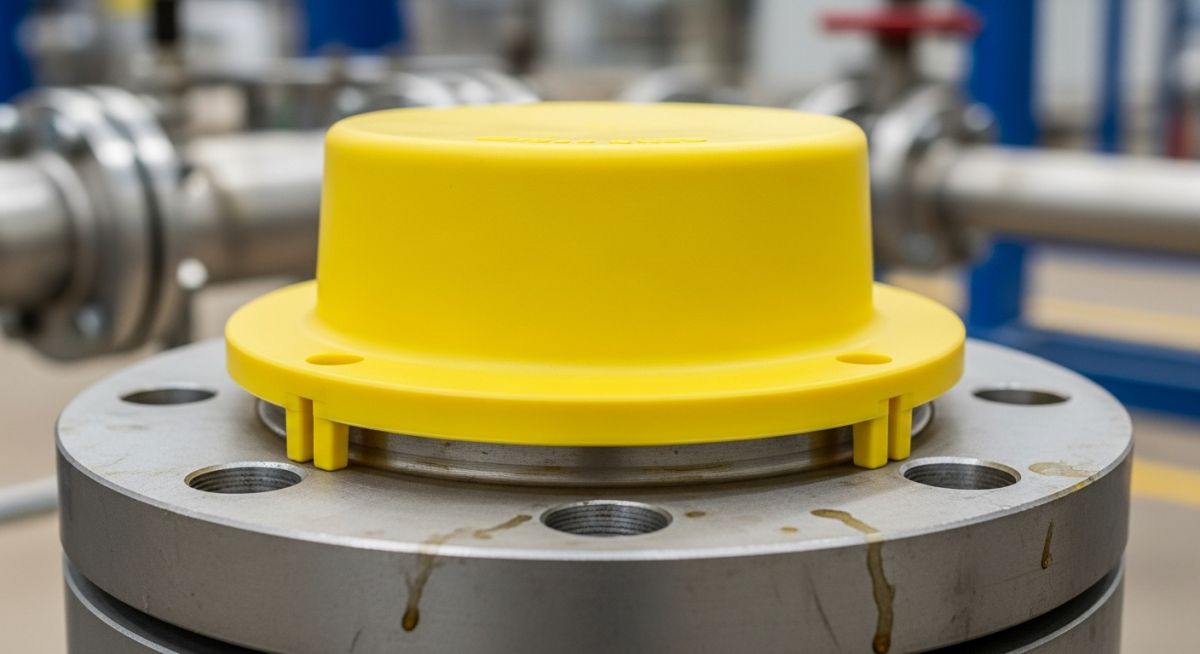
That is where pipe flange protectors come into play. These simple, engineered components act as armor for your piping joints. Whether you are dealing with carbon steel, stainless steel, or exotic duplex alloys, using the right protector ensures your piping systems remain clean, intact, and ready for safe bolt-up.
Key Takeaways from a Piping Expert
- Flange protectors prevent mechanical damage to the critical sealing surfaces specified by ASME B16.5.
- They keep dirt, moisture, sandblasting grit, and nesting animals out of your fabricated piping spools.
- Using the wrong adhesive tape on stainless steel flanges can cause stress corrosion cracking due to chloride contamination.
- Selecting the right protector material depends on whether your piping is in transit, long-term outdoor storage, or undergoing sandblasting.
- Investing in quality flange covers saves thousands of dollars in field-machining and hydrotest failures.
Why Use Pipe Flange Protectors in Piping Systems?
To understand why we need these protectors, we must look at how a flange seals. Under ASME B16.5, raised face flanges must have a specific surface roughness—typically a spiral serrated finish between 125 and 250 micro-inches AARH (Arithmetic Average Roughness Height). This texture is designed to bite into the gasket material when the bolts are torqued.
If a flange face is dropped, bumped, or scraped, those tiny serrations are flattened or gouged. A scratch that cuts across the radial path of the serrations creates a direct leak path for the process fluid. Once that happens, the flange will fail its hydrotest.
The Cost of Damage: An Engineering Calculation
Let us look at the math behind flange damage. If a 12-inch Class 600 carbon steel flange face is damaged on-site, we cannot simply sand it down by hand. We must set up a portable field-flange facing machine.
The total cost of on-site repair can be calculated using this simple project cost model:
For a typical offshore or refinery project:
• Portable machine rental: 500 per day
• Field machinist labor (2 days including setup): 1,600
• Non-Destructive Testing (NDT) and QC sign-off: 400
• Schedule delay (if on the critical path): upwards of 10,000 per day
Total Cost: 2,500 to 12,500 per damaged flange.
Compare this to the cost of a heavy-duty plastic flange protector, which ranges from 2 to 15 depending on the size. The return on investment is clear.
Selecting the Right Pipe Flange Protectors
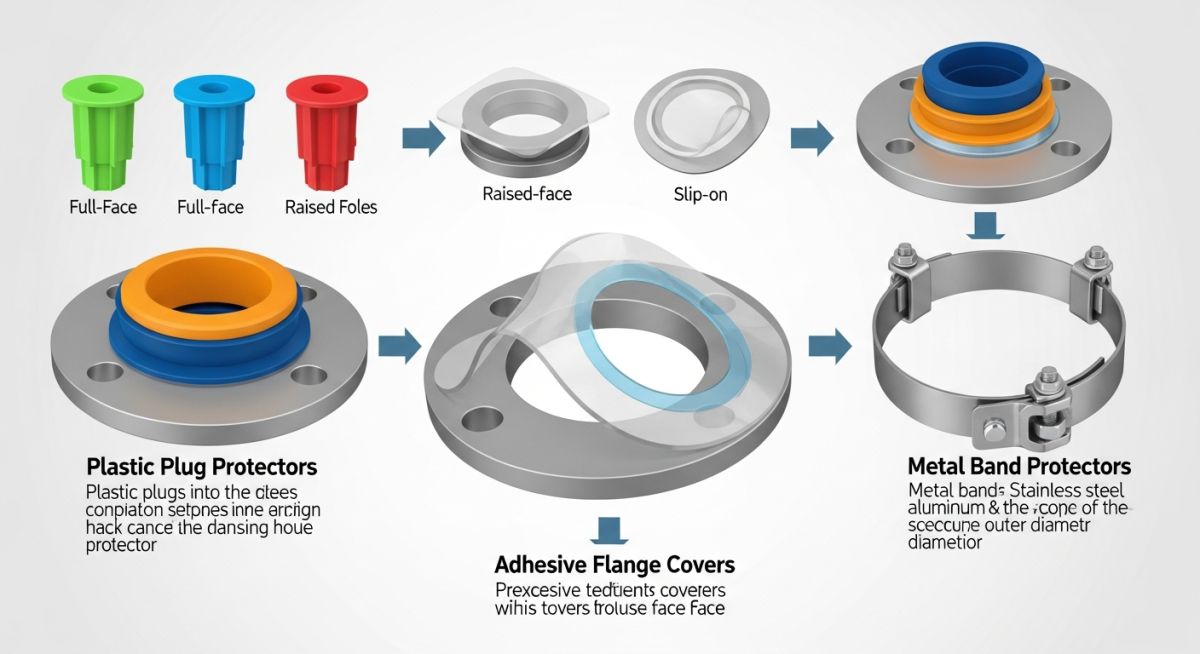
Not all protectors are built the same. A thin plastic plug that works fine for indoor warehouse storage will disintegrate within three weeks under the harsh UV rays of a desert fabrication yard. Below is the engineering selection matrix I use to specify protectors for our projects.
| Protector Type | Material | Temperature Limits | Best Application | ASME Compliance |
|---|---|---|---|---|
| Full-Face Pressboard | Laminated Wood / Hardboard | -40°C to 80°C | Heavy transit, ocean shipping, sandblasting | ASME B16.5 / B16.47 |
| Push-In Flange Plugs | Low-Density Polyethylene (LDPE) | -30°C to 60°C | Indoor storage, short-term yard storage | ASME B16.5 |
| Multi-Fit Bolt Hole Protectors | Injection Molded Plastic | -40°C to 90°C | Long-term outdoor storage, high wind areas | ASME B16.5 / B16.47 |
| Corrosion Inhibitor Bands | Polyurethane with VCI gel | -50°C to 120°C | Offshore preservation, highly corrosive environments | API 6A / ASME B16.5 |
Technical Mapping & Specifications Matrix
To ensure your procurement team orders the correct items, use this technical mapping matrix which links physical parameters to industry standards.
| Technical Entity | Acronym | Physical Parameter | Standard Reference |
|---|---|---|---|
| Arithmetic Average Roughness Height | AARH | 125 to 250 micro-inches | ASME B16.5 |
| Volatile Corrosion Inhibitor | VCI | Molecular protective layer thickness | NACE TM0208 |
| Low-Density Polyethylene | LDPE | Density: 0.910 to 0.940 g/cm³ | ASTM D1248 |
Quality Checks for Pipe Flange Protectors
Before releasing a piping spool for shipment or storage, the quality control inspector must verify that the flange protection is installed correctly. A loose or poorly fitted cover is just as bad as having no cover at all. Use this checklist on your job site to maintain high quality standards.
Flange Protection Field Checklist
Field Case Study: Real-World Application
The Problem: Costly Damage on Duplex Flanges
During a major offshore gas platform project in the North Sea, 42 spools of duplex stainless steel piping were shipped from a fabrication yard in Southeast Asia. The fabricator used cheap, thin plastic push-in plugs to protect the flanges. During ocean transit, high winds and salt spray dislodged over 30% of the plugs.
When the shipment arrived, the exposed flange faces had suffered severe pitting corrosion from salt water and mechanical gouges from shifting cargo. Upon inspection, 18 high-pressure flanges failed the surface roughness checks, requiring immediate on-site machining. This delayed the project schedule by three weeks and cost over 140,000 in emergency machining and re-testing.
The Solution: Heavy-Duty Full-Face Protection
For the next shipment, I mandated a strict flange protection protocol. We switched to heavy-duty, UV-stabilized polyethylene full-face protectors secured with four plastic push-pins through the bolt holes. Additionally, we placed a Volatile Corrosion Inhibitor (VCI) disc inside each flange cover to neutralize any moisture that might seep in.
The result was outstanding. Out of 120 flanges shipped under the new protocol, 100% arrived in pristine condition. There were zero hydrotest failures, and the installation team was able to bolt up the joints immediately, saving the project both time and money.
My recommendation for any high-value piping project is simple: never cut corners on flange protection. The small amount of money saved by buying cheap covers is quickly wiped out by a single field repair.
Frequently Asked Engineering Questions
What is the difference between full-face and plug-type flange protectors?
Can I reuse pipe flange protectors on different projects?
How do I protect flanges during sandblasting operations?
Are there specific standards governing flange protectors?
Why is adhesive tape discouraged for flange face protection?
What are VCI flange protectors and when should they be used?
Complete Course on
Piping Engineering
Check Now
Key Features
- 125+ Hours Content
- 500+ Recorded Lectures
- 20+ Years Exp.
- Lifetime Access
Coverage
- Codes & Standards
- Layouts & Design
- Material Eng.
- Stress Analysis