Discover the five sequential stages of a utility-scale solar project construction workforce, managing crews, productivity rates, and workflow bottlenecks.
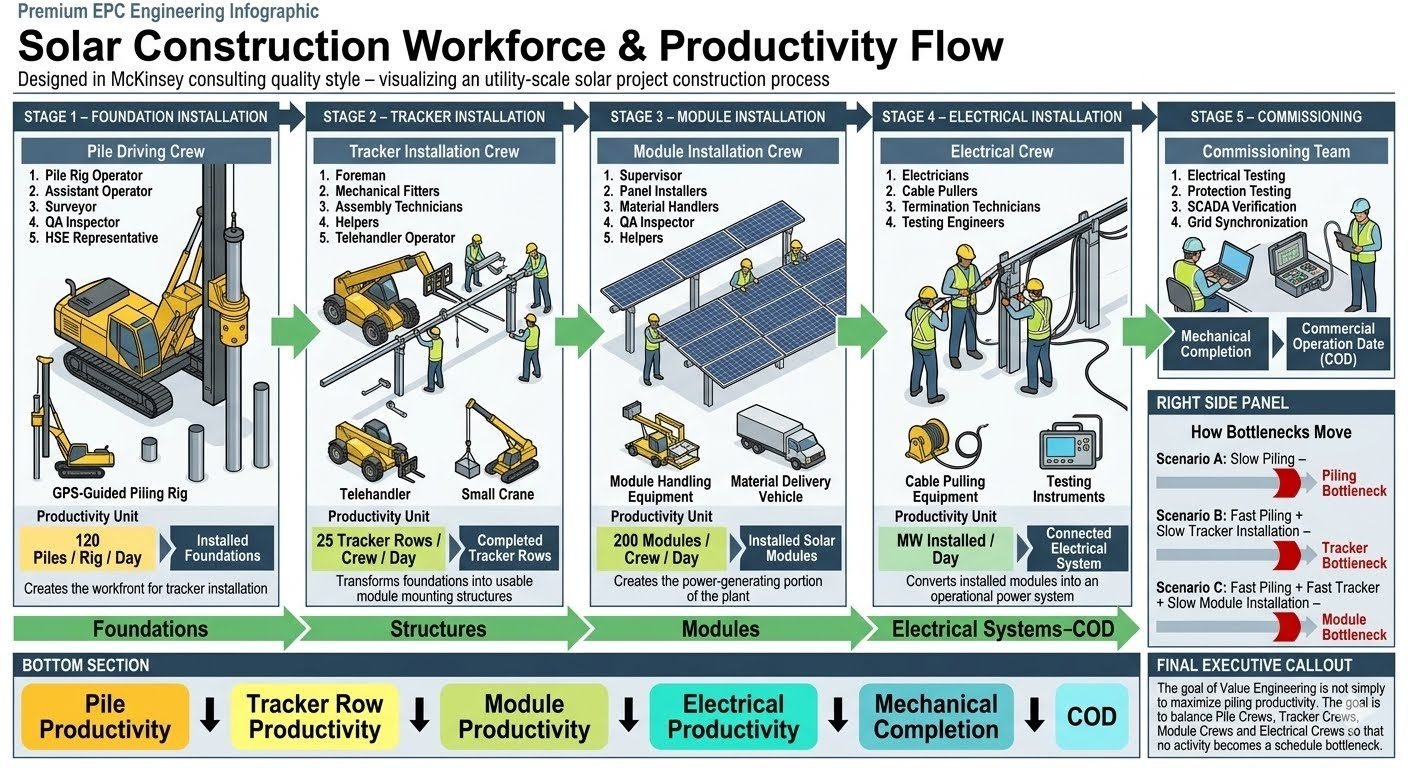
Discover the five sequential stages of a utility-scale solar project construction workforce, managing crews, productivity rates, and workflow bottlenecks.
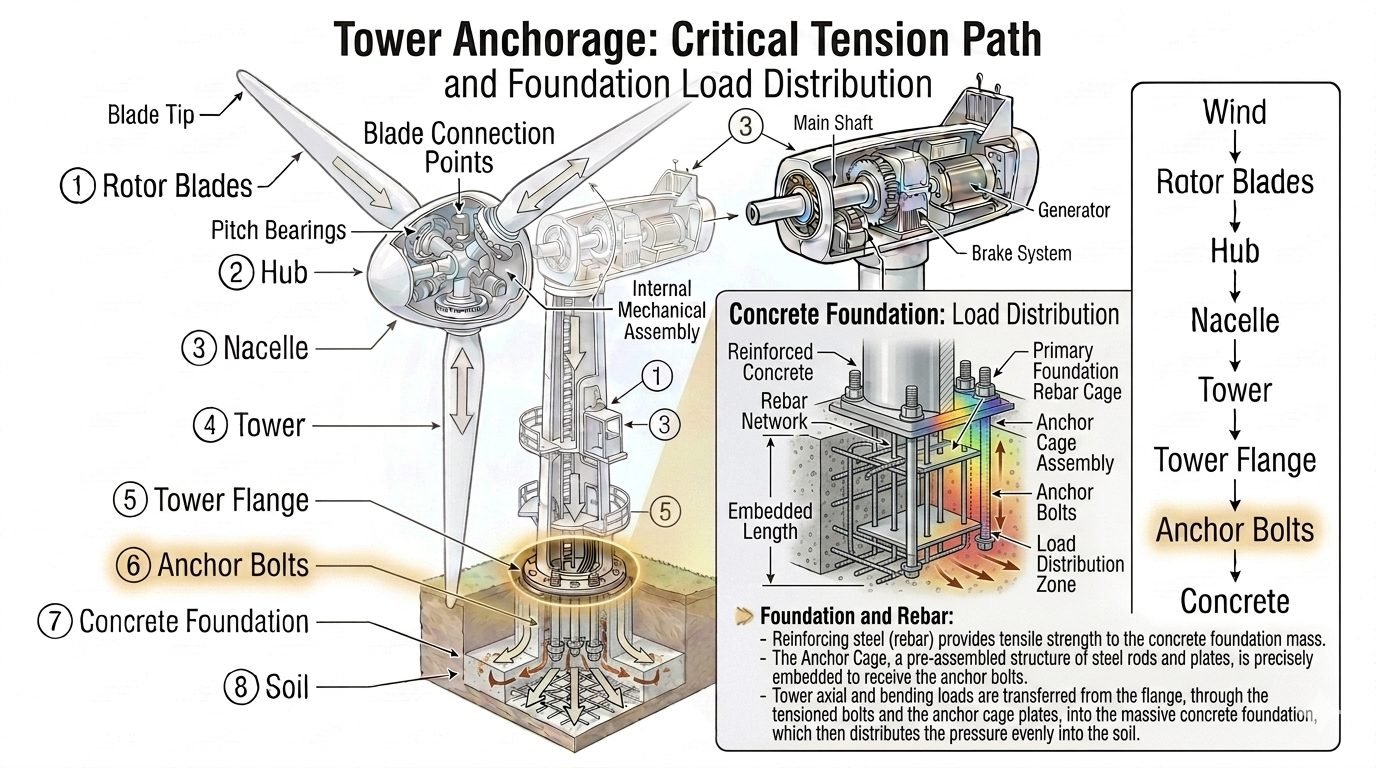
Master reinforced concrete foundation design for piping structures. Learn anchor cage integration, load transfer, and ACI code compliance.
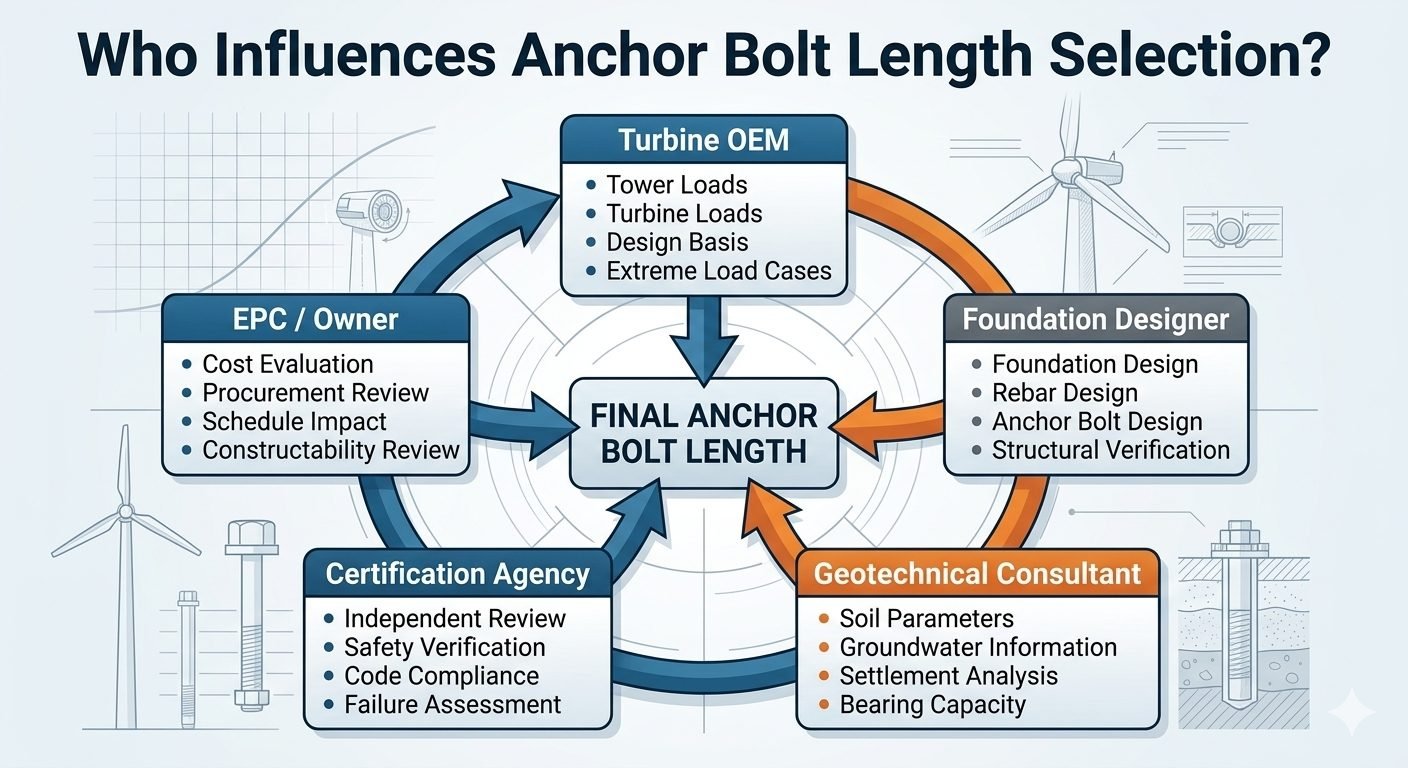
Discover how 5 key stakeholders determine wind turbine anchor bolt length, balancing OEM loads, geotechnical data, and structural codes.
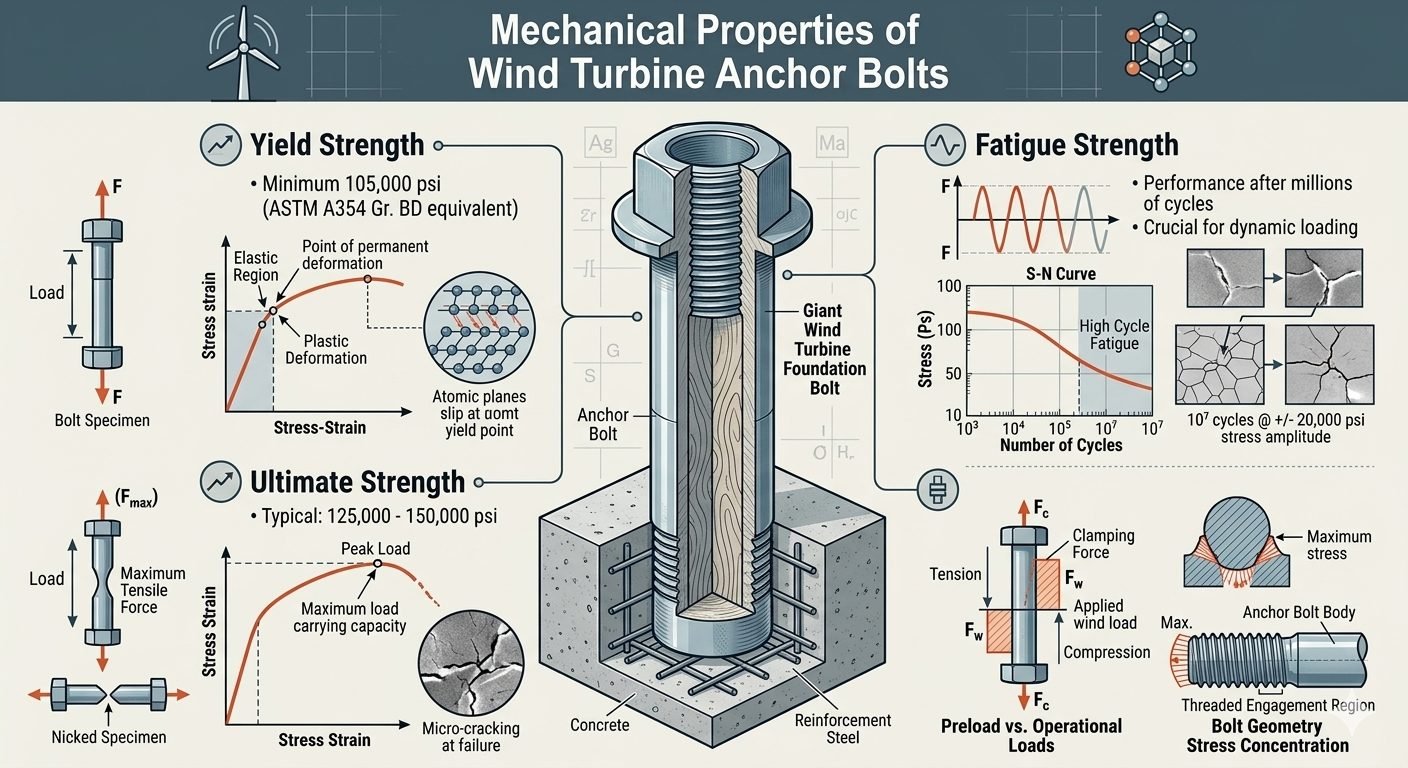
Discover the mechanical properties of wind turbine anchor bolts, including yield strength, ultimate tensile limits, and fatigue performance standards.
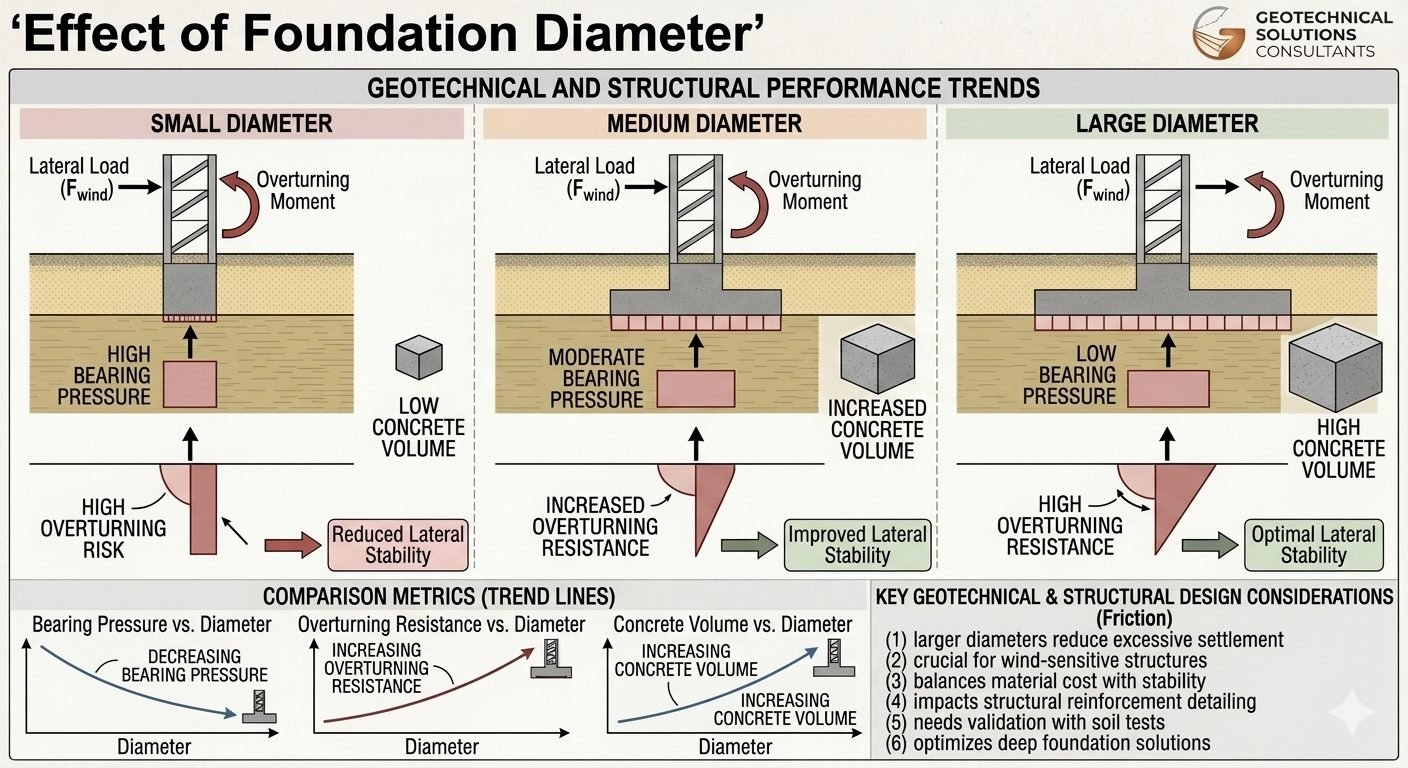
Compare small, medium, and large foundation diameters under lateral loads. Evaluate bearing pressure, concrete volume, and structural stability per ASCE standards.
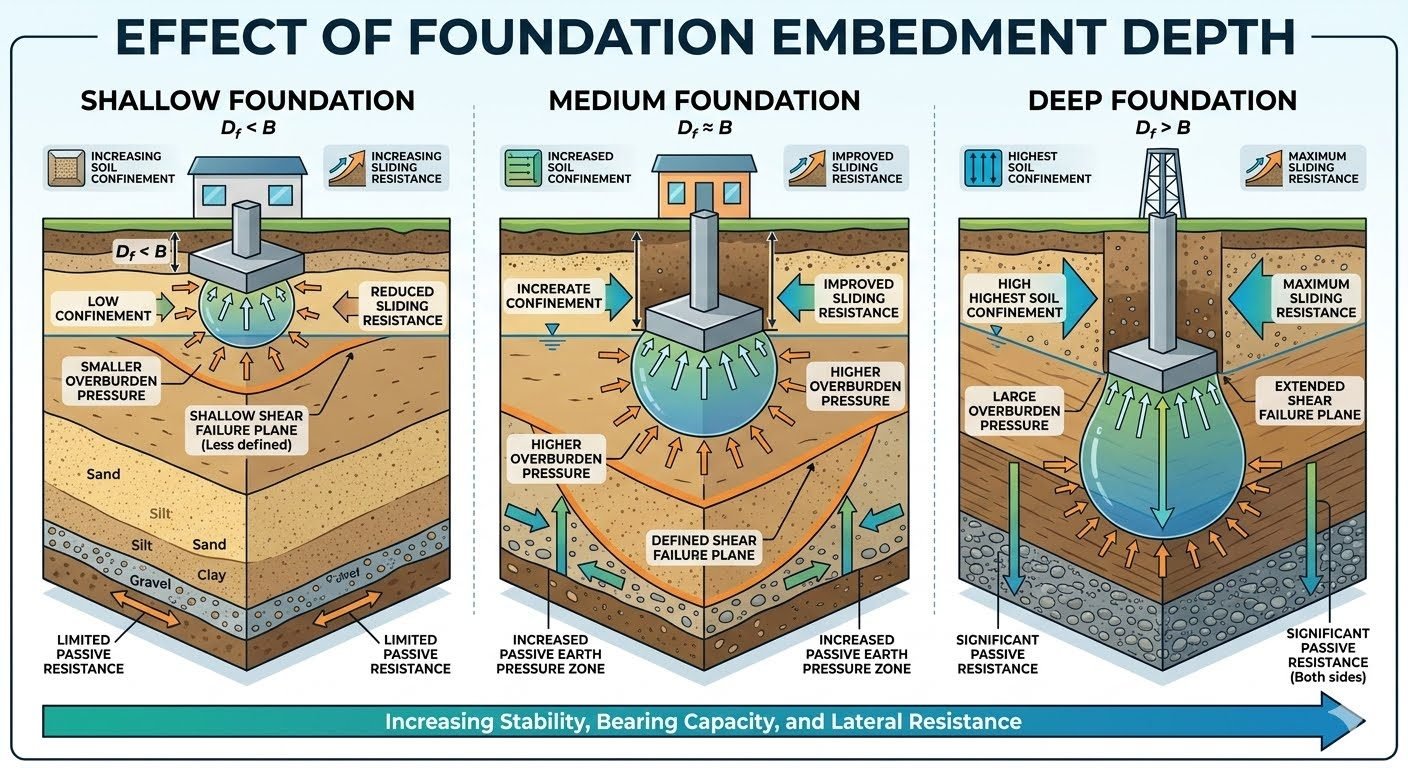
Analyze how foundation embedment depth ratio Df/B impacts lateral wind stability, bearing capacity, and shear failure planes under ASME standards.

Analyze the effect of concrete strength on foundation design comparing 25 MPa, 35 MPa, and 50 MPa grades. Optimize load capacity and size.
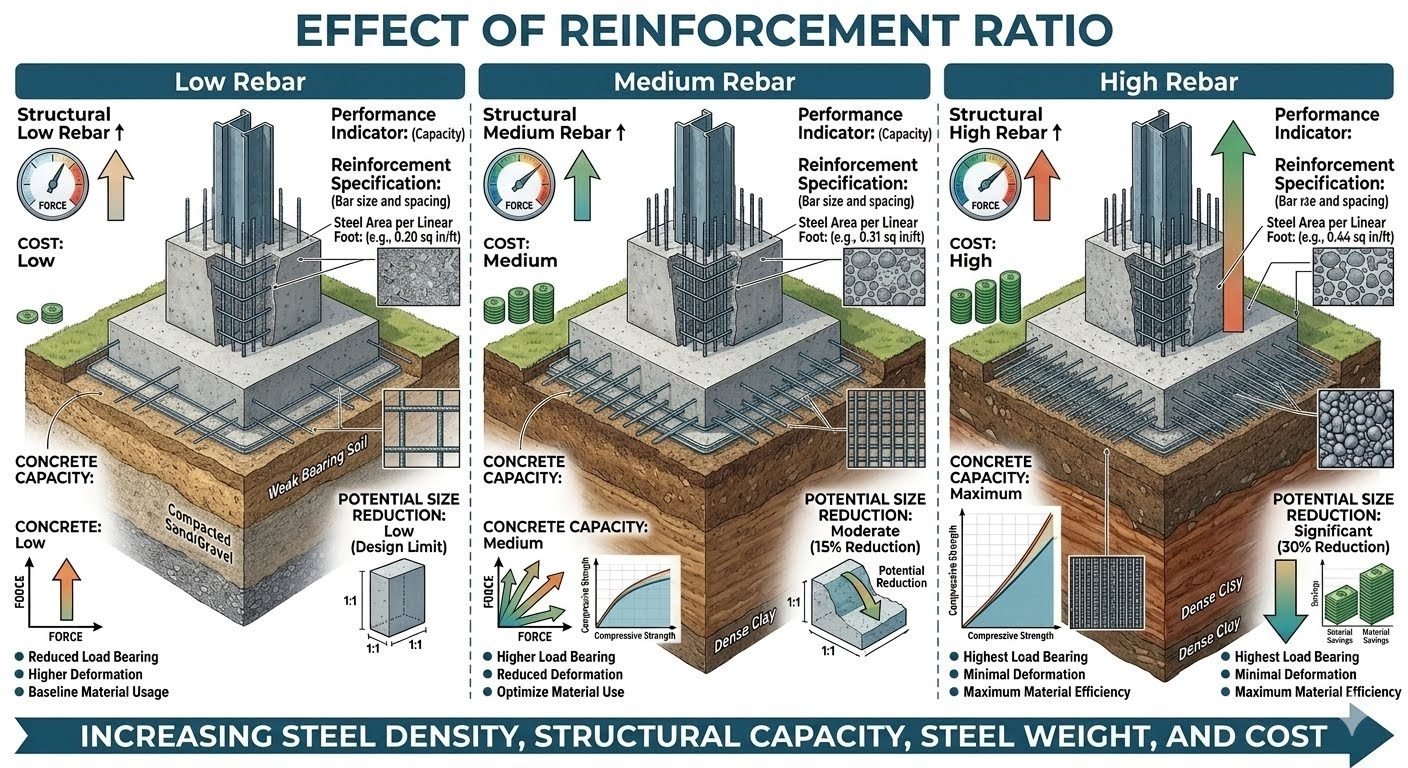
Explore the Effect of Reinforcement Ratio across low, medium, and high rebar configurations. Analyze cost, structural capacity, and size reduction.
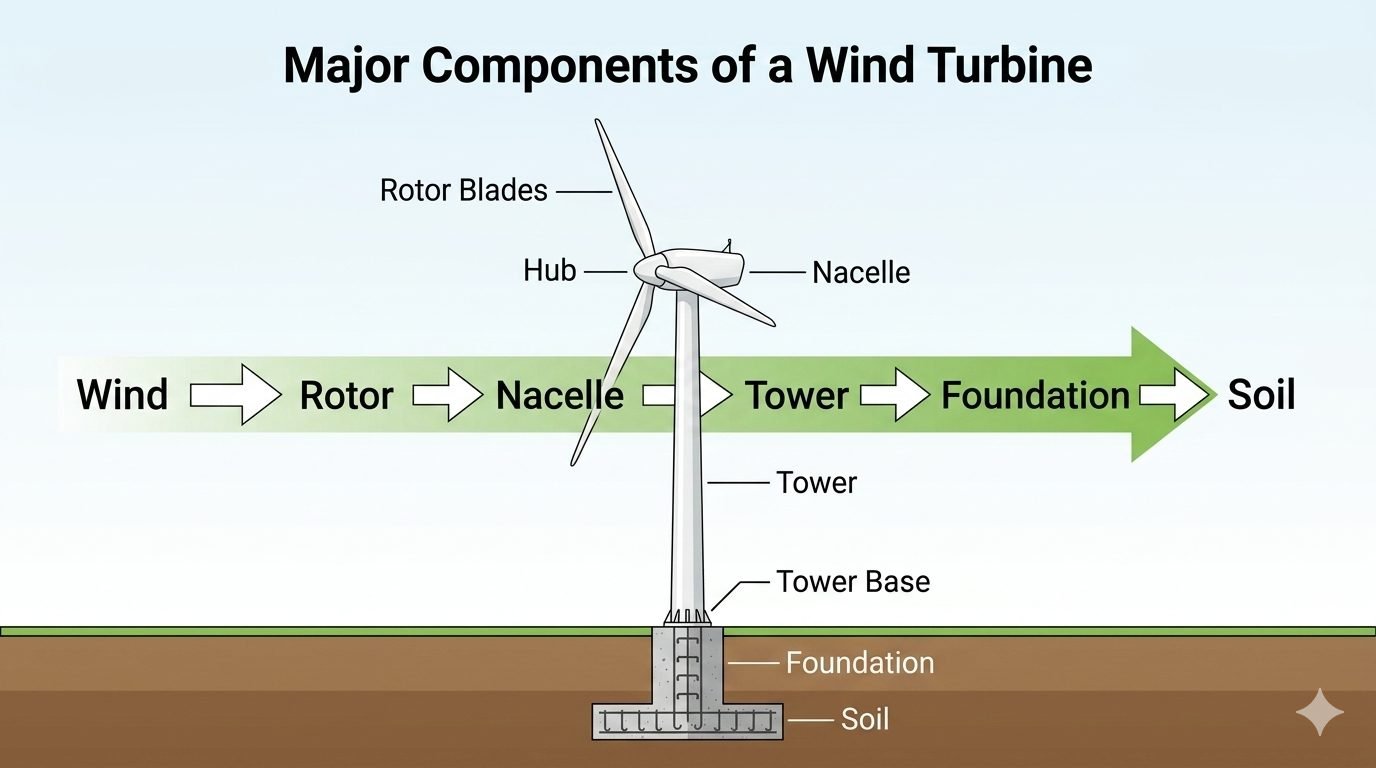
Discover the complete top-to-bottom structural breakdown of wind turbine components, from rotor blades and nacelle to the tower foundation and soil.
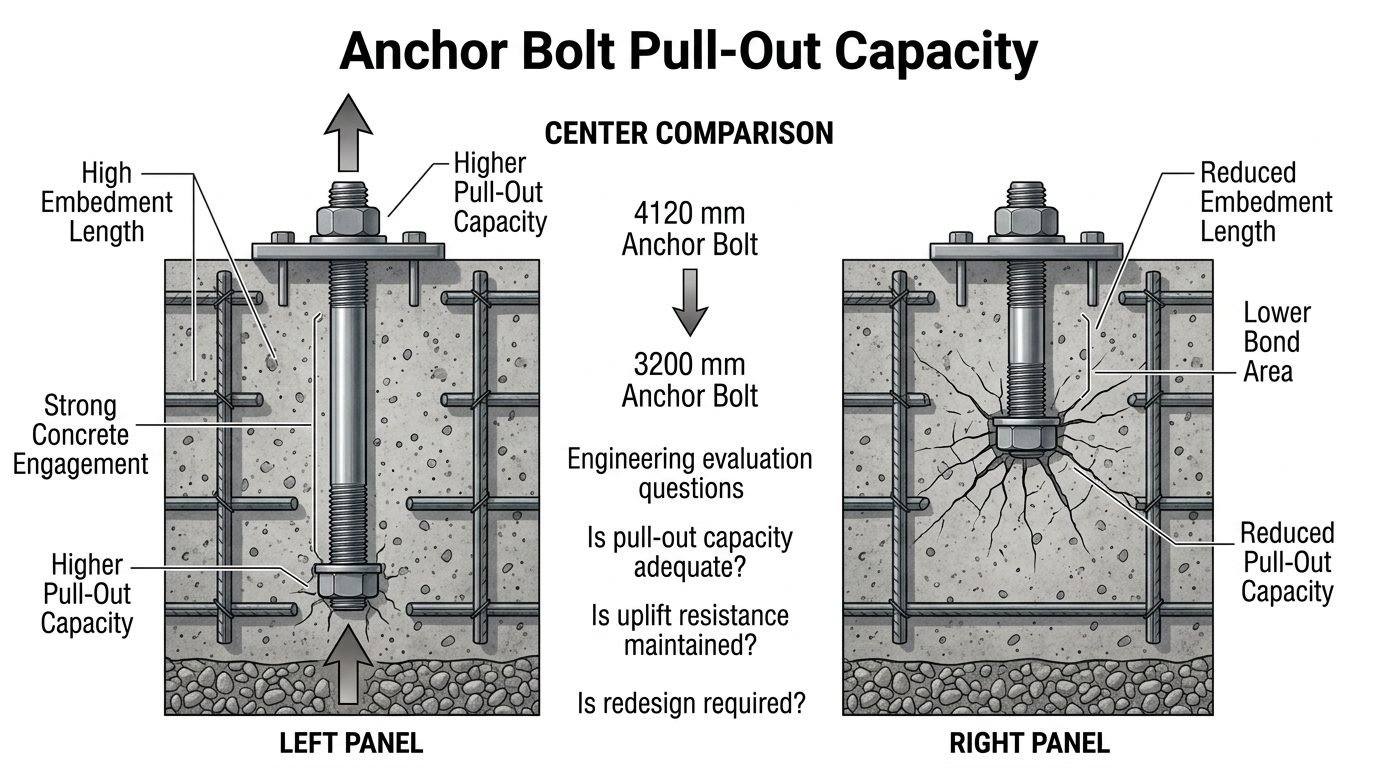
Calculate anchor bolt pull-out capacity using embedment length, concrete engagement, and ACI 318 standards. Avoid structural uplift failures today.
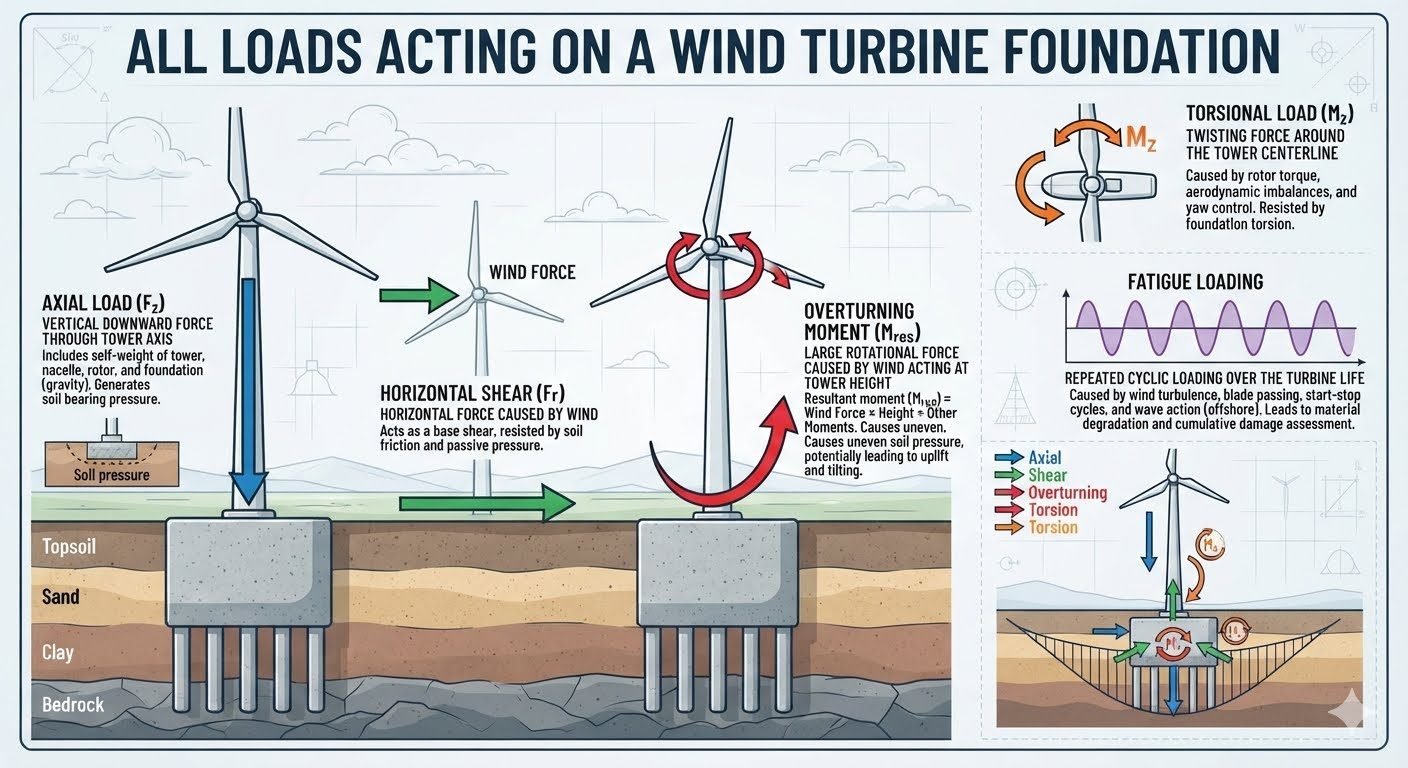
Master the 4 critical wind turbine foundation loads: axial, shear, overturning moment, and torsion. Ensure structural stability using ASME/API standards.
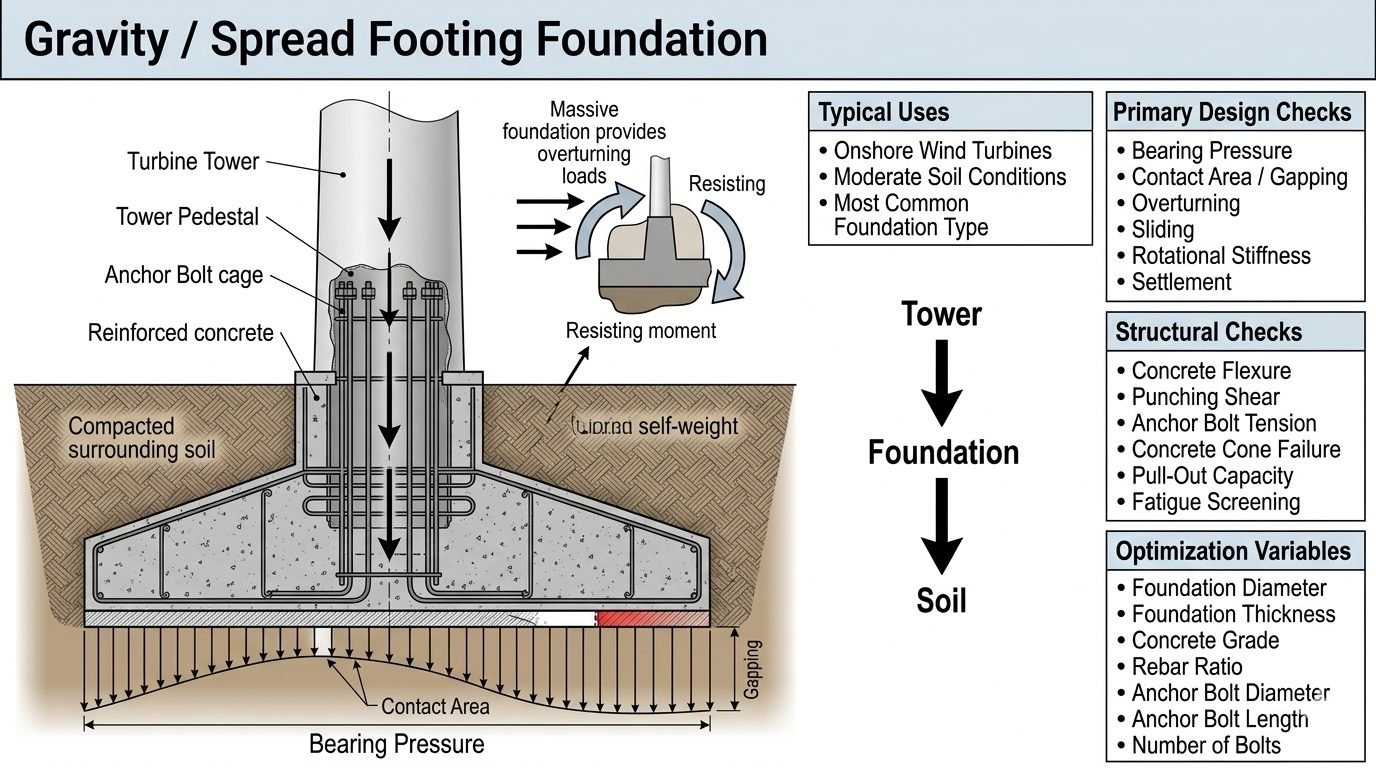
Master wind turbine gravity foundation design with key checks for bearing pressure, sliding, overturning, and anchor bolt tension per standards.