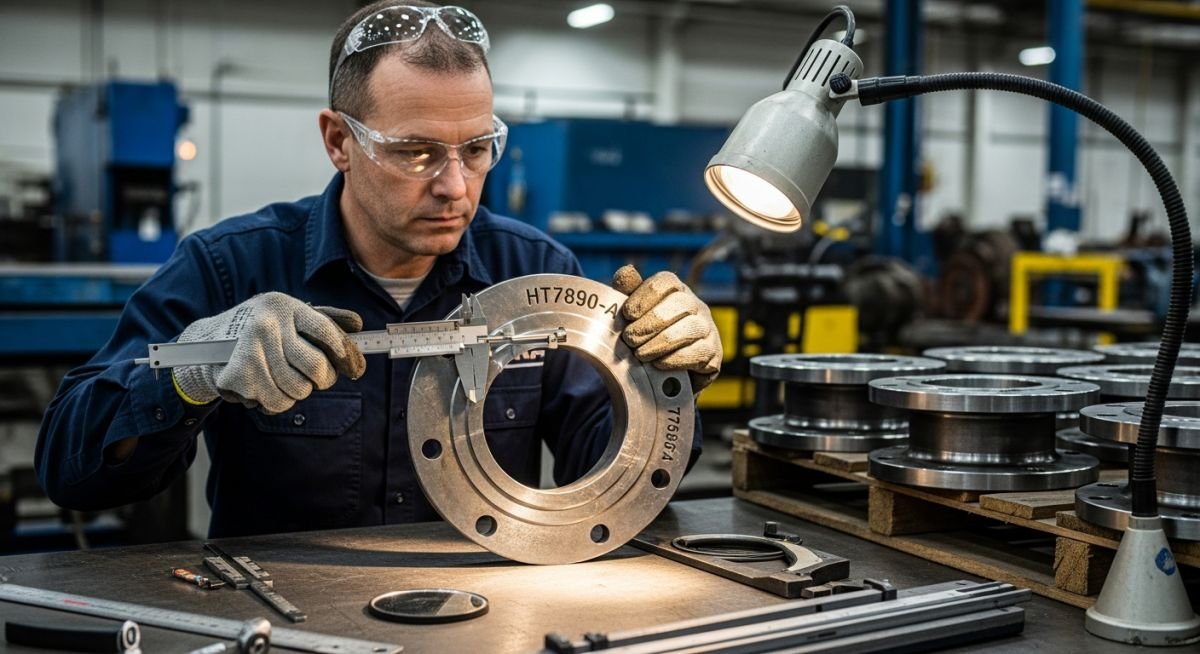
Piping Inspection and Marking: Ensuring Industrial Integrity and Compliance
In my two decades of field experience, I have observed that the most catastrophic piping failures often originate not from complex design errors, but from simple oversights in material verification and improper identification. When a pipe spool arrives on-site without clear, traceable markings, the entire project schedule risks derailment due to the necessity of Positive Material Identification (PMI) re-testing.
This guide serves as your definitive reference for managing the lifecycle of piping components from the manufacturer’s shop floor to final installation. We will dissect the critical requirements for inspection, the logic behind color-coding systems, and the logistics of packing to prevent corrosion and mechanical damage during transit.
Key Takeaways for Piping Professionals
- Master the mandatory ASME B31.3 inspection requirements for pressure-retaining components.
- Implement robust color-coding strategies to eliminate cross-contamination of alloy materials.
- Adopt best-in-class packing techniques to mitigate atmospheric corrosion during long-term storage.
- Ensure full traceability through rigorous documentation and heat number verification.
Piping Inspection and Marking Standards for Global Projects
Piping Inspection and Marking: This technical discipline mandates the rigorous application of material traceability, dimensional accuracy, and surface integrity checks to satisfy the stringent safety requirements of ASME B31.3 and ASME B16.5.
The inspection process begins with the verification of the Mill Test Report (MTR). Every fitting and pipe length must be cross-referenced against the heat number stamped on the component. In my experience, failing to verify the heat number against the MTR is the primary cause of non-conformance reports (NCRs) during the construction phase.
Material Verification and PMI Protocols
Positive Material Identification (PMI) is non-negotiable for high-alloy materials such as stainless steel (300 series) and chrome-moly (P11, P22, P91). Using X-ray fluorescence (XRF) analyzers, inspectors must confirm that the chemical composition aligns with the specified ASTM grade. For instance, a P91 pipe must show a chromium content of 8.0-9.5% and molybdenum of 0.85-1.05%.
Field Warning: Low-Stress Stamping
Never use sharp-edged steel stamps on high-pressure or high-temperature piping components. The stress concentration factor (SCF) introduced by deep, sharp indentations can initiate fatigue cracks under cyclic loading. Always mandate the use of low-stress, round-bottom stamps for all permanent markings on pressure-retaining parts.
Color Coding and Identification Systems
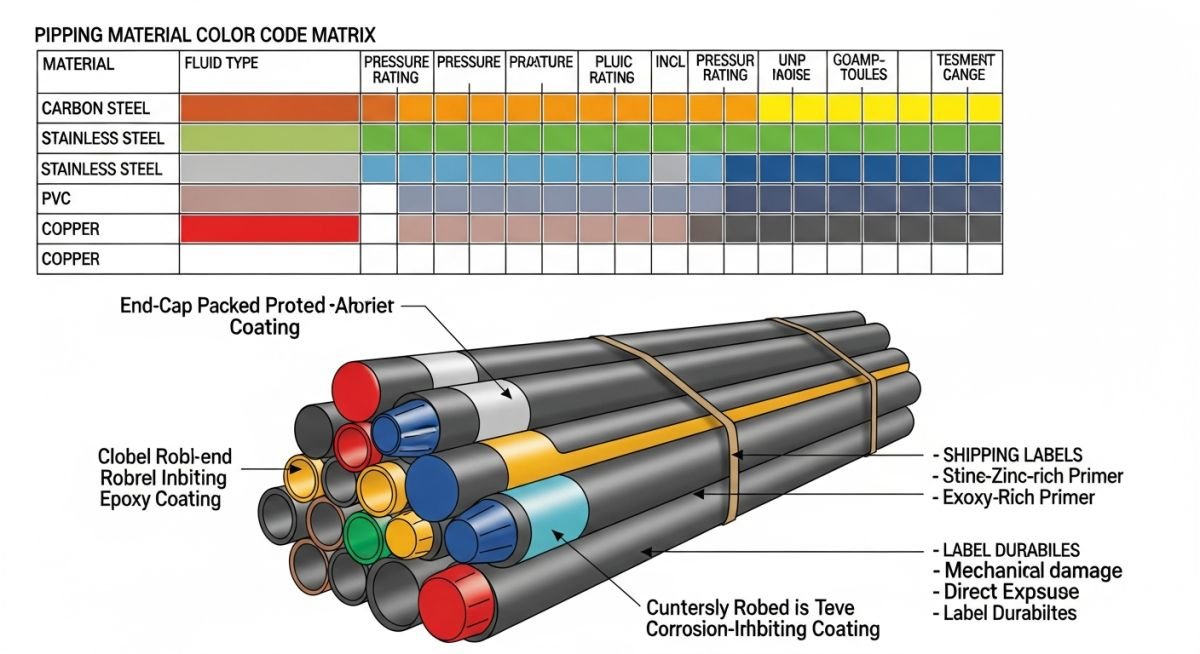
Color coding is not merely for aesthetics; it is a critical safety barrier against the accidental installation of incorrect materials. A common industry practice involves painting a 2-inch wide band at both ends of the pipe. For example, Carbon Steel (A106 Gr. B) might be marked with a yellow band, while 316 Stainless Steel (A312 TP316) is marked with a blue band.
The marking must be durable enough to withstand environmental exposure. I recommend using weather-resistant, lead-free industrial markers or stencils. Ensure that the marking includes the manufacturer’s logo, the ASTM specification, the grade, the schedule, and the heat number. If the pipe is cut, the marking must be transferred to the remaining piece immediately to maintain traceability.
Packing and Preservation Requirements
Packing requirements are dictated by the duration of storage and the environmental conditions of the site. For international shipping, all pipe ends must be protected with plastic or wooden caps to prevent ingress of debris and moisture. For long-term storage in humid environments, I mandate the use of Vapor Corrosion Inhibitors (VCI) inside the pipe bore.
When stacking pipes, use timber dunnage to prevent metal-to-metal contact, which can lead to galvanic corrosion, especially between dissimilar metals. Ensure that the packing list is securely attached to the exterior of the crate in a waterproof pouch, providing a detailed inventory of the contents, including quantities, heat numbers, and dimensions.
Piping Inspection Protocols: This comparative analysis evaluates the operational benefits and logistical challenges associated with standardized material verification and protective packing methodologies in industrial piping projects.
Advantages
- Eliminates material mix-ups through rigorous PMI and heat number tracking.
- Reduces rework costs by identifying non-compliant fittings before installation.
- Extends component service life by preventing atmospheric corrosion during transit.
- Ensures full compliance with ASME B31.3 safety standards.
- Simplifies inventory management and site logistics for large-scale projects.
Disadvantages
- Increases initial procurement and inspection overhead costs.
- Requires specialized training for site personnel to perform accurate PMI.
- Adds complexity to the supply chain due to strict packing and documentation needs.
- Potential for marking degradation if improper paint or ink is utilized.
- Increased lead times for components requiring extensive pre-shipment testing.
Piping System Implementation: These applications demonstrate the critical role of standardized inspection and marking in maintaining structural integrity across diverse high-pressure industrial environments.
High-Pressure Steam Generation
In power generation facilities, the use of P91 and P92 chrome-moly piping requires absolute precision in marking and inspection. Any deviation in material chemistry or improper stamping can lead to creep-rupture failures under high-temperature steam service, necessitating strict adherence to ASME B31.1 and B31.3 protocols.
Cryogenic Liquefied Natural Gas (LNG) Plants
LNG piping systems utilize austenitic stainless steels that remain ductile at extremely low temperatures. Inspection protocols here focus on preventing surface contamination from carbon steel tools, which could induce localized corrosion or stress risers, while packing must ensure the integrity of the insulation-ready surface finish.
Petrochemical Refining and Processing
Refineries handle highly corrosive hydrocarbons, making material traceability a cornerstone of safety. Rigorous color coding and heat number verification ensure that every valve and fitting installed in the process loop matches the design specification, preventing catastrophic leaks in hazardous service environments.
In my two decades of field experience, I have observed that the most common cause of project delays is the failure to reconcile physical material markings with the Mill Test Reports (MTRs). The following table outlines the critical inspection parameters required to maintain compliance with ASME B31.3 and ASTM material specifications. These parameters ensure that every fitting and pipe spool is traceable from the foundry to the final weld.
When reviewing these requirements, remember that marking is not merely for identification; it is a legal record of material integrity. Any deviation from these standards, such as improper low-stress stamping or missing heat numbers, necessitates an immediate quarantine of the affected components to prevent non-conforming materials from entering the pressure boundary.
| Parameter | Standard Reference | Acceptance Criteria |
|---|---|---|
| Material Grade | ASTM A106/A312 | Must match MTR and Purchase Order |
| Heat Number | ASME B31.3 | Permanent, legible, and traceable |
| Wall Thickness | ASME B36.10M | Verified via ultrasonic thickness gauge |
| Marking Method | MSS SP-25 | Low-stress dot or round-bottom stamp |
The following matrix maps the essential entities involved in the piping supply chain to their respective technical standards. As an engineer, I rely on this mapping to ensure that the quality assurance documentation aligns with the physical hardware delivered to the site. This matrix serves as a quick-reference guide for inspectors to verify that all components, from valves to flanges, meet the rigorous demands of high-pressure process environments.
By cross-referencing these entities, you can identify potential gaps in documentation before they become critical path issues. Always ensure that the ASME code edition specified in your project design basis is the one used for these verification steps, as revisions can significantly alter marking and testing requirements.
| Entity | Standard | Primary Function |
|---|---|---|
| Pipe Spools | ASME B31.3 | Pressure containment and transport |
| Flanges | ASME B16.5 | Mechanical joint integrity |
| Valves | API 600/602 | Flow control and isolation |
| Fittings | ASME B16.9 | Directional change and branching |
Effective site verification requires a systematic approach to material receipt. In my experience, skipping these steps leads to costly rework during the construction phase. Use this checklist to validate that all incoming piping components comply with project specifications and international standards before they are released to the fabrication shop or installation crew.
-
Visual Inspection: Check for surface defects, pitting, or mechanical damage that could compromise pressure integrity per ASME B31.3. -
Marking Verification: Ensure heat numbers, material grade, and manufacturer logo are present and match the provided MTRs. -
Dimensional Check: Verify wall thickness and end-to-end dimensions against the isometric drawings and ASME B36.10M. -
Positive Material Identification (PMI): Perform alloy verification on all stainless steel and alloy components to confirm chemical composition. -
Packing Integrity: Inspect crates and bundles for moisture protection, end caps, and secure bracing to prevent transit damage.
Once these checks are completed, sign off on the Material Receiving Report (MRR). If any item fails, it must be tagged with a “Hold” label and moved to the non-conforming material area immediately. Never allow unverified material to be staged in the construction zone, as it creates a significant risk of accidental installation.
The Problem: Mismatched Material Identification
During a major refinery turnaround, we discovered that a batch of high-pressure alloy steel fittings lacked the required heat number traceability, leading to a site-wide work stoppage.
- Manufacturer markings were obscured by heavy protective coating.
- MTRs provided by the vendor did not correlate with the physical heat numbers on the fittings.
- Lack of clear color coding made it impossible to distinguish between carbon steel and alloy steel in the laydown yard.
The Outcome: Implementation of Robust Traceability
We successfully resolved the issue by implementing a strict quarantine and re-verification protocol that saved the project from significant schedule slippage.
- Conducted 100% PMI testing on all suspect components to confirm material chemistry.
- Established a new color-coding system for all incoming materials to prevent future mix-ups.
- Mandated that all future vendors provide digital MTRs linked to physical QR codes on the fittings.
My recommendation is to always perform a pre-shipment inspection at the vendor’s facility. Relying solely on documentation is a recipe for disaster; physical verification is the only way to guarantee the integrity of your piping system.
What are the primary marking requirements for piping components?
- Markings must be legible and durable for the life of the component.
- For high-pressure or high-temperature service, use low-stress stamps to avoid creating stress risers.
- Ensure that heat numbers are clearly marked to maintain traceability back to the original MTR.
How should color coding be applied to piping materials?
- Use paint stripes or color-coded end caps to identify material grades like Carbon Steel, Stainless Steel, or Chrome-Moly.
- Ensure the color code is documented in the project’s Quality Control manual.
- Train all site personnel on the specific color-coding scheme to prevent accidental installation of incorrect materials.
What are the best practices for packing and shipping pipes?
- Use wooden dunnage to separate layers of pipe and prevent metal-to-metal contact.
- Ensure that all bundles are securely strapped and braced within the shipping container.
- For sensitive materials, include desiccant packs to control humidity and prevent internal oxidation.
Why is Positive Material Identification (PMI) required?
- PMI confirms the chemical composition of the alloy using X-ray fluorescence (XRF) or optical emission spectroscopy (OES).
- It is mandatory for critical service lines where material substitution could lead to rapid corrosion or brittle fracture.
- Always document the PMI results for every component and link them to the specific heat number.
How do you handle non-conforming piping materials?
- Issue a Non-Conformance Report (NCR) detailing the specific failure.
- Physically tag the item with a “Hold” or “Reject” label to prevent accidental use.
- Quarantine the item in a designated area until a disposition (repair, return, or scrap) is approved by the project engineer.
What is the role of the Mill Test Report (MTR)?
- Verify that the MTR includes the heat number, chemical analysis, and mechanical test results.
- Ensure the MTR is signed by an authorized representative of the manufacturer.
- Cross-reference the MTR with the physical markings on the pipe to ensure the documentation matches the hardware.
📚 Recommended Resources: Piping Inspection and Marking
Read these Guides
🎓 Advanced Training


Complete Course on
Piping Engineering
Check Now
Key Features
- 125+ Hours Content
- 500+ Recorded Lectures
- 20+ Years Exp.
- Lifetime Access
Coverage
- Codes & Standards
- Layouts & Design
- Material Eng.
- Stress Analysis