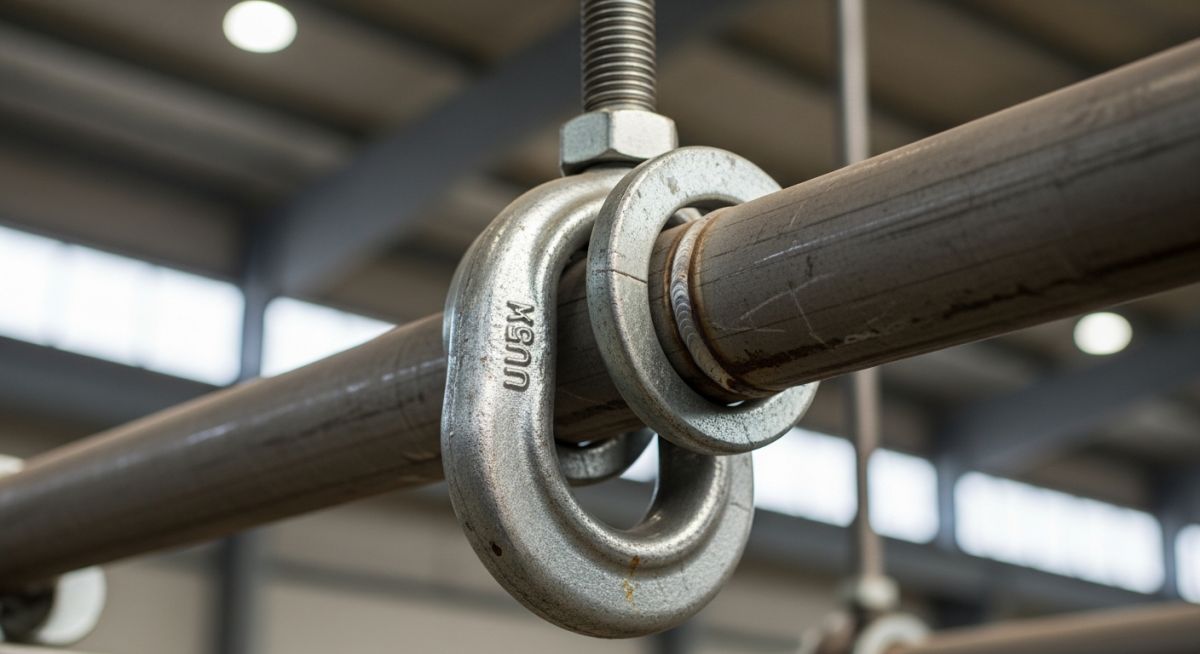
What is a Clevis Hanger and How Does It Support Industrial Piping?
In my 20-plus years of walking refinery decks and supervising piping installations, I have seen many supports fail due to poor selection. The clevis hanger is the workhorse of suspended piping systems, yet it is frequently misunderstood. When you are dealing with heavy-wall carbon steel or delicate copper lines, choosing the correct hanger geometry makes the difference between a stable system and a catastrophic line sag. Let me share the practical realities of using these supports safely.
- Provides up to 2 inches of vertical adjustment during field installation.
- Accommodates thermal movement along the longitudinal axis of the pipe.
- Must be sized correctly to prevent the bottom strap from pinching the pipe wall.
Complete Course on
Piping Engineering
Check Now
Key Features
- 125+ Hours Content
- 500+ Recorded Lectures
- 20+ Years Exp.
- Lifetime Access
Coverage
- Codes & Standards
- Layouts & Design
- Material Eng.
- Stress Analysis
Understanding the Core Design of a Clevis Hanger
Clevis Hanger Components: The structural configuration of a clevis hanger includes an upper yoke, a lower strap, and a load bolt that together distribute the gravitational load of the piping system to the overhead structural attachment in accordance with MSS SP-58 Type 1 specifications.
The mechanical integrity of a suspended piping system relies on the load path. In a standard clevis hanger, the weight of the pipe rests directly on the bottom strap. This load is transferred through the cross bolt (or clevis pin) to the upper yoke, which is threaded onto an overhead hanger rod.
Never use a standard clevis hanger on piping systems with significant lateral or vertical thermal movement. The rigid rod connection cannot absorb lateral shear forces, which leads to rod bending, thread stripping, or structural failure of the overhead anchor.
To calculate the tensile stress on the hanger rod, we use the standard engineering formula:
Where the Design Load (P) includes the weight of the pipe, the process fluid, insulation, and any concentrated loads like valves or instruments. Under ASME B31.3 Section 321, the allowable tensile stress must not exceed the material’s yield strength divided by a safety factor of 3.5.
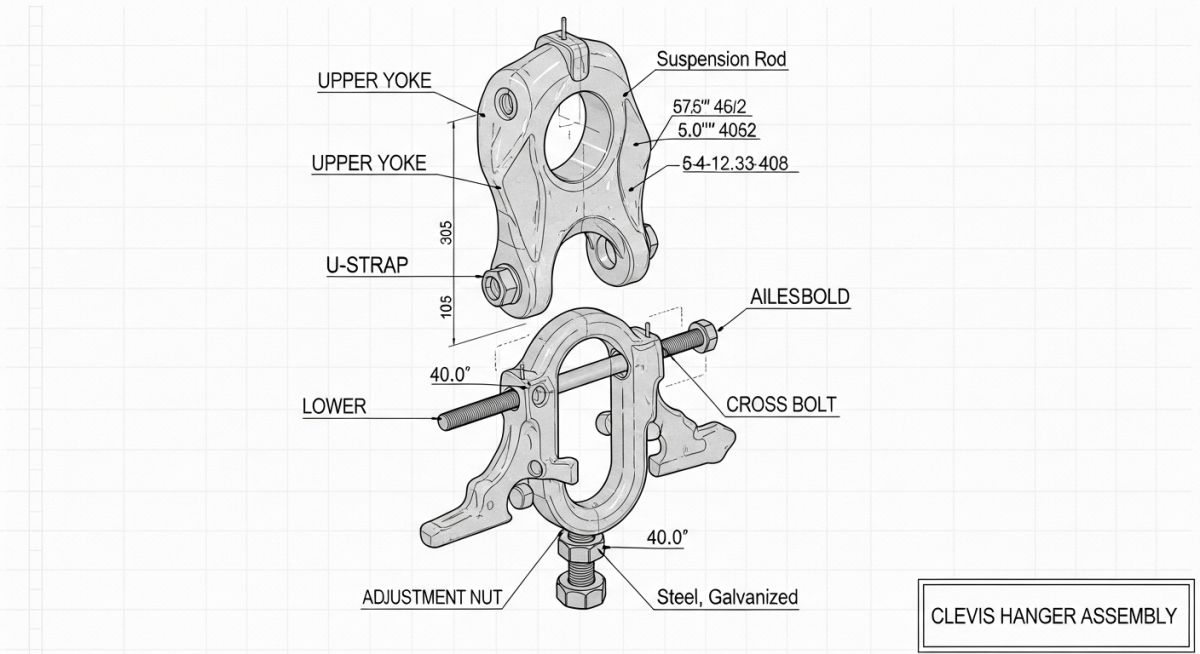
When specifying these supports, you must also consider the temperature of the process fluid. High temperatures reduce the allowable stress of the carbon steel hanger material. For temperatures exceeding 650 degrees Fahrenheit, I always specify alloy steel or hot-dip galvanized finishes to prevent oxidation and creep deformation.
Selecting the Right Clevis Hanger Sizes and Loads
Clevis Hanger Sizing: The selection of hanger dimensions and load ratings must match the nominal pipe size and the maximum operating weight of the piping system to ensure structural integrity under all operating conditions.
The table below outlines the standard load ratings and rod sizes for carbon steel clevis hangers operating at elevated temperatures, compiled in accordance with MSS SP-58 standards.
| Nominal Pipe Size (Inches) | Hanger Rod Diameter (Inches) | Max Recommended Load at 650°F (lbs) | Max Recommended Load at 450°F (lbs) |
|---|---|---|---|
| 2 | 3/8 | 730 | 730 |
| 4 | 5/8 | 1,430 | 1,430 |
| 6 | 3/4 | 1,940 | 1,940 |
| 8 | 7/8 | 2,000 | 2,000 |
| 12 | 7/8 | 3,800 | 3,800 |
Technical Mapping & Specifications Matrix
| Component / Entity | Material Specification | Standard Reference | Primary Function |
|---|---|---|---|
| Upper Yoke | ASTM A36 Carbon Steel | MSS SP-58 Type 1 | Connects to hanger rod and transfers load |
| Bottom Strap | ASTM A36 Carbon Steel | MSS SP-58 Type 1 | Cradles the pipe directly |
| Cross Bolt & Nut | ASTM A307 Grade A | ASME B18.2.1 | Secures the bottom strap to the yoke |
| Hanger Rod | ASTM A193 Grade B7 | ASME B31.3 | Suspends the assembly from structural steel |
Field Inspection Checklist for Pipe Hangers
Hanger Inspection Protocols: Field verification of suspended piping supports requires systematic checks of rod verticality, thread engagement, and clearance gaps to prevent localized pipe wall deformation and structural overloading.
Before signing off on any piping installation, I perform a physical walkdown of the system. Use this field checklist to verify that your hangers are installed correctly and will perform safely under pressure.
-
[ ]
Verify that the hanger rod is within 4 degrees of vertical alignment to prevent bending moments. -
[ ]
Confirm full thread engagement in the adjustment nut (minimum rod penetration equal to rod diameter). -
[ ]
Check that the cross bolt is fully tightened and the locknut is secured against the yoke. -
[ ]
Ensure the bottom strap does not pinch the pipe; a minimum clearance of 1/16 inch is recommended for thermal expansion. -
[ ]
Inspect the structural attachment (beam clamp or weldless eye nut) for signs of deformation or weld cracking.
Field Case Study: Real-World Application
During a turnaround at a petrochemical plant in Texas, I was called to inspect a 12-inch cooling water line. The line was sagging, and several hanger rods had bent. The original contractor had installed standard clevis hangers without accounting for the weight of the water during hydrotesting. The excessive load caused the bottom straps of the hangers to deform, leading to localized pipe buckling and structural failure of the overhead rod threads.
We replaced the deformed supports with heavy-duty clevis hangers rated for the hydrotest load. We also added structural insulation shields to distribute the load evenly across the bottom straps. The system was successfully hydrotested and has operated without any deflection or rod bending for over four years.
My direct recommendation from this event: Always calculate your hanger loads based on the heaviest fluid condition—which is almost always the hydrotest water weight—rather than the lighter operating gas or vapor weight.
Frequently Asked Engineering Questions
What is the maximum temperature limit for a standard carbon steel clevis hanger?
Can I use a clevis hanger on insulated piping systems?
How do I adjust the elevation of a pipe suspended by a clevis hanger?
What is the difference between a clevis hanger and a band hanger?
Why do clevis hangers fail in high-vibration piping systems?
How does MSS SP-58 classify clevis hangers?
===
