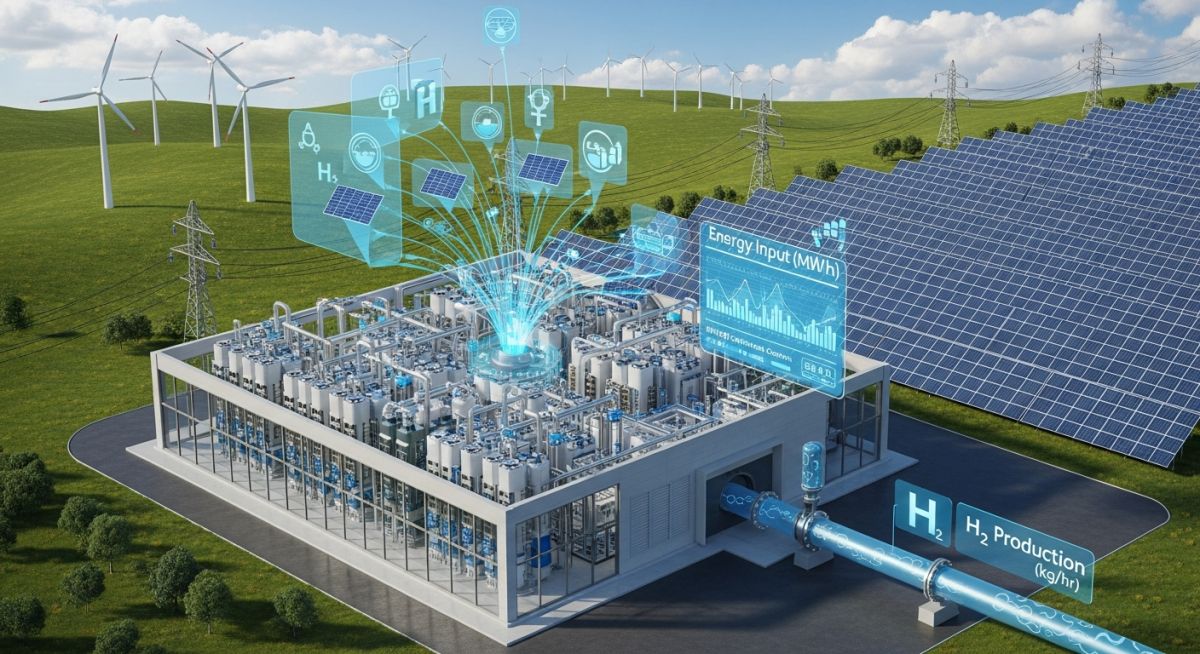
How to Demonstrate RFNBO Compliance in Green Hydrogen Projects
In my two decades of piping and process engineering, I have seen few regulatory shifts as transformative as the EU’s Renewable Fuels of Non-Biological Origin (RFNBO) mandates. Achieving compliance is not merely a paperwork exercise; it is a fundamental design constraint that dictates how we integrate electrolyzers with renewable energy sources. If your project cannot prove that the electricity powering your stack is truly “additional” and synchronized with production, your hydrogen will not qualify as green under the latest delegated acts.
This guide breaks down the technical rigor required to navigate these standards. We will move beyond high-level policy to examine the specific metering, data logging, and verification protocols that auditors demand. Whether you are designing a 100MW PEM facility or a modular alkaline system, the principles of additionality and temporal matching remain the bedrock of your operational license.
Key Takeaways for Project Success:
- Mastering the 1-hour temporal correlation requirement for grid-connected electrolysis.
- Implementing high-fidelity metering to satisfy RED III audit trails.
- Navigating the “additionality” evidence requirements for PPA-backed renewable energy.
- Structuring documentation to survive third-party certification under the CertifHy or ISCC PLUS schemes.
Technical Requirements for RFNBO Compliance
RFNBO Compliance Engineering: The technical integration of renewable power sources with electrolysis units, requiring precise adherence to delegated acts regarding hourly matching and geographic proximity to ensure carbon intensity thresholds are maintained.
To demonstrate RFNBO compliance, engineers must treat the power supply as a critical process fluid. The core challenge lies in the “Additionality” requirement, which mandates that the renewable energy source must be commissioned no more than 36 months before the electrolyzer. From a design perspective, this forces a tight coupling between the Power Purchase Agreement (PPA) and the physical plant commissioning schedule. We must verify that the renewable installation is not receiving other operational support, which requires a deep dive into the financial and regulatory history of the wind or solar farm.
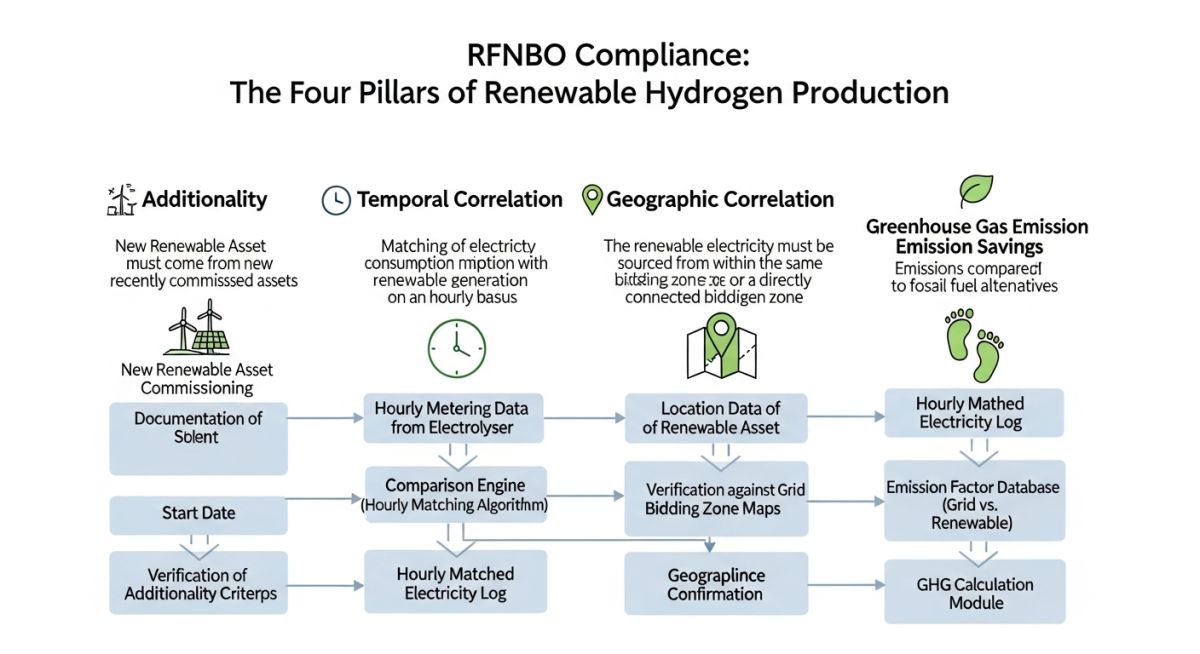
Temporal matching is perhaps the most rigorous technical hurdle. Under the current delegated acts, the production of hydrogen must be matched with renewable electricity on an hourly basis. This means your SCADA system must be capable of logging both the electrolyzer power consumption and the renewable generation profile with a resolution of 60 minutes or less. If the grid is used, the system must prove that the renewable energy was available at the exact time of production, accounting for transmission losses and grid congestion.
Critical Design Limitation:
If your facility relies on grid-connected power, you must implement a “Net-Zero” hourly balance. Any hour where the renewable generation is lower than the electrolyzer demand requires the purchase of Guarantees of Origin (GOs) that match the specific renewable source, or the electrolyzer must be curtailed. Failure to maintain this hourly balance results in the hydrogen being classified as “grey” or “fossil-based,” rendering it ineligible for RFNBO subsidies.
Geographic matching adds another layer of complexity. The renewable source must be located within the same bidding zone as the electrolyzer, or in an interconnected bidding zone where the price of electricity is equal to or higher than the electrolyzer’s zone. This requires a thorough analysis of the ENTSO-E market data. I recommend building a digital twin of your energy balance that pulls real-time data from the local Transmission System Operator (TSO) to ensure that your PPA strategy remains compliant throughout the project lifecycle.
RFNBO Compliance Trade-offs: The strategic evaluation of the operational and financial impacts of adhering to strict EU renewable energy mandates for hydrogen production facilities.
Advantages
- Market Access: Enables participation in high-value green hydrogen markets and subsidy schemes.
- Regulatory Future-Proofing: Aligns facility design with long-term EU decarbonization trajectories.
- Carbon Intensity Reduction: Ensures the lowest possible lifecycle carbon footprint for the produced hydrogen.
- Investor Confidence: Provides a transparent, auditable framework that satisfies ESG reporting requirements for project financing.
Disadvantages
- High Operational Complexity: Requires sophisticated SCADA integration for hourly temporal matching.
- Increased CAPEX: Necessity for dedicated renewable assets or complex PPA structures increases initial investment.
- Curtailment Risks: Strict hourly matching may force electrolyzer downtime during low-wind or low-sun periods.
- Audit Burden: Demands rigorous, continuous documentation and third-party verification, increasing administrative overhead.
RFNBO Compliance Implementation: The practical deployment of renewable hydrogen production systems across heavy industry and transport sectors to meet stringent EU sustainability benchmarks.
Industrial Feedstock Decarbonization
Large-scale ammonia and methanol production facilities are increasingly integrating PEM electrolyzers to replace steam methane reforming. By demonstrating RFNBO compliance, these plants can certify their feedstock as green, allowing them to produce “green ammonia” that meets the stringent requirements of the fertilizer and shipping industries.
Heavy-Duty Transport Refueling Hubs
Hydrogen refueling stations for long-haul trucking require a consistent, certified supply of green hydrogen to qualify for transport-sector decarbonization credits. Compliance with RFNBO standards ensures that the hydrogen dispensed at the pump is fully traceable to renewable sources, providing a critical competitive advantage in the logistics market.
Steel Manufacturing (Direct Reduction)
The transition to hydrogen-based direct reduction of iron (DRI) requires massive volumes of green hydrogen to replace coking coal. RFNBO compliance is essential for steelmakers to market their output as “green steel,” which commands a significant price premium and satisfies the growing demand for low-carbon construction materials in the EU.
Grid Balancing and Energy Storage
Electrolyzers acting as flexible loads can provide grid services while simultaneously producing green hydrogen. By adhering to RFNBO temporal matching, these facilities can optimize their production cycles to coincide with periods of renewable energy surplus, effectively acting as a massive, long-duration energy storage system for the grid.
Demonstrating compliance with Renewable Fuels of Non-Biological Origin (RFNBO) mandates requires a rigorous alignment between renewable energy procurement and hydrogen production cycles. The following table outlines the critical operational parameters that engineers and project managers must track to satisfy the European Union’s Renewable Energy Directive (RED III). These parameters are not merely administrative; they dictate the physical configuration of the electrolyzer plant, the sizing of behind-the-meter renewable assets, and the logic of the energy management system (EMS).
Engineers must ensure that the data acquisition systems are capable of logging these variables at high resolution to support future audits. Failure to maintain these specific thresholds can result in the reclassification of the hydrogen output, rendering it ineligible for EU ETS credits or other decarbonization incentives. Pay close attention to the correlation between the electrolyzer duty cycle and the intermittent nature of the renewable source, as this is the primary point of failure in most compliance audits.
| Parameter | Compliance Metric | Standard Reference |
|---|---|---|
| Additionality | Asset commissioning date within 36 months | Delegated Act 2023/1184 |
| Temporal Correlation | Hourly matching (transitioning to 15-min) | RED III Article 27 |
| Geographic Scope | Same bidding zone or interconnected zone | Delegated Act 2023/1184 |
| GHG Emission Savings | Minimum 70% reduction vs fossil baseline | RED II Annex V |
The complexity of RFNBO compliance stems from the intersection of electrical grid topology, hydrogen production kinetics, and regulatory accounting. This matrix maps the core technical entities involved in a green hydrogen project to their respective regulatory requirements. By understanding these relationships, project teams can better design the digital infrastructure required for automated compliance reporting.
Each entity listed below represents a critical node in the chain of custody for renewable energy. For instance, the Power Purchase Agreement (PPA) is not just a financial contract; it is a technical document that must specify the delivery profile of the renewable energy to ensure it meets the temporal matching requirements. Similarly, the electrolyzer control system must be integrated with the grid-metering infrastructure to provide the granular data required for ISO 14064 verification.
| Entity | Function | Standard |
|---|---|---|
| Electrolyzer Stack | Conversion of electricity to H2 | ISO 22734 |
| Smart Metering | High-resolution energy logging | EN 50470-3 |
| PPA Contract | Renewable energy procurement proof | Delegated Act 2023/1184 |
| Certification Body | Independent audit and verification | RED III Article 30 |
RFNBO Compliance Verification: Achieving full compliance requires a systematic site-level audit of all energy inputs and hydrogen outputs. This checklist serves as a foundational tool for project engineers to validate that their facility meets the stringent requirements set forth in the European Union’s Delegated Act on RFNBOs.
- Additionality Validation: Confirm that the renewable energy source (wind/solar) was commissioned no more than 36 months prior to the electrolyzer, or that it is part of a repowering project.
- Temporal Matching: Verify that the energy management system (EMS) logs electricity consumption and renewable generation at hourly intervals, ensuring no net-negative balance.
- Geographic Constraints: Ensure the renewable asset is located within the same bidding zone as the electrolyzer, or that the grid connection is not congested.
- Metering Accuracy: Calibrate all flow meters and electricity sub-meters to meet the accuracy requirements specified in IEC standards for fiscal metering.
- Data Integrity: Implement a secure, immutable data logging system to prevent tampering with energy consumption records during the audit period.
- Audit Readiness: Compile a comprehensive dossier containing PPA contracts, grid connection agreements, and monthly energy balance reports for the certifying body.
Each item on this list must be signed off by the project lead and the independent auditor. In my experience, the most common point of failure is the lack of granular data during the commissioning phase. Ensure your SCADA system is configured to store at least 24 months of historical data to satisfy the initial audit requirements.
Problem: Grid Congestion and Temporal Mismatch
A 20MW green hydrogen facility faced significant challenges in proving RFNBO compliance due to frequent grid congestion in their local bidding zone, which prevented the full utilization of their contracted wind power.
- Inconsistent temporal matching between wind generation peaks and electrolyzer operation.
- Lack of granular sub-metering at the electrolyzer stack level.
- Regulatory uncertainty regarding the definition of “congested” bidding zones.
- High administrative burden in reconciling PPA data with grid operator reports.
Outcome: Optimized EMS and Compliance Certification
By implementing a predictive energy management system and upgrading to high-precision fiscal meters, the facility successfully achieved full RFNBO certification within 12 months.
- Achieved 98% temporal matching accuracy through predictive load shifting.
- Reduced administrative audit time by 40% using automated reporting software.
- Successfully secured EU ETS credits for the entire hydrogen production volume.
- Established a robust data trail that satisfied the independent auditor’s requirements.
Recommendation: For projects facing similar grid constraints, I strongly recommend investing in behind-the-meter battery energy storage systems (BESS). This allows for the decoupling of renewable generation from electrolyzer demand, effectively solving the temporal matching problem while simultaneously providing grid services that can improve project ROI.
Frequently Asked Engineering Questions
How does the 36-month additionality rule work?
- Projects must provide commissioning certificates for the renewable asset.
- Repowering existing assets is permitted if it increases capacity by at least 25%.
- The rule applies to all direct-line and PPA-based procurement models.
What constitutes a congested bidding zone?
- TSO reports are the primary evidence for congestion status.
- Projects in congested zones may need to prove that their operation does not exacerbate grid stress.
- Geographic matching is strictly enforced to prevent “greenwashing” via grid imports.
Are there exceptions for temporal matching?
- Monthly matching is a temporary derogation, not a permanent exemption.
- Projects must still demonstrate that the energy is sourced from renewable assets.
- Transitioning to hourly matching early is recommended to future-proof the facility.
How is GHG emission saving calculated?
- Lifecycle analysis includes upstream emissions, electricity production, and transport.
- Emissions from the grid mix must be accounted for if the renewable source is unavailable.
- Standardized methodologies are provided in RED II Annex V.
What documentation is required for audits?
- Maintain a digital ledger of all energy inputs and hydrogen outputs.
- Ensure all meters are certified and calibrated according to national standards.
- Keep records of all maintenance and calibration activities for the metering equipment.
Can I use grid electricity for RFNBO?
- The PPA must be specific to the renewable asset.
- The grid must be capable of delivering the power without violating the geographic constraints.
- All grid-based procurement must be verified by an independent third party.
Complete Course on
Piping Engineering
Check Now
Key Features
- 125+ Hours Content
- 500+ Recorded Lectures
- 20+ Years Exp.
- Lifetime Access
Coverage
- Codes & Standards
- Layouts & Design
- Material Eng.
- Stress Analysis
