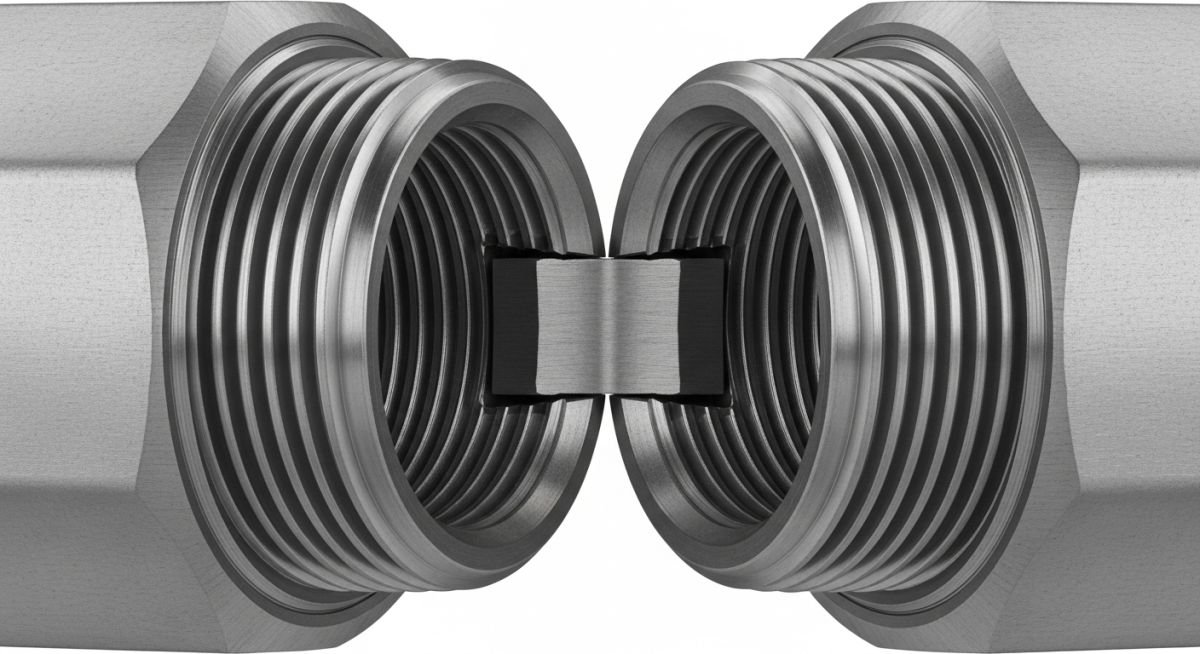
Overview of Pipe Coupling and Pipe Coupling Types
In my two decades of field experience, I have observed that the humble pipe coupling is often the most overlooked component in a piping system, yet it remains the primary point of failure if specified incorrectly. Whether you are dealing with high-pressure steam or corrosive chemical slurries, understanding the nuances of coupling geometry—be it threaded, socket-weld, or mechanical—is non-negotiable for system integrity.
This guide dissects the technical requirements for selecting the right coupling, ensuring your piping infrastructure meets the rigorous demands of modern industrial environments. We will move beyond basic definitions to explore the mechanical stress profiles and material constraints that dictate long-term performance.
Key Takeaways for Piping Engineers
- Master the pressure-temperature ratings for Class 3000 and 6000 fittings.
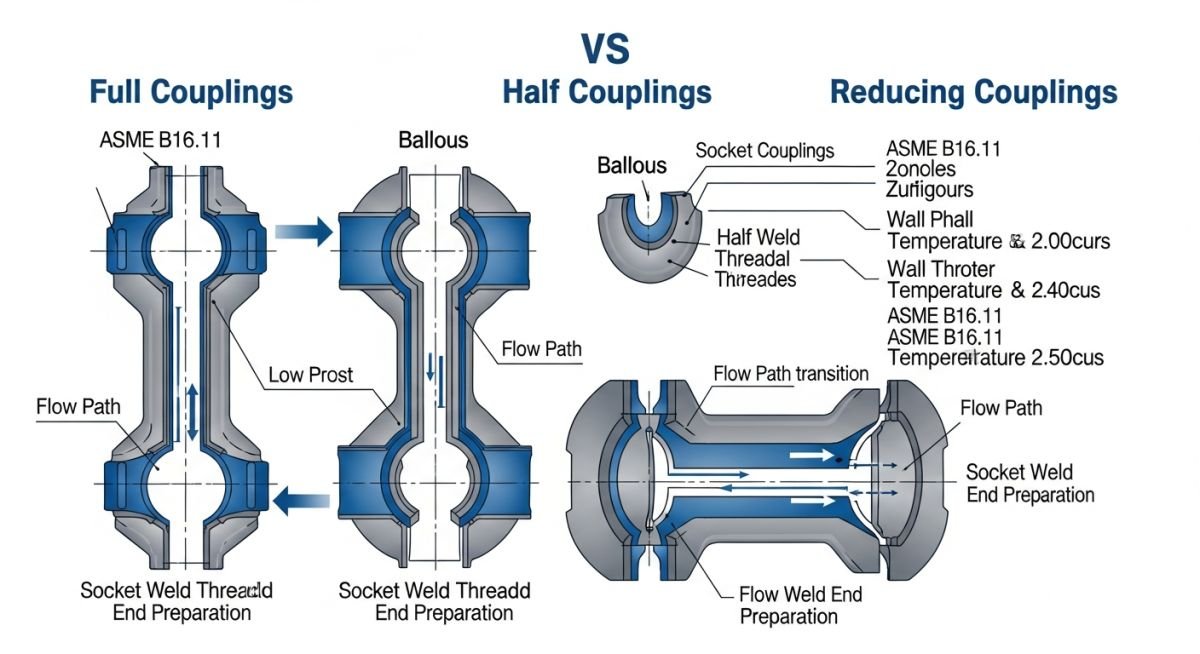
- Understand the critical difference between full and half-couplings in branch connections.
- Learn to mitigate galvanic corrosion through proper material selection in coupling joints.
- Apply ASME B16.11 dimensional tolerances to ensure fit-up accuracy during site installation.
Technical Analysis of Pipe Coupling and Pipe Coupling Types
Pipe Coupling Engineering: The technical evaluation of internal and external connection geometries designed to maintain pressure boundary integrity under cyclic loading and thermal expansion conditions.
When I evaluate a piping system, the first step is determining the appropriate coupling type based on the ASME B16.11 standard. This standard governs forged steel fittings, including threaded and socket-welding couplings. For high-pressure applications, we typically specify Class 3000 or Class 6000 fittings. The “Class” designation is not a direct pressure rating but a reference to the wall thickness and pressure-temperature capability relative to the pipe schedule.
Stress Parameters and Design Limitations
The structural integrity of a coupling is defined by its ability to withstand hoop stress and longitudinal stress. In threaded couplings, the thread root acts as a stress riser. I always advise against using threaded couplings in services subject to severe vibration or thermal cycling, as the notch sensitivity of the threads can lead to fatigue cracking.
Field Warning: Threaded Joint Limitations
Per ASME B31.3, threaded joints are restricted in certain hazardous fluid services. Always verify the fluid category (Category D, M, or High Pressure) before specifying threaded couplings. If the service involves cyclic temperature fluctuations exceeding 50 degrees Celsius, consider transitioning to socket-weld or butt-weld connections to prevent leakage at the thread interface.
Socket-weld couplings offer a superior alternative for small-bore piping (typically 2 inches and smaller). The pipe is inserted into the coupling socket, leaving a small gap (approximately 1.5mm to 3mm) before welding. This gap is critical; it prevents the weld from cracking due to thermal expansion of the pipe against the bottom of the socket. In my experience, failing to maintain this gap is the leading cause of premature weld failure in socket-welded systems.
Material Compatibility and Corrosion
Material selection must align with the piping specification (Piping Class). For carbon steel systems, ASTM A105 is the industry standard for forged couplings. If the process fluid is corrosive, we must upgrade to stainless steel grades like ASTM A182 F316/F316L. The coupling material must match the pipe material to prevent galvanic corrosion, which occurs when two dissimilar metals are in contact in the presence of an electrolyte.
Coupling Performance Metrics: The comparative analysis of mechanical joint reliability, installation labor costs, and long-term maintenance requirements for industrial piping systems.
Advantages
- Threaded couplings allow for rapid disassembly and maintenance in non-critical utility lines.
- Socket-weld couplings provide a robust, leak-proof seal for high-pressure small-bore piping.
- Reducing couplings simplify transitions between different pipe diameters without complex swaging.
- Standardized dimensions per ASME B16.11 ensure global interchangeability of components.
- Forged construction provides higher structural density compared to cast fittings.
Disadvantages
- Threaded joints are highly susceptible to fatigue failure under vibration.
- Socket-weld gaps require precise field measurement, increasing installation labor time.
- Internal crevices in couplings can trap corrosive fluids, leading to crevice corrosion.
- Threaded connections require sealant or tape, which may be incompatible with process fluids.
- High-pressure ratings require thicker walls, increasing the overall weight of the piping system.
Industrial Piping Integration: The practical deployment of pipe couplings across diverse sectors, focusing on pressure containment and system modularity.
High-Pressure Hydraulic Power Units
In hydraulic systems, socket-weld couplings are utilized to maintain high-pressure integrity where threaded connections would fail under pressure spikes. These couplings ensure the hydraulic fluid remains contained within the circuit, preventing catastrophic leaks that could lead to equipment downtime or safety hazards.
Chemical Processing Plant Utility Lines
Threaded couplings are frequently employed in non-hazardous utility lines, such as instrument air or cooling water, where ease of maintenance is prioritized. By using standardized threaded components, maintenance teams can quickly replace sections of piping without the need for hot-work permits or specialized welding equipment.
Steam Distribution Manifolds
In steam distribution, reducing couplings are essential for connecting branch lines to main headers. These components must be specified with high-temperature ratings to withstand the thermal expansion and contraction cycles inherent in steam service, ensuring the joint remains tight over years of operation.
Selecting the correct pipe coupling requires a rigorous understanding of the pressure-temperature (P-T) ratings defined by ASME B16.11. These ratings are not arbitrary; they are derived from the material’s yield strength at elevated temperatures and the specific geometry of the fitting. When I evaluate a piping system, I prioritize the pressure class—typically 2000, 3000, or 6000—to ensure the wall thickness provides sufficient reinforcement against hoop stress and thermal expansion cycles.
The table below outlines the relationship between the nominal pipe size and the corresponding pressure class for threaded and socket-weld couplings. It is vital to recognize that these ratings assume the use of compatible piping materials, such as ASTM A105 for carbon steel or ASTM A182 for stainless steel. If your process fluid involves high-cycle vibration or thermal shock, you must apply a derating factor to these nominal values to maintain the integrity of the mechanical joint over the design life of the facility.
| Pressure Class | Threaded (NPS) | Socket-Weld (NPS) | Typical Application |
|---|---|---|---|
| 2000 | 1/8 to 4 | N/A | Low-pressure utility lines |
| 3000 | 1/8 to 4 | 1/8 to 3 | Process piping, hydrocarbons |
| 6000 | 1/8 to 2 | 1/8 to 2 | High-pressure hydraulic/steam |
Always verify that the coupling material matches the pipe schedule to prevent galvanic corrosion or weld incompatibility. In my experience, failing to cross-reference the fitting class with the pipe wall thickness is the most common cause of premature joint failure in high-pressure steam systems.
The following matrix maps the critical technical entities involved in pipe coupling selection. As a piping engineer, I rely on these standardized parameters to ensure that every component—from the coupling body to the sealing mechanism—meets the stringent requirements of international codes. This mapping helps in identifying the correct material grade, pressure rating, and connection type for specific process conditions.
By aligning these entities with the relevant ASME and ASTM standards, we minimize the risk of procurement errors and ensure that the final assembly is compliant with safety regulations. This matrix serves as a quick-reference guide for design reviews and site inspections, ensuring that all stakeholders are aligned on the technical specifications of the piping components.
| Entity | Standard | Key Parameter |
|---|---|---|
| Forged Steel Coupling | ASME B16.11 | Pressure Class (3000/6000) |
| Carbon Steel Material | ASTM A105 | Yield Strength (36 ksi) |
| Stainless Steel Material | ASTM A182 | Corrosion Resistance |
| Threaded Connection | ASME B1.20.1 | NPT Tapered Threads |
Pipe Coupling Selection and Installation: Proper installation of pipe couplings is the final line of defense against leaks and structural failure. Before any joint is finalized, I mandate a rigorous verification process to ensure that the components meet the design specifications and that the installation environment is conducive to a long-term, leak-free seal.
- Material Compatibility: Verify that the coupling material (e.g., ASTM A105) matches the pipe material to prevent galvanic corrosion.
- Pressure Rating Check: Confirm the fitting class (3000/6000) meets or exceeds the maximum allowable working pressure (MAWP) of the line.
- Thread Inspection: Ensure NPT threads are clean, free of burrs, and properly lubricated with an approved sealant per ASME B1.20.1.
- Socket-Weld Gap: For socket-weld couplings, verify the 1/16-inch expansion gap is maintained before welding to prevent thermal stress cracking.
- Alignment Verification: Check that the pipe ends are square and properly aligned to avoid inducing bending moments on the coupling.
- Final Pressure Test: Perform a hydrostatic test at 1.5 times the design pressure to validate the integrity of the mechanical joint.
In my experience, the most common oversight is the failure to maintain the expansion gap in socket-weld fittings. Without this gap, the thermal expansion of the pipe during operation can force the pipe end against the bottom of the socket, leading to weld failure. Always document these checks in your site quality assurance log to ensure full traceability and compliance with project specifications.
Problem: Recurring Leaks in High-Pressure Steam Line
A petrochemical facility experienced persistent leaks at threaded coupling joints in a 2-inch high-pressure steam line, leading to significant downtime and safety risks.
- Use of incorrect pressure class (2000 instead of 6000) for the operating temperature.
- Inadequate thread sealant application leading to thermal degradation of the joint.
- Excessive vibration from nearby reciprocating pumps causing fatigue at the threaded interface.
- Lack of proper pipe support, placing bending stress directly on the coupling.
Outcome: Successful Remediation and System Stabilization
By implementing a comprehensive overhaul of the joint design, we achieved a 100% reduction in leak incidents over the following 24-month operational period.
- Upgraded all couplings to 6000-class forged steel per ASME B16.11.
- Transitioned from threaded to socket-weld connections to eliminate vibration-induced fatigue.
- Installed additional spring-loaded pipe supports to isolate the joints from thermal expansion loads.
- Implemented a mandatory torque and inspection protocol for all future maintenance activities.
My recommendation for similar high-vibration environments is to prioritize welded connections over threaded ones whenever possible. If threaded joints are unavoidable, ensure they are properly braced and that the pressure class is conservatively selected to account for the stress concentration factors inherent in NPT threads.
Frequently Asked Engineering Questions
What is the primary difference between 3000 and 6000 class couplings?
- 3000-class couplings are designed for standard process piping where pressures are moderate.
- 6000-class couplings feature significantly thicker walls to withstand higher internal pressures and mechanical stresses.
- Selection is governed by ASME B16.11, which dictates the minimum dimensions for each class.
- Choosing the wrong class can lead to catastrophic failure if the internal pressure exceeds the fitting’s yield capacity.
Why is the 1/16-inch gap required for socket-weld couplings?
- Without this gap, the pipe can expand against the bottom of the socket, creating high localized stress.
- This stress often leads to cracking in the weld fillet, which is a common failure point in high-temperature systems.
- The requirement is explicitly stated in ASME B31.3 for process piping.
- Always verify this gap using a gap gauge or by pulling the pipe back slightly before welding.
Can I use threaded couplings in high-vibration environments?
- Vibration induces fatigue at the root of the NPT threads, which act as stress concentrators.
- Over time, this fatigue leads to loosening of the joint and subsequent leakage.
- If threaded joints are necessary, they must be fully supported and braced to minimize movement.
- Welded connections are the industry-standard solution for mitigating vibration-related joint failure.
What material standards apply to forged steel couplings?
- For corrosive or high-temperature environments, ASTM A182 (stainless steel) is the standard choice.
- These materials provide the necessary ductility and strength required for high-pressure service.
- Always ensure the material test report (MTR) matches the project’s material specification.
- Using non-standard materials can lead to premature failure and non-compliance with safety codes.
How do I ensure proper thread engagement for NPT couplings?
- Start by hand-tightening the joint to ensure the threads are properly aligned.
- Apply the specified number of turns with a wrench to achieve the required seal.
- Use an approved thread sealant to fill the voids between the threads and prevent leaks.
- Over-tightening can damage the threads and compromise the integrity of the coupling.
What is the role of ASME B16.11 in piping design?
- It defines the pressure-temperature ratings, dimensions, and tolerances for these components.
- Adherence to this standard ensures that fittings are interchangeable and meet global safety requirements.
- It provides the technical foundation for selecting the correct fitting class for any given process condition.
- Engineers rely on this standard to ensure that the piping system is robust, reliable, and compliant with regulatory mandates.
📚 Recommended Resources: Pipe Coupling
Read these Guides
🎓 Advanced Training


Complete Course on
Piping Engineering
Check Now
Key Features
- 125+ Hours Content
- 500+ Recorded Lectures
- 20+ Years Exp.
- Lifetime Access
Coverage
- Codes & Standards
- Layouts & Design
- Material Eng.
- Stress Analysis
