Understanding Black Steel Pipes vs Carbon Steel Pipes in Piping Systems
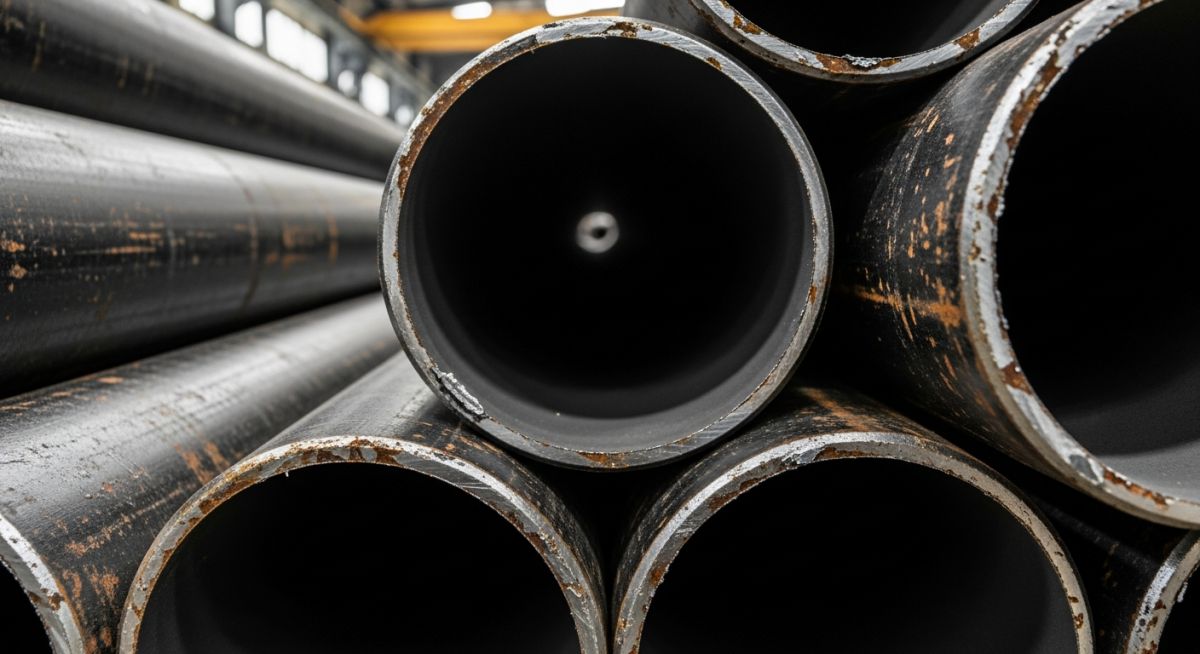
In my 20+ years of managing piping installations across petrochemical plants and high-pressure steam facilities, I have seen countless junior engineers get tripped up by terminology. They often treat “black steel” and “carbon steel” as mutually exclusive terms. Let me clear the air: black steel is actually a type of carbon steel, but with a distinct surface finish and specific application boundaries. When you are standing on-site, specifying the wrong pipe can lead to catastrophic corrosion failures or massive cost overruns.
Key Engineering Takeaways
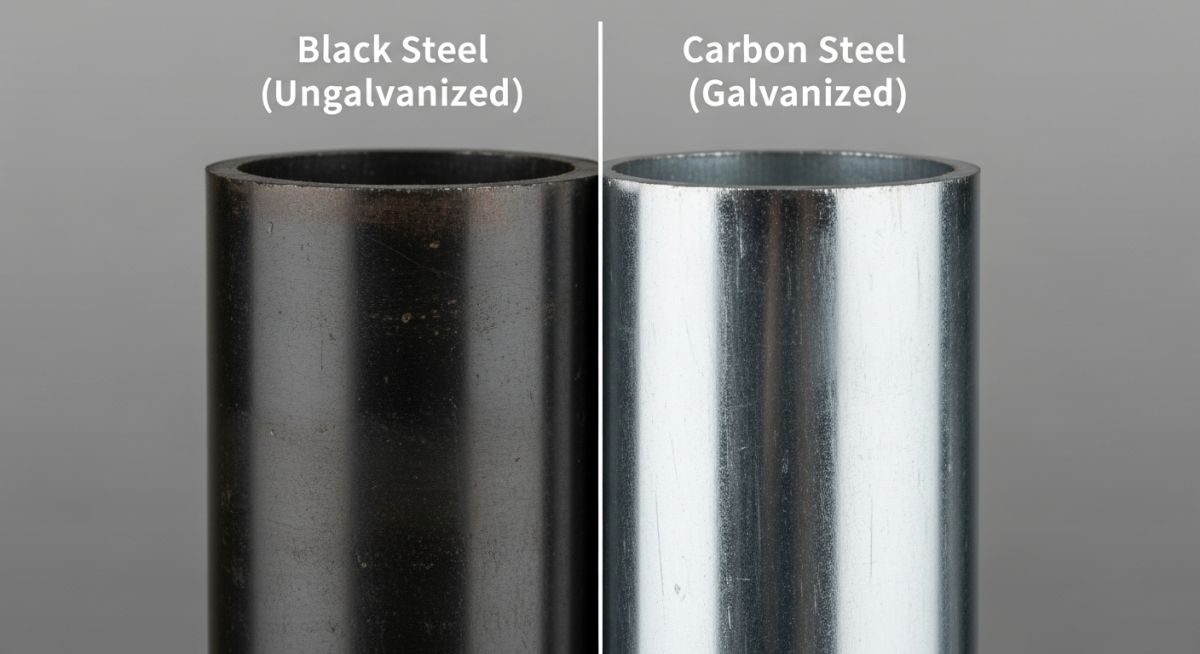
- Black steel pipes lack protective zinc coatings, making them ideal for gas and oil lines but highly susceptible to rust in wet environments.
- Carbon steel is the parent material category, classified by carbon weight percentages that dictate tensile strength and weldability.
- ASME B31.3 governs the pressure design limits for both pipe types, requiring strict adherence to wall thickness calculations.
Metallurgical Differences: Black Steel Pipes vs Carbon Steel Pipes
[Metallurgical Composition]: The primary distinction lies in the surface treatment and carbon concentration, where black steel utilizes an iron oxide scale for mild atmospheric protection, while carbon steel relies on precise carbon alloying elements up to 2.0 percent by weight to achieve specific mechanical properties under ASTM A106 or ASTM A53.
To understand these materials, we must look at how they are made. During the hot-rolling process, the steel surface reacts with oxygen in the air, forming a dark, scaly layer of iron oxide (magnetite, Fe3O4). This is what gives black steel its name. Carbon steel, on the other hand, is classified by its chemical makeup. It contains up to 2.0 percent carbon by weight, with minimal alloying elements like chromium, nickel, or cobalt.
Pressure Design and Wall Thickness Calculations
When designing a piping system under ASME B31.3, we calculate the minimum required wall thickness to withstand internal pressure. The formula is written as follows:
Where:
t = Pressure design wall thickness (inches)
P = Internal design gauge pressure (psig)
D = Outside diameter of pipe (inches)
S = Allowable stress value for material from Table A-1 (psi)
E = Quality factor from Table A-1A or A-1B
W = Weld joint strength reduction factor
Y = Coefficient from Table 304.1.1
Let us run a real-world calculation. Suppose we are designing an 8-inch nominal pipe (Outside Diameter D = 8.625 inches) using seamless carbon steel ASTM A106 Grade B. The system operates at a design pressure of 600 psig and a design temperature of 400 degrees Fahrenheit.
- From ASME B31.3 Table A-1, the allowable stress (S) for ASTM A106 Grade B at 400 degrees Fahrenheit is 20,000 psi.
- Since the pipe is seamless, the quality factor (E) is 1.0.
- The weld joint strength reduction factor (W) is 1.0.
- The coefficient (Y) for carbon steel at temperatures less than 900 degrees Fahrenheit is 0.4.
Plugging these values into our equation:
t = 5175 / (2 * (20000 + 240))
t = 5175 / (2 * 20240)
t = 5175 / 40480
t = 0.1278 inches
To find the nominal wall thickness, we must add a corrosion allowance (typically 0.0625 inches for carbon steel in mild service) and account for the standard 12.5 percent mill tolerance:
t_nominal = (0.1278 + 0.0625) / 0.875
t_nominal = 0.1903 / 0.875
t_nominal = 0.2175 inches
Comparing this to standard pipe schedules, Schedule 40 (wall thickness of 0.322 inches) is the correct choice, providing a safe margin over the calculated minimum of 0.2175 inches.
Standard Specifications for Industrial Steel Piping
[Standard Specifications]: Industrial piping standards establish the chemical limits, tensile strengths, and testing protocols required to safely deploy black steel and carbon steel pipes in high-pressure or high-temperature environments.
| Parameter | ASTM A53 Grade B (Black Steel) | ASTM A106 Grade B (Carbon Steel) |
|---|---|---|
| Manufacturing Type | Seamless or Welded (ERW) | Seamless Only |
| Carbon Max (%) | 0.30% | 0.30% |
| Tensile Strength Min (psi) | 60,000 psi | 60,000 psi |
| Yield Strength Min (psi) | 35,000 psi | 35,000 psi |
| Common Applications | Low-pressure steam, air, gas, water lines | High-pressure, high-temperature process piping |
| Acronym / Entity | Full Technical Name | Primary Function | Governing Standard |
|---|---|---|---|
| CS | Carbon Steel | Base structural alloy for pressure containment | ASTM A106 |
| BPS | Black Plain Steel | Uncoated transport medium for non-corrosive fluids | ASTM A53 |
| NPS | Nominal Pipe Size | Standard dimensional designation for pipe diameters | ASME B36.10M |
| WPS | Welding Procedure Specification | Joint integrity and welding execution protocol | ASME Section IX |
Field Verification Checklist for Steel Piping Installation
[Field Verification]: Quality control protocols require systematic visual, dimensional, and material verification of piping components prior to welding or pressure testing to ensure compliance with engineering specifications.
Before any pipe is welded or hung on supports, the field engineer must verify that the materials delivered match the design drawings. Use this checklist on-site to prevent installation errors.
-
Verify Material Test Reports (MTRs): Match pipe heat numbers stamped on the pipe body with the MTRs to confirm carbon content and yield strength limits. -
Inspect Surface Finish: Ensure black steel pipes have a uniform iron oxide scale without deep pitting, gouges, or excessive red rust. -
Measure Wall Thickness: Use ultrasonic testing (UT) gauges at four quadrants to verify mill tolerance compliance (minimum 87.5% of nominal thickness). -
Confirm Pipe End Bevels: Verify that pipe ends are beveled to 37.5 degrees (+/- 2.5 degrees) per ASME B16.25 for proper weld penetration. -
Check Internal Cleanliness: Inspect the inside of the pipe for debris, slag, or moisture before positioning. -
Ensure Proper Storage: Keep black steel pipes elevated off the ground on wooden dunnage and covered with tarps to prevent premature atmospheric corrosion.
Field Case Study: Real-World Application
[Field Case Study]: Real-world engineering failures highlight the critical importance of selecting the correct pipe material and surface treatment for specific process conditions.
The Problem: The Cost of Misidentifying Black Steel Pipes vs Carbon Steel Pipes
During a fast-track expansion of a utility steam plant, a subcontractor substituted standard ASTM A53 Type F (butt-welded) black steel pipe for a high-pressure condensate return line that specified ASTM A106 Grade B seamless carbon steel. The subcontractor assumed that because both were “steel pipes” of the same nominal size, they were interchangeable. Within four months of operation at 250 psig and 300 degrees Fahrenheit, the longitudinal weld seam of the ASTM A53 pipe suffered severe erosion-corrosion, leading to a pinhole leak that forced an unscheduled plant shutdown.
The Outcome: Root Cause Analysis and Remediation
I was called in to lead the failure analysis. We determined that the continuous furnace-butt-welded seam of the Type F pipe had lower joint efficiency (E = 0.60) and was highly susceptible to the corrosive velocity of the condensate. We replaced the entire run with ASTM A106 Grade B seamless carbon steel (E = 1.00) and implemented strict material receiving controls. The plant has now run for five years without a single piping incident, saving an estimated 120,000 dollars in annual downtime costs.
This case proves that understanding the subtle differences between black steel and carbon steel is not just academic. It is a safety-critical requirement for any piping engineer.
Essential FAQs: Black Steel Pipes vs Carbon Steel Pipes
[Technical FAQ Summary]: Addressing common field questions regarding material selection, welding procedures, and corrosion mitigation strategies for industrial steel piping systems.
Can black steel pipes be welded to standard carbon steel fittings?
Why does black steel turn black, and does it prevent rust?
What is the temperature limit for ASTM A106 carbon steel pipes?
How do you calculate the pressure rating of a black steel pipe?
Can black steel pipes be used for underground gas lines?
What is the main difference between ASTM A53 and ASTM A106?
Complete Course on
Piping Engineering
Check Now
Key Features
- 125+ Hours Content
- 500+ Recorded Lectures
- 20+ Years Exp.
- Lifetime Access
Coverage
- Codes & Standards
- Layouts & Design
- Material Eng.
- Stress Analysis
