Discover the Best Piping Books for Professional Piping Engineers
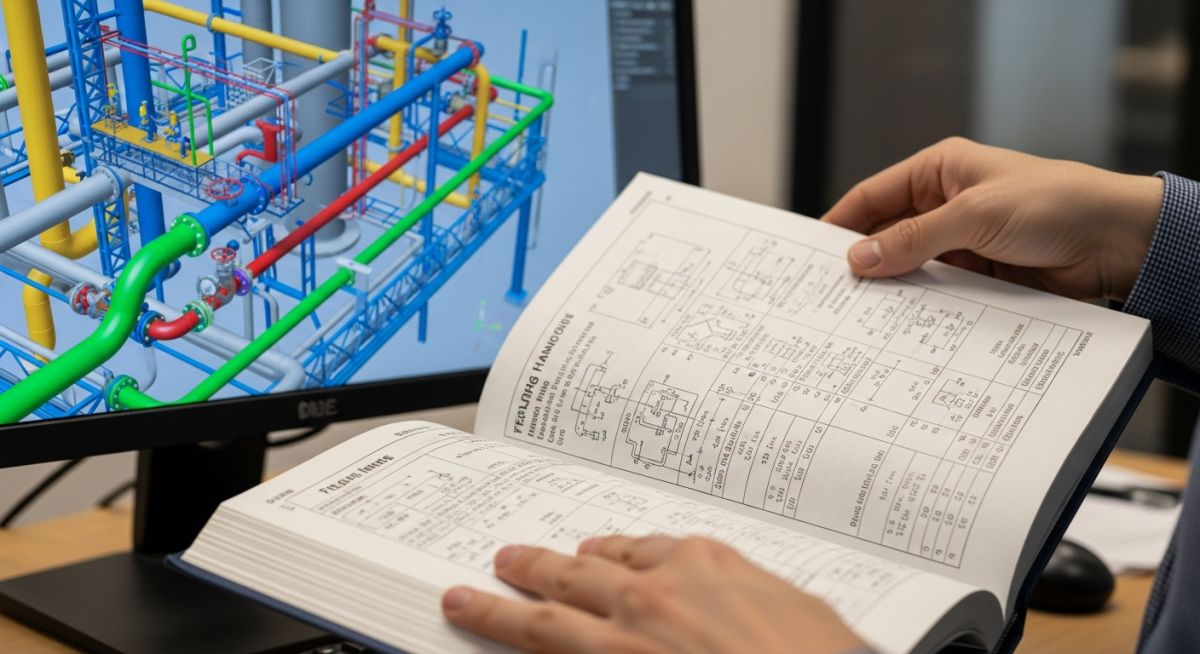
In my 20+ years of working in petrochemical plants and offshore platforms, I have seen many young engineers rely blindly on 3D modeling software. When a stress analysis alarm flashes red, or a pump nozzle load exceeds the limits of API 610, software alone cannot save you. You need a deep, fundamental understanding of piping mechanics, hydraulics, and material behavior. That wisdom is not found in software help files; it is written in the classic textbooks and handbooks that have guided generations of engineers.
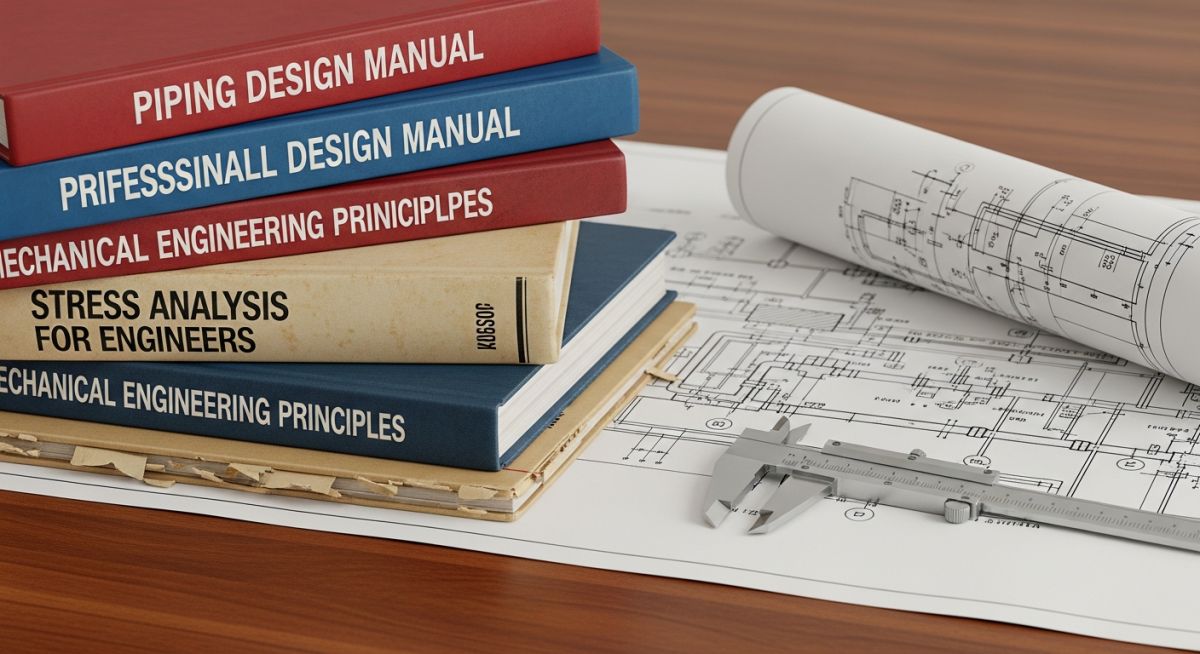
I keep a small, heavily dog-eared library right next to my desk. These books have helped me resolve complex thermal expansion loops, design custom pipe supports for high-temperature steam lines, and defend my calculations during rigorous client audits. Below, I share my personal recommendations for the absolute finest literature in our field.
What You Will Learn
- The definitive handbooks for mastering ASME B31.3 process piping design.
- Practical guides for executing manual pipe stress analysis and support selection.
- Essential resources for understanding valve selection, hydraulics, and fluid flow.
- How to bridge the gap between theoretical mechanics and field-ready construction drawings.
- A structured checklist to build your own professional engineering library.
Why These Are the Best Piping Books
To build a safe, efficient, and code-compliant industrial plant, you must master both the physical layout and the underlying stress profiles. The books listed below are not mere collections of tables; they explain the “why” behind the rules. They teach you how to calculate wall thicknesses, evaluate thermal expansion, and prevent catastrophic fatigue failures.
1. Piping Handbook by Mohinder L. Nayyar
This is the undisputed bible of our industry. If you can only afford one book, make it this one. Nayyar’s handbook covers everything from materials selection and manufacturing processes to detailed design rules for water, steam, and process fluids. It provides direct explanations of ASME B31.1 and ASME B31.3 requirements, making it an invaluable companion during the initial design phase of any project.
2. Piping and Pipeline Calculations Manual by Philip Ellenberger
Ellenberger’s work is highly practical. It focuses heavily on the calculations that piping engineers must perform daily. It breaks down complex formulas for pressure design of components, flange ratings, and joint efficiencies. The step-by-step calculation examples for wind and seismic loads on piping systems are particularly outstanding.
3. Piping Stress Handbook by Victor Helguero
For stress analysts, Helguero’s handbook is a goldmine. It provides quick reference tables, formulas, and nomographs for calculating thermal expansion stresses, guide spacings, and wind loads. It is particularly useful when you need to quickly size an expansion loop or determine the spring rate of a variable hanger without running a full computer simulation.
4. Detail Engineering and Layout of Piping Systems by Bob Wilson
Wilson bridges the gap between the drafting board and the stress analysis report. This book is filled with practical layout rules for piping around pumps, compressors, heat exchangers, and distillation columns. It explains how to arrange piping to ensure adequate maintenance access while minimizing pressure drop and structural loads on equipment nozzles.
5. Pipe Drafting and Design by Roy A. Parisher and Robert A. Rhea
This is the perfect starting point for junior engineers and designers. It clearly explains how to read and create Piping and Instrumentation Diagrams (P&IDs), plan views, elevations, and isometric drawings. Understanding these drafting fundamentals is critical before you can effectively analyze a system for mechanical integrity.
6. Design of Piping Systems by M.W. Kellogg Company
Although written decades ago, this classic text remains the foundation of modern pipe stress analysis. It introduces the analytical methods for calculating expansion stresses in three-dimensional piping configurations. If you want to truly understand the mathematical theories that power software like CAESAR II, this is the book you must study.
7. Valve Selection Handbook by Peter Smith
Valves are the most complex and expensive components in a piping system. Peter Smith’s book provides a comprehensive guide to selecting the right valve type (gate, globe, ball, butterfly, or check) for specific process conditions. It covers sealing mechanisms, material compatibility, and pressure-temperature ratings under ASME B16.34.
8. Facility Piping Systems Handbook by Michael Frankel
This book is an exceptional resource for utility piping systems. While many books focus exclusively on process lines, Frankel covers domestic water, laboratory gas, fuel oil, and fire protection systems. It is a necessary reference for any engineer working on industrial facility design or commercial infrastructure.
| Book Title & Author | Primary Technical Focus | Key Codes Covered | Target Audience |
|---|---|---|---|
| Piping Handbook (M. Nayyar) | Comprehensive design, materials, and system sizing | ASME B31.1, B31.3, B31.4, B31.8 | All Piping Engineers |
| Piping & Pipeline Calculations (P. Ellenberger) | Component design, wall thickness, flange ratings | ASME Section VIII, B31.3 | Mechanical & Stress Engineers |
| Piping Stress Handbook (V. Helguero) | Thermal expansion, support design, loop sizing | ASME B31.3, MSS-SP-58 | Stress Analysts |
| Detail Engineering & Layout (B. Wilson) | Equipment piping layout, spacing, maintenance access | ASME B31.3, API standards | Piping Layout Designers |
| Pipe Drafting and Design (R. Parisher) | P&ID symbols, isometric drawings, 3D modeling basics | ASME B16 Series | Junior Designers & Drafters |
| Design of Piping Systems (M.W. Kellogg) | Analytical stress analysis, flexibility calculations | Historical ASME Code Foundations | Senior Stress Specialists |
| Valve Selection Handbook (P. Smith) | Valve types, sealing, pressure drops, materials | ASME B16.34, API 6D | Materials & Process Engineers |
| Engineering Entity | Acronym / Standard | Physical Parameter / Application | Reference Literature Source |
|---|---|---|---|
| Process Piping Code | ASME B31.3 | Pressure design, allowable stresses, inspection rules | Piping Handbook (Nayyar) |
| Pipe Support Standards | MSS-SP-58 | Materials, design, and selection of pipe hangers | Piping Stress Handbook (Helguero) |
| Centrifugal Pumps | API 610 | Allowable nozzle loads and moments | Detail Engineering & Layout (Wilson) |
| Flanged Fittings | ASME B16.5 | Pressure-temperature ratings, dimensions | Piping & Pipeline Calculations (Ellenberger) |
Piping Design Book Selection Checklist
Building a professional library requires selecting books that offer practical, code-compliant solutions rather than purely academic theories. Use this checklist to evaluate any piping book before adding it to your engineering reference shelf.
Verification Checkpoints
-
Code Alignment: Does the book explicitly reference current editions of ASME B31.3, ASME B31.1, or relevant API standards?
-
Practical Calculations: Does it contain fully worked manual calculation examples for wall thickness, thermal expansion, and pressure drops?
-
Material Specifications: Are ASTM material designations (e.g., A106 Gr. B, A312 TP316) used in the examples instead of generic terms?
-
Support Design: Does the text cover the selection and placement of variable spring hangers, rigid struts, and snubbers?
-
Layout Guidelines: Are there clear, illustrated layout rules for piping around rotating equipment and vessels?
Field Case Study: Real-World Application
The Problem: Unrealistic Stress Analysis Results
During a major refinery expansion project, a junior stress engineer was modeling a 12-inch high-temperature steam line (operating at 450 degrees Celsius) using CAESAR II. The software repeatedly flagged a critical overstress condition at a major manifold junction. To resolve this, the junior engineer proposed adding three massive expansion loops and four variable spring hangers, which would have added approximately 45,000 in material and structural support costs.
The Outcome: Manual Verification and Optimization
As the lead engineer, I stepped in and halted the design change. I pulled out my copy of the M.W. Kellogg “Design of Piping Systems” book and guided the engineer through a manual flexibility analysis of the piping run. We discovered that the software model had incorrect boundary conditions; a rigid anchor had been placed where a guided slide support should have been.
By correcting the support configuration based on Kellogg’s classic analytical methods, we eliminated the overstress condition entirely. The system was built safely without the unnecessary expansion loops, saving the project significant capital and reducing pressure drop across the line.
This case highlights why relying solely on software is dangerous. A solid grounding in the principles found in the best piping books is necessary to spot modeling errors and develop elegant, cost-effective engineering solutions.
How to Choose the Best Piping Books
When building your professional library, focus on books that offer clear explanations of code requirements and practical, real-world examples. Avoid books that are overly academic or fail to reference modern industry standards.
Which book is considered the absolute “bible” for piping engineers?
What is the best book for learning pipe stress analysis?
Are older piping books still relevant today?
Which book should a beginner start with?
Do these books cover pipeline engineering as well?
How do I verify if a book is compliant with ASME B31.3?
===FAQ_BLOCK===
Complete Course on
Piping Engineering
Check Now
Key Features
- 125+ Hours Content
- 500+ Recorded Lectures
- 20+ Years Exp.
- Lifetime Access
Coverage
- Codes & Standards
- Layouts & Design
- Material Eng.
- Stress Analysis