Earthworks for Green Hydrogen Plants: A Civil Engineering Guide
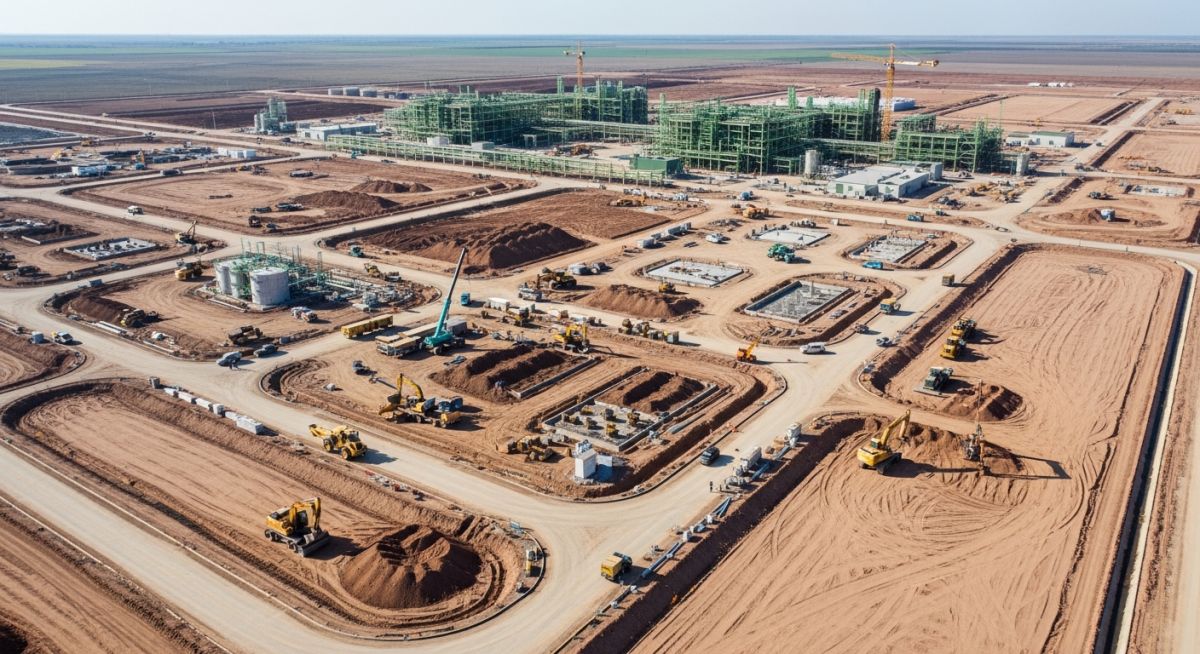
In my two decades of experience managing large-scale industrial projects, I have learned that the success of a green hydrogen facility begins long before the first pipe rack is erected. Earthworks for green hydrogen plants represent the foundational bedrock of the entire project lifecycle. Unlike traditional petrochemical sites, hydrogen facilities require extreme precision in site grading to accommodate the sensitive tolerances of PEM or alkaline electrolyzers and the stringent safety requirements for high-pressure storage.
Poorly executed site preparation leads to differential settlement, which can compromise the alignment of critical piping and the structural stability of heavy equipment foundations. This guide explores the technical nuances of managing site topography, optimizing cut-and-fill volumes, and integrating complex drainage systems to mitigate environmental risks. We will examine how to balance the immediate construction needs with the long-term operational safety of your hydrogen infrastructure.
Key Takeaways for Project Success:
- Prioritize geotechnical soil stabilization to prevent long-term settlement under heavy electrolyzer skids.
- Implement a tiered grading strategy to separate process areas from hazardous storage zones.
- Design drainage systems with redundant capacity to handle extreme weather events, protecting sensitive electrical components.
- Optimize cut-and-fill volumes early in the FEED phase to reduce project costs and environmental footprint.
Technical Fundamentals of Earthworks for Green Hydrogen Plants
Site Grading Precision: The primary objective in Earthworks for Green Hydrogen Plants is achieving a stable, level platform that meets the stringent requirements of ASME B31.12 for hydrogen piping. Electrolyzer skids are highly sensitive to foundation tilt; therefore, site grading must often achieve a tolerance of less than 1:500 across the entire process footprint. I typically specify a sub-base of compacted engineered fill, verified by a minimum 95% Modified Proctor Density (ASTM D1557), to ensure uniform load distribution.
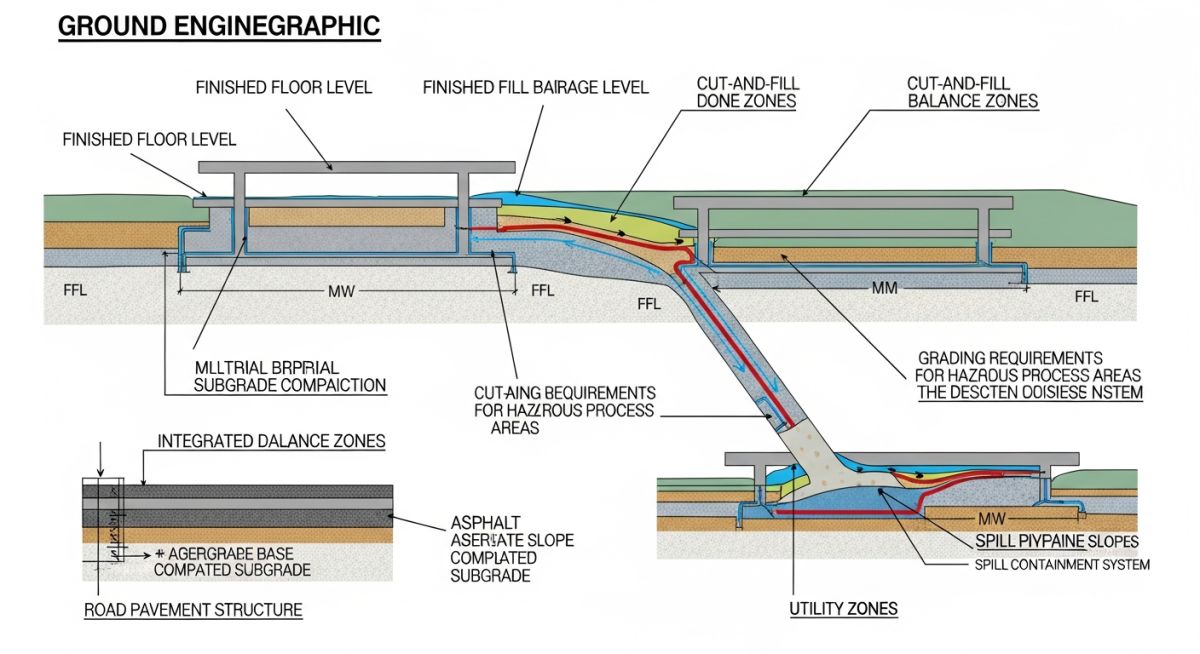
Cut and Fill Optimization: Balancing the site requires a rigorous mass-haul analysis. When calculating the volume of earth to be moved, I use the average end area method for initial estimates, followed by a digital terrain model (DTM) for precision. The goal is to minimize off-site soil disposal, which is both costly and environmentally detrimental. If the site requires significant import of fill, I prioritize granular materials with low plasticity indices to minimize the risk of future expansion or contraction.
Field Warning: Soil Liquefaction Risks
In regions with high water tables, the risk of soil liquefaction during seismic events is a critical design factor. For hydrogen storage areas, I mandate deep soil mixing or stone columns if the native soil profile shows loose, saturated sands. Failure to address these geotechnical conditions can lead to catastrophic failure of high-pressure storage vessels during a seismic event.
Drainage Integration: Hydrogen facilities present unique drainage challenges. Because these sites often involve large paved areas for equipment access, the runoff coefficient is high. I design the drainage network to segregate potentially contaminated runoff from clean stormwater. This involves installing oil-water separators and dedicated containment basins for the electrolyzer area, ensuring that any accidental release of process fluids is captured before it enters the site’s primary drainage system.
Structural Load Considerations: The weight of hydrogen compressors and storage tanks requires specialized foundation designs that must be integrated into the earthworks plan. I often coordinate the grading plan with the structural team to ensure that the sub-grade preparation accounts for the concentrated loads of these heavy assets. This prevents the “punching” effect where heavy equipment foundations settle deeper than the surrounding grade, creating drainage pockets and potential structural stress on piping connections.
Earthworks Strategic Assessment: A balanced evaluation of site preparation methodologies is required to optimize capital expenditure while maintaining the highest safety standards for hydrogen infrastructure.
Advantages
- Enhanced structural stability for sensitive electrolyzer skids.
- Reduced long-term maintenance costs through proper soil compaction.
- Improved site safety by mitigating trip hazards and uneven surfaces.
- Optimized drainage prevents standing water, reducing corrosion risks for piping.
- Efficient mass-haul reduces overall project carbon footprint.
Disadvantages
- High initial capital expenditure for extensive site grading.
- Potential for significant project delays if geotechnical issues arise.
- Strict environmental regulations for soil disposal increase logistics complexity.
- Requirement for specialized equipment and skilled labor for precision grading.
- Increased complexity in managing multi-phase construction schedules.
Industrial Site Implementation: Earthworks methodologies are tailored to specific hydrogen production environments, ranging from remote renewable energy hubs to integrated industrial clusters.
Renewable Energy Integration Hubs
These sites often feature large-scale solar or wind farms adjacent to the electrolyzer plant. The earthworks must accommodate vast, flat areas for solar arrays while providing high-load-bearing pads for the hydrogen conversion equipment, requiring a dual-tier grading approach to manage different soil pressure requirements.
Industrial Feedstock Decarbonization
Retrofitting existing chemical plants for green hydrogen requires precise earthworks within constrained brownfield footprints. We must navigate existing underground utilities and legacy foundations, often utilizing specialized shoring and soil stabilization techniques to prevent damage to active production lines during the grading process.
High-Pressure Storage Facilities
Storage areas demand the most rigorous earthworks, as the weight of high-pressure vessels is immense. We implement deep-foundation preparation and advanced drainage systems to ensure that the storage zone remains perfectly level and dry, preventing any potential for ground-induced stress on the high-pressure piping manifolds.
In my two decades of managing industrial site development, I have found that the precision of earthworks design directly dictates the long-term operational integrity of green hydrogen plants. These facilities require stringent adherence to ASCE and ASTM standards, particularly when dealing with high-pressure electrolyzer skids and cryogenic storage tanks. The following table outlines the critical design parameters I prioritize during the initial site grading phase to ensure structural stability and safety.
These values represent baseline requirements for typical soil conditions encountered in industrial brownfield and greenfield projects. Engineers must adjust these based on site-specific geotechnical reports, as hydrogen infrastructure is exceptionally sensitive to differential settlement, which can compromise piping alignment and seal integrity in high-pressure systems.
| Parameter | Standard/Requirement | Design Tolerance |
|---|---|---|
| Process Area Slope | Minimum 1.0% for drainage | +/- 0.1% |
| Tank Farm Compaction | ASTM D1557 (Modified Proctor) | 95% to 98% |
| Roadway Crown Slope | 2.0% to 3.0% | +/- 0.2% |
| Subgrade CBR Value | Minimum 5% for heavy traffic | Site specific |
Always verify these parameters against the local building codes and the specific requirements of the hydrogen technology provider. Failure to meet these compaction and slope thresholds often leads to ponding, which is a significant safety hazard in areas where hydrogen leak detection systems must remain unobstructed and functional.
The complexity of green hydrogen plant infrastructure necessitates a clear mapping of civil engineering entities to their respective regulatory and physical performance standards. In my experience, the integration of these systems—ranging from stormwater management to heavy-load foundation support—requires a holistic view of the site’s physical constraints.
The matrix below categorizes the primary technical entities involved in earthworks, providing a reference point for project managers and lead engineers to ensure that every component of the site development aligns with international safety protocols. By standardizing these inputs, we minimize the risk of interface errors between civil, mechanical, and electrical disciplines.
| Entity | Standard Reference | Primary Function |
|---|---|---|
| Stormwater Drainage | ASCE 7 | Runoff mitigation |
| Structural Fill | ASTM D2487 | Load-bearing support |
| Pavement Design | AASHTO | Heavy vehicle access |
Maintaining this matrix throughout the project lifecycle allows for rapid verification during site audits. It serves as a living document that tracks the evolution of site conditions from initial clearing to final paving, ensuring that no critical engineering requirement is overlooked during the construction phase.
Effective earthworks for green hydrogen plants require a rigorous verification process. As an engineer, I have developed this checklist to ensure that every phase of site preparation meets the high safety standards required for hydrogen production facilities. Use this to validate your site readiness before commencing foundation work.
-
[ ]
Geotechnical Validation: Confirm that the soil bearing capacity matches the design assumptions provided in the initial site report. -
[ ]
Compaction Testing: Ensure all structural fill layers are tested per ASTM D1557 to achieve the required density. -
[ ]
Drainage Slope Verification: Verify that all process area grades meet the minimum 1% slope to prevent standing water near electrical equipment. -
[ ]
Utility Trenching: Check that all underground utility trenches are backfilled with appropriate material to prevent future settlement. -
[ ]
Erosion Control: Confirm that silt fences and sediment basins are installed according to the site environmental management plan.
Regular site inspections are mandatory. I recommend documenting every test result in a centralized project management system to maintain a clear audit trail for regulatory compliance. If any test fails, immediately halt work in that sector until the soil conditions are remediated to the specified design standard.
Field Case Study: Real-World Application
The Challenge: Differential Settlement in Electrolyzer Area
During the construction of a 50MW hydrogen plant, we encountered unexpected soil variability that threatened the alignment of the electrolyzer skids.
- Inconsistent moisture content in the subgrade.
- Presence of organic lenses not identified in the initial survey.
- High water table impacting compaction efforts.
The Outcome: Successful Remediation and Stabilization
By implementing a targeted soil stabilization program, we successfully mitigated the risk and ensured the long-term stability of the process area.
- Achieved 98% compaction after soil replacement.
- Installed a sub-surface drainage layer to lower the water table.
- Zero settlement detected during the six-month post-construction monitoring period.
My recommendation for similar projects is to perform a more granular geotechnical investigation, specifically targeting the footprint of heavy process equipment. Relying on site-wide averages is often insufficient for the high-precision requirements of modern hydrogen production technology.
Frequently Asked Engineering Questions
Why is site grading critical for hydrogen safety?
Site grading is the first line of defense in preventing hazardous conditions at a hydrogen plant. Proper grading ensures that any potential leaks or spills are directed away from critical infrastructure and toward designated containment areas.
- Prevents the accumulation of hydrogen gas in low-lying areas.
- Ensures that fire suppression systems have clear, level access.
- Protects sensitive electrical equipment from water ingress during heavy rainfall.
How do you optimize cut and fill volumes?
Optimization of cut and fill is achieved through precise digital terrain modeling. By balancing the volume of earth removed with the volume required for site leveling, we significantly reduce project costs and environmental impact.
- Utilize BIM software to calculate exact earthwork volumes.
- Reuse excavated material on-site if it meets geotechnical specifications.
- Minimize the need for off-site soil disposal or import.
What are the drainage requirements for tank farms?
Tank farms require specialized drainage to manage both stormwater and potential containment of hazardous materials. The design must comply with NFPA standards for spill control.
- Implement secondary containment berms with controlled drainage valves.
- Ensure the tank pad is sloped away from the tank shell.
- Design drainage systems to handle extreme weather events without flooding.
How is road network design integrated into earthworks?
Road networks must be designed to support heavy equipment transport during both construction and maintenance. The integration involves aligning road grades with the overall site drainage plan to prevent erosion.
- Design road subgrades to handle high axle loads.
- Coordinate road elevations with process area drainage.
- Ensure turning radii accommodate large hydrogen transport trailers.
What standards govern earthworks for hydrogen plants?
Earthworks are governed by a combination of civil engineering standards and industrial safety codes. Key references include:
How do you handle soil stabilization in poor conditions?
When site conditions are suboptimal, I employ various stabilization techniques to ensure the foundation can support the heavy loads of hydrogen production equipment.
- Chemical stabilization using lime or cement to improve soil strength.
- Mechanical stabilization using geogrids to distribute loads.
- Deep soil mixing or pile foundations if the soil is highly compressible.
Complete Course on
Piping Engineering
Check Now
Key Features
- 125+ Hours Content
- 500+ Recorded Lectures
- 20+ Years Exp.
- Lifetime Access
Coverage
- Codes & Standards
- Layouts & Design
- Material Eng.
- Stress Analysis
