Solar Energy for Green Hydrogen Production: A Technical Guide
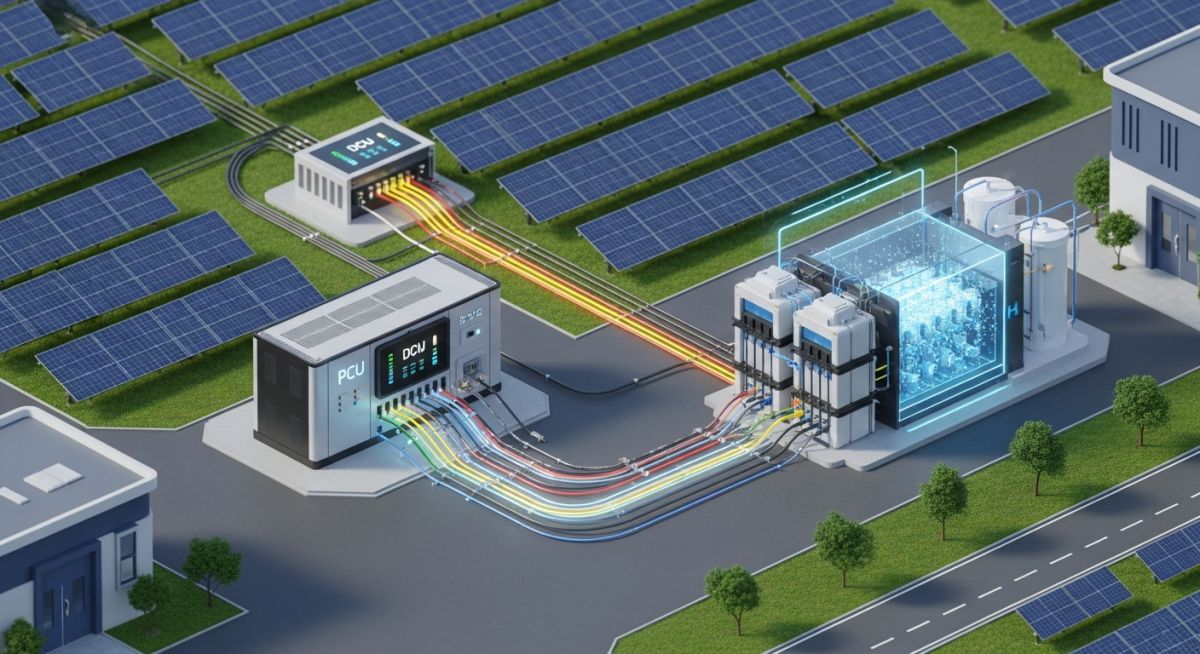
In my two decades of experience in the piping and energy sectors, I have observed that the transition to sustainable industrial processes hinges on the seamless integration of intermittent renewables with high-demand chemical processes. Solar energy for green hydrogen production is not merely about placing panels next to an electrolyzer; it is a complex exercise in power electronics, load balancing, and fluid system design.
We are moving beyond pilot projects into utility-scale deployments where the variability of solar irradiance directly impacts the degradation rates of electrolyzer stacks. This guide explores the technical realities of coupling these systems, ensuring your design meets the rigorous demands of modern industrial hydrogen facilities.
Key Takeaways for Engineers:
- Understanding the DC-DC coupling efficiency vs. AC-grid conversion.
- Mitigating electrolyzer stack degradation due to solar power fluctuations.
- Optimizing water purification systems for high-purity hydrogen output.
- Navigating safety standards for high-pressure hydrogen storage systems.
Technical Deep-Dive: Solar Energy for Green Hydrogen Production
Solar Energy for Green Hydrogen Production: The systematic integration of photovoltaic power systems with water electrolysis units, requiring precise control of current density and voltage regulation to maintain optimal hydrogen production rates under variable solar irradiance.
Designing a solar-to-hydrogen facility requires a fundamental shift in how we view power supply. Unlike grid-connected systems, direct coupling of solar PV to an electrolyzer eliminates the need for expensive inverters, but it introduces significant challenges regarding the variable current-voltage (I-V) characteristics of the solar array. In my experience, the primary design constraint is the “operating window” of the electrolyzer stack. If the solar input drops below the minimum current density required for the stack, the system risks efficiency losses or, in some cases, reverse current flow.
Power Coupling and Load Matching
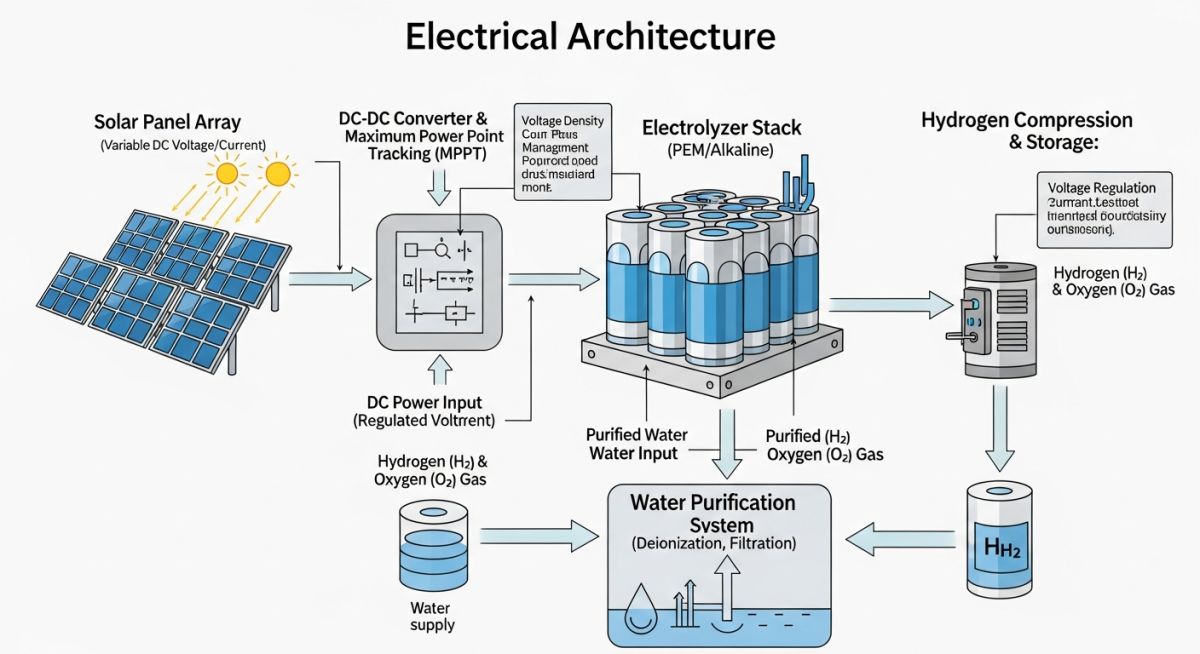
To achieve maximum power point tracking (MPPT) in a direct-coupled system, we utilize DC-DC buck-boost converters. These devices ensure that the voltage output from the PV array matches the required input voltage of the electrolyzer stack, even as solar irradiance fluctuates throughout the day. The efficiency of this conversion is critical; every percentage point lost here is a direct reduction in the kilograms of hydrogen produced per megawatt of installed solar capacity.
Field Warning: Electrolyzer Degradation
Frequent cycling of the electrolyzer stack due to cloud cover or diurnal cycles can accelerate membrane degradation. Engineers must implement a “buffer” strategy, such as a small battery energy storage system (BESS) or a hydrogen buffer tank, to stabilize the power input and prevent rapid start-stop cycles that exceed the manufacturer’s design life for the catalyst layers.
Electrolyzer Integration Standards
When designing the piping and balance-of-plant (BoP) systems, we must adhere to ASME B31.12 for hydrogen piping. The integration involves not just the electrical side, but the water treatment loop. The water must be deionized to a resistivity of at least 1 megohm-centimeter to prevent ion contamination of the electrolyzer membrane. This requires a robust demineralization unit that can handle the intermittent nature of the solar power supply, ensuring that water quality remains consistent even when the system is ramping up or down.
Calculations for hydrogen production capacity are typically based on the Faraday efficiency of the stack. For a PEM electrolyzer, the theoretical hydrogen production rate is approximately 0.0105 kilograms per ampere-hour. However, in real-world conditions, we must account for the cell voltage efficiency, which is typically between 65% and 80%. When sizing the solar array, I recommend a 1.2 to 1.5 DC-to-AC ratio to account for system losses and the need to maintain the electrolyzer within its optimal operating temperature range, usually between 50 and 80 degrees Celsius.
System Integration Trade-offs: A technical evaluation of the operational, economic, and mechanical impacts of coupling solar photovoltaic arrays directly with industrial-scale water electrolysis systems.
Advantages
- Elimination of grid-tie inverter costs and associated conversion losses.
- Reduced carbon footprint by bypassing grid-based electricity sources.
- Scalability through modular PV array and electrolyzer stack expansion.
- Lower operational expenditure due to minimal moving parts in PV systems.
- Potential for localized hydrogen production, reducing transport infrastructure needs.
Disadvantages
- High sensitivity to solar intermittency affecting stack longevity.
- Requirement for complex power electronics to manage DC-DC voltage matching.
- Increased land footprint compared to grid-connected centralized plants.
- Need for auxiliary storage to maintain consistent hydrogen output.
- Complex water treatment requirements for high-purity feedstocks.
Industrial Implementation Scenarios: Strategic deployment of solar-to-hydrogen systems across various sectors to achieve decarbonization goals and energy independence in high-demand environments.
Industrial Feedstock Decarbonization
Chemical plants utilizing hydrogen for ammonia synthesis or hydrocracking can integrate solar-hydrogen systems to replace steam methane reforming (SMR). By utilizing on-site solar arrays, these facilities reduce their reliance on natural gas, directly lowering the carbon intensity of their chemical products while leveraging existing site infrastructure for hydrogen storage and distribution.
Remote Mining Operations
Mining sites often operate in off-grid locations where diesel fuel transport is prohibitively expensive and carbon-intensive. Solar-powered electrolyzers provide a sustainable alternative for heavy machinery fuel and stationary power, utilizing the vast land availability typical of mining concessions to generate hydrogen on-site for fuel cell-powered haul trucks.
Green Hydrogen Refueling Hubs
Strategic placement of solar-electrolyzer units along major logistics corridors enables the creation of green hydrogen refueling stations for heavy-duty transport. These hubs utilize solar energy to produce hydrogen during peak daylight hours, storing it in high-pressure vessels to ensure 24/7 availability for hydrogen-powered logistics fleets, effectively bridging the gap between renewable generation and transport demand.
When designing the interface between solar photovoltaic arrays and hydrogen production units, engineers must account for the inherent variability of solar irradiance. The following table outlines the critical electrical parameters required to maintain optimal stack efficiency while protecting the electrolyzer membrane from rapid power fluctuations. These values are derived from standard ASME and IEC guidelines for power electronics in renewable energy systems.
It is vital to note that the power conditioning system must act as a buffer. Without proper DC-DC conversion, the fluctuating voltage from the PV array can lead to premature degradation of the catalyst layers within the PEM electrolyzer. The table below provides a baseline for sizing these power conversion stages based on typical industrial electrolyzer capacities.
| Parameter | Typical Range | Standard Reference |
|---|---|---|
| DC Input Voltage | 400V – 800V | IEC 61000 |
| Current Ripple Tolerance | Less than 5% | ASME B31.3 |
| Efficiency (DC-DC) | 94% – 98% | IEEE 519 |
Engineers should prioritize high-frequency switching converters to minimize the physical footprint of the power electronics while maximizing the conversion efficiency. Always verify that the chosen components meet the harmonic distortion limits specified in the local grid connection codes, even if the system is designed for off-grid operation.
The integration of solar energy for Green Hydrogen Production requires a multi-disciplinary approach involving electrical, chemical, and mechanical engineering. This matrix maps the core technical entities to their respective operational requirements and relevant industry standards. Understanding these relationships is fundamental for project feasibility studies and long-term asset management.
By aligning these entities, we ensure that the system architecture remains robust against environmental stressors and operational load variations. Each entity listed below represents a critical node in the energy conversion chain, from photon capture to molecular hydrogen storage.
| Entity | Function | Standard |
|---|---|---|
| PV Array | Energy Harvesting | IEC 61215 |
| PEM Electrolyzer | Water Splitting | ISO 22734 |
| H2 Storage | Pressure Containment | ASME BPVC |
This mapping serves as a foundational guide for procurement and system design. When selecting equipment, ensure that the manufacturer provides certification against these specific standards to guarantee interoperability and safety across the entire hydrogen production facility.
Before finalizing the design for a solar-powered hydrogen plant, a rigorous site verification process is mandatory. This ensures that the environmental conditions, grid infrastructure, and water supply are sufficient to support the intended production capacity. My experience suggests that overlooking these site-specific variables often leads to significant cost overruns during the commissioning phase.
-
Solar Irradiance Analysis: Verify 10-year historical GHI data to ensure consistent power output for the electrolyzer stack. -
Water Quality Testing: Confirm water conductivity meets ISO 22734 requirements for PEM electrolyzer feed. -
Grid Interconnection Study: Assess the local substation capacity if the system is designed for grid-tied hydrogen production. -
Safety Zoning: Ensure compliance with hazardous area classification standards for hydrogen storage and compression units.
Each item on this checklist must be signed off by the lead engineer before procurement begins. Pay special attention to the water purification system; even minor impurities can lead to rapid catalyst poisoning in the electrolyzer, significantly reducing the operational lifespan of the stack. Always document the baseline environmental conditions to facilitate future performance benchmarking and maintenance scheduling.
The Challenge: Unstable Power Coupling
A pilot project in a remote desert location faced severe electrolyzer degradation due to rapid solar irradiance fluctuations caused by intermittent cloud cover.
- Voltage spikes exceeding the PEM stack tolerance.
- Inadequate DC-DC converter response time.
- Lack of a secondary buffer storage system.
- High ambient temperatures affecting power electronics efficiency.
The Outcome: Optimized System Stability
By implementing a hybrid energy management system, the project achieved a 30% increase in stack longevity and consistent hydrogen output.
- Installed a supercapacitor bank for transient power smoothing.
- Upgraded to high-speed IGBT-based power converters.
- Integrated an AI-driven predictive weather forecasting model.
- Improved thermal management for the power electronics enclosure.
The primary recommendation from this case is to never rely on direct coupling without a robust power conditioning layer. Even in high-irradiance regions, the transient nature of solar energy requires active management to protect the sensitive electrochemical components of the electrolyzer.
What is the primary benefit of direct coupling?
- Reduced system complexity and maintenance requirements.
- Higher overall system efficiency due to fewer conversion steps.
- Lower footprint for power electronics infrastructure.
How do you handle solar intermittency?
- Buffer storage using lithium-ion or supercapacitors.
- Predictive control algorithms based on local weather data.
- Dynamic load shedding to maintain stack pressure stability.
Which electrolyzer type is best for solar?
- Fast start-up and shut-down cycles.
- Compact design suitable for modular deployment.
- High purity hydrogen output without complex purification.
What are the safety requirements for H2?
- Redundant pressure relief valves and sensors.
- Hazardous area classification for all equipment.
- Regular integrity testing of storage vessels.
How do you calculate system sizing?
- Energy balance modeling over a full year.
- Electrolyzer stack efficiency at partial loads.
- Storage capacity requirements for peak demand.
What is the future of this tech?
- Development of non-noble metal catalysts.
- Integration with large-scale industrial processes.
- Advancements in high-pressure electrolysis technology.
Complete Course on
Piping Engineering
Check Now
Key Features
- 125+ Hours Content
- 500+ Recorded Lectures
- 20+ Years Exp.
- Lifetime Access
Coverage
- Codes & Standards
- Layouts & Design
- Material Eng.
- Stress Analysis

📚 Recommended Resources: Green Hydrogen Production
Read these Guides
- 📄 SOEC Electrolyzer Explained: High Temperature Electrolysis for Green Hydrogen Production
- 📄 Green Hydrogen Production Process and Industrial Plant Design Guide
- 📄 Alkaline Electrolysers Explained: The Workhorse of Green Hydrogen Production
- 📄 How to Demonstrate RFNBO Compliance in Green Hydrogen Projects
