Table of Contents
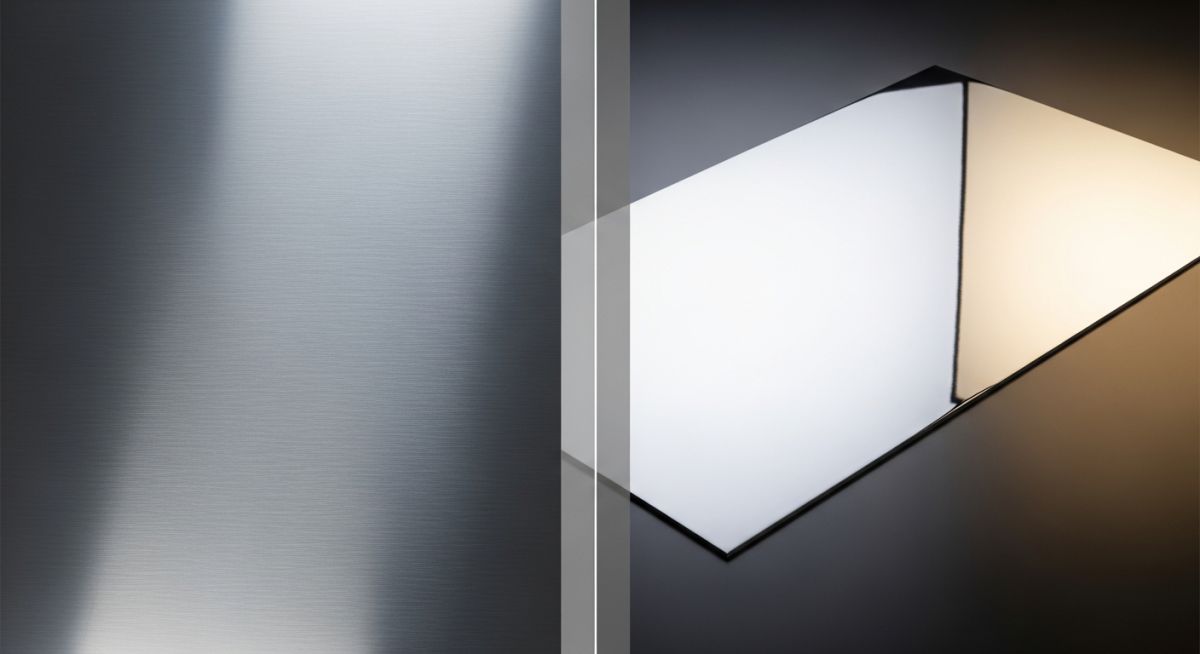
Stainless Steel vs Aluminum: 12 Major Differences for Engineers
In my 20+ years of piping and structural engineering, I have seen countless projects stumble because of a fundamental misunderstanding of material selection. Choosing between stainless steel and aluminum is not just about comparing price tags or aesthetic appeal. It is a complex engineering decision that dictates the structural integrity, fatigue life, and safety of your entire system.
Whether you are designing a high-pressure chemical process line under ASME B31.3 or a lightweight structural frame, you must understand how these two metals behave under stress, temperature fluctuations, and corrosive environments. Let us dive deep into the physical, chemical, and mechanical realities of these materials.
Key Engineering Takeaways
- Density Disparity: Stainless steel is roughly three times denser than aluminum, making aluminum the default choice for weight-sensitive aerospace and structural applications.
- Thermal Performance: Aluminum loses structural strength rapidly above 150 degrees Celsius, whereas stainless steel maintains its integrity at temperatures exceeding 800 degrees Celsius.
- Corrosion Mechanisms: Stainless steel relies on a chromium oxide passive layer to resist aggressive chemicals, while aluminum forms an aluminum oxide layer that excels in atmospheric and marine environments but fails in highly acidic or alkaline services.
- Cryogenic Ductility: Aluminum does not undergo a ductile-to-brittle transition, making it highly effective for liquefied natural gas (LNG) piping systems.
Why Stainless Steel vs Aluminum Selection Matters
To truly appreciate the differences, we must look at the underlying metallurgy. Stainless steel is an iron-based alloy containing a minimum of 10.5% chromium. This chromium content reacts with atmospheric oxygen to form an ultra-thin, self-healing passive layer of chromium oxide. Aluminum, on the other hand, is a non-ferrous element that naturally forms an aluminum oxide barrier.
1. Strength-to-Weight Ratio and Density
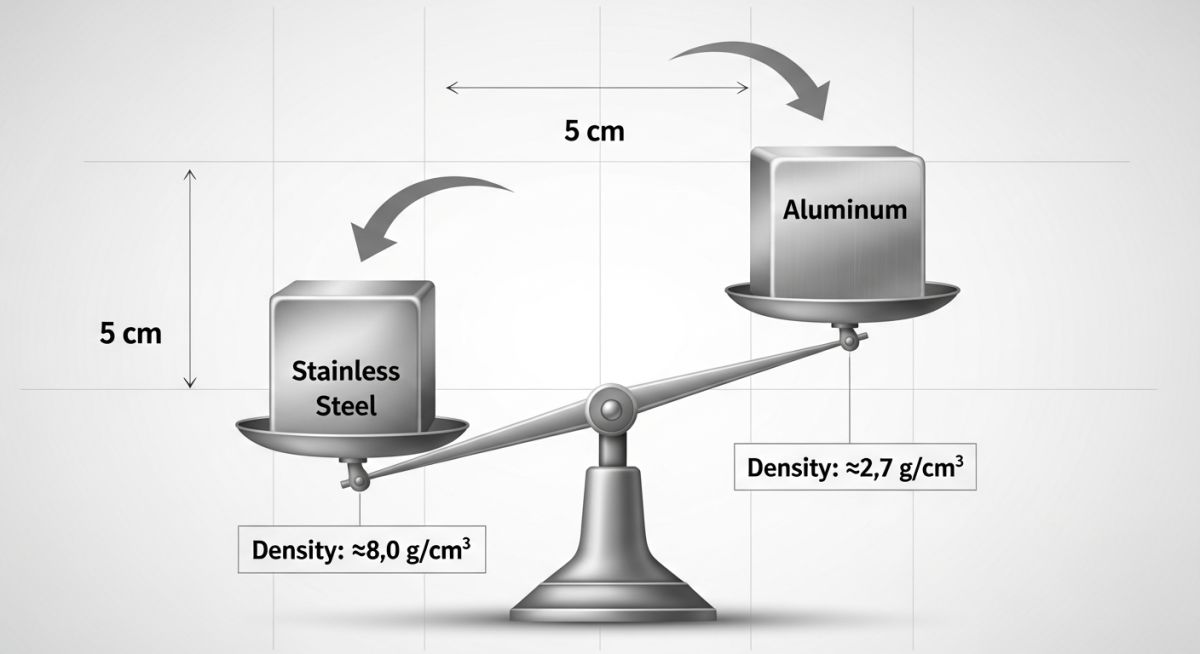
In structural design, the strength-to-weight ratio is a primary metric. Aluminum has a density of approximately 2.7 g/cm³, compared to stainless steel’s 8.0 g/cm³. While stainless steel has a much higher absolute tensile strength, certain high-strength aluminum alloys (such as 7075-T6) can match or exceed the specific strength (strength-to-weight ratio) of standard 304 stainless steel.
2. Thermal Stress and Expansion Calculations
When piping systems undergo thermal cycling, the coefficient of thermal expansion (CTE) dictates the magnitude of thermal stress generated. Let us calculate the thermal stress developed in a fully constrained pipe run for both materials.
Thermal Stress Formula:
S = E * alpha * dT
Where:
- S = Thermal Stress (MPa)
- E = Modulus of Elasticity (GPa)
- alpha = Coefficient of Thermal Expansion (10^-6 / K)
- dT = Temperature Change (100 K)
Case A: 304 Stainless Steel
E = 193 GPa | alpha = 17.2 x 10^-6 / K
S = 193,000 * (17.2 x 10^-6) * 100 = 331.96 MPa
Case B: 6061-T6 Aluminum
E = 68.9 GPa | alpha = 23.6 x 10^-6 / K
S = 68,900 * (23.6 x 10^-6) * 100 = 162.60 MPa
Even though aluminum expands more than stainless steel (higher alpha), its significantly lower Modulus of Elasticity (E) results in roughly half the thermal stress under fully constrained conditions. This makes aluminum highly forgiving in systems with moderate temperature fluctuations, provided the operating temperature remains below its softening point.
3. Cryogenic and High-Temperature Limits
In my field experience with liquefied natural gas (LNG) facilities, material selection at cryogenic temperatures (down to -196 degrees Celsius) is critical. Carbon steels become extremely brittle at these temperatures. Stainless steels (specifically austenitic grades like 304 and 316) and aluminum alloys (such as 5083 or 6061) remain ductile. Aluminum actually increases in tensile strength at cryogenic temperatures without losing impact toughness, making it an incredibly cost-effective choice for low-temperature storage tanks and piping.
Comparing Stainless Steel vs Aluminum Properties
The table below outlines the 12 major differences between these two metals, focusing on the mechanical, physical, and chemical properties that matter most to design engineers.
| Property / Feature | Stainless Steel (e.g., Grade 304) | Aluminum (e.g., Grade 6061-T6) | Engineering Significance |
|---|---|---|---|
| 1. Density | ~8.0 g/cm³ | ~2.7 g/cm³ | Aluminum reduces structural dead load by 66%. |
| 2. Tensile Strength | 505 MPa (High) | 310 MPa (Moderate) | Stainless steel handles higher pressure and mechanical loads. |
| 3. Yield Strength | 215 MPa | 276 MPa (T6 tempered) | Heat-treated aluminum can resist permanent deformation well. |
| 4. Modulus of Elasticity | 193 GPa | 68.9 GPa | Stainless steel is three times stiffer; aluminum deflects more. |
| 5. Thermal Conductivity | 16.2 W/m·K (Low) | 167 W/m·K (Very High) | Aluminum is ideal for heat exchangers and cooling fins. |
| 6. Melting Point | 1400°C to 1450°C | 580°C to 650°C | Stainless steel is mandatory for fire-safe designs. |
| 7. Corrosion Resistance | Excellent (Acids/Chlorides) | Good (Atmospheric/Marine) | Stainless steel resists pitting in harsh chemical environments. |
| 8. Weldability | Excellent (Standard TIG/MIG) | Difficult (Requires high heat input) | Aluminum welding requires specialized training and clean environments. |
| 9. Raw Material Cost | High (Driven by Nickel/Chrome) | Moderate | Aluminum is generally more cost-effective per unit volume. |
| 10. Magnetic Response | Non-magnetic (Austenitic) | Non-magnetic | Both are suitable for sensitive electronic enclosures. |
| 11. Cryogenic Performance | Excellent (No transition temp) | Outstanding (Strengthens at low temp) | Both avoid low-temperature brittle fractures. |
| 12. Hardness & Wear | High (Resists abrasion) | Low (Prone to scratching) | Stainless steel is preferred for abrasive slurry handling. |
To assist procurement and quality assurance teams, this matrix maps common alloy grades to their respective international standards and typical industrial applications.
| Alloy Family | Common Grades | ASTM Standard | ASME Code Section | Primary Application |
|---|---|---|---|---|
| Austenitic Stainless | 304L, 316L | ASTM A312 | Section II, Part A | Chemical process piping, corrosive fluids |
| Duplex Stainless | 2205, 2507 | ASTM A790 | Section II, Part A | Offshore oil and gas, high-chloride environments |
| Al-Mg Alloys | 5083, 5086 | ASTM B209 | Section II, Part B | Marine vessels, cryogenic storage tanks |
| Al-Mg-Si Alloys | 6061-T6, 6063-T6 | ASTM B221 | Section II, Part B | Structural frames, architectural extrusions |
How to Verify Materials on Site
In my years auditing construction sites, I have caught several instances where aluminum and stainless steel components were mixed up or improperly installed. Use this checklist to ensure your field installations comply with engineering specifications.
Field Inspection Protocol
-
Positive Material Identification (PMI): Perform handheld X-ray fluorescence (XRF) testing on all critical piping and structural components to verify elemental composition (e.g., chromium and nickel levels in stainless steel).
-
Galvanic Isolation Check: Verify that non-conductive isolation kits (neoprene, Teflon, or G10 gaskets) are installed wherever stainless steel contacts aluminum structural members.
-
Weld Procedure Specification (WPS) Compliance: Ensure that aluminum welding is performed using clean argon shielding gas and the correct filler wire (e.g., ER4043 or ER5356) in accordance with AWS D1.2.
-
Visual Inspection for Contamination: Inspect stainless steel surfaces for iron contamination (rust spots) caused by using carbon steel grinding wheels or wire brushes.
-
Material Test Report (MTR) Verification: Cross-reference heat numbers stamped on the pipes or plates with the supplied mill test certificates to ensure full traceability.
Field Case Study: Real-World Application
The Problem: Galvanic Failure in a Coastal Chemical Plant
During a routine inspection at a coastal chemical processing facility, I discovered severe structural degradation on an overhead pipe rack. The design team had specified lightweight aluminum 6061-T6 structural supports to hold heavy 316L stainless steel piping carrying hot acidic slurry.
Because the plant was located less than 500 meters from the ocean, salt-laden moisture acted as a highly conductive electrolyte. The installer had failed to place isolation pads between the stainless steel pipe clamps and the aluminum support beams. Within 14 months of operation, the aluminum beams suffered severe localized pitting and galvanic corrosion, losing over 40% of their load-bearing cross-sectional area.
The Outcome: Engineering Remediation and Redesign
We immediately executed an emergency shutdown and shored up the piping system. The damaged aluminum supports were replaced with hot-dip galvanized structural steel. To prevent future galvanic cells, we implemented the following engineering controls:
- Installed 6mm thick UV-resistant neoprene isolation pads between all pipe clamps and structural steel.
- Replaced all standard steel fasteners with Teflon-coated stainless steel bolts equipped with non-conductive washers.
- Applied a high-build epoxy coating system to the structural steel to provide an additional physical barrier against the marine atmosphere.
This remediation completely halted the galvanic corrosion. Subsequent inspections over the next five years showed zero signs of material degradation.
My recommendation for any engineer working in coastal or industrial environments is simple: never assume a physical barrier will remain intact without regular inspection. Design for isolation from day one, and always verify the installation quality on-site.
Frequently Asked Engineering Questions
Which material is better for high-temperature piping systems?
How do I prevent galvanic corrosion between stainless steel and aluminum?
Why does aluminum perform better than stainless steel in cryogenic applications?
Is stainless steel always more expensive than aluminum?
Which material is easier to weld in a field fabrication shop?
Can I use stainless steel fasteners on an aluminum structure?
===FAQ_BLOCK===
Complete Course on
Piping Engineering
Check Now
Key Features
- 125+ Hours Content
- 500+ Recorded Lectures
- 20+ Years Exp.
- Lifetime Access
Coverage
- Codes & Standards
- Layouts & Design
- Material Eng.
- Stress Analysis

📚 Recommended Resources: stainless steel vs aluminum
Read these Guides



Related posts:
![Piping stress engineer analyzing 3D piping model on computer screen for stress analysis]()
Mastering Piping Stress Interview Questions: The Ultimate Engineering Guide
![Industrial steam jet ejector 3D CAD model showing inlet and discharge ports]()
What is an Ejector? Types, Parts, Datasheet, and Working Principles
![3D CAD model of industrial piping system showing color-coded piping classes and specifications.]()
Mastering the Piping Material Specification for Industrial Plant Design
![Industrial pig launcher and receiver station with quick-opening closure and bypass piping.]()
Design and Engineering of Pig Launchers and Receivers
![Close-up of an industrial dial pressure gauge mounted on a stainless steel pipe.]()
What is a Pressure Gauge and How Does It Work?
![3D cutaway diagram of an industrial ball valve showing internal components like the ball, stem, and seats.]()
What is a Ball Valve? Design, Types, and Engineering Standards