Understanding Mill Finish: The Complete Engineering Guide for 2026
Mill Finish is the natural, untreated surface of a metal as it emerges from the rolling mill, extrusion die, or drawing facility, serving as the foundational baseline for all metallurgical surface engineering. Unlike secondary finishes such as anodizing or powder coating, this raw state retains the inherent textures, streaks, and luster of the manufacturing process, making it a critical choice for structural efficiency and cost-control in modern engineering.
What is Mill Finish?
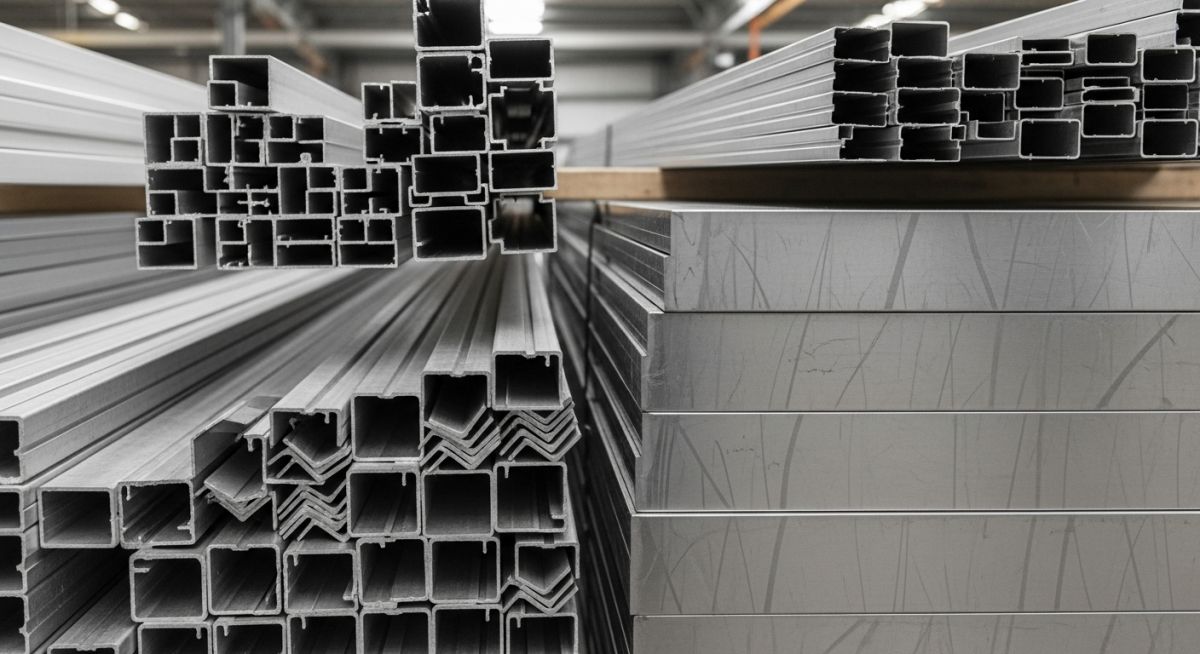
Mill Finish is the raw, unpolished surface appearance of metal—typically aluminum or steel—exactly as it is produced at the mill without secondary chemical or mechanical processing. It is characterized by a dull luster, natural oxidation (patina), and visible “die lines” or “chatter marks” from the manufacturing equipment.
In This Engineering Guide
Knowledge Check: Mill Finish Fundamentals
Loading first question…
What is Mill Finish?
In the metallurgical and fabrication sectors, a Mill Finish refers to the specific surface condition of a metal product—most commonly aluminum extrusions, stainless steel sheets, or structural steel—at the moment it exits the primary manufacturing equipment. This finish is the byproduct of the high-pressure mechanical forces applied during hot or cold rolling, extrusion, or drawing processes.
From an engineering perspective, choosing a Mill Finish means accepting the material in its most honest form. It has not been subjected to electrochemical baths (anodizing), abrasive blasting (bead blasting), or protective polymer coatings (powder coating). Because it is produced in a high-speed industrial environment, the surface typically exhibits “mill scale” on steel or a thin, naturally occurring aluminum oxide layer on non-ferrous alloys.
Key Characteristics of a Standard Mill Finish
Every Mill Finish possesses distinct physical signatures that dictate how the material will perform in the field. Unlike polished surfaces, these characteristics are functional rather than purely aesthetic.
Surface Texture and Roughness (Ra) Values
The texture of a Mill Finish is defined by its Surface Roughness (Ra). This value measures the arithmetic average of the profile height deviations from the mean line. For standard aluminum extrusions, the Ra typically ranges from 0.8 to 1.6 micrometers (32 to 63 micro-inches). These microscopic peaks and valleys are often oriented in a linear pattern known as “die lines,” which occur as the metal is pushed through a steel die.

Natural Color Profiles of Raw Metals
The color of a Mill Finish is not uniform. For example, 6061-T6 aluminum will appear as a light, silvery gray, while cold-rolled steel may have a darker, matte appearance. Over time, these colors change as the metal reacts with atmospheric oxygen—a process known as oxidation. This creates a dulling effect that many engineers utilize as a protective “patina” in non-corrosive environments.
Why Mill Finish Lacks Reflective Shine
Unlike a #8 mirror finish on stainless steel, a Mill Finish is “non-specular.” This means it scatters light in multiple directions rather than reflecting it back to the viewer. This lack of shine is due to the “chatter marks” and micro-pores inherent in the rolling process. For applications requiring low-glare properties, such as solar panel racking or highway sign supports, this characteristic is highly desirable.
Industrial Applications of Mill Finish
The versatility of the Mill Finish allows it to be used across various sectors where the structural integrity of the metal is more important than the visual perfection of the surface.
Mill Finish in Architecture and Construction
In the 2026 construction landscape, Mill Finish aluminum is frequently used for concealed structural components. This includes curtain wall sub-frames, masonry anchors, and roofing clips. Since these components are hidden behind the building envelope, there is no technical requirement for expensive decorative finishes, allowing project managers to reallocate budgets to higher-performance insulation or glazing.
Industrial Equipment and Machinery Frames
Conveyor systems, CNC machine chassis, and clean-room framing often utilize a Mill Finish. According to ISO 286 standards for tolerances, the raw surface provides a stable base for mounting sensors and drive motors without the dimensional variations that can be introduced by thick powder coatings.
Automotive Structural Components
Automotive engineers specify Mill Finish for internal battery housings and chassis reinforcements. The raw surface allows for superior weld penetration and bonding when using structural adhesives, as there is no secondary coating to strip away or interfere with the chemical bond between the metal and the adhesive.
The Engineering Importance of Choosing Mill Finish
Cost-Effectiveness vs. Secondary Finishes
From a Procurement and Engineering (EPC) standpoint, the primary driver for selecting a Mill Finish is the Bill of Materials (BOM) optimization. On average, skipping secondary finishes like anodizing or liquid painting can reduce the unit cost of a component by 15% to 35%. For large-scale infrastructure projects, such as bridge decking or utility-scale solar farms, these savings can amount to millions of dollars.
Engineering Note:
When specifying a Mill Finish for outdoor use, engineers must consult ASTM B209 for aluminum or ASTM A240 for stainless steel to ensure the alloy’s natural corrosion resistance is sufficient for the local environmental conditions (C1-C5 corrosion categories).
Customization and Secondary Coating Potential
A primary advantage of a Mill Finish is its role as a “blank canvas” for post-fabrication treatments. For parts that require specific colors or enhanced UV protection, the raw surface provides an ideal substrate for chemical conversion coatings (such as chromate or non-chrome pretreatments). In 2026, many automated powder coating lines prefer Mill Finish aluminum because it avoids the adhesion issues sometimes associated with the thick oxide layers found on aged or poorly stored anodized materials.
Corrosion Resistance and Material Oxidation
When exposed to the atmosphere, a Mill Finish metal begins a natural chemical reaction. For aluminum, this results in the rapid formation of a microscopic layer of Aluminum Oxide (Al2O3). This layer is roughly 2.5 to 5 nanometers thick and acts as a self-healing barrier against further environmental degradation. In non-marine environments, this “Patina” provides sufficient protection for the entire lifecycle of the component.
| Property | Mill Finish | Anodized | Powder Coated |
|---|---|---|---|
| Relative Cost | Low (Base) | Medium-High | Medium |
| Electrical Conductivity | High | Insulative | Insulative |
| Surface Hardness | Variable (Alloy dependent) | Very High | Moderate |
| Aesthetic Uniformity | Low (Streaks possible) | High | Very High |
Technical Properties of Mill Finish Aluminum
Under ASTM B209 standards, Mill Finish Aluminum is the most common specification for sheet and plate alloys like 3003, 5052, and 6061. One critical technical detail is the “Reflectivity Transition.” A freshly extruded Mill Finish can have a Specular Reflection (gloss) value that starts high but drops by up to 40% within the first six months of outdoor exposure as the oxide layer thickens.
For electrical engineers, Mill Finish is often mandatory for grounding lugs and busbars. Because there is no insulative anodic layer, the contact resistance is minimized, ensuring safe electrical continuity according to NEC (National Electrical Code) requirements.
Performance Standards for Mill Finish Stainless Steel
In the stainless world, “Mill Finish” is often categorized by specific designations under ASTM A240. The most common is the 2B Finish—a bright, cold-rolled finish that is smooth but not reflective. Unlike aluminum, Mill Finish Stainless Steel relies on its high chromium content (minimum 10.5%) to maintain its surface integrity.
- No. 1 Finish: Hot-rolled, annealed, and descaled. Rough and dull.
- No. 2D Finish: A dull, cold-rolled Mill Finish that reduces glare in industrial flooring.
- No. 2B Finish: The standard “Mill Finish” for most 304 and 316 stainless sheets.
Long-term Durability of a Mill Finish Metal Roof
Choosing a Mill Finish Metal Roof is an architectural decision often seen in industrial warehouses and agricultural buildings. Over a 20-year period, the roof will undergo “weathering.” In year one, it may be highly reflective (high Albedo), which helps in cooling. By year ten, the Mill Finish will have transitioned to a uniform, matte gray.
Engineering calculations for thermal expansion must account for this: a darker, oxidized Mill Finish surface will absorb more solar radiation than a brand-new, shiny one, potentially increasing the surface temperature by 10-15% over its lifespan.
Steel Mill Finish and ASTM Standards
Structural steel, such as I-beams and channels (ASTM A36), features a very different Mill Finish compared to aluminum. This is characterized by “Mill Scale”—a bluish-black layer of mixed iron oxides (FeO, Fe2O3, and Fe3O4).
While mill scale protects the steel during transit, it is brittle. For high-performance coatings, engineers specify SSPC-SP6 (Commercial Blast Cleaning) to remove the Mill Finish before painting, ensuring the coating bonds directly to the base metal rather than the flaky scale.
EPCLand YouTube Channel
2,500+ Videos • Daily Updates
Mill Finish Calculator: Cost & Roughness Estimator
Estimate the surface roughness (Ra) and potential cost savings of specifying a Mill Finish instead of secondary surface treatments for your engineering project.
Mill Finish vs. Clear Anodized: A 20-Year Lifecycle Cost Analysis
When evaluating the Total Cost of Ownership (TCO) for industrial projects in 2026, engineers must look beyond the initial purchase price. While a Mill Finish offers the lowest entry-level Capital Expenditure (CAPEX), the long-term Operating Expenditure (OPEX) varies significantly based on the installation environment.

For a standard structural application (e.g., 10,000 square feet of aluminum framing), the following table breaks down the engineering financial trade-offs between selecting a Mill Finish and a Class II Clear Anodized finish.
| Cost Factor (per 10k sq. ft) | Mill Finish | Clear Anodized |
|---|---|---|
| Initial Procurement (Year 0) | $45,000 | $62,000 |
| Pre-Installation Cleaning | $2,500 (De-greasing) | $500 (Basic Rinse) |
| 10-Year Maintenance Cost | $8,000 (Oxide Scrubbing) | $2,000 (Soft Rinse) |
| 20-Year Aesthetics Loss | High (Significant Dulling) | Low (Retains Luster) |
| Estimated 20-Year Total | $55,500 | $64,500 |
Engineering Verdict
The financial data reveals that the Mill Finish remains the more economical choice over a 20-year period, saving approximately 14% in total lifecycle costs despite the higher maintenance requirements. However, this calculation assumes a "Category C2" (Inland/Low Humidity) environment.
Key Procurement Insight: If the project requires a specific "Architectural Signature" or is located within 5 miles of a coastline, the "Aesthetic Loss" of a Mill Finish becomes a financial liability, often necessitating a switch to anodized or coated surfaces to prevent premature structural replacement.
Mill Finish Failure Case Study: Coastal Oxidation Analysis

Project Data
- Project Type: 50MW Utility-Scale Solar Installation
- Location: Gulf Coast, USA (C5-M Environment)
- Material: 6063-T6 Aluminum Extrusions
- Surface Specified: Standard Mill Finish
- Project Year: 2026
The Failure
Within 14 months of commissioning, the Mill Finish rails exhibited significant "white rust" (aluminum oxide buildup). While structural integrity remained within 95% of design limits, the cosmetic degradation triggered client concerns regarding the 25-year service life warranty and potential pit corrosion in high-stress fastener zones.
Engineering Root Cause Analysis
The failure was attributed to Filiform Corrosion, a type of localized corrosion occurring under thin films or in the microscopic "die lines" of a Mill Finish. In the high-salinity, high-humidity coastal environment, chloride ions trapped in the surface roughness (Ra 1.4) accelerated the natural oxidation process beyond the material's ability to self-passivate.
The Engineering Fix
The technical team implemented a dual-strategy for the remaining project phases:
- Specification Shift: Moved from Mill Finish to AAMA 611 Class I Clear Anodized coating (minimum 0.7 mil thickness).
- Fastener Isolation: Introduced EPDM washers to prevent galvanic coupling between the raw aluminum surface and stainless steel bolts.
- Maintenance Protocol: Scheduled semi-annual fresh-water rinses to remove salt deposits from the raw metal pores.
Lessons Learned
While a Mill Finish is highly cost-effective for 90% of industrial applications, it should not be specified for "Category C5" (Marine) environments without a lifecycle cost-benefit analysis that includes potential cleaning and premature replacement costs.
Frequently Asked Questions About Mill Finish
What are the long-term maintenance requirements for a Mill Finish surface?
How does Mill Finish aluminum appearance change compared to anodized finishes?
Is a Mill Finish surface suitable for immediate painting or coating?
Can Mill Finish stainless steel be used in food-grade industrial applications?
Conclusion: Maximizing ROI with Mill Finish Materials
Selecting a Mill Finish for your engineering project is a strategic decision that balances material cost with functional performance. Whether you are specifying 6061 aluminum for structural frames or 2B stainless steel for industrial tanks, understanding the raw state of the metal allows for better budget allocation and more accurate long-term durability forecasting.
In 2026, the push for sustainable and cost-effective infrastructure makes the Mill Finish a preferred choice for renewable energy components, hidden architectural structures, and automotive chassis. By acknowledging the natural oxidation process and surface roughness profiles defined by ASTM standards, engineers can utilize these raw materials to their full potential without the unnecessary expense of secondary cosmetic treatments.


