HDPE Pipe Meaning (Full Form & Basics)

HDPE pipe meaning refers to High-Density Polyethylene pipe, a thermoplastic piping solution manufactured from petroleum-derived ethylene. This material is widely utilized in 2026 for water, gas, and industrial services due to its high strength-to-density ratio, flexibility, and chemical resistance. HDPE pipes are classified by PN (pressure nominal) ratings, such as PN6, PN10, PN12.5, and PN16, which dictate the allowable operating pressure in bar.
Quick Navigation
Knowledge Check: HDPE Essentials
Question 1 of 5
Complete Course on
Piping Engineering
Check Now
Key Features
- 125+ Hours Content
- 500+ Recorded Lectures
- 20+ Years Exp.
- Lifetime Access
Coverage
- Codes & Standards
- Layouts & Design
- Material Eng.
- Stress Analysis
Engineering Theory: HDPE Pipe Meaning & Full Form
To understand the HDPE pipe meaning, one must look at its molecular structure. High Density Polyethylene pipe specifications are defined by the lack of branching in the polymer chain, which results in a higher density (0.93 to 0.97 g/cm3) and stronger intermolecular forces compared to LDPE. In 2026, engineering standards like ISO 4427 and ASTM D3350 govern the production of these pipes to ensure they withstand environmental stress cracking.
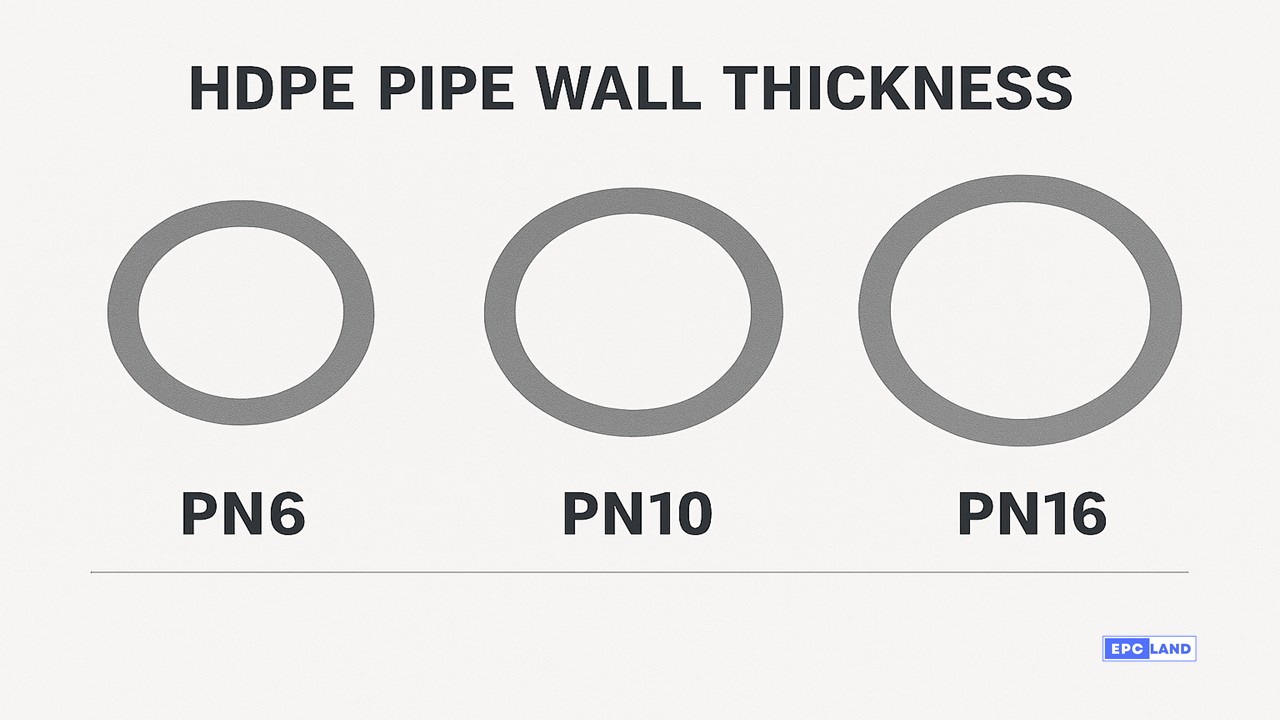
Figure 1: Cross-sectional variation based on PN rating and wall thickness.
The Physics of Pressure Ratings
The most critical aspect of the HDPE pipe full form in practical application is the PN rating in HDPE pipe meaning. PN stands for “Pressure Nominal,” which is the maximum pressure a pipe can handle at 20 degrees Celsius. This is directly related to the Standard Dimension Ratio (SDR).
Pressure Calculation Formula
P = (2 * S) / (SDR – 1)
Where:
- P = Hydrostatic Design Pressure (bar/psi)
- S = Design Stress of the material (MPa)
- SDR = Standard Dimension Ratio (OD / Minimum Wall Thickness)
HDPE Pipe Pressure Rating Chart: Bar to PSI
Selecting the correct HDPE pipe PN16 vs PN10 depends on the operational safety factor required for your 2026 infrastructure project. Use the table below for a quick engineering reference on pressure capabilities.
| PN Rating | Pressure (Bar) | Pressure (PSI) | SDR Equivalent | Typical Use Case |
|---|---|---|---|---|
| PN 6 | 6 Bar | 87 PSI | SDR 26 | Gravity Sewer / Low Pressure |
| PN 10 | 10 Bar | 145 PSI | SDR 17 | Domestic Water Mains |
| PN 12.5 | 12.5 Bar | 181 PSI | SDR 13.6 | Industrial Process Piping |
| PN 16 | 16 Bar | 232 PSI | SDR 11 | High-Pressure Water/Gas |
Engineer’s Note: When performing an SDR to PN conversion for HDPE, always account for temperature derating factors. HDPE loses strength as the temperature of the fluid increases above 20°C.
Case Study: HDPE Pipe Meaning & Failure Analysis
In early 2026, a major municipal water project in a coastal region faced a critical decision regarding pipe material selection. The existing ductile iron infrastructure had reached its 50-year limit, suffering from massive internal tuberculation and external corrosion. The engineering firm required a solution that offered a 100-year design life while remaining cost-effective for a 15km distribution network.
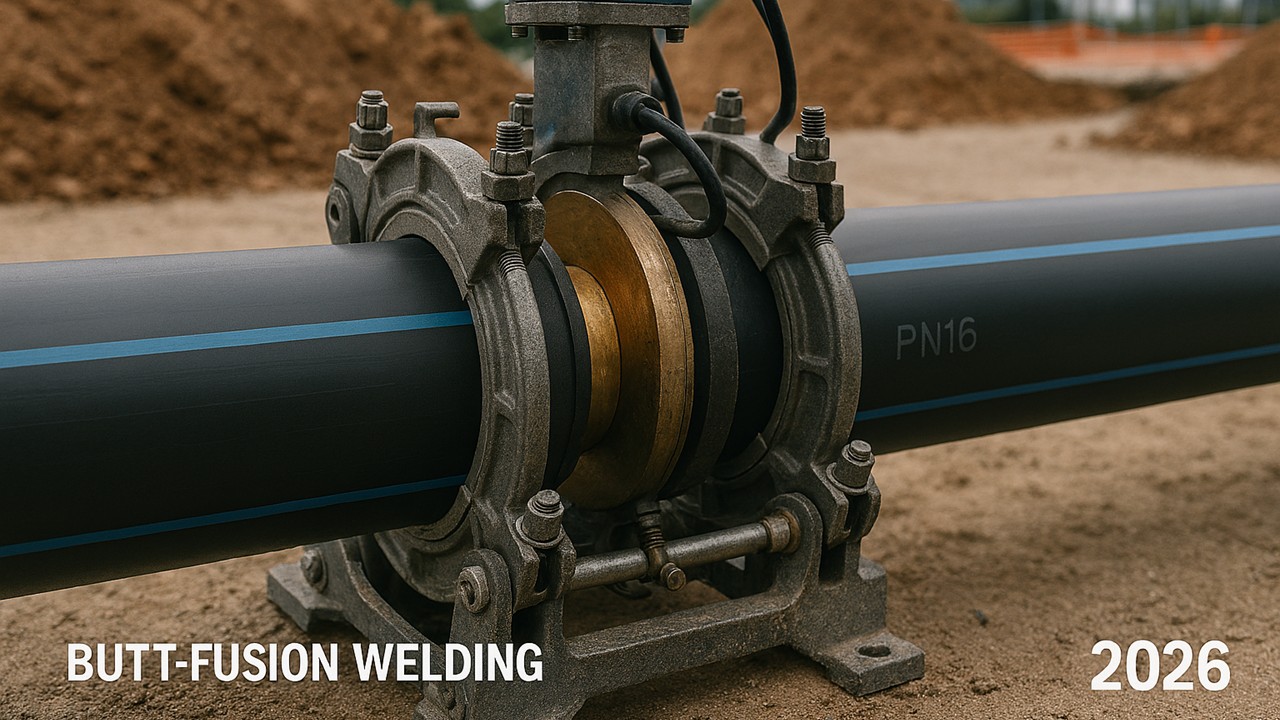
Image: On-site butt-fusion welding of a PN16 distribution main in 2026.
Project Specifications
- Location: Coastal Metro Region
- Material: PE100 High-Density Polyethylene
- Rating: PN16 (16 Bar Working Pressure)
- Method: Horizontal Directional Drilling (HDD)
Operating Conditions
- Fluid: Potable Water
- Max Temp: 35°C (Summer Peak)
- Soil Type: High Salinity / Sandy Loam
- Surge Limit: Up to 20 Bar (Transient)
The Challenge: Pressure Transients
The primary concern was potential surge pressures (water hammer) caused by rapid pump shutdowns. Standard PVC pipes often fail in these scenarios due to fatigue. The engineering team conducted a detailed HDPE pipe pressure rating chart bar to psi analysis to ensure the chosen PN16 rating provided an adequate safety margin for both static and dynamic loads.
Analysis & Implementation
By choosing HDPE, the project utilized “Butt-Fusion” technology, creating a leak-proof, monolithic system. Unlike gasketed joints, the HDPE joints are resistant to the axial loads imposed during the HDD pulling process. This allowed for 300-meter continuous pipe strings to be installed under existing roadways without trenching.
The Result & ROI
EPCLand YouTube Channel
2,500+ Videos • Daily Updates
The Extrusion Process & Material Composition
Beyond the basic HDPE pipe meaning, engineers must understand that these are thermoplastic pipes manufactured through a precision extrusion process. This involve melting high-density polyethylene resin and forming it into a continuous profile. In 2026, this method allows for a seamless structure that provides excellent strength, flexibility, and chemical resistance.
Critical Selection Factors for 2026 Infrastructure
When determining High Density Polyethylene pipe specifications, selecting the correct size involves more than just diameter. Engineers must evaluate the following matrix:
| Factor | Engineering Description |
|---|---|
| Flow Rate | Calculate the required volume of fluid per unit time to prevent head loss. |
| Pressure Rating | Select a PN rating (PN6 to PN32) that handles both static and surge pressure. |
| Temperature | Account for fluid heat; high temperatures require derating the PN capacity. |
| Installation Space | Verify minimum bend radius for flexible layouts in tight corridors. |
| Regulations | Ensure compliance with ISO 4427 or ASTM D3350 for 2026 compliance. |
The Significance of PN in HDPE Pipes
The HDPE pipe full form context extends into the “Pressure Nominal” (PN) classification system. This numerical indicator is vital for 2026 safety standards, providing the maximum allowable operating pressure (MAOP) for a specific pipe at 20°C.
Common PN Ratings
Ratings range from PN 2.5 (lowest) to PN 32 (highest). In modern municipal water works, HDPE pipe PN16 vs PN10 is the most common debate, with PN16 offering a superior safety margin for surge protection.
Safety & Derating
Engineers must apply derating factors based on chemical concentration and temperature. A pipe rated for 16 bar at 20°C may only handle 10 bar if the fluid reaches 40°C.
Categorization: Types of HDPE Pipes
Modern 2026 piping systems utilize different structural designs depending on the mechanical load and fluid dynamics required.
1. Solid Wall HDPE
Pressure Systems
The industry standard for HDPE pipe meaning. Composed of a single, dense layer of PE100 or PE100-RC. Ideal for water mains and gas distribution due to its high burst resistance.
2. Structured Wall
Gravity & Drainage
Features multiple layers or hollow profiles. This reduces weight while maintaining high ring stiffness, making it the preferred choice for 2026 sewage and stormwater management.
3. Steel Reinforced
High-Pressure Hybrid
Integrates a steel mesh or spiral within the PE wall. This allows for an SDR to PN conversion for HDPE that exceeds typical thermoplastic limits, reaching pressures of PN25 and PN32.
4. Corrugated / Double Wall
Culverts & Cable
A corrugated outer shell for soil load resistance combined with a smooth inner bore for optimal hydraulic flow. Frequently used for cable protection and fiber optic ducting.
Need a Specific Pressure Calculation?
Refer to our HDPE pipe pressure rating chart bar to psi in the previous section for exact SDR values.
View Pressure ChartFactors Influencing PN Selection in 2026
Selecting the appropriate PN rating in HDPE pipe meaning requires a multi-faceted engineering approach. Beyond the basic HDPE pipe full form, technical teams must evaluate how external and internal stressors impact the pipe’s design life.
1. Operating Pressure
Determine both average and peak surge pressures. Your chosen PN rating must exceed these to ensure long-term performance and reliability.
2. Fluid Compatibility
Chemical viscosity and corrosiveness can degrade polymers. Always verify High Density Polyethylene pipe specifications against the specific fluid profile.
3. Environmental Loads
Consider soil type and temperature variations. In 2026, thermal expansion factors are critical for calculating SDR to PN conversion for HDPE.
4. Regulatory Compliance
Ensure all selections meet ISO 4427 or regional infrastructure codes to pass 2026 safety audits.
Engineering Definitions: PN 6 to PN 16 Meaning
HDPE PN 6 Meaning
A PN 6 rating indicates a nominal pressure capacity of 6 bar (approx. 87 PSI). These pipes are primarily utilized in 2026 for low-pressure irrigation and gravity-fed drainage where consistent, low-stress flow is expected.
HDPE PN 8 Meaning
With a rating of 8 bar, PN 8 pipes serve medium-pressure roles. They are the standard for rural water supply and agricultural networks, offering a balance between wall thickness and material flexibility.
HDPE PN 10 Meaning
Rated for 10 bar, this is the most common specification for potable water systems and municipal networks. It offers the enhanced pressure resistance required for urban distribution.
HDPE PN 12.5 Meaning
Handling 12.5 bar, these pipes are engineered for industrial pipelines and chemical transport. They are essential for infrastructure projects requiring high-pressure tolerance and maximum durability.
HDPE PN 16 Meaning
The PN 16 meaning represents one of the highest standard ratings at 16 bar. In a HDPE pipe PN16 vs PN10 comparison, PN 16 features significantly thicker walls to handle fire mains, high-pressure industrial surges, and long-distance transmission.
Summary: As the PN value increases, the wall thickness increases and the SDR (Standard Dimension Ratio) decreases. Always refer to the HDPE pipe pressure rating chart bar to psi for exact technical dimensions.
Installation and Maintenance of HDPE Pipes
To fulfill the HDPE pipe meaning of a “leak-free lifetime,” proper site execution is mandatory. In 2026, engineering standards emphasize that the longevity of High Density Polyethylene pipe specifications is directly tied to the quality of the initial installation and ongoing maintenance protocols.
Preparation & Handling
Trench preparation requires stable bedding and specific compaction levels to prevent localized stress. Pipes must be protected from impact and extreme temperature cycles during transport to maintain material integrity.
Fusion Welding Integrity
Joints are created via butt fusion or electrofusion. These techniques create molecular bonds that are as strong as the pipe itself, ensuring the HDPE pipe full form (High-Density) translates to a monolithic, leak-proof system.
2026 Audit Requirement: Personnel must hold valid certification in fusion techniques. Regular hydrostatic testing and joint inspections are required to identify stress concentrations before they lead to system failure.
Global Applications of HDPE Pipes
The versatility of the material allows for a wide range of uses, from municipal infrastructure to specialized industrial sectors.
Water Supply
PN10 / PN16 Ratings
Standard for potable water distribution and firefighting mains.
Sewage & Drainage
Structured / Double Wall
Corrosion-resistant collection for municipal wastewater and stormwater.
Gas Distribution
High Safety Factor
Safe, leak-free transportation of natural gas using yellow-striped pipes.
Agriculture
UV & Abrasion Resistant
Ideal for irrigation systems due to chemical and UV resistance.
Mining & Industrial
PN16 / PN25 Hybrid
Used in chemical processing for conveying abrasive slurries and acids.
Engineering Summary: HDPE Pipe Characteristics
| Characteristic | Engineering Description | Project Benefits |
|---|---|---|
| High Strength Ratio | Excellent strength-to-density ratio. | Strong yet lightweight; easy to handle. |
| Corrosion Immunity | Immune to rust and soil-based decay. | Ideal for underground and marine installs. |
| Chemical Stability | Resistant to acids, alkalis, and solvents. | Reduced maintenance in industrial apps. |
| Low Friction (C-Value) | Smooth interior (Low friction coefficient). | Higher flow rates; lower pumping costs. |
| Design Life | 50–100 years service expectancy. | Lower lifecycle cost and environmental impact. |
Frequently Asked Questions
What is the full form of HDPE pipe?
What does PN mean in HDPE pipes?
Which PN rating is right for domestic water?
PN6 vs PN10 vs PN12.5 vs PN16—what are the differences?
Final Engineering Summary
Understanding the HDPE pipe meaning is foundational for modern fluid transport. By 2026 standards, its durability, fusion-joined integrity, and immunity to corrosion make it the superior choice over legacy materials. Whether you are using a HDPE pipe pressure rating chart bar to psi for design or calculating High Density Polyethylene pipe specifications for a tender, selecting the correct PN rating ensures a leak-free system for the next century.
