Author: Atul Singla | Senior Piping Engineer | Last Updated: May 2026
What is Tensile Strength? Tensile Strength of Steel and Other Materials
What is Tensile Strength? Tensile Strength of Steel and Other Materials
I still remember a hydrotest job where a supposedly “high-strength” pipe failed before reaching the target pressure. Everyone was shocked. On paper, the tensile strength of steel looked sufficient. But in the field, numbers don’t lie — assumptions do.
In piping engineering, I don’t just look at tensile strength as a number from a datasheet. I treat it as a failure boundary. If you misunderstand it, you risk rupture, shutdown, or worse — safety incidents.
Key Takeaways
- Tensile strength defines the maximum stress a material can withstand before failure.
- The tensile strength of steel varies widely depending on grade, heat treatment, and composition.
- Yield strength vs tensile strength confusion is one of the most common design mistakes.
- Field failures often occur due to incorrect assumptions, not lack of data.
- Understanding the stress-strain curve is non-negotiable for engineers in critical systems.
Tensile strength is the maximum stress a material can withstand while being stretched before breaking. In steel, it depends on composition and treatment. Engineers use it to define failure limits, select materials, and ensure structural safety under load conditions.
Interactive Engineering Quiz
1. What does tensile strength represent?
Definition of Tensile Strength
In my experience, tensile strength is not just a lab number—it is the final boundary before rupture. Technically, it is the maximum engineering stress a material withstands in a uniaxial tensile test, typically per ASTM E8/E8M.
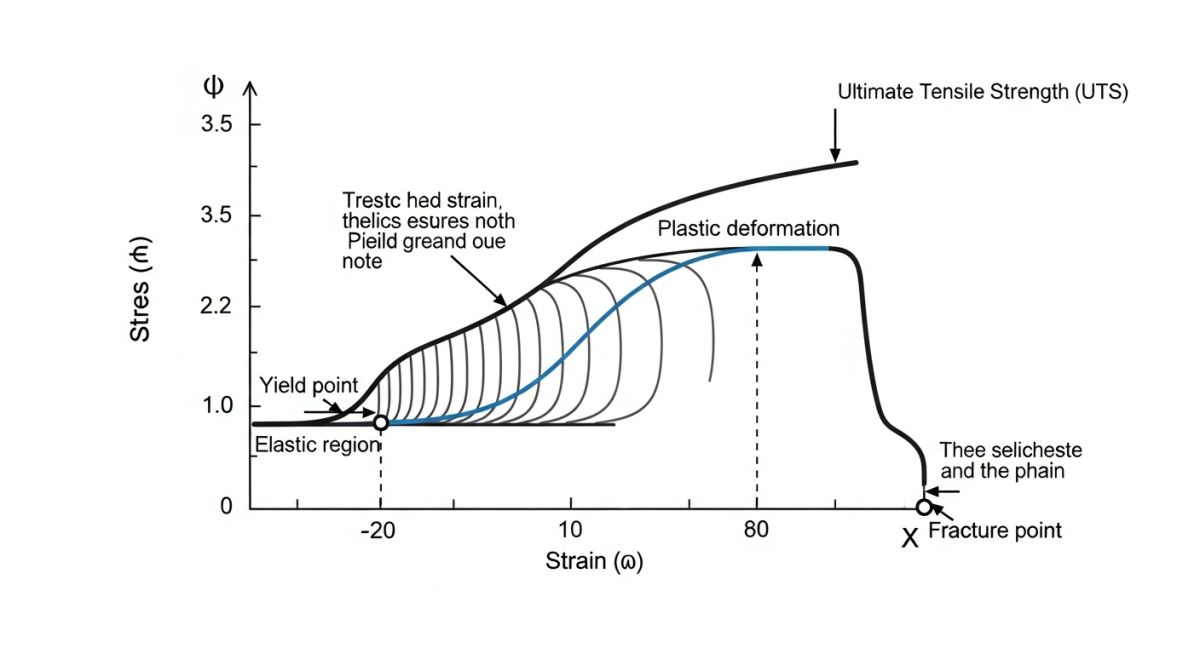
For steel, we report Ultimate Tensile Strength (UTS) in MPa. It sits at the peak of the stress–strain curve, right before necking dominates.
Significance of Tensile Strength
- Defines failure limit for pressure parts
- Guides material selection in high-load systems
- Used in allowable stress via codes like ASME B31.3
- Helps compare materials across grades and heat treatments
Factors Affecting Tensile Strength
- Composition: Carbon, alloying elements (Cr, Mo, Ni)
- Heat Treatment: Quenching, tempering, annealing
- Grain Structure: Fine grains → higher strength
- Manufacturing: Forged vs cast vs rolled
- Temperature: Strength drops at high operating temperatures
Measuring Tensile Strength
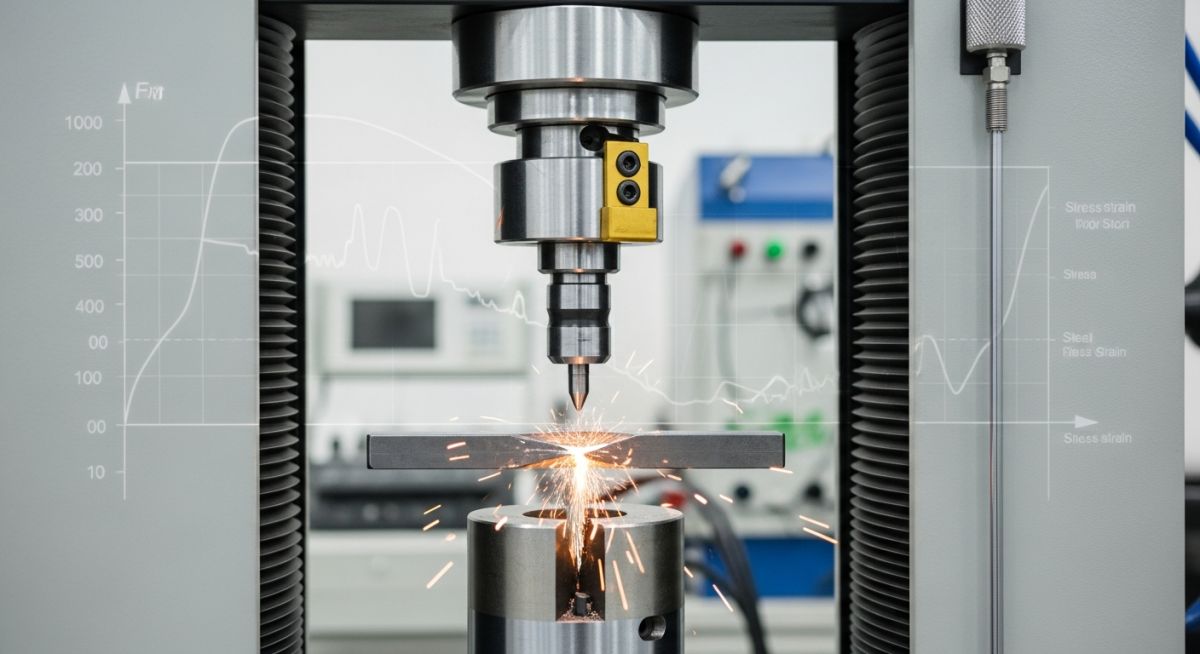
We use a Universal Testing Machine (UTM). A specimen is pulled at a controlled rate while load and elongation are recorded. Output is a stress–strain curve from which we read:
- Yield Strength (0.2% offset)
- Ultimate Tensile Strength (UTS)
- Elongation at fracture
Tensile Strength vs Yield Strength
| Parameter | Yield Strength | Tensile Strength |
|---|---|---|
| Definition | Start of plastic deformation | Maximum stress before fracture |
| Design Role | Primary for allowable stress | Failure limit check |
| Field Usage | Sizing thickness | Failure investigation |
Tensile Strength of Steel
The tensile strength of steel varies widely:
- Mild Steel: ~400–550 MPa
- Carbon Steel (ASTM A106 Gr B): ~415 MPa
- Alloy Steel (P91): ~585–760 MPa
- Stainless Steel (304): ~515–720 MPa
Tensile Strength of Other Materials
- Aluminum: ~90–570 MPa
- Copper: ~210–250 MPa
- Concrete: Very low (~2–5 MPa in tension)
- Composites: Highly directional, up to 1500+ MPa
Field Case Study: Real-World Application
During a hydrotest, a pipeline failed below expected pressure. Datasheet tensile strength looked acceptable.
I reviewed the MTC and heat treatment records. The steel had undergone improper normalization, leading to coarse grain structure. That reduced actual tensile performance.
We cross-verified with re-testing per ASTM standard and observed a 15% lower UTS than specified.
Root cause identified → material batch rejected → vendor process corrected → zero repeat failures.
Lesson: Never trust tensile values blindly. In the field, always validate heat treatment + traceability. That’s where failures hide.
Executive FAQ
What is a good tensile strength for steel?
Why is yield strength more used in design?
Does higher tensile strength mean better material?
Can tensile strength change over time?
What test standard is used?
Why did my pipe fail below tensile strength?
Complete Course on
Piping Engineering
Check Now
Key Features
- 125+ Hours Content
- 500+ Recorded Lectures
- 20+ Years Exp.
- Lifetime Access
Coverage
- Codes & Standards
- Layouts & Design
- Material Eng.
- Stress Analysis

📚 Recommended Resources: Tensile Strength of Steel
Read these Guides
- 📄 A36 Steel: Composition, Properties, and Real-World Engineering Applications
- 📄 Types of Structural Steel Shapes: The 2026 Engineering Guide to AISC Sections
- 📄 What is Chromoly Steel? AISI 4130 Characteristics & Engineering Applications
- 📄 Carbon Steel vs LTCS Pipe: Engineering Guide to Material Substitution 2026