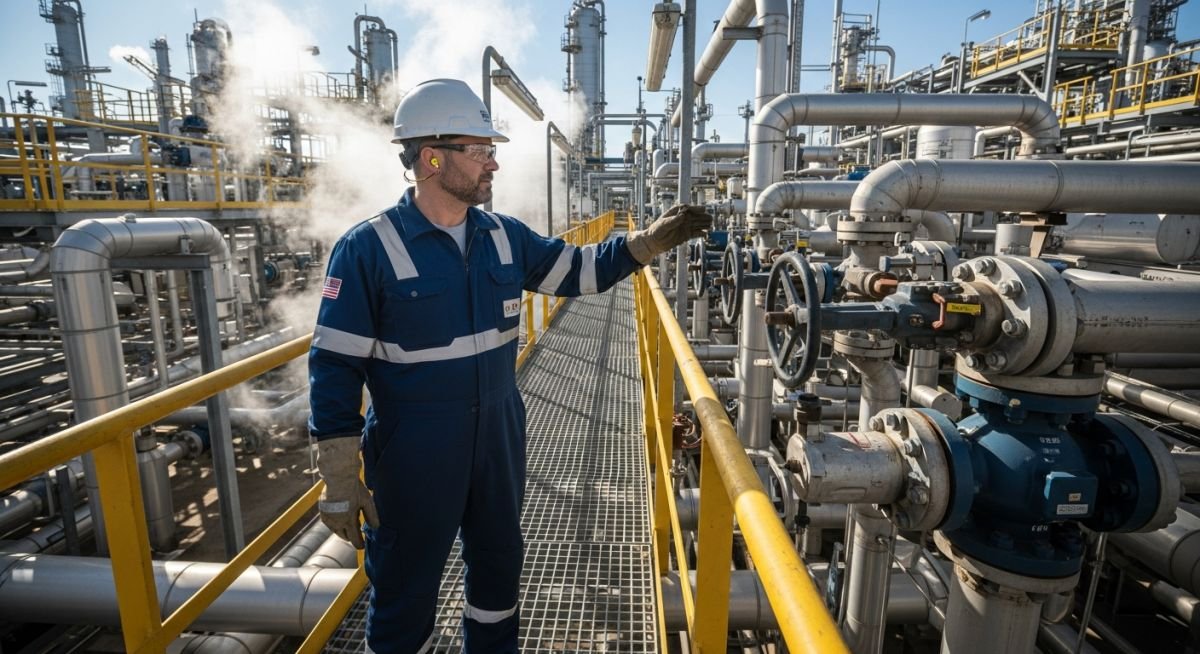
Site Visit Safety Rules: Operating Plant Visit Safety Guidelines
In my two decades of walking through live process units, I have learned that the most dangerous hazard is the one you assume is absent. Whether you are performing a piping stress walkdown or a routine equipment audit, your presence in an operating plant requires strict adherence to established Site Visit Safety Rules. These guidelines are not mere bureaucratic hurdles; they are the difference between a successful data collection mission and a catastrophic incident.
When I step onto a site, I treat every valve, flange, and pipe rack as a potential source of high-pressure release or thermal hazard. This guide distills the essential safety protocols I use to navigate complex brownfield environments, focusing on hazard identification, proper PPE selection, and the critical importance of the Permit to Work system.
Key Takeaways for Site Inspections:
- Always verify the current status of the Permit to Work before entering any process area.
- Maintain a minimum safe distance from rotating equipment and high-pressure lines.
- Ensure your PPE is rated for the specific chemical and thermal hazards of the unit.
- Never bypass safety barriers or ignore audible site alarms.
Technical Implementation of Site Visit Safety Rules
Hazard Mitigation Protocols: These technical procedures involve the systematic identification and control of energy sources, chemical exposures, and structural risks during plant inspections to maintain compliance with ASME B31.3 and local safety standards.
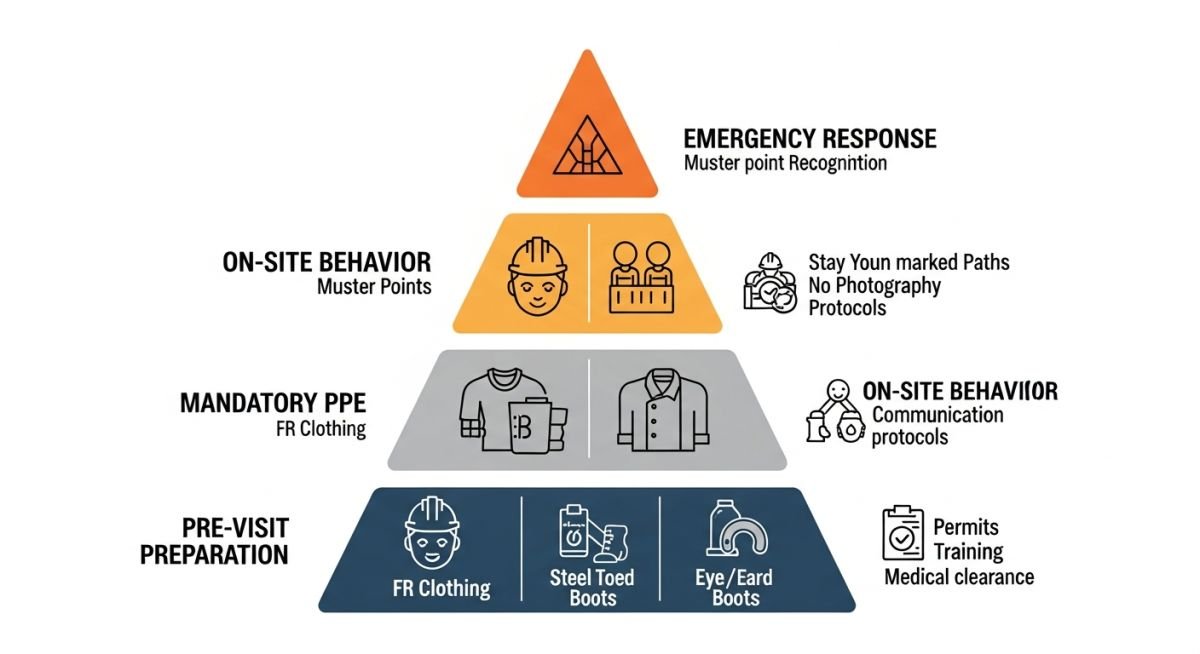
During a site visit, the primary technical challenge is the quantification of risk in a dynamic environment. I categorize hazards into three distinct tiers: kinetic, thermal, and chemical. Kinetic hazards involve high-pressure piping systems where a flange leak could result in a high-velocity jet. According to API 570, inspectors must maintain a clear line of sight and avoid standing in the direct path of potential leak sources, such as valve stems or gasketed joints.
Thermal hazards require a rigorous assessment of surface temperatures. If a pipe is insulated, I never assume the surface is cool. I utilize infrared thermography to verify temperatures before any physical contact or proximity work. If the surface temperature exceeds 60 degrees Celsius, standard contact is prohibited without specialized thermal-rated PPE. This is a critical requirement for preventing contact burns in high-temperature steam or hydrocarbon service.
Field Warning: High-Pressure Energy Sources
Never approach a piping system that is undergoing a pressure test or is currently in a transient state. Always confirm the system pressure is within the design limits specified in the P&ID and that the NFPA 70E arc flash boundaries are respected if electrical equipment is nearby.
Chemical exposure risk is managed through the strict application of the site’s Material Safety Data Sheets (MSDS). Before entering a unit, I review the specific chemicals present, such as H2S or benzene. If the concentration levels exceed the permissible exposure limits, I mandate the use of supplied-air respirators. My rule of thumb is to always carry a personal gas monitor calibrated for the specific hazards of the unit, regardless of the site’s general ambient monitoring.
Structural integrity is another often-overlooked aspect of site safety. When inspecting elevated pipe racks, I verify the condition of grating and handrails. If I observe signs of severe corrosion or missing fasteners, I immediately report the condition to the site supervisor and avoid the area. The structural load-bearing capacity of older plants can be compromised by years of atmospheric corrosion, and I never rely on existing structures without a visual verification of their current state.
Safety Protocol Efficacy: This analysis evaluates the operational benefits and logistical constraints associated with implementing rigorous site safety rules during industrial facility inspections.
Advantages
- Reduces the probability of high-consequence incidents by enforcing standardized hazard identification.
- Ensures legal and regulatory compliance with OSHA and local safety mandates.
- Facilitates better data accuracy by allowing inspectors to focus on technical tasks rather than immediate survival.
- Promotes a culture of safety that improves overall site morale and operational discipline.
Disadvantages
- Increases the time required for site access due to mandatory inductions and permit processing.
- Requires significant investment in high-quality, specialized PPE for diverse environmental conditions.
- Can lead to “safety fatigue” if protocols are overly complex or redundant for low-risk areas.
- May create logistical bottlenecks during emergency inspections where rapid response is required.
Industrial Safety Deployment: These applications demonstrate the practical integration of safety rules across various high-hazard sectors to maintain operational continuity and personnel protection.
Refinery Turnaround Inspections
During major refinery turnarounds, the density of contractors and equipment increases the risk of cross-contamination and mechanical interference. I apply strict zoning and permit-to-work protocols to ensure that hot work and confined space entries are isolated from non-essential personnel, preventing accidental exposure to residual hydrocarbons.
Offshore Platform Integrity Audits
Inspecting offshore assets requires specialized safety rules due to the confined nature of the facility and the harsh marine environment. I prioritize fall protection and emergency egress training, as the ability to evacuate or reach a muster station is severely limited compared to onshore plants.
Chemical Processing Plant Upgrades
When upgrading piping systems in chemical plants, the presence of toxic or corrosive media necessitates the use of chemical-resistant suits and full-face respirators. I enforce a “buddy system” where every inspector is monitored by a safety observer who remains outside the immediate hazard zone to coordinate emergency response if needed.
When preparing for an industrial site visit, the selection of Personal Protective Equipment (PPE) is not merely a suggestion but a mandatory compliance requirement dictated by OSHA and internal site safety protocols. The table below outlines the baseline requirements for various zones within an operating plant, categorized by the level of hazard exposure typically encountered during routine inspections.
Engineers must verify that all equipment meets the relevant ANSI or ASTM standards before entering the gate. Failure to provide documentation for flame-resistant clothing (FRC) or impact-rated footwear often results in immediate denial of site access, regardless of the criticality of the inspection task.
| Zone Classification | Primary PPE Requirement | Standard Reference |
|---|---|---|
| Administrative/Office | Standard Business Casual/Safety Glasses | ANSI Z87.1 |
| General Process Area | Hard Hat, Safety Glasses, Steel-Toe Boots | ANSI Z89.1 |
| High-Pressure/Hydrocarbon | FRC Coveralls, H2S Monitor, Face Shield | NFPA 2112 |
| Confined Space Entry | Full Body Harness, Tripod, Multi-Gas Meter | OSHA 1910.146 |
Always ensure that your H2S monitor is calibrated within the last 24 hours and that your FRC clothing is free of synthetic underlayers, which can melt to the skin during a flash fire event. These data points serve as your primary defense against preventable industrial injuries.
The following matrix maps critical safety entities to their respective engineering standards and operational parameters. Understanding these relationships is vital for any engineer conducting a site visit, as it bridges the gap between theoretical safety design and the practical, on-the-ground reality of an operating facility.
By cross-referencing these entities, you can better prepare your safety documentation and risk assessment forms. Each entry represents a specific control measure that must be validated during your pre-entry briefing with the site safety officer or the area supervisor.
| Safety Entity | Operational Parameter | Governing Standard |
|---|---|---|
| LOTO (Lockout/Tagout) | Zero Energy Verification | OSHA 1910.147 |
| Gas Detection | Lower Explosive Limit (LEL) | ISA 92.00.01 |
| Fall Protection | Anchorage Strength (5000 lbs) | ANSI Z359 |
| Hearing Protection | Decibel Threshold (85 dBA) | NIOSH 98-126 |
This matrix is intended to be used as a quick-reference guide during your site orientation. If you encounter a situation where these parameters are not met, you are authorized and encouraged to stop work immediately and report the discrepancy to the site lead.
Before stepping onto the process floor, you must complete a rigorous verification process. This checklist ensures that you have accounted for all environmental and mechanical hazards present in the facility. In my experience, the most common cause of site incidents is the failure to verify the current status of the area’s permit-to-work system.
- Permit Validation: Confirm that the active work permit covers your specific scope of inspection.
- Communication Check: Verify that your radio or mobile device is on the correct site-wide emergency channel.
- Hazard Awareness: Review the current site safety board for active maintenance or heavy lifting operations.
- Emergency Egress: Identify the nearest muster point and ensure your path to it is free of obstructions.
- PPE Integrity: Perform a final visual inspection of your hard hat, safety glasses, and FRC for signs of wear.
Once these items are checked, you must sign the site logbook. This signature is your formal acknowledgment that you understand the site-specific hazards and agree to abide by all safety regulations. If you are unsure about any aspect of the site’s safety culture, do not hesitate to ask the site safety officer for clarification before proceeding.
Field Case Study: Real-World Application
The Problem: Unplanned Exposure During Inspection
An inspection team entered a process unit without verifying the status of a nearby maintenance activity, leading to a near-miss incident involving a chemical release.
- Failure to check the daily permit-to-work board.
- Inadequate communication between the maintenance crew and the inspection team.
- Lack of awareness regarding the specific chemical hazards of the unit.
- Ignoring the site-wide alarm test schedule.
The Outcome: Implementation of Enhanced Safety Protocols
Following the incident, the site implemented a mandatory “Safety Bridge” meeting for all visiting contractors and engineering personnel.
- Mandatory 30-minute safety orientation for all visitors.
- Real-time digital tracking of all personnel within the process unit.
- Requirement for a dedicated site escort for all non-operational staff.
- Improved signage for active maintenance zones.
My recommendation is to treat every site visit as if it were your first. Never assume that the plant environment is static; conditions change rapidly, and your safety depends on your ability to adapt to these changes through constant vigilance and adherence to established protocols.
Frequently Asked Engineering Questions
What is the primary purpose of a site-specific safety orientation?
- Site-specific emergency alarm signals and evacuation routes.
- Location of safety showers and eye-wash stations.
- Specific chemical hazards present in the units you will visit.
- The facility’s unique permit-to-work and LOTO requirements.
How do I determine the correct PPE for a specific unit?
- Consult the site’s safety manual or the area supervisor.
- Review the Safety Data Sheets (SDS) for any chemicals in the area.
- Check the signage at the entrance of the process unit.
- Verify requirements with your site escort before entering the gate.
What should I do if I encounter an unsafe condition?
- Move to a safe location away from the hazard.
- Notify your site escort or the area supervisor immediately.
- Document the hazard in your field notes for the safety report.
- Do not resume work until the hazard has been mitigated and cleared by safety personnel.
Why is flame-resistant clothing (FRC) required in many plants?
How do I handle emergency alarms during a visit?
What is the importance of the permit-to-work system?
- All hazards have been identified and mitigated.
- Necessary isolations (LOTO) are in place and verified.
- The work is authorized by the appropriate operational authority.
- Communication between different work groups is maintained.
📚 Recommended Resources: Site Visit Safety Rules
Read these Guides



Complete Course on
Piping Engineering
Check Now
Key Features
- 125+ Hours Content
- 500+ Recorded Lectures
- 20+ Years Exp.
- Lifetime Access
Coverage
- Codes & Standards
- Layouts & Design
- Material Eng.
- Stress Analysis
