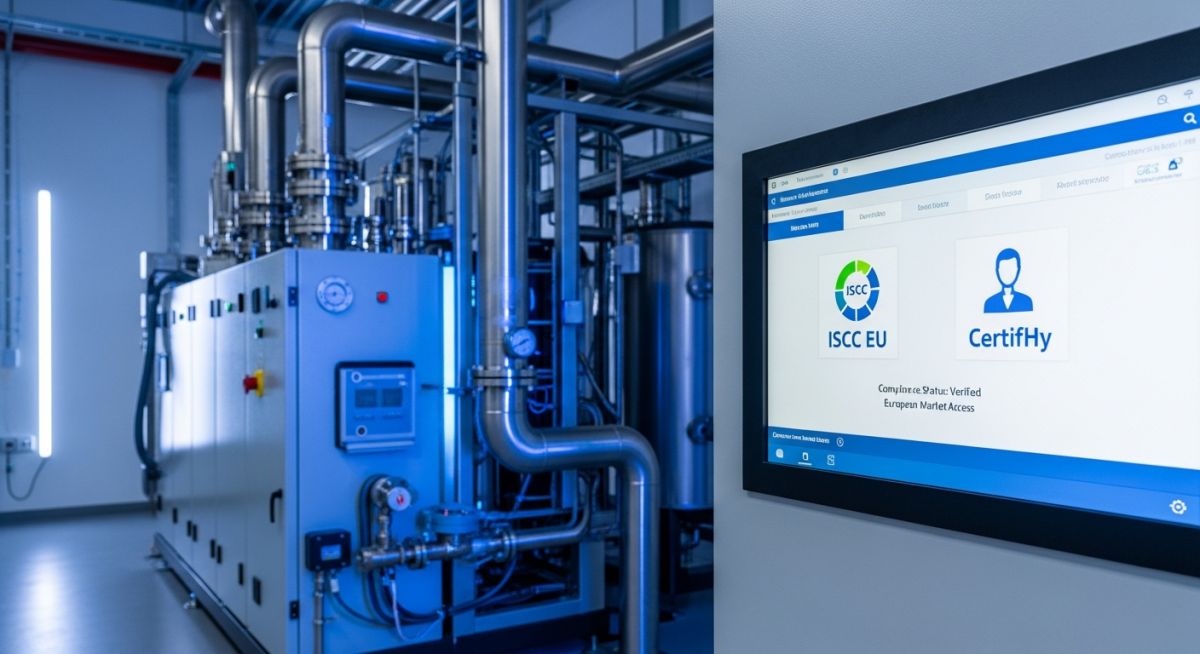
RFNBO Certification Schemes: ISCC EU vs CertifHy Comparison
In my two decades of experience navigating industrial piping and energy infrastructure, I have seen few regulatory shifts as impactful as the introduction of Renewable Fuels of Non-Biological Origin (RFNBO) mandates. As we transition toward a hydrogen-based economy, the ability to prove the “green” credentials of your output is no longer optional—it is a commercial and legal necessity.
Whether you are designing a green ammonia facility or a synthetic fuel plant, selecting the right certification partner is a critical engineering decision. This guide breaks down the technical nuances of ISCC EU and CertifHy, ensuring your project remains compliant with RED II and RED III requirements from day one.
Key Takeaways for Project Managers
- Understand the strict additionality and temporal correlation requirements for renewable electricity.
- Compare the audit rigor and market recognition of ISCC EU versus CertifHy.
- Learn how to integrate mass balance accounting into your plant’s digital control systems.
- Identify the cost-benefit trade-offs for small-scale versus utility-scale hydrogen production.
Complete Course on
Piping Engineering
Check Now
Key Features
- 125+ Hours Content
- 500+ Recorded Lectures
- 20+ Years Exp.
- Lifetime Access
Coverage
- Codes & Standards
- Layouts & Design
- Material Eng.
- Stress Analysis
Technical Analysis of RFNBO Certification Schemes
To achieve RFNBO status, a facility must demonstrate that the electricity used for electrolysis is sourced from renewable installations that are not receiving operating aid, or that the production occurs within a bidding zone where the share of renewable electricity exceeds 90 percent. My experience with these audits shows that the “Temporal Correlation” requirement—matching production to renewable generation within the same hour—is the most significant technical hurdle for plant operators.
The Mechanics of Mass Balance Accounting
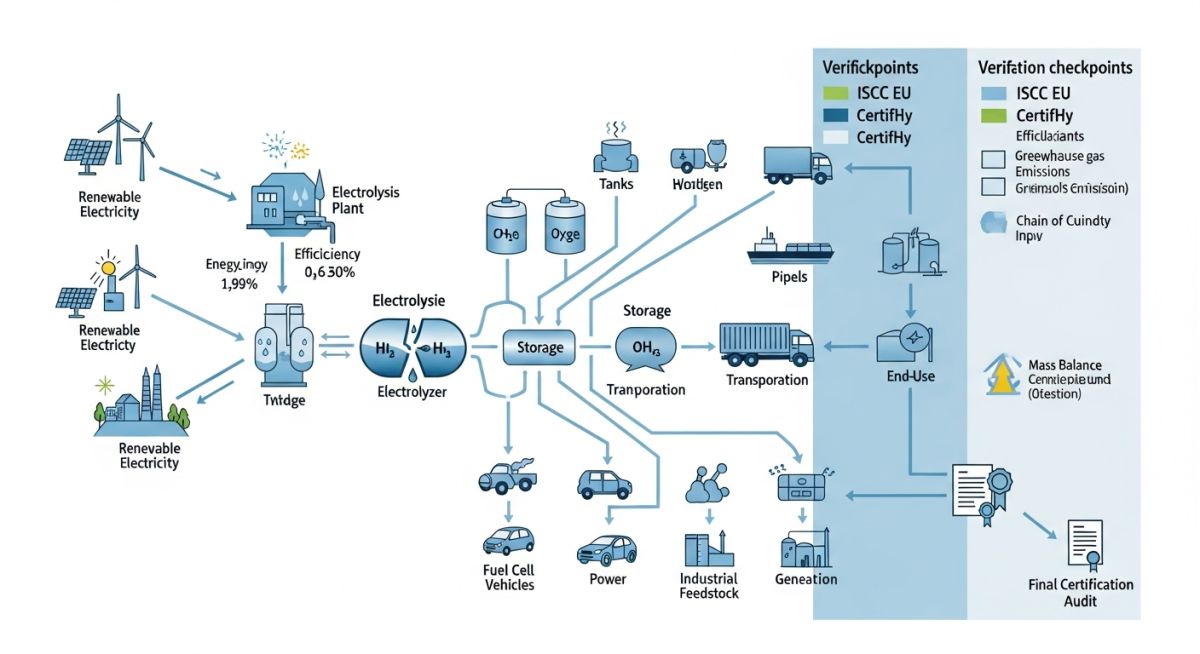
Both ISCC EU and CertifHy rely on a mass balance system to track the sustainability of the hydrogen produced. You must maintain a clear chain of custody from the renewable energy source to the final hydrogen output. This requires precise instrumentation at the electrolyzer inlet and outlet, coupled with a robust data management system that logs energy inputs in real-time.
GHG Lifecycle Assessment (LCA) Parameters
The certification schemes require a lifecycle assessment that accounts for the entire production chain. This includes the carbon intensity of the grid electricity, the energy required for water purification, and the compression or liquefaction processes. The threshold for RFNBO compliance is a 70 percent reduction in greenhouse gas emissions compared to the fossil fuel comparator, which is currently set at 94 grams of carbon dioxide equivalent per megajoule.
When calculating your facility’s carbon footprint, you must account for the following variables:
- Electricity Input: Must be verified via Power Purchase Agreements (PPAs) or direct lines.
- Water Treatment: Energy consumption for demineralization and desalination.
- Compression Losses: Thermodynamic losses during high-pressure storage.
- Fugitive Emissions: Leakage rates across the piping network and storage vessels.
In my practice, I recommend using the ISO 14067 standard as a baseline for your carbon footprint calculations. While ISCC EU and CertifHy have their own proprietary calculators, aligning your internal data with ISO standards ensures that you can switch between certification schemes if market requirements change in the future.
Advantages
- ISCC EU: Unmatched global recognition for biofuels and circular economy products.
- CertifHy: Highly specialized focus on hydrogen, offering tailored solutions for H2-specific infrastructure.
- Market Access: Both schemes provide the necessary documentation to trade hydrogen across EU borders.
- Digital Integration: Modern schemes now offer API-based reporting, reducing manual data entry errors.
Disadvantages
- Audit Costs: High recurring costs for annual third-party verification and site inspections.
- Administrative Burden: Complex documentation requirements for proving additionality and temporal correlation.
- Regulatory Volatility: Frequent updates to RED III mandates can render existing certification processes obsolete.
- Data Silos: Difficulty in integrating legacy plant control systems with modern certification reporting software.
Green Ammonia Production
Ammonia plants are the primary consumers of hydrogen, and transitioning to green feedstock requires rigorous certification to qualify for EU subsidies. By applying ISCC EU standards, operators can verify the renewable origin of their hydrogen, ensuring the final ammonia product meets the “green” classification for fertilizer and maritime fuel markets.
Synthetic Aviation Fuel (SAF) Synthesis
The aviation industry is under intense pressure to decarbonize, and RFNBO-certified hydrogen is the essential building block for Power-to-Liquid (PtL) fuels. CertifHy certification provides the necessary chain-of-custody documentation to prove that the hydrogen used in the Fischer-Tropsch process was produced using strictly renewable electricity.
Steel Manufacturing Decarbonization
Direct Reduced Iron (DRI) processes are increasingly replacing traditional blast furnaces, utilizing hydrogen as a reducing agent instead of coking coal. Certification is vital here to ensure that the hydrogen used in the DRI furnace qualifies for carbon-neutral steel labeling, which commands a significant price premium in the automotive and construction sectors.
Selecting the appropriate certification scheme for Renewable Fuels of Non-Biological Origin (RFNBO) requires a granular understanding of how ISCC EU and CertifHy handle specific technical mandates under the Renewable Energy Directive (RED II/III). While both frameworks aim to ensure greenhouse gas (GHG) emission savings, their operational methodologies differ significantly regarding audit frequency, supply chain traceability, and the integration of hourly temporal correlation requirements.
The following table outlines the critical technical parameters that project developers must evaluate when aligning their production facilities with EU regulatory standards. These metrics are essential for determining the eligibility of hydrogen and its derivatives for counting toward national renewable energy targets and for securing potential subsidies or market access within the European Economic Area.
| Parameter | ISCC EU Focus | CertifHy Focus |
|---|---|---|
| Primary Scope | Global biomass and RFNBO supply chains | Hydrogen-specific guarantees of origin |
| Audit Rigor | High (Annual site-specific audits) | High (Project-based lifecycle assessment) |
| Temporal Correlation | Aligned with Delegated Acts | Strict hourly matching protocols |
| Market Recognition | Broad (Biofuels and chemicals) | Niche (Hydrogen and e-fuels) |
Engineers must note that while ISCC EU provides a robust mechanism for mass balance tracking across complex global supply chains, CertifHy offers a more specialized interface for hydrogen producers focusing on the specific nuances of electrolyzer operation and grid-connected renewable energy procurement. Choosing between them often depends on whether the project is integrated into a larger chemical refinery complex or operates as a standalone green hydrogen production hub.
The regulatory landscape for RFNBO production is defined by a complex interplay of technical standards and legal mandates. To maintain compliance, project managers must map their operational data against the specific requirements set forth in the Delegated Regulation (EU) 2023/1185. This matrix serves as a technical reference for aligning internal monitoring systems with external certification requirements.
By standardizing the nomenclature and reference points for GHG intensity, additionality, and temporal correlation, stakeholders can ensure that their data collection processes are audit-ready from the project inception phase. This mapping is critical for avoiding non-compliance penalties and ensuring that the hydrogen produced qualifies for the highest possible sustainability credits under current EU legislation.
| Entity/Standard | Technical Acronym | Regulatory Reference |
|---|---|---|
| Renewable Energy Directive | RED III | Directive 2023/2413 |
| Greenhouse Gas Intensity | GHGI | Annex V/VI RED II |
| Power Purchase Agreement | PPA | Delegated Act 2023/1185 |
| Guarantee of Origin | GO | Article 19 RED II |
The integration of these entities into a unified management system allows for the seamless generation of sustainability reports. Engineers should prioritize the alignment of their SCADA systems with the data logging requirements of the chosen certification body to minimize manual intervention during the annual audit cycle.
Achieving certification for RFNBO production is not merely a documentation exercise; it requires rigorous site-level verification of energy inputs and production outputs. As an engineer, I have observed that the most common failure points during audits involve the lack of granular data regarding the temporal correlation between renewable energy generation and electrolyzer operation. The following checklist provides a structured approach to preparing your facility for an ISCC EU or CertifHy audit.
- 1. Verify that all Power Purchase Agreements (PPAs) explicitly state the renewable energy source and the location of the generation facility to meet additionality requirements.
- 2. Ensure that the SCADA system is capable of recording hourly energy consumption and production data, as required by the Delegated Act 2023/1185.
- 3. Confirm that the mass balance accounting system is isolated from non-renewable hydrogen streams to prevent cross-contamination of certified product batches.
- 4. Validate that the GHG emission calculations include all upstream and downstream emissions, including grid losses and compression energy, using the standard ISO 14067 methodology.
- 5. Conduct a pre-audit internal review of all sustainability declarations to ensure consistency with the latest guidance from the European Commission.
Site verification is an ongoing process. I recommend establishing a dedicated compliance team that performs quarterly internal audits to identify potential gaps in data logging or documentation before the official third-party auditor arrives. This proactive stance significantly reduces the risk of non-conformity findings and ensures that your facility maintains its certification status without interruption.
The Problem: Electrolyzer Grid-Matching Failure
A green hydrogen facility in Northern Europe faced a critical non-conformity finding during its initial ISCC EU audit due to inadequate temporal correlation between its wind power PPA and electrolyzer runtime.
- Lack of hourly synchronization between grid-injected renewable energy and hydrogen production.
- Inconsistent data logging across multiple sub-metering points at the site.
- Failure to account for grid-supplied electricity during periods of low wind generation.
- Incomplete documentation of the PPA additionality criteria for the specific wind farm.
The Outcome: Successful Certification Remediation
The facility successfully achieved certification after implementing a comprehensive digital monitoring upgrade and revising its operational protocols.
- Deployed an automated energy management system to ensure hourly matching of renewable inputs.
- Established a robust data audit trail that satisfied the requirements of the RED III mandates.
- Achieved full compliance with the additionality requirements through a revised PPA structure.
- Reduced administrative overhead by 40% through automated reporting workflows.
My recommendation for similar projects is to prioritize the integration of digital monitoring systems at the design stage. Retrofitting these systems after the facility is operational is significantly more expensive and disruptive to production schedules than building them into the initial project scope.
Frequently Asked Engineering Questions
What is the primary difference between ISCC EU and CertifHy?
- ISCC EU is a comprehensive sustainability certification scheme originally designed for biomass and biofuels, now expanded to cover RFNBOs with a strong emphasis on mass balance and supply chain traceability.
- CertifHy is a specialized framework specifically developed for hydrogen, focusing on the issuance of Guarantees of Origin (GOs) and the unique technical requirements of electrolyzer-based production.
- ISCC EU is often preferred by large-scale industrial players integrated into existing chemical supply chains, while CertifHy is frequently chosen by hydrogen-specific projects seeking to leverage the European GO market.
How does temporal correlation impact certification costs?
- The need for hourly matching requires advanced SCADA systems and high-frequency data logging, which increases the initial instrumentation investment.
- Operational costs rise due to the complexity of managing and auditing large datasets to prove that renewable energy was consumed during the exact hour of hydrogen production.
- Failure to meet these requirements can lead to the rejection of the hydrogen as “renewable,” resulting in the loss of potential subsidies and market value, which is the ultimate cost of non-compliance.
Are there specific standards for GHG emission calculations?
- Calculations must account for the full lifecycle, including the carbon intensity of the electricity grid and the upstream emissions of the renewable energy source.
- The methodology must be consistent with ISO 14067 for product carbon footprinting.
- Certification bodies require detailed documentation of all emission factors used, which must be sourced from recognized databases or verified site-specific measurements.
What is the role of additionality in RFNBO certification?
- It requires that the renewable energy used for hydrogen production comes from new installations that were not already contributing to the grid’s renewable share.
- This prevents the “cannibalization” of existing renewable energy, ensuring that the hydrogen sector contributes to the overall decarbonization of the energy system.
- Certification schemes like ISCC EU and CertifHy verify additionality by checking the commissioning dates and PPA structures of the renewable energy generation assets.
How often are audits conducted for these schemes?
- The annual audit involves a comprehensive review of all production data, sustainability declarations, and PPA documentation from the previous year.
- In addition to the annual audit, certification bodies may conduct unannounced spot checks to verify site-level compliance with operational protocols.
- Any significant changes to the production process or energy supply structure must be reported to the certification body immediately, which may trigger an interim audit or a review of the certification scope.
Can a facility hold both ISCC EU and CertifHy certifications?
- Some projects choose to hold both to maximize market access, as different customers or jurisdictions may prefer one scheme over the other.
- However, the data requirements for both schemes are highly overlapping, meaning that a well-designed data management system can support both certifications simultaneously.
- I generally advise clients to select the scheme that best aligns with their primary market and regulatory requirements, rather than pursuing multiple certifications unless there is a clear commercial justification.
