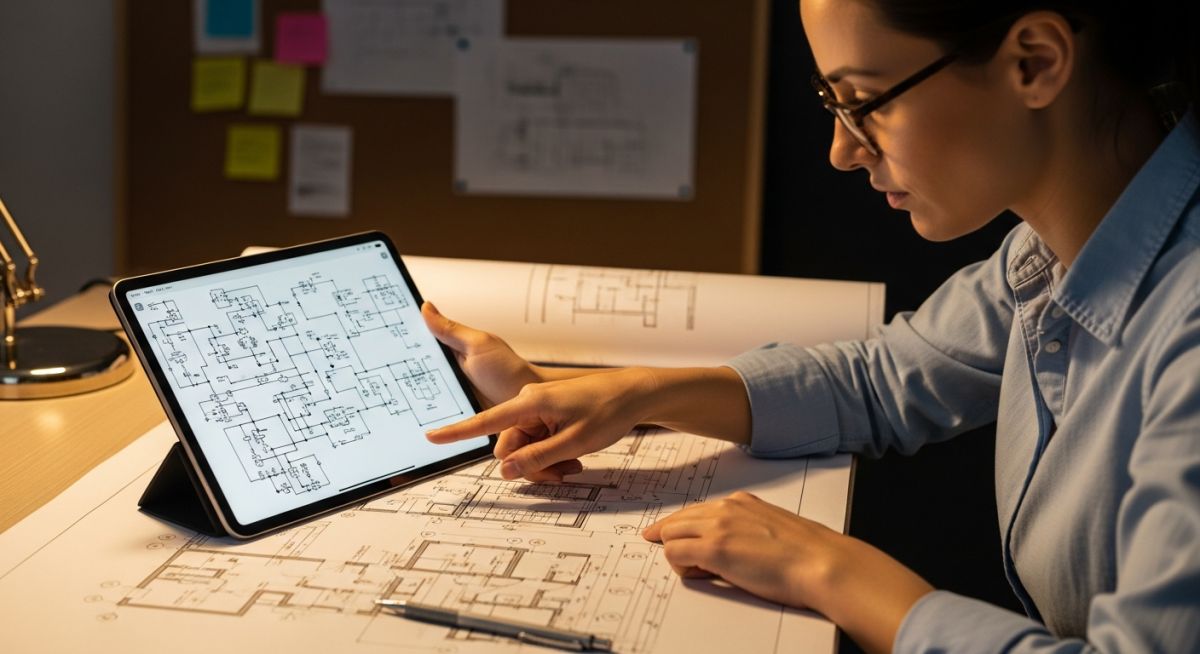
Why the Checking of Design Saves Industrial Projects From Failure
In my 20 plus years of piping and structural engineering experience, I have seen millions of dollars literally turn to scrap metal because of a single unchecked dimension or an unverified stress calculation. I remember a major refinery expansion where a young engineer modeled a high-pressure steam line but forgot to input the correct anchor movements. The design looked beautiful on the 3D model, but during commissioning, the thermal expansion tore a nozzle right off a multi-million dollar steam turbine. That day, I realized that the systematic checking of design is not just a bureaucratic step; it is the ultimate line of defense protecting human lives and project capital.
When we talk about quality assurance in heavy industries, we are looking at a complex web of piping isometrics, structural steel frames, pressure vessel datasheets, and electrical layouts. If you do not have a rigorous, multi-layered verification process, errors will slip through. In this guide, I will share the exact methodologies, mathematical verifications, and field-tested checklists that I use to ensure every design leaving our engineering office is flawless, code-compliant, and ready for safe construction.
Key Takeaways for Engineering Managers
- Independent verification prevents catastrophic field failures and expensive rework.
- Standardized checklists ensure interdisciplinary alignment across piping, structural, and process teams.
- Code compliance with standards like ASME B31.3 and AISC 360 must be verified mathematically, not just visually.
- A robust design checking workflow reduces field modification costs by up to ninety percent.
- Digital twin reviews and 3D model clash detection are powerful, but they cannot replace fundamental engineering calculations.
Rigorous Methods for the Checking of Design
To execute the checking of design effectively, we must establish a clear hierarchy of verification. In my practice, we use a three-tier checking system. First is the self-check, where the originating engineer reviews their own work using a basic checklist. Second is the peer review, where an engineer of equal caliber reviews the calculations and drawings. Third is the independent design verification, often performed by a principal engineer or an external third party, focusing on systemic risks, code compliance, and interdisciplinary interfaces.
Let us look at the mathematical reality of checking a piping system under pressure. For instance, when verifying the wall thickness of a process pipe under ASME B31.3 Process Piping, we must independently calculate the minimum required thickness. The formula is:
Where:
– t is the pressure design thickness.
– P is the internal design gage pressure.
– D is the outside diameter of the pipe.
– S is the allowable stress value for the material at design temperature.
– E is the quality factor.
– W is the weld joint strength reduction factor.
– Y is the coefficient from Table 304.1.1.
During the checking of design, the checker must not simply look at the final thickness value on the drawing. They must open the material certificates, verify the design temperature, check the allowable stress from ASME B31.3 Table A-1, and ensure that the corrosion allowance and mechanical tolerances are added to the calculated thickness. This level of detail is what prevents catastrophic ruptures in high-pressure systems.
Another critical aspect of design checking is interdisciplinary coordination. A piping layout might be perfectly designed for thermal expansion, but if the structural engineer did not design the supporting steel frame to handle the resulting anchor forces, the entire structure could buckle. Therefore, the design checking process must include a formal sign-off matrix where structural, piping, process, and electrical leads confirm that all interface loads and space requirements have been mutually verified.
| Deliverable Type | Primary Code Reference | Key Checking Parameter | Acceptable Tolerance / Limit |
|---|---|---|---|
| Piping Isometrics | ASME B31.3 | Wall thickness, material spec, slope, support spans | Zero negative tolerance on minimum wall thickness |
| Pressure Vessels | ASME Sec VIII Div 1 | Nozzle reinforcement, shell thickness, flange ratings | Maximum stress under design pressure less than allowable stress |
| Structural Steel | AISC 360 | Beam deflection, column buckling, connection capacity | Deflection limit of L/360 for live loads |
| Pipe Supports | MSS SP-58 | Load capacity, travel range of springs, clearance | Safety factor of minimum 4 on structural elements |
| Entity / Acronym | Technical Definition | Physical Parameter Checked | Standard Reference |
|---|---|---|---|
| MAWP | Maximum Allowable Working Pressure | Internal pressure capacity of vessels and piping | ASME Sec VIII / ASME B31.3 |
| SL | Sustained Longitudinal Stress | Stress due to pressure and weight gravity loads | ASME B31.3 Clause 302.3.5 |
| SE | Displacement Stress Range | Thermal expansion and contraction stresses | ASME B31.3 Clause 319.4.4 |
| P&ID | Piping and Instrumentation Diagram | Process flow, line sizes, valve configurations | ISA 5.1 / PIP PIC001 |
Implementing a Checklist for Checking of Design
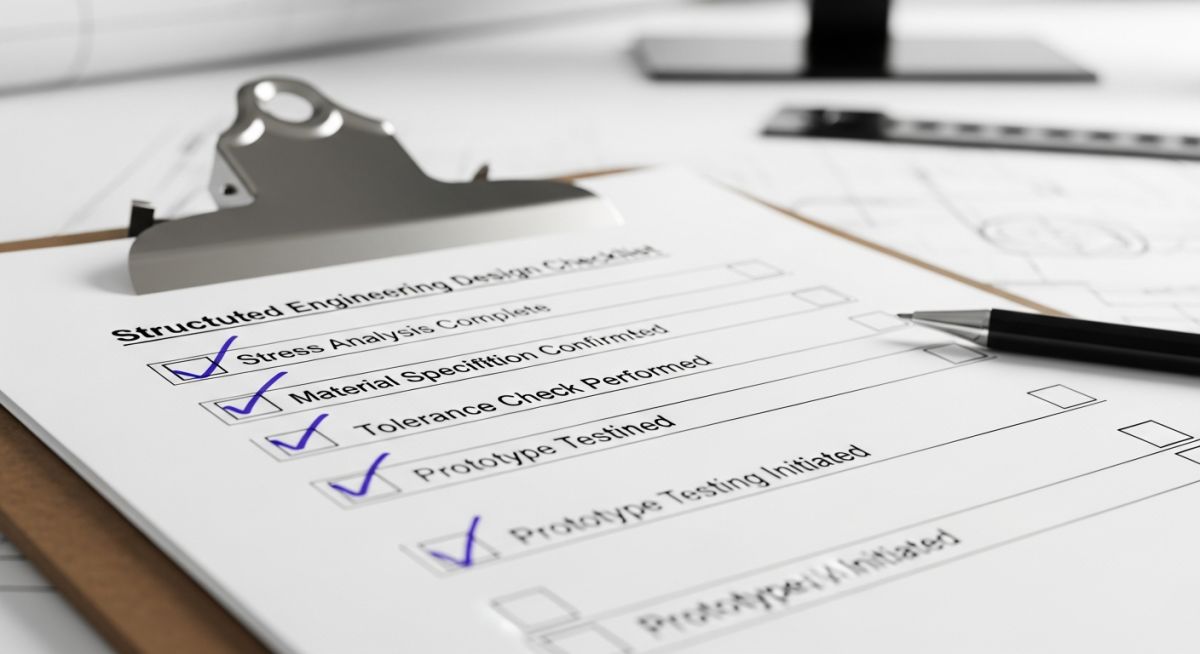
A checklist is not a substitute for engineering judgment, but it is an incredibly effective tool to ensure that repetitive, critical items are not overlooked. In my years of leading engineering teams, I have found that a structured checklist, signed off by both the designer and the checker, reduces drawing revisions by more than sixty percent. Below is the exact checklist template we use for verifying piping and structural designs before they are issued for construction.
Comprehensive Design Checking Checklist
Field Case Study: Real-World Application
This case study highlights a fundamental truth in engineering: skipping the design checking phase to save a few days on the schedule almost always results in weeks of delays, massive cost overruns, and severe safety hazards during commissioning. My direct recommendation to every project manager is to treat the design checking phase as an untouchable milestone in the project schedule.
Frequently Asked Engineering Questions
What is the difference between design checking and design validation?
Who should perform the checking of design in an engineering office?
How does a design checklist prevent interdisciplinary clashes?
What are the most common errors found during the checking of design?
How does ASME B31.3 influence the design checking process?
Can 3D modeling software replace manual design checking?
===
Complete Course on
Piping Engineering
Check Now
Key Features
- 125+ Hours Content
- 500+ Recorded Lectures
- 20+ Years Exp.
- Lifetime Access
Coverage
- Codes & Standards
- Layouts & Design
- Material Eng.
- Stress Analysis