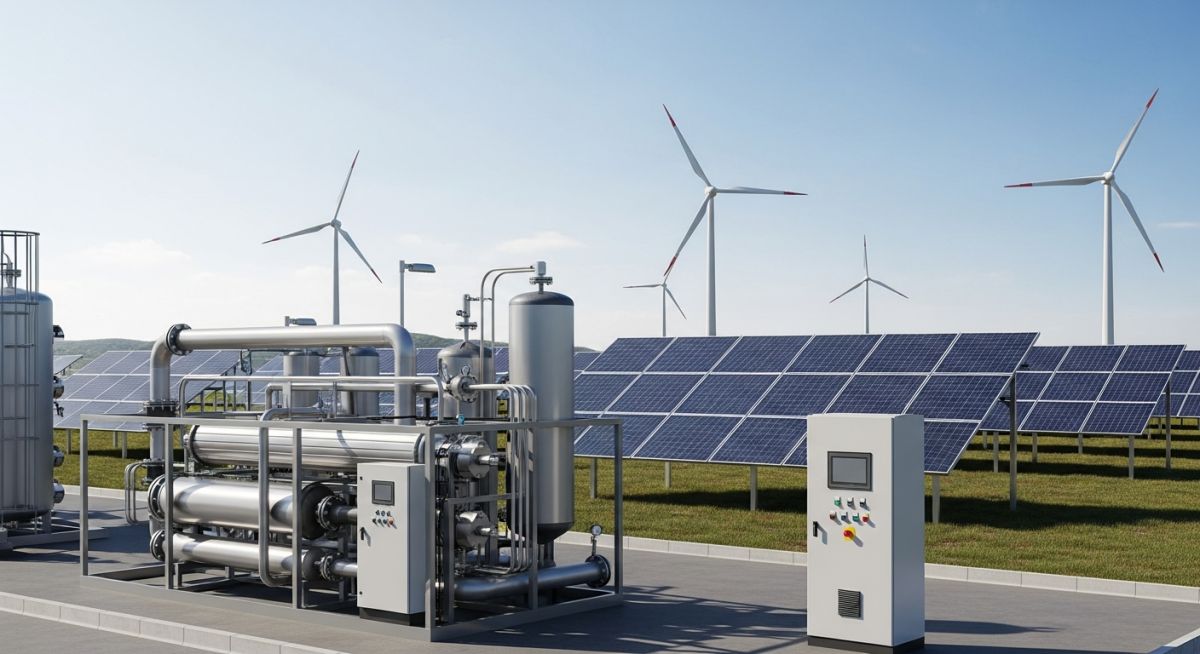
Designing a Green Hydrogen Plant: A Comprehensive Engineering Overview
In my two decades of experience across complex industrial projects, the shift towards green hydrogen represents one of the most significant transformations in energy infrastructure. Designing a green hydrogen plant isn’t just about assembling equipment; it’s a meticulous orchestration of renewable power, advanced water purification, high-efficiency electrolysis, and robust storage solutions. I’ve seen firsthand how critical each step is, from the initial site selection influenced by renewable resource availability to the final commissioning of compression and utility systems. This article breaks down the core engineering considerations I focus on when developing these vital facilities.
- Renewable energy source selection is paramount for true ‘green’ credentials.
- Water purity requirements are exceptionally high for electrolysis.
- Electrolyzer technology choice impacts efficiency and CAPEX/OPEX.
- Safe and scalable hydrogen storage and compression are non-negotiable.
- Integrated plant layout and utility systems drive operational efficiency.
Designing a Green Hydrogen Plant: An Engineering Deep Dive
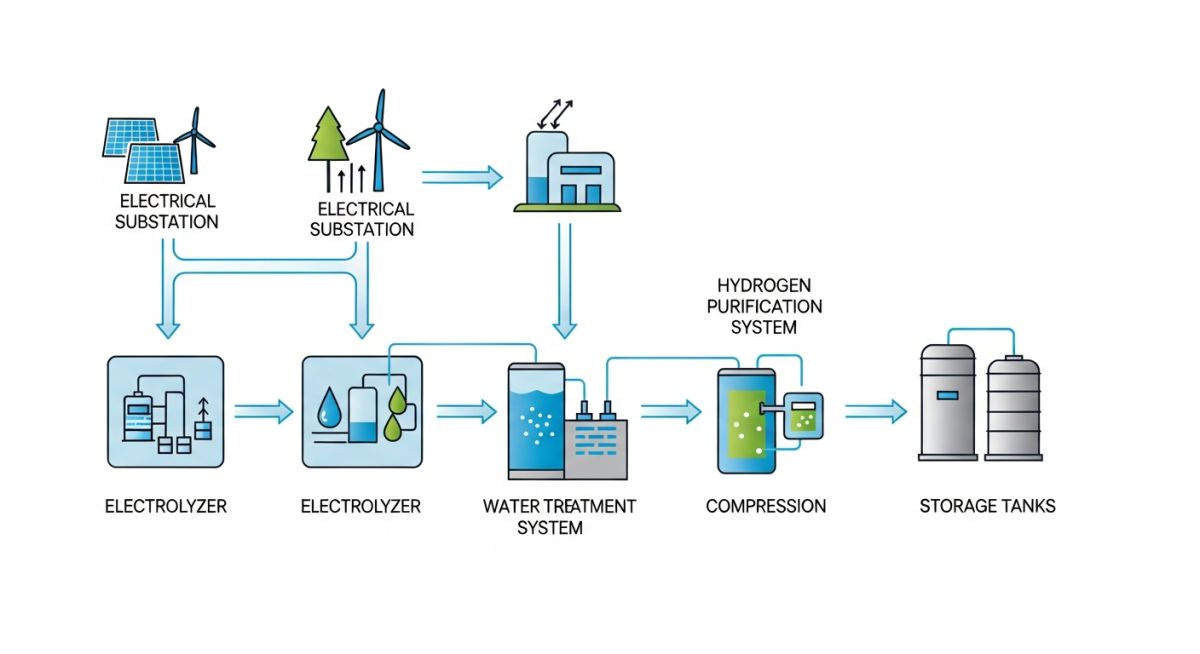
The journey to designing a successful green hydrogen plant begins with a deep understanding of its core components and their intricate relationships. My approach always starts with the energy source, as this defines the ‘green’ aspect of the hydrogen produced. Following this, the quality of water and the efficiency of the electrolysis process become paramount. Each subsystem must be engineered not only for optimal performance but also for safety and long-term reliability.
Renewable Energy Integration: The Foundation
The ‘green’ in green hydrogen is derived directly from the electricity source used for electrolysis. This necessitates a robust integration strategy for renewable energy, primarily solar photovoltaic (PV) or wind power. The design must account for the intermittent nature of these sources. This involves sizing the renewable capacity to meet the electrolyzer’s demand, often with a surplus to compensate for low generation periods. Energy storage solutions, such as batteries, might be integrated to smooth out power supply fluctuations, ensuring a consistent feed to the electrolyzers. My experience shows that accurate long-term solar irradiance and wind speed data are critical for reliable energy yield predictions. The electrical interface design, including grid connection standards and protection systems, must comply with local utility regulations and international standards like those from the IEEE.
Water Treatment Facilities: Purity is Paramount
Electrolyzers, particularly Proton Exchange Membrane (PEM) and Alkaline types, are highly sensitive to impurities in their feed water. The water treatment system is therefore a critical subsystem, designed to achieve ultra-pure water (UPW) standards, often exceeding 18 megaohm-centimeters resistivity. This typically involves a multi-stage process: pre-treatment (filtration, softening), reverse osmosis (RO) to remove dissolved salts and organic matter, and finally, ion exchange (IX) polishing to achieve the required UPW quality. The design must consider the source water quality, flow rates required by the electrolyzer, and the operational costs associated with membrane replacement and regeneration of ion exchange resins. Standards like ASTM D1193 for reagent water quality provide a benchmark, but specific electrolyzer manufacturers often have even tighter specifications. Failure to meet these purity levels can lead to premature membrane degradation, reduced efficiency, and costly downtime.
Design Limitation: Water Purity
Achieving and maintaining UPW consistently is a significant engineering challenge. Fluctuations in source water quality, scaling of RO membranes, and exhaustion of ion exchange resins require robust monitoring and control systems. The design must incorporate redundancy and fail-safe mechanisms to prevent impure water from reaching the electrolyzers, which could cause irreversible damage.
Electrolyzer Section: The Hydrogen Generator
This is the heart of the green hydrogen plant. The choice of electrolyzer technology—Alkaline, PEM, or Solid Oxide—significantly influences the plant’s design, footprint, efficiency, and cost. PEM electrolyzers offer faster response times and higher current densities, making them suitable for integration with variable renewable energy sources, but they typically require more expensive materials like platinum group metals. Alkaline electrolyzers are more mature and cost-effective but have slower response times. Solid Oxide electrolyzers operate at high temperatures and can be very efficient, especially when coupled with waste heat sources, but are less common for standalone green hydrogen production. The design must consider the electrolyzer’s operating pressure, temperature, power requirements, and hydrogen production rate. Safety aspects, including hydrogen leak detection, ventilation, and hazardous area classification according to standards like NFPA 70 (National Electrical Code), are paramount.
Hydrogen Purification System: Meeting Purity Standards
The hydrogen produced by the electrolyzer may contain impurities such as water vapor, oxygen (especially in PEM systems), and trace amounts of the electrolyte. A purification system is necessary to meet the required hydrogen purity for its intended application, which can range from 99.9% to 99.999% or higher. Common purification technologies include pressure swing adsorption (PSA), which uses adsorbent materials to selectively remove impurities at high pressure, and membrane separation, which uses selective membranes to allow hydrogen to pass through while retaining impurities. The design must consider the target purity, flow rate, operating pressure, and the specific impurities to be removed. Standards like ISO 14098 (formerly ISO 22734) provide guidance on hydrogen fuel quality.
Advantages
- Environmental Impact: Produces zero-carbon hydrogen, significantly reducing greenhouse gas emissions compared to grey or blue hydrogen.
- Energy Independence: Leverages domestic renewable resources, reducing reliance on imported fossil fuels.
- Grid Stability Support: Electrolyzers can act as flexible loads, absorbing excess renewable energy and providing grid balancing services.
- Versatile Energy Carrier: Hydrogen can be used for power generation, industrial feedstock, transportation fuel, and energy storage.
- Technological Advancement: Drives innovation in renewable energy, electrolysis, and fuel cell technologies.
- Decarbonization Pathway: Offers a viable solution for decarbonizing hard-to-abate sectors like heavy industry and long-haul transport.
Disadvantages
- High Capital Costs: Initial investment for electrolyzers, renewable energy infrastructure, and balance of plant is substantial.
- Renewable Energy Intermittency: Reliance on solar and wind means production can be variable, requiring energy storage or grid backup.
- Energy Efficiency Losses: Energy is lost during electrolysis, compression, transport, and conversion back to electricity (if applicable).
- Water Consumption: Electrolysis requires significant amounts of purified water, which can be a constraint in water-scarce regions.
- Infrastructure Development: Requires new or adapted infrastructure for hydrogen storage, transportation, and distribution.
- Safety Concerns: Hydrogen is highly flammable, necessitating stringent safety protocols and specialized handling procedures.
Industrial Feedstock Decarbonization:
Replacing grey hydrogen (produced from natural gas) with green hydrogen in processes like ammonia production for fertilizers and methanol synthesis offers a direct route to decarbonize these large-scale chemical industries.
Heavy-Duty Transportation Fuel:
Green hydrogen can power fuel cell electric vehicles (FCEVs) for long-haul trucking, buses, and potentially trains and ships, offering zero tailpipe emissions and faster refueling times compared to battery-electric alternatives for heavy loads.
Renewable Energy Storage and Grid Balancing:
Excess renewable electricity generated during peak production times can be converted to hydrogen and stored. This stored hydrogen can then be used later in fuel cells to generate electricity when renewable output is low, providing grid stability and energy security.
Power Generation:
Green hydrogen can be blended with natural gas for use in existing gas turbines or used directly in dedicated hydrogen turbines for power generation, providing a dispatchable, low-carbon energy source.
Aviation and Maritime Fuel:
As synthetic fuels (e-fuels) derived from green hydrogen and captured CO2 gain traction, green hydrogen plants become foundational for producing these sustainable aviation fuels (SAFs) and low-carbon marine fuels.
Engineering Data Table: Key Green Hydrogen Plant Parameters
[Engineering Data Table: Key Green Hydrogen Plant Parameters]: This table outlines critical design parameters for various subsystems within a green hydrogen plant, referencing key industry standards for compliance.
| Subsystem | Parameter | Typical Range / Value | Relevant Standards | Notes |
|---|---|---|---|---|
| Electrolyzer | Operating Temperature | 50-80 °C (PEM); 60-90 °C (Alkaline) | IEC 62282 | Depends on electrolyzer type (PEM, Alkaline, SOEC) |
| Electrolyzer | DC Voltage Efficiency | 60-80% | IRENA Reports | Impacted by current density and temperature |
| Water Treatment | Feed Water Conductivity | < 10 µS/cm | ASME | For PEM electrolyzers |
| Water Treatment | Electrolyte Water Conductivity | < 1 µS/cm | ASME | Critical for PEM stack longevity |
| Hydrogen Purification (PSA) | Target Purity | 99.9% – 99.999% | API, ASME | Application dependent |
| Hydrogen Compression | Discharge Pressure | Up to 700 bar (for refueling) | ASME B31.12 | Storage and transport dependent |
| Hydrogen Storage | Storage Pressure | 350 – 700 bar (compressed gas) | ASME BPVC | Design based on vessel codes |
| Renewable Power Input | Voltage Fluctuation Tolerance | ± 5-10% (typical grid connection) | IEEE | Requires power conditioning |
Technical Mapping & Specifications Matrix
[Technical Mapping & Specifications Matrix]: This matrix maps key technical entities within a green hydrogen plant, detailing their function, primary parameters, and relevant governing standards.
| Entity | Description / Function | Key Parameters | Governing Standards / Codes | Associated Risks |
|---|---|---|---|---|
| Electrolyzer Stack | Electrochemical device splitting water into H2 and O2 using electricity. | Power Consumption (kWh/kg H2), Efficiency (%), Operating Temp (°C), Pressure (bar) | IEC 62282, Manufacturer Specs | Membrane degradation, thermal runaway, leaks |
| Water Treatment Unit (DM Plant) | Purifies feed water to meet electrolyzer requirements. | Conductivity (µS/cm), Flow Rate (m³/hr), Purity Level | ASME, Water Quality Standards | Contamination, scaling, insufficient flow |
| Hydrogen Purification System (PSA) | Removes impurities (O2, N2, H2O, etc.) from raw hydrogen. | Purity (%), Recovery Rate (%), Cycle Time (min), Pressure (bar) | API, ASME | Incomplete purification, adsorbent degradation |
| Hydrogen Compressor | Increases hydrogen pressure for storage or transport. | Inlet/Outlet Pressure (bar), Flow Rate (kg/hr), Power (kW), Material Compatibility | ASME B31.12, API 618 | Hydrogen embrittlement, seal failure, overheating |
| Hydrogen Storage Tank | Stores hydrogen under pressure or at cryogenic temperatures. | Capacity (kg/m³), Pressure Rating (bar), Temperature (°C), Material | ASME BPVC Section VIII, ISO 19880 | Leakage, embrittlement, over-pressurization |
| Renewable Power Source (Solar/Wind) | Provides electricity for electrolysis. | Capacity (MW), Availability (%), Power Quality (V, Hz) | Grid Codes, IEEE Standards | Intermittency, grid fluctuations, power quality issues |
| Control System (DCS/PLC) | Monitors and controls plant operations for safety and efficiency. | Response Time (ms), Redundancy, Safety Integrity Level (SIL) | IEC 61508, ISA Standards | Cybersecurity threats, system failure, incorrect control logic |
Site Verification Checklist for Green Hydrogen Plant Construction
[Site Verification Checklist for Green Hydrogen Plant Construction]: This checklist ensures all critical aspects of a green hydrogen plant construction are verified on-site against design specifications and safety regulations.
Pre-Commissioning & Commissioning Checks:
- Power Systems: Verify grounding continuity, insulation resistance of cables, and correct phasing of incoming power supply as per IEEE standards.
- Water Treatment: Confirm water quality parameters (conductivity, pH, TOC) meet design specifications before feeding to electrolyzers. Validate RO membrane integrity and DI resin performance.
- Electrolyzer Installation: Check for correct alignment of stacks, secure electrical connections, proper sealing of flanges, and integrity of cooling loops. Ensure compliance with manufacturer guidelines.
- Piping Systems: Perform hydrostatic or pneumatic testing on all hydrogen, water, and utility lines. Verify material traceability and weld quality documentation according to ASME B31.12.
- Purification & Compression: Verify installation of PSA vessels, adsorbent loading, and leak testing of compressor seals and piping. Check lubrication systems and safety relief devices.
- Storage Systems: Inspect storage tanks for structural integrity, correct installation of safety relief valves, grounding, and leak detection systems. Confirm adherence to ASME BPVC requirements.
- Instrumentation & Control: Calibrate all critical instruments (pressure, temperature, flow, gas detectors). Test safety instrumented functions (SIF) and emergency shutdown (ESD) sequences. Verify communication links to the DCS/PLC.
- Ventilation & Safety: Confirm adequate ventilation rates in enclosed areas, proper functioning of gas detection systems, and availability/accessibility of safety equipment (fire suppression, PPE stations).
- Documentation Review: Ensure all ‘as-built’ drawings, test reports, and operational manuals are complete and accurate.
Field Case Study: Real-World Application
The Problem: Intermittent Power Impacting Electrolyzer Lifespan
A newly commissioned green hydrogen plant relying solely on direct solar PV input faced significant operational challenges. The fluctuating power output from the solar array, especially during cloudy periods or rapid weather changes, led to frequent on-off cycling and load variations for the PEM electrolyzer stacks. This inconsistent operation caused thermal stress and accelerated degradation of the membranes, resulting in reduced hydrogen production efficiency and premature stack replacement costs, far exceeding initial projections. The plant operators struggled to maintain a stable hydrogen output required by their industrial off-takers.
The Outcome: Implementing Buffer Storage and Advanced Control
To address the issue, a multi-pronged engineering solution was implemented. Firstly, a medium-scale compressed hydrogen buffer storage system was installed. This allowed the electrolyzers to operate at a more consistent, optimal load during periods of high solar generation, storing the excess hydrogen. Secondly, an advanced predictive control system was integrated, utilizing weather forecasts and real-time power output data to proactively adjust electrolyzer operation and manage the buffer storage levels. This strategy significantly reduced the frequency of rapid cycling, extending the electrolyzer lifespan by an estimated 30% and ensuring a more reliable hydrogen supply to the customer. The buffer storage also provided flexibility to meet peak demand, demonstrating the synergy between production, storage, and demand management.
This case highlights the critical need to design green hydrogen plants not just as standalone production units, but as integrated systems that account for the inherent variability of renewable energy sources. Implementing buffer storage and intelligent control strategies is key to ensuring both economic viability and operational longevity.
Frequently Asked Engineering Questions
What are the primary safety considerations when designing hydrogen storage systems?
How does renewable energy intermittency affect green hydrogen plant design?
What is the role of EPC contractors in green hydrogen projects?
Can green hydrogen be produced using seawater?
What are the main challenges in scaling up green hydrogen production?
How is hydrogen purity verified in a plant?
Complete Course on
Piping Engineering
Check Now
Key Features
- 125+ Hours Content
- 500+ Recorded Lectures
- 20+ Years Exp.
- Lifetime Access
Coverage
- Codes & Standards
- Layouts & Design
- Material Eng.
- Stress Analysis

📚 Recommended Resources: Designing a Green Hydrogen Plant
Read these Guides
- 📄 Mastering Hydrogen Compression Systems: Engineering Design, Selection, and Safety
- 📄 Hydrogen Storage Technologies: A Comprehensive Engineering and Selection Guide
- 📄 Mastering Hydrogen Safety in Industrial Facilities: Engineering and Design Guide
- 📄 Green vs Blue vs Grey Hydrogen: Complete Engineering Comparison Guide
