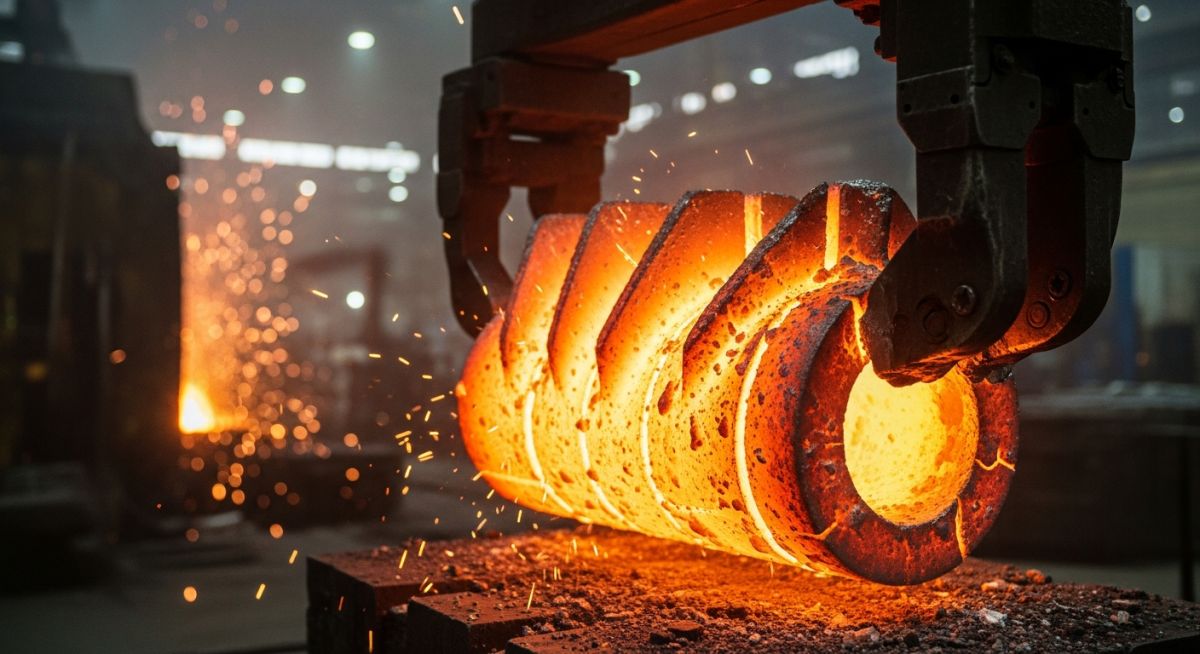
What are the Strongest Metals? Top 10 Strongest Metals
In my 20 years of designing high-pressure piping systems and offshore structural platforms, I have seen what happens when materials are pushed past their absolute physical limits. Choosing the wrong alloy isn’t just a design error; it is a catastrophic failure waiting to happen. When we talk about the strongest metals in heavy industry, we are not just looking at a single number on a datasheet. We must analyze how these materials behave under extreme tension, compression, shear, and thermal stress.
Whether you are engineering an aerospace turbine blade, a deep-sea drilling riser, or a high-velocity chemical reactor, understanding the mechanical thresholds of your materials is paramount. This guide breaks down the top 10 strongest metals on Earth, analyzing their yield strength, ultimate tensile strength, and real-world industrial applications.
Key Engineering Takeaways
- Tensile vs. Yield Strength: Yield strength is the limit of elastic deformation, while ultimate tensile strength (UTS) is the absolute limit before structural fracture.
- Alloying Superiority: Pure elemental metals rarely match the engineered strength of multi-element superalloys.
- Environmental Factors: Temperature, corrosion, and hydrogen exposure can drastically reduce a metal’s effective strength in the field.
How Do We Classify the Strongest Metals?
To truly understand the strongest metals, we must define the four primary pillars of mechanical strength used by metallurgical engineers:
- Yield Strength: The maximum stress a metal can withstand without permanent, plastic deformation. This is the design limit for most structural codes, including ASME Section VIII.
- Ultimate Tensile Strength (UTS): The maximum longitudinal stress a metal can withstand before necking and fracturing.
- Impact Toughness: The capacity of a metal to absorb energy and deform plastically before fracturing, typically measured via Charpy V-Notch testing under ASTM E23.
- Hardness: Resistance to localized plastic deformation, typically induced by mechanical indentation (measured via Brinell, Rockwell, or Vickers scales).
The Top 10 Strongest Metals Explained
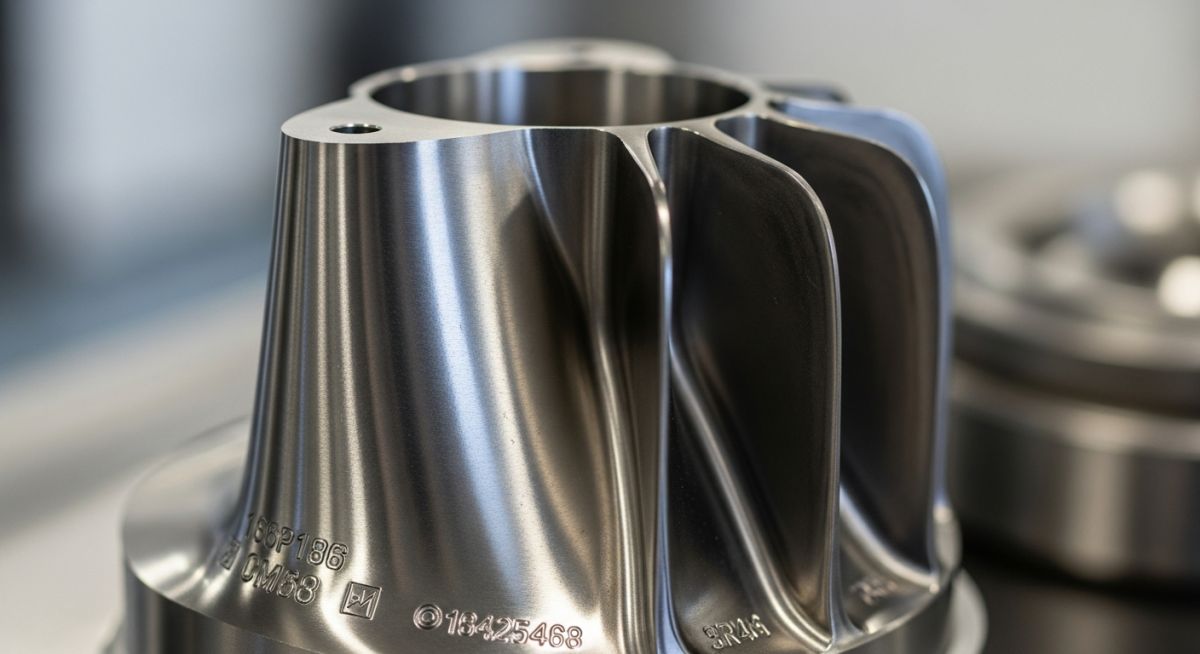
Here is the technical breakdown of the metals that dominate high-stress engineering applications:
- Tungsten (W): With the highest tensile strength of any pure metal (up to 1510 MPa at room temperature) and an incredibly high melting point of 3422 degrees Celsius, tungsten is the king of thermal-mechanical resistance. However, it is highly brittle at room temperature.
- Titanium Alloys (e.g., Ti-6Al-4V Grade 5): Titanium boasts the highest strength-to-density ratio of any metallic element. Grade 5 titanium exhibits a yield strength of 880 MPa and is highly resistant to corrosion, making it the standard for aerospace and deep-sea applications.
- Inconel (e.g., Inconel 718): A nickel-chromium-based superalloy designed to maintain its mechanical integrity at temperatures exceeding 700 degrees Celsius. It is widely used in gas turbines, rocket engines, and high-pressure piping.
- Maraging Steel (Grade 350): An ultra-high-strength, low-carbon iron alloy that achieves its extreme strength (yield strength up to 2400 MPa) through a specialized heat-treatment process called martensitic aging.
- Chromium (Cr): The hardest pure metal on the Mohs scale (9.0). While too brittle to be used as a standalone structural component, it is the primary alloying element in stainless steel to provide hardness and corrosion resistance.
- Tool Steels (e.g., AISI D2, H13): Highly alloyed steels containing tungsten, molybdenum, vanadium, and chromium. They are engineered to resist deformation and maintain sharp cutting edges under extreme mechanical wear.
- Tantalum (Ta): A dense, highly ductile metal with excellent thermal conductivity and corrosion resistance. When alloyed, it exhibits high yield strength and is used extensively in chemical process equipment.
- Osmium (Os): The densest naturally occurring element. It has an incredibly high bulk modulus (around 395 GPa), making it virtually incompressible, though its extreme hardness makes it difficult to machine.
- Zirconium Alloys (Zircaloy): Engineered for nuclear applications due to their low neutron-absorption cross-section, high mechanical strength, and resistance to corrosion in high-temperature water.
- High-Strength Low-Alloy (HSLA) Steels: Steels designed to provide excellent mechanical properties and high weldability without the high cost of heavy alloying, widely used in structural beams and pipelines.
Engineering Calculations: Stress and Strain Limits
When calculating the allowable stress for piping and structural design under ASME B31.3, we apply a safety factor to the yield strength and ultimate tensile strength. The basic formula for allowable stress (S) is:
For instance, if we analyze Titanium Grade 5 with a Yield Strength of 880 MPa and a UTS of 950 MPa:
- Based on Yield: 880 / 1.5 = 586.6 MPa
- Based on UTS: 950 / 3.0 = 316.6 MPa
- Allowable Design Stress (S) = 316.6 MPa (the conservative limiting value)
The following table provides verified mechanical properties for the top 10 strongest metals and alloys used in modern industrial design. All values are evaluated at room temperature (20 degrees Celsius) under standard atmospheric conditions.
| Metal / Alloy | Yield Strength (MPa) | Tensile Strength (MPa) | Mohs Hardness | Primary Standard |
|---|---|---|---|---|
| Tungsten (Pure) | 550 – 620 | 1510 | 7.5 | ASTM B760 |
| Titanium Grade 5 (Ti-6Al-4V) | 880 | 950 | 6.0 | ASTM B348 |
| Inconel 718 (Age Hardened) | 1030 | 1240 | 5.5 | ASME SB-637 |
| Maraging Steel (Grade 350) | 2400 | 2450 | 8.0 | ASTM A579 |
| Chromium (Pure) | 360 | 413 | 9.0 | ASTM B338 |
| AISI D2 Tool Steel | 1500 – 2200 | 1700 – 2400 | 8.5 | ASTM A681 |
| Tantalum (Pure Annealed) | 140 | 200 | 6.5 | ASTM B365 |
| Osmium (Pure) | N/A (Brittle) | 300 | 7.0 | Specialist Spec |
| Zircaloy-4 | 380 | 510 | 5.0 | ASTM B351 |
| A514 Structural Steel | 690 | 760 | 6.0 | ASTM A514 |
This matrix maps critical metallurgical acronyms, physical parameters, and their corresponding industrial standards to assist design engineers in material selection.
| Acronym / Entity | Physical Parameter | Standard Reference | Industrial Application |
|---|---|---|---|
| UTS | Ultimate Tensile Strength | ASTM E8 / E8M | Structural failure limit calculations |
| YS | Yield Strength (0.2% Offset) | ASME Section II Part D | Elastic limit design for pressure vessels |
| CVN | Charpy V-Notch Impact Energy | ASTM E23 | Low-temperature toughness verification |
| PMI | Positive Material Identification | API RP 578 | Field verification of alloy composition |
How to Verify the Strongest Metals on Site
In my field experience, material mix-ups at the job site are a major cause of premature piping failures. Just because a pipe is stamped “Inconel 718” or “Titanium Grade 5” does not mean you should trust it blindly. You must implement a strict verification protocol before any welding or structural loading begins.
Field Material Verification Checklist
-
Verify Mill Test Reports (MTRs): Ensure the MTR matches the heat number stamped on the metal. The MTR must list the exact chemical composition and mechanical test results (Yield, Tensile, Elongation) complying with ASTM standards.
-
Perform Positive Material Identification (PMI): Use a handheld X-ray Fluorescence (XRF) or Optical Emission Spectroscopy (OES) analyzer to verify the elemental composition of the alloy on-site in accordance with API RP 578.
-
Check Hardness Limits: For high-strength alloys operating in sour service (H2S), verify that the hardness does not exceed the limits specified in NACE MR0175 / ISO 15156 to prevent sulfide stress cracking.
-
Inspect for Surface Defects: Conduct Liquid Penetrant Testing (PT) or Magnetic Particle Testing (MT) on high-strength welds to ensure there are no micro-cracks that could propagate under cyclic loading.
-
Validate Heat Treatment Records: For age-hardened alloys like Inconel 718 or Maraging Steel, verify that the post-weld heat treatment (PWHT) charts match the qualified Welding Procedure Specification (WPS).
Field Case Study: Real-World Application
The Problem: High-Pressure Hydrogen Embrittlement
During a refinery expansion project, a high-pressure hydrogen recycle line operating at 15 MPa and 350 degrees Celsius experienced sudden, catastrophic cracking at a major manifold weld. The original design specified standard high-strength carbon steel.
However, under high partial pressures of hydrogen, the atomic hydrogen diffused into the steel’s crystalline lattice, causing severe hydrogen embrittlement. This drastically reduced the material’s fracture toughness, leading to sub-critical crack growth and eventual failure.
The Outcome: Material Upgrade to Inconel 718
I was brought in to lead the root cause analysis and redesign. We immediately ruled out standard carbon steels and opted for a high-strength nickel-based superalloy, specifically Inconel 718, which is highly resistant to hydrogen-assisted cracking.
By upgrading the manifold to Inconel 718, we utilized its superior yield strength (over 1000 MPa) and face-centered cubic (FCC) crystal structure, which has a much lower hydrogen diffusion rate than body-centered cubic (BCC) steels. The system was successfully recommissioned and has operated for over five years without a single trace of micro-cracking.
My Professional Recommendation
When dealing with high-pressure hydrogen or corrosive process fluids, never compromise on material selection. Upfront capital expenditure on premium alloys like Inconel or Titanium Grade 5 is always more cost-effective than the millions of dollars lost during an unplanned facility shutdown.
Frequently Asked Engineering Questions
What is the absolute strongest metal on Earth?
Why is titanium considered strong if steel has a higher tensile strength?
How does temperature affect the strength of these metals?
What is the difference between hardness and toughness?
Can a metal be too strong for practical engineering?
Which standards govern the testing of these high-strength metals?
===FAQ_BLOCK===
Complete Course on
Piping Engineering
Check Now
Key Features
- 125+ Hours Content
- 500+ Recorded Lectures
- 20+ Years Exp.
- Lifetime Access
Coverage
- Codes & Standards
- Layouts & Design
- Material Eng.
- Stress Analysis
