What is a Slurry Pump? Engineering Guide to Slurry Pump Selection and Types
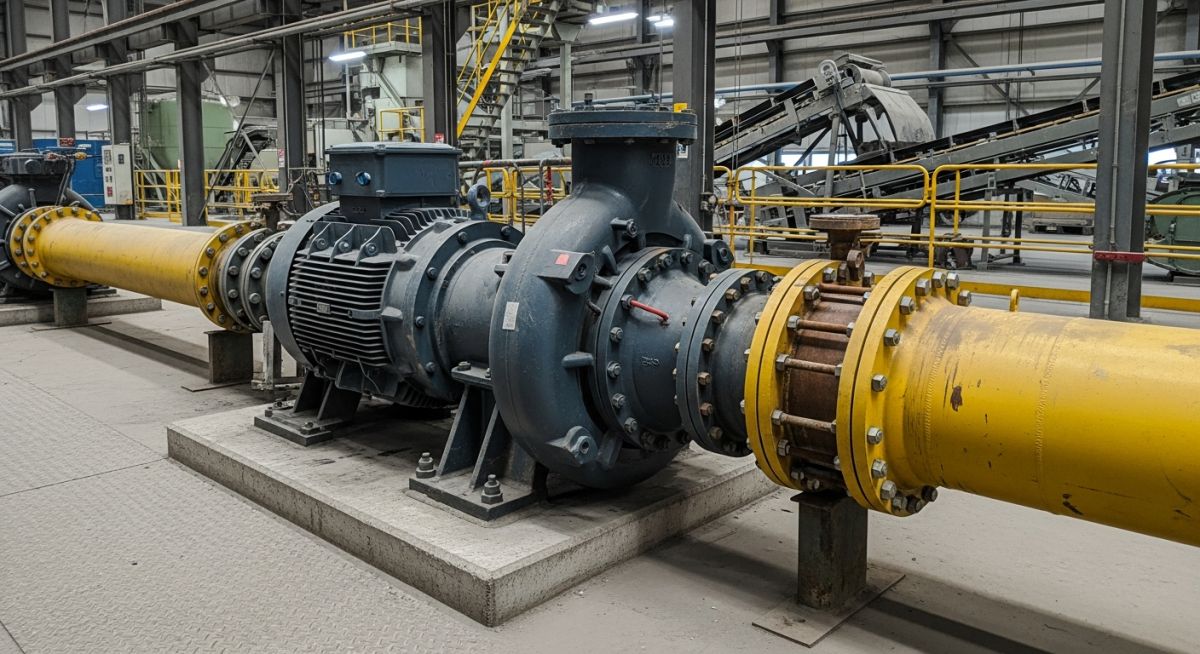
Why is your centrifugal unit vibrating violently or failing within weeks of commissioning? In heavy-duty mining and dredging, the difference between a 95% uptime and a catastrophic plant shutdown often comes down to a single decision: Slurry Pump Selection.
Handling abrasive, high-density solids is not standard hydraulics—it is a battle against erosion and cavitation. This guide provides the technical depth required to select the right metallurgy and pump configuration to master abrasive fluid transport.
Key Takeaways
- Identify the critical relationship between particle size and Slurry Pump Selection.
- Compare High-Chrome alloys versus Rubber liners for varying pH and abrasive levels.
- Understand the impact of Total Dynamic Head (TDH) on impeller wear life.
What is Slurry Pump Selection?
Slurry Pump Selection is the engineering process of matching pump design and materials to specific fluid characteristics, including solid concentration, particle abrasivity, and corrosivity. Successful selection ensures the pump survives the extreme wear of high-density solids while maintaining efficient Total Dynamic Head (TDH) and Net Positive Suction Head (NPSH).
“In 20 years of field inspections, the most common error I see is oversizing the pump, which leads to operation far from the Best Efficiency Point (BEP) and accelerates abrasive wear by 300%.”
— Atul Singla, Founder of Epcland
Table of Contents
Complete Course on
Piping Engineering
Check Now
Key Features
- 125+ Hours Content
- 500+ Recorded Lectures
- 20+ Years Exp.
- Lifetime Access
Coverage
- Codes & Standards
- Layouts & Design
- Material Eng.
- Stress Analysis
Engineering Competency Check
Topic: Slurry Pump Selection & Abrasive Handling
1. Which factor is most critical when initiating Slurry Pump Selection for a high-density mining application?
Quiz Complete!
You are now ready to master the technical fundamentals of Slurry Pump Selection.
What are Slurry Pumps? Fundamentals of Abrasive Fluid Transport
A slurry pump is a specialized type of centrifugal or positive displacement pump designed specifically to handle Slurry Pump Selection challenges involving high concentrations of solid particles. Unlike standard water pumps, which suffer catastrophic failure when exposed to abrasives, slurry pumps are engineered with sacrificial wear parts and heavy-walled castings. The fluid, or "slurry," consists of a liquid carrier (typically water) and a solid phase which can range from fine silts to large, jagged rocks.
In 2026, the engineering focus has shifted toward maximizing the "Mean Time Between Failures" (MTBF) by optimizing the hydraulic profile of the pump. Slurries are categorized into two types: Settling Slurries, where particles are large enough to sink if the velocity drops, and Non-settling Slurries, which behave like a pseudo-homogeneous thick fluid. Understanding this distinction is the cornerstone of effective Slurry Pump Selection.
Critical Factors in Slurry Pump Selection
To achieve a high-ranking Slurry Pump Selection strategy, engineers must look beyond the Flow (Q) and Head (H) parameters. The following four variables dictate the longevity of the installation:
- Solid Concentration (Cw): Measured by weight or volume. Higher concentrations increase the fluid density and viscosity, requiring a "derating" of the pump's water-based performance curves.
- Particle Size (d50): The median particle size determines whether the pump requires a rubber liner (fine particles) or a hard metal alloy (large, sharp particles).
- Particle Shape: Angular or sharp particles accelerate erosion via "cutting wear," whereas rounded particles cause "deformation wear."
- Critical Settle Velocity: The Slurry Pump Selection must ensure that the pipe velocity remains 20-30% above the settling point to prevent "sanding up" of the lines.
Slurry Pump Selection: Material and Component Metallurgy
Metallurgy is the "shield" of the pump. During Slurry Pump Selection, choosing the wrong material can lead to a casing breach in less than 48 hours of operation. In 2026, the industry standard for abrasive resistance remains High-Chrome White Iron (27% Cr), which provides a hardness of 600+ Brinell. This is ideal for slurries with pH values between 5 and 12.
However, for acidic slurries (pH < 4) found in leaching circuits, Natural Rubber or Polyurethane liners are preferred. Rubber liners utilize an "elastic rebound" principle: when a particle hits the liner, the rubber deforms and then bounces the particle back into the stream, absorbing minimal energy and sustaining less damage.
Categorizing Types of Slurry Pumps for Industry Applications
The architectural variety in Slurry Pump Selection is driven by the physical constraints of the plant and the rheology of the slurry. Engineers must distinguish between the kinetic energy delivery of centrifugal units and the displacement mechanism of piston-driven units. In 2026, the integration of smart sensors into these pump types allows for real-time monitoring of liner thinning.
Centrifugal Slurry Pumps
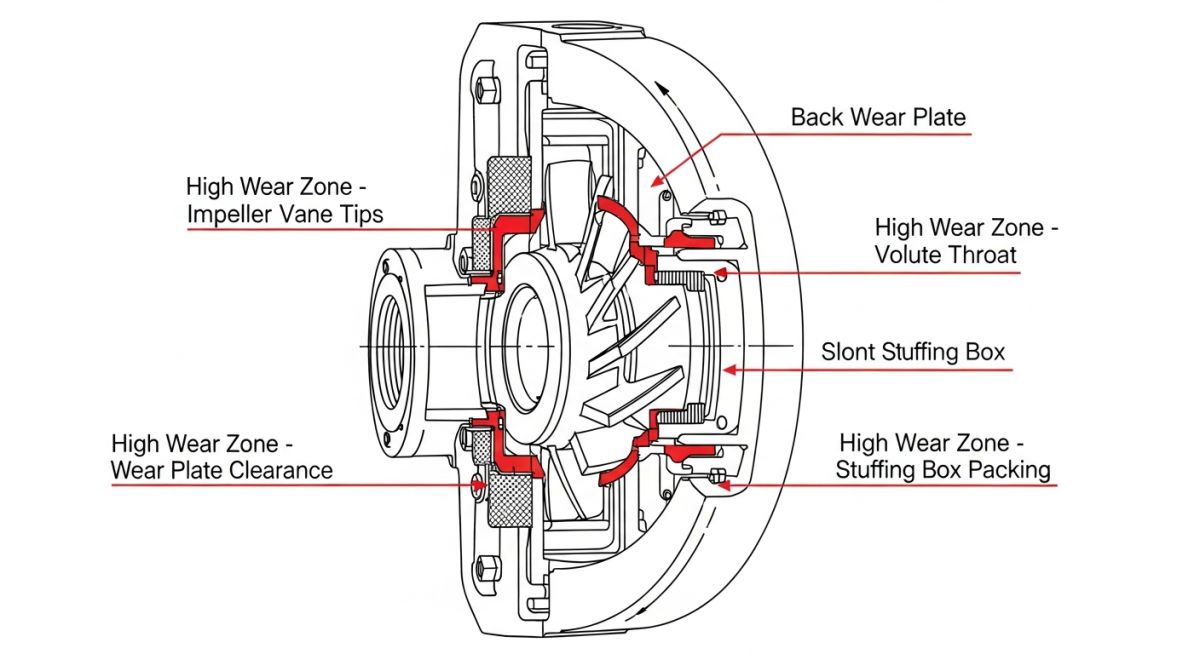
Centrifugal units are the workhorses of the mining industry. They utilize a heavy-duty impeller to impart centrifugal force to the slurry. Key to Slurry Pump Selection in this category is the impeller clearance; "expeller" vanes are often used on the back of the impeller to create a secondary seal, preventing solids from entering the gland area.
Positive Displacement Slurry Pumps
When the solids concentration (Cw) exceeds 50% or the fluid is extremely viscous (paste-like), Slurry Pump Selection shifts toward Positive Displacement (PD) pumps. These include diaphragm and piston pumps capable of generating extremely high pressures for long-distance tailings pipelines spanning several kilometers.
Horizontal vs. Vertical Slurry Pumps
Horizontal pumps are easier to maintain due to ground-level access but require significant floor space. Vertical cantilever pumps (sump pumps) are essential for Slurry Pump Selection in floor drainage or tank transfer applications where the motor must remain above the fluid level to prevent flooding.
Engineering Standards and Performance Metrics
Regulatory compliance ensures that Slurry Pump Selection meets safety and reliability benchmarks. The primary standards governing these units include:
- HI 12.1-12.6: Hydraulic Institute standards for rotodynamic slurry pumps.
- ASME B73.1: Though for chemical pumps, it provides a baseline for centrifugal pump reliability.
- ISO 5199: Technical specifications for centrifugal pumps (Class II).
| Material Property | High-Chrome (27% Cr) | Natural Rubber | Polyurethane |
|---|---|---|---|
| Hardness (Brinell) | 600 - 650 | 40 - 50 (Shore A) | 80 - 90 (Shore A) |
| Particle Size Suitability | Large (>15mm) / Sharp | Fine (<5mm) / Round | Medium / Sliding Abrasion |
| Corrosion Resistance | Moderate (pH 5-12) | High (pH 1-13) | High (Acid/Oil) |
| Max Tip Speed | High (up to 30 m/s) | Limited (20-25 m/s) | Moderate (25 m/s) |
⚙️ Slurry Pump Selection: Tip Speed & Wear Estimator
In 2026, minimizing impeller tip speed is the primary method to extend pump life. Use this calculator to determine your current tip speed and evaluate the risk level for abrasive erosion.
EPCLand YouTube Channel
2,500+ Videos • Daily Updates
Don't miss this video related to Slurry Pump Selection

Summary: Master Piping Engineering with our complete 125+ hour Certification Course: ......
Slurry Pump Selection Failure Case Study

The Scenario: Rapid Impeller Degradation in Gold Tailings
In a prominent gold processing facility in 2026, a newly installed centrifugal unit experienced a catastrophic loss of head pressure within just 14 days of commissioning. The initial Slurry Pump Selection had specified a standard 27% High-Chrome impeller designed for a flow of 450 m3/h. However, maintenance crews discovered severe localized pitting and "hole-through" erosion on the impeller vanes.
The Investigation: Forensic Root Cause Analysis
Upon technical audit, several critical Slurry Pump Selection oversights were identified:
- Oversized Design: The pump was operating at only 40% of its Best Efficiency Point (BEP), leading to massive internal recirculation and "vortex wear."
- Unexpected Particle Size: Upstream mill failure caused d90 particle sizes to jump from 150 microns to 2.5mm, exceeding the impact threshold for the brittle chrome alloy.
- Entrained Air: Severe cavitation was occurring due to a low NPSH margin, which stripped the protective oxide layer from the metal components.
The Solution: Optimized Engineering Redesign
The engineering team implemented a revised Slurry Pump Selection strategy by down-sizing the pump casing to match the actual flow rate. The metallurgy was swapped for a specialized Tungsten Carbide coated impeller to resist the larger particle impacts, and a VFD (Variable Frequency Drive) was installed to maintain optimal tip speed. Result: MTBF (Mean Time Between Failure) increased from 14 days to 18 months.
Expert Insights: Lessons from 20 years in the field
Refining your Slurry Pump Selection process requires moving beyond the datasheet. Based on two decades of troubleshooting abrasive systems, here are the critical field-proven insights for 2026:
- ● The 120% Rule: Always design your suction piping to be at least one size larger than the pump suction flange to minimize friction losses and prevent NPSH-related cavitation in Slurry Pump Selection.
- ● VFD Versatility: In 2026, never install a fixed-speed slurry pump. The ability to slow down the pump as the impeller wears is the only way to maintain a constant discharge pressure without wasting energy.
- ● Gland Seal Water: Ensure gland seal water pressure is at least 10-15 PSI higher than the pump discharge pressure. If the seal fails, abrasive solids will destroy the shaft sleeve in hours.
- ● Maintenance Clearances: Always select a "back pull-out" design during Slurry Pump Selection. This allows the rotating assembly to be removed without disturbing the suction or discharge piping.

