ReFuelEU Aviation and RFNBO-Based Sustainable Aviation Fuel Introduction
In my two decades of experience navigating complex energy transitions, I have rarely seen a regulatory shift as transformative as the ReFuelEU Aviation mandate. As we move toward 2050, the industry is no longer just looking at efficiency gains; we are fundamentally re-engineering the molecular composition of our fuel supply. The core of this transition lies in the production of e-SAF, which requires a rigorous adherence to RFNBO standards defined under the Renewable Energy Directive (RED III).
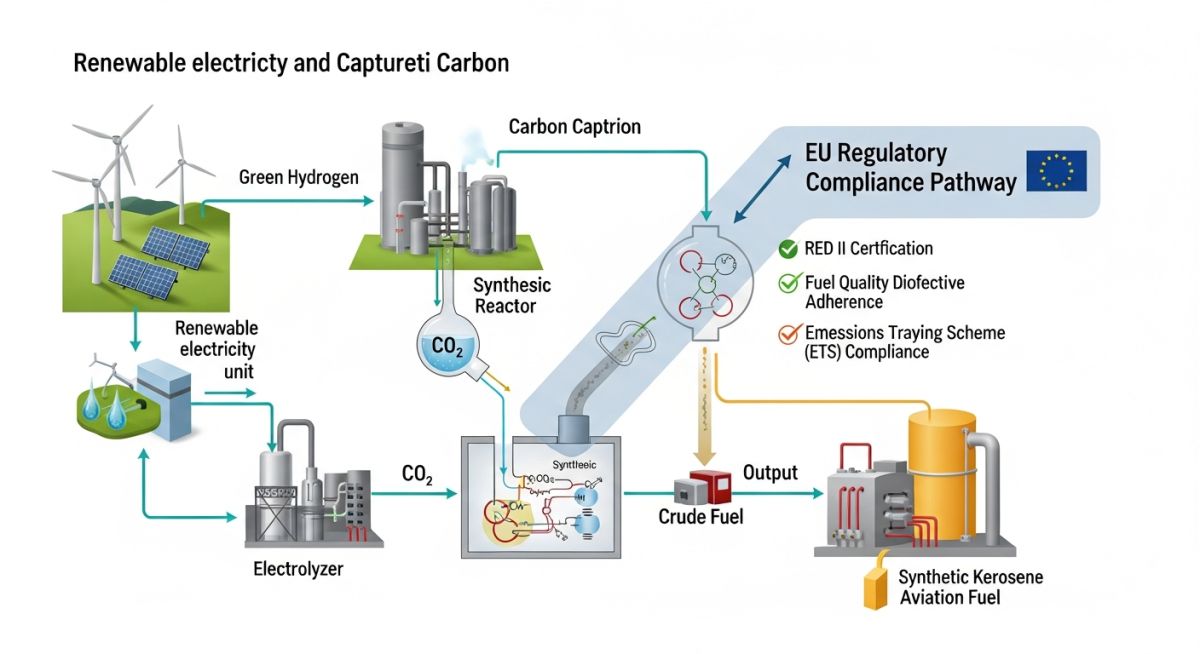
For engineers and project developers, this means moving beyond simple procurement to mastering the technical nuances of electrolysis, carbon capture, and synthetic fuel synthesis. We are essentially building the infrastructure for a circular carbon economy, where the quality of our hydrogen and the origin of our carbon molecules dictate our regulatory compliance and market viability.
Key Takeaways for Project Success:
- Strict adherence to temporal and geographical correlation for renewable electricity sourcing.
- Integration of Direct Air Capture (DAC) or industrial point-source carbon capture for feedstock.
- Compliance with the 70% greenhouse gas emission reduction threshold compared to fossil kerosene.
- Scalability of modular Fischer-Tropsch synthesis units to meet rising EU mandates.
Complete Course on
Piping Engineering
Check Now
Key Features
- 125+ Hours Content
- 500+ Recorded Lectures
- 20+ Years Exp.
- Lifetime Access
Coverage
- Codes & Standards
- Layouts & Design
- Material Eng.
- Stress Analysis
Technical Requirements for RFNBO-Based Sustainable Aviation Fuel
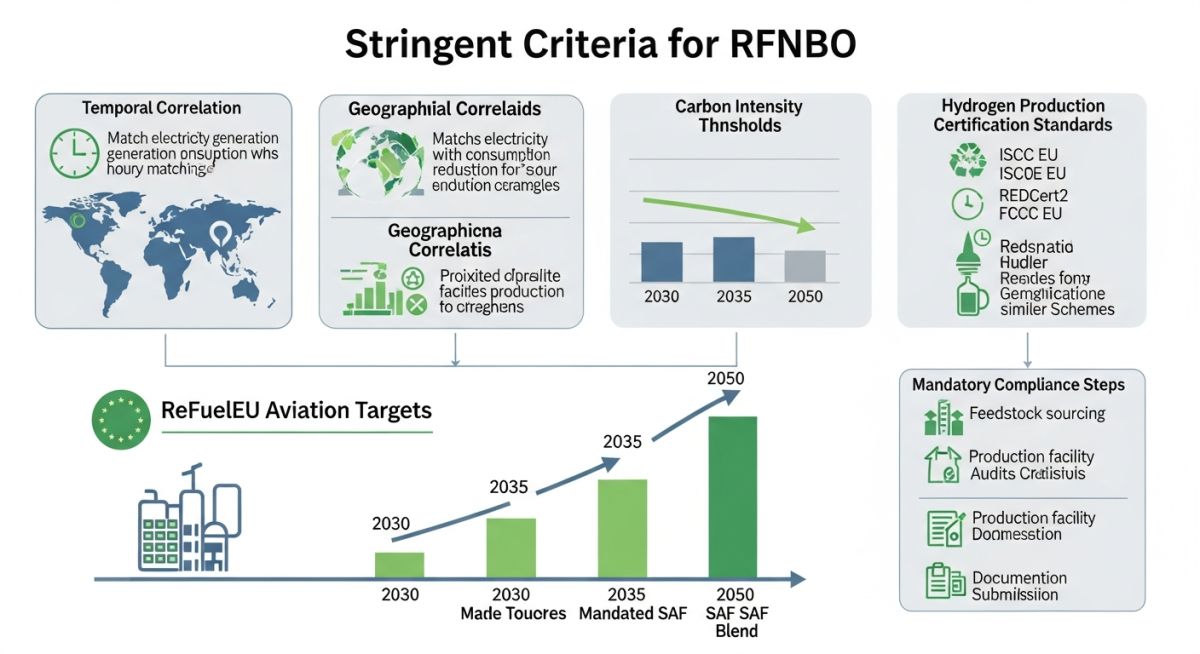
RFNBO Compliance Standards: These technical parameters define the mandatory criteria for renewable hydrogen and carbon feedstock to qualify as sustainable aviation fuel under the ReFuelEU Aviation regulatory framework.
The technical backbone of ReFuelEU Aviation is the production of synthetic kerosene via the Fischer-Tropsch (FT) process, utilizing hydrogen derived from water electrolysis and carbon captured from the atmosphere or industrial processes. To qualify as an RFNBO, the hydrogen must be produced using electricity from renewable sources that meet strict additionality criteria. In my experience, the most significant hurdle is the “temporal correlation” requirement, which mandates that the renewable electricity generation must match the electrolyzer operation within specific time windows to prevent grid-carbon leakage.
The electrolysis process must achieve high current densities while maintaining membrane integrity. We typically utilize Proton Exchange Membrane (PEM) electrolyzers for their rapid response times to intermittent renewable power inputs. The hydrogen purity must exceed 99.99% to prevent catalyst poisoning in the downstream FT reactor. The synthesis of long-chain hydrocarbons requires precise control over the H2:CO ratio, typically maintained near 2:1, to optimize the yield of C8-C16 fractions suitable for jet fuel.
Engineering Design Limitations:
- Electrolyzer degradation rates increase significantly with frequent power cycling.
- Carbon capture efficiency is limited by the energy intensity of solvent regeneration.
- FT catalyst selectivity requires precise temperature control within a 5-degree Celsius margin.
- High-pressure hydrogen storage infrastructure requires specialized metallurgy to mitigate embrittlement.
When designing these facilities, we must reference ASME B31.12 for hydrogen piping systems, ensuring that material selection accounts for the high-pressure hydrogen environment. Furthermore, the carbon source must be verified as biogenic or captured from industrial processes that do not displace carbon sequestration efforts. The integration of these systems requires a robust Process Control System (PCS) capable of managing the dynamic interplay between renewable energy availability and chemical synthesis rates.
RFNBO Implementation Analysis: This assessment evaluates the technical and operational trade-offs inherent in deploying synthetic fuel production facilities within the current European regulatory landscape.
Advantages
- Drop-in compatibility with existing jet engine infrastructure.
- Near-zero sulfur and aromatic content, reducing contrail formation.
- Significant reduction in lifecycle greenhouse gas emissions.
- Independence from fossil fuel price volatility and supply chains.
- Alignment with long-term EU climate neutrality targets.
Disadvantages
- High capital expenditure for electrolysis and DAC units.
- Energy-intensive production process leads to higher fuel costs.
- Requirement for massive, dedicated renewable energy capacity.
- Complex regulatory compliance and certification documentation.
- Limited current global production capacity for e-SAF.
Sustainable Aviation Fuel Deployment: These industry applications demonstrate the practical integration of RFNBO-based synthetic fuels into existing aviation and industrial energy systems.
Commercial Aviation Decarbonization
Major airlines are integrating e-SAF into their fuel supply chains to meet mandatory blending targets. This application focuses on the logistics of blending synthetic kerosene with conventional Jet A-1 at major hub airports, ensuring that the final product meets ASTM D7566 specifications for drop-in use.
Industrial Feedstock Decarbonization
Refineries are repurposing existing hydroprocessing units to co-process renewable feedstocks alongside synthetic crudes. This approach leverages existing distillation and storage infrastructure, significantly reducing the capital cost of transitioning to a low-carbon fuel production model.
Regional Renewable Energy Hubs
Integrated energy parks combine wind or solar farms with onsite hydrogen production and carbon capture. These hubs provide a localized supply of e-SAF, minimizing the transportation energy footprint and maximizing the utilization of regional renewable energy resources.
To achieve compliance under the ReFuelEU Aviation framework, operators and fuel producers must navigate a complex matrix of volumetric mandates and technical quality thresholds. The following table outlines the specific blending mandates and the corresponding greenhouse gas (GHG) reduction requirements that define the transition toward a decarbonized aviation sector. These values are derived from the EU Renewable Energy Directive (RED III), which serves as the backbone for RFNBO (Renewable Fuels of Non-Biological Origin) certification.
Engineers must pay close attention to the “GHG Savings Threshold,” as this is not a static number but a dynamic requirement that tightens as the industry matures. Failure to meet these specific lifecycle emission reductions renders the fuel ineligible for the ReFuelEU mandate, regardless of its chemical composition or feedstock origin. The data below provides a snapshot of the regulatory trajectory through 2050, emphasizing the shift from conventional kerosene to high-blend synthetic alternatives.
| Compliance Year | SAF Mandate (%) | Synthetic SAF (RFNBO) | Min. GHG Reduction |
|---|---|---|---|
| 2025 | 2% | 0% | 70% |
| 2030 | 6% | 1.2% | 70% |
| 2035 | 20% | 5% | 75% |
| 2050 | 70% | 35% | 85% |
The transition from 2% to 70% mandates represents a massive industrial scaling challenge. Producers must ensure that their hydrogen electrolysis units are powered by additional renewable energy sources to satisfy the temporal and geographical correlation requirements mandated by the European Commission.
The technical architecture of an RFNBO-based SAF facility requires the integration of multiple distinct engineering domains. This matrix maps the core entities—ranging from hydrogen production to carbon capture and synthesis—against their primary regulatory and technical standards. Understanding these interdependencies is critical for project developers aiming to secure EU funding or private investment.
Each entity listed below must be verified through an independent certification body to ensure compliance with the ISO 14067 carbon footprint standards and the specific delegated acts of the RED III directive. The matrix highlights the necessity of “Additionality,” which ensures that the renewable electricity used for hydrogen production does not cannibalize existing grid capacity, thereby maintaining the net-zero integrity of the final fuel product.
| Entity/Component | Technical Standard | Primary Function |
|---|---|---|
| PEM Electrolyzer | ISO 22734 | Renewable Hydrogen Generation |
| DAC Unit | VDI 4663 | Atmospheric Carbon Capture |
| Fischer-Tropsch Reactor | ASTM D7566 | Hydrocarbon Synthesis |
| Power Purchase Agreement | RED III Art. 27 | Renewable Energy Correlation |
By aligning these components with the specified standards, operators can mitigate the risk of regulatory non-compliance. The integration of Direct Air Capture (DAC) with PEM electrolysis is currently the most robust pathway for meeting the stringent RFNBO criteria, as it avoids the complexities associated with biogenic carbon sourcing.
RFNBO Compliance Verification: Before commissioning any e-SAF production facility, project managers must execute a rigorous site verification process. This checklist ensures that every stage of the production chain—from renewable energy input to final fuel certification—aligns with the ReFuelEU Aviation mandates and the delegated acts regarding renewable hydrogen.
-
Temporal Correlation: Verify that the renewable electricity generation and hydrogen production occur within the same hourly window (moving to 15-minute intervals by 2030). -
Geographical Correlation: Confirm that the renewable energy source is located within the same bidding zone or an interconnected zone as the electrolyzer facility. -
Additionality Proof: Document that the renewable energy installation was commissioned no more than 36 months prior to the electrolyzer, ensuring new capacity. -
Carbon Source Audit: Validate that the CO2 feedstock is captured from industrial point sources or direct air capture (DAC) and meets the IEA purity standards for synthesis. -
Mass Balance Accounting: Implement a certified mass balance system to track the physical flow of RFNBO-based SAF through the logistics and blending infrastructure.
This verification process is not merely a bureaucratic hurdle; it is a fundamental requirement for the “Green Premium” associated with e-SAF. Without these documented proofs, the fuel cannot be classified as an RFNBO, effectively disqualifying it from the ReFuelEU mandate quotas. I recommend conducting quarterly internal audits to ensure that the PPA (Power Purchase Agreement) structures remain compliant with evolving EU grid regulations.
Problem: Grid-Connected Electrolyzer Non-Compliance
A pilot e-SAF facility faced a critical regulatory failure when their hydrogen production was deemed ineligible for RFNBO status due to improper renewable energy sourcing.
- Electricity was sourced from a generic grid mix rather than dedicated renewable assets.
- The facility failed to demonstrate “additionality” for their wind power PPA.
- Temporal correlation was not tracked, leading to hydrogen production during peak grid carbon intensity hours.
- Lack of automated data logging prevented the submission of required compliance reports to the national regulator.
Outcome: Remediation and Certification Success
Following a comprehensive technical overhaul, the facility successfully achieved full RFNBO certification and met the ReFuelEU mandate requirements.
- Installed a dedicated behind-the-meter solar and battery storage system to ensure 24/7 renewable supply.
- Implemented a blockchain-based tracking system for hourly energy matching.
- Secured a long-term DAC partnership to guarantee high-purity, sustainable CO2 feedstock.
- Achieved a 92% lifecycle GHG reduction, exceeding the 70% minimum threshold.
My recommendation for similar projects is to prioritize the energy-to-hydrogen link from the conceptual design phase. Retrofitting compliance systems is significantly more expensive than integrating them into the initial plant architecture.
What defines an RFNBO in the context of SAF?
- The hydrogen must be produced via electrolysis using renewable electricity.
- The carbon must be captured from the atmosphere or industrial point sources.
- The fuel must demonstrate a minimum 70% reduction in lifecycle greenhouse gas emissions compared to fossil kerosene.
- It must comply with the strict additionality and correlation rules defined in the EU RED III directive.
How does temporal correlation impact electrolyzer design?
- Designers must integrate large-scale battery energy storage systems (BESS) to buffer renewable energy fluctuations.
- Electrolyzer stacks must be capable of rapid ramping to follow the variable output of wind or solar assets.
- The control system must include real-time grid monitoring to ensure compliance with the hourly matching mandate.
- Oversizing the renewable energy capacity is often necessary to ensure sufficient hydrogen production during low-generation periods.
What are the primary challenges with DAC integration?
- The low concentration of CO2 in the atmosphere (approx. 420 ppm) necessitates massive air throughput.
- Thermal energy for sorbent regeneration must be sourced from waste heat or renewable heat pumps to maintain low lifecycle emissions.
- Integration with the Fischer-Tropsch synthesis unit requires high-purity CO2, necessitating advanced purification stages.
- The capital expenditure for DAC units remains high, requiring significant scale to achieve economic viability.
How is additionality verified for renewable energy?
- Verification involves proving that the renewable asset was commissioned within a specific timeframe relative to the hydrogen plant.
- The asset must not have received other forms of operational support, such as feed-in tariffs, which could lead to double counting.
- Documentation must include grid connection agreements and commissioning certificates from the local energy authority.
- Independent auditors verify these claims against the EU’s delegated acts to ensure the project genuinely expands renewable capacity.
What is the role of the mass balance system?
- It prevents the “greenwashing” of fossil fuels by ensuring that only the volume of SAF produced is sold as SAF.
- It allows for the mixing of sustainable and conventional fuels in pipelines while maintaining the integrity of the sustainability claims.
- Operators must maintain detailed records of inputs and outputs at every transfer point.
- Certification bodies use these records to issue “Proof of Sustainability” certificates required for ReFuelEU compliance.
Can existing refineries be converted to e-SAF?
- Hydroprocessing units can often be repurposed for SAF production, but they require different catalysts and operating conditions.
- The primary challenge is the integration of the hydrogen and carbon capture units, which are not present in traditional refineries.
- Refineries must establish a dedicated supply of renewable electricity to power the new electrolysis units.
- The economic feasibility depends on the proximity to renewable energy sources and the ability to leverage existing logistics and storage assets.
