What is Nitrogen Purging? Applications, Procedures, and 2026 Industry Standards
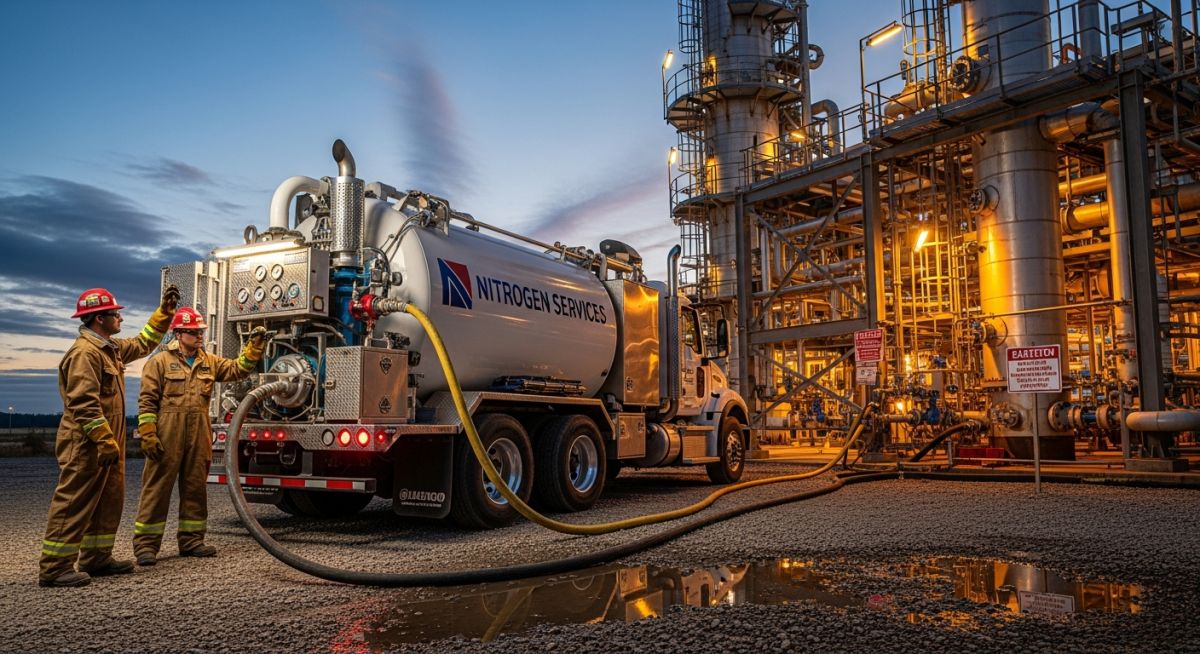
Imagine standing on the deck of a refinery during a high-stakes turnaround. A massive distillation column needs maintenance, but it is currently saturated with volatile hydrocarbon vapors. One spark—from a tool, static electricity, or even a friction-heated bolt—could trigger a catastrophic explosion. This is the critical moment where Nitrogen Purging becomes the thin line between a safe procedure and an industrial disaster. By displacing oxygen and hazardous gases with dry, inert nitrogen, engineers create a stable environment where maintenance and commissioning can proceed without the threat of combustion.
Key Takeaways
- Atmospheric Displacement: Nitrogen Purging reduces oxygen levels below the Limiting Oxidant Concentration (LOC) to prevent ignition.
- Method Selection: Choosing between displacement, dilution, pressure swing, or vacuum purging depends entirely on vessel geometry and pressure ratings.
- Operational Safety: Modern 2026 standards prioritize continuous O2 monitoring and strict adherence to API 2015 for tank entry.
What is Nitrogen Purging?
Nitrogen Purging is an industrial safety procedure used to displace hazardous gases, moisture, or oxygen from piping systems and vessels. By introducing high-purity nitrogen, the internal atmosphere is rendered inert, preventing combustion, oxidation, and contamination. It is essential for pipeline commissioning, maintenance turnarounds, and volatile chemical storage.
“In my two decades of field experience, the biggest mistake I see is treating Nitrogen Purging as a ‘one-size-fits-all’ task. A pipeline requires a completely different flow dynamic than a complex reactor. Accuracy in volume calculations isn’t just about cost—it’s about ensuring zero pockets of trapped oxygen remain.”
— Atul Singla, Founder of EPCLand
Table of Contents
Complete Course on
Piping Engineering
Check Now
Key Features
- 125+ Hours Content
- 500+ Recorded Lectures
- 20+ Years Exp.
- Lifetime Access
Coverage
- Codes & Standards
- Layouts & Design
- Material Eng.
- Stress Analysis
Technical Knowledge Check
Question 1 of 5Which Nitrogen Purging method is most effective for systems with complex internal geometries or “dead legs”?
What is Nitrogen Purging?
At its technical core, Nitrogen Purging is a controlled displacement process where an undesired atmosphere—typically containing oxygen, moisture, or hydrocarbons—is replaced by high-purity nitrogen gas. Unlike simple ventilation, purging is a precision engineering task designed to achieve specific atmospheric parameters, such as reducing oxygen levels below the Limiting Oxidant Concentration (LOC). According to industry-standard safety guidelines from the U.S. Chemical Safety Board (CSB), proper inerting and purging protocols are the primary defense against internal vessel explosions.
The process is categorized by the flow dynamics within the system. In 2026, engineering teams utilize advanced ultrasonic sensors to monitor the interface between the nitrogen and the displaced gas, ensuring that the purge is complete without excessive nitrogen waste. Whether it is preparing a reactor for catalyst loading or clearing a pipeline of natural gas, Nitrogen Purging ensures that the internal environment is non-reactive and bone-dry.
Critical Engineering: Why Nitrogen Purging is Required?
The requirement for Nitrogen Purging stems from three critical industrial needs: safety, integrity, and purity. From a safety perspective, the “Fire Triangle” requires fuel, heat, and oxygen. By removing oxygen through Nitrogen Purging, the triangle is broken, making ignition physically impossible regardless of the heat source or fuel concentration.
Beyond combustion prevention, purging is essential for asset integrity. Moisture trapped in piping systems can lead to internal corrosion or the formation of ice crystals (hydrates) in cryogenic applications. Nitrogen, being an inert and extremely dry gas with a typical dew point of -40°F or lower, acts as a drying agent. For projects adhering to American Petroleum Institute (API) Standards, purging is a non-negotiable step in the pre-commissioning phase to ensure product purity and prevent contamination.
Industrial Uses of Nitrogen Purging Systems
The versatility of Nitrogen Purging allows it to be used across diverse sectors, from aerospace to heavy manufacturing. In the oil and gas sector, it is used to “kill” a well or clear a subsea line. In the pharmaceutical industry, purging ensures that oxygen-sensitive active ingredients do not degrade during the packaging process.
Standard applications in 2026 include the decommissioning of retired offshore platforms, where Nitrogen Purging is used to render large storage cells safe for dismantling. Additionally, in the semiconductor industry, ultra-high purity nitrogen purging is used to maintain an oxygen-free environment during silicon wafer fabrication to prevent unwanted oxidation layers.
Why Is Nitrogen the Gold Standard for Nitrogen Purging?
Nitrogen is favored over other inert gases like Argon or Carbon Dioxide for several technical reasons. Firstly, it is abundant and cost-effective, making up roughly 78% of the Earth’s atmosphere. This allows for the use of on-site Nitrogen Generation Systems (Membrane or PSA) which eliminate the logistical challenges of liquid nitrogen delivery for remote sites.
Chemically, nitrogen is truly inert at standard process temperatures, meaning it will not react with the metals of the vessel or the chemicals being processed. Furthermore, nitrogen has a similar density to air (unlike CO2 which is much heavier), making it easier to predict its flow behavior during Nitrogen Purging operations. This predictability is vital for calculating the required “number of volume changes” to reach a safe O2 threshold.
Comparative Analysis: Nitrogen Purging vs. Inerting
While often used interchangeably in casual field talk, Nitrogen Purging and inerting represent distinct engineering objectives. Purging is a transient process; it is the act of displacing one gas with nitrogen until a specific endpoint is reached. In contrast, inerting is a maintenance state. Once a vessel has undergone Nitrogen Purging, a “nitrogen blanket” or constant pressure is maintained to ensure that no oxygen can re-enter the system. This distinction is critical when calculating gas volumes under ASME Section VIII pressure vessel standards.
How Nitrogen Purging Procedures Differ from Explosion Prevention
Explosion prevention often focuses on ignition source control (ATEX/EX-rated equipment), whereas Nitrogen Purging addresses the atmosphere itself. By adhering to NFPA 69: Standard on Explosion Prevention Systems, engineers use purging to ensure that even if a spark occurs, the concentration of fuel or oxygen is outside the flammable range.
4 Core Types of Nitrogen Purging Procedures
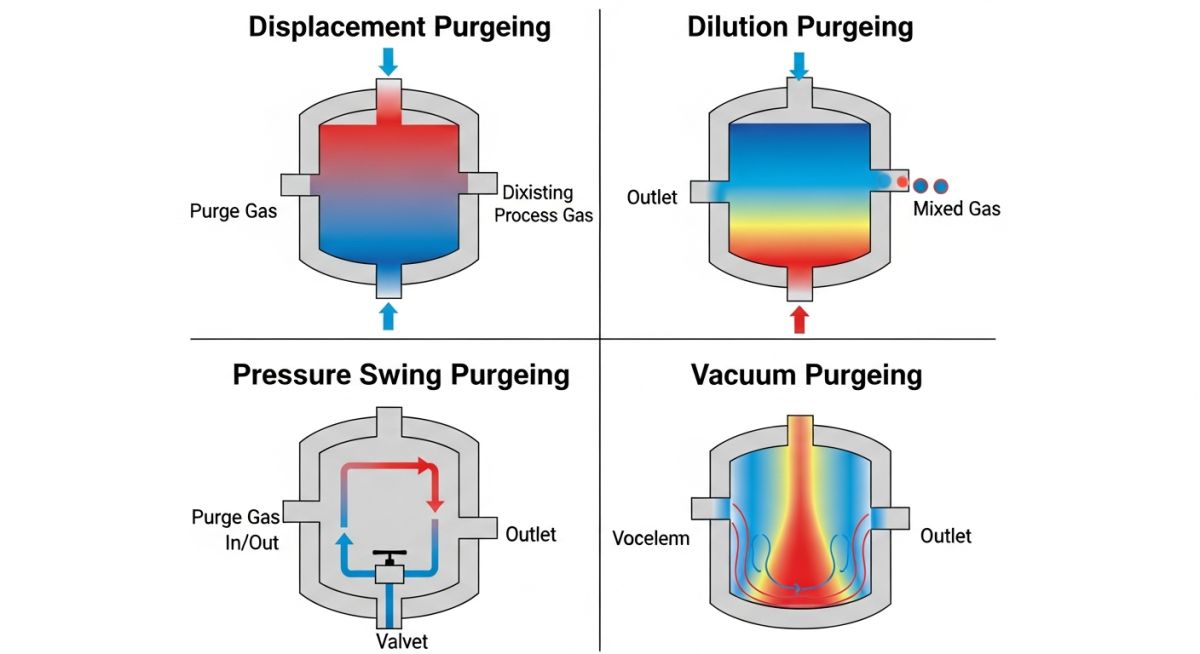
1. Displacement Purging (The Plug Effect)
Ideal for simple geometries like pipelines. Nitrogen is injected at a controlled rate to act as a physical “plug,” pushing the existing gas ahead of it. This method requires the least amount of nitrogen—typically only 1.2 to 1.5 times the volume of the vessel.
2. Dilution Purging (Continuous Mixing)
Used for complex vessels with internal baffles or “dead legs.” Nitrogen is injected and allowed to mix thoroughly with the internal gas. The mixture is then vented. This requires more volume—often 3 to 5 times the vessel capacity—to reach safe levels.
3. Pressure Swing Purging (Cycling)
The vessel is pressurized with nitrogen, held, and then depressurized (vented) to atmosphere. Each cycle significantly reduces the concentration of the contaminant. This is the preferred method for high-pressure systems.
4. Vacuum Purging (Sub-atmospheric)
Used only for vessels designed to withstand vacuum. The atmosphere is sucked out using a vacuum pump, and then “broken” by injecting nitrogen. It is the most efficient method for deep-cleaning oxygen from pores and crevices.
Best Practices for Nitrogen Purging in Pipelines
| Parameter | Standard Practice | Engineering Goal |
|---|---|---|
| Purge Velocity | 2-5 ft/sec | Minimize mixing (Laminar flow) |
| O2 Target | < 1% to 2% | Below LOC threshold |
| Dew Point | -40°C or lower | Prevent Hydrate formation |
| Standard Check | API 2015 / 2217A | Safe work & entry compliance |
Nitrogen Purging Volume Calculator
Estimate the required Nitrogen volume for Dilution Purging based on the desired final oxygen concentration.
Note: Calculation based on the Dilution Formula: C = Co * e(-Vn/Vv). For Nitrogen Purging in complex vessels, a safety factor of 1.2x is recommended.
EPCLand YouTube Channel
2,500+ Videos • Daily Updates
Commissioning a 42-Inch Natural Gas Pipeline
Challenge
Displacing 15km of atmospheric air with natural gas without creating a flammable interface.
Solution
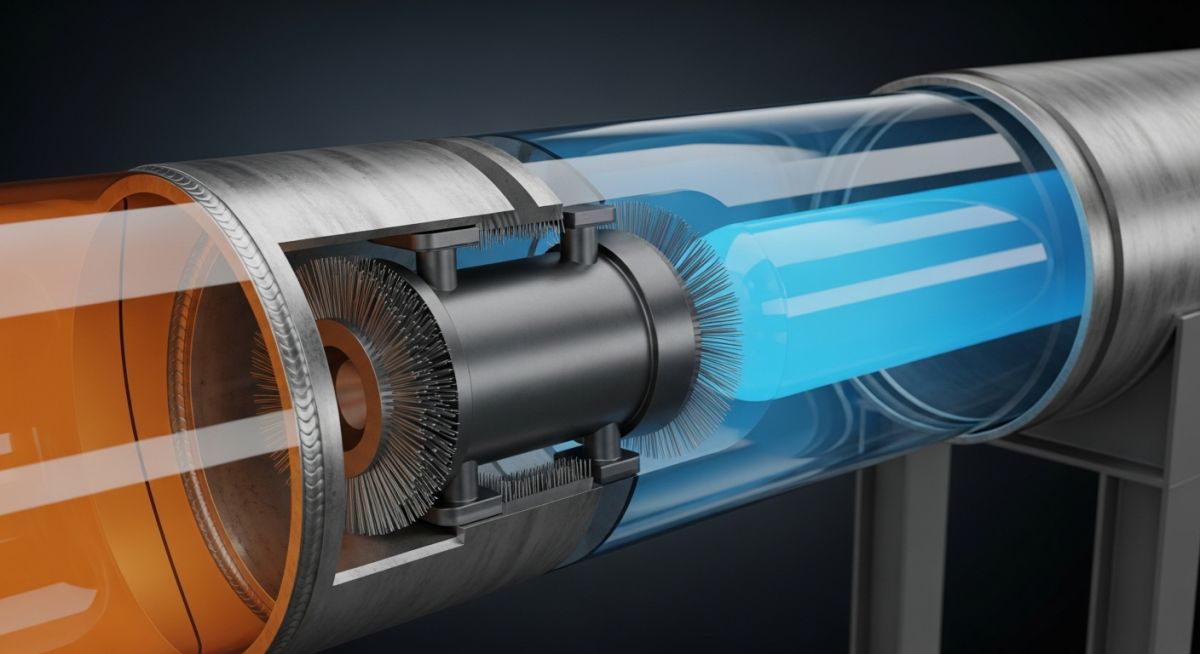
Implementation of Nitrogen Purging using the “Slug Displacement” method with mechanical pigs.
Result
O2 levels reduced to 0.5% in 14 hours with 99.9% purity verification at the terminal.
In this 2026 subsea project, the engineering team utilized high-flow nitrogen pumpers to inject a 1,000-meter “slug” of nitrogen between two bi-directional pigs. This Nitrogen Purging strategy ensured that the air was physically separated from the incoming hydrocarbon gas by an inert buffer.
Precision was maintained by monitoring the “Nitrogen Interface” via wireless sensors embedded in the pigs. By maintaining a constant back-pressure of 2.5 bar, the team prevented “bypass,” where gas might leak around the pig seals. This approach reduced nitrogen consumption by 40% compared to traditional dilution methods, proving that Nitrogen Purging efficiency is a result of superior flow dynamics management.
Project Oversight
Lead Engineer: Atul Singla
Don’t miss this video related to Nitrogen Purging

Summary: Master Piping Engineering with our complete 125+ hour Certification Course: ……
Expert Insights: Lessons from 20 years in the field
The Stratification Trap: When performing Nitrogen Purging on large vertical vessels, remember that nitrogen is slightly lighter than air. If you inject from the top without high-velocity turbulence, you risk “stratification” where air remains trapped at the bottom. Always inject at the furthest point from the vent to ensure a total sweep.
Dew Point vs. Oxygen: Many junior engineers focus solely on O2 percentages. However, in cryogenic or high-pressure gas services, the moisture content (dew point) is just as critical. A successful 2026 purge protocol must hit both the <2% O2 and the -40°F dew point targets simultaneously.
Pressure Cycling Fatigue: For older vessels, frequent “Pressure Swing” Nitrogen Purging can introduce cyclic stress. Always consult the vessel’s ASME U-1 Data Report to ensure the purging pressure cycles stay within the fatigue design limits.


