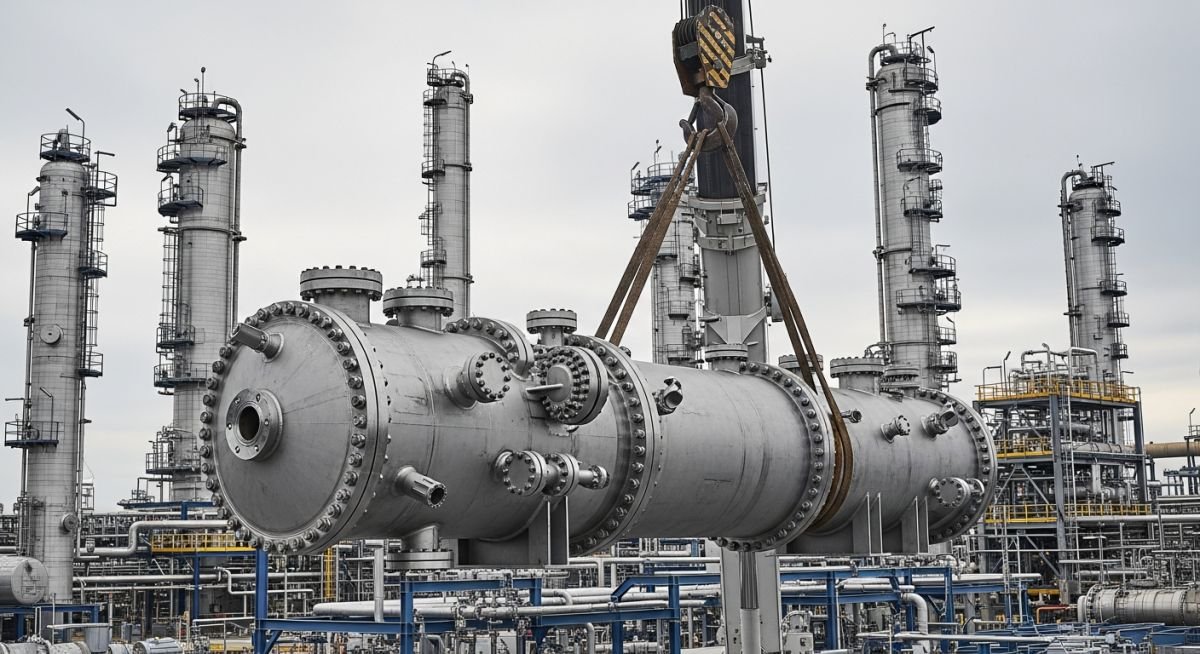
Managing Long Lead Items for a Process Piping Industry
In my two decades of managing large-scale refinery and petrochemical projects, I have learned that the difference between a project finishing on time and one bleeding millions in liquidated damages often comes down to the procurement of long lead items. These are not just components; they are the heartbeat of your piping system. When a 24-inch high-pressure control valve or a custom-engineered bellows expansion joint has a 52-week delivery cycle, you cannot afford to wait for final P&ID approval to initiate the requisition process.
I have seen too many projects stall because engineering teams treated procurement as a downstream activity. Effective management requires integrating supply chain intelligence into the front-end engineering design (FEED) phase. By identifying these critical path items early, we can lock in manufacturing slots and perform rigorous vendor qualification before the site mobilization phase begins.
Key Takeaways for Project Success:
- Initiate long lead item identification during the 30% design review phase.
- Prioritize vendor technical audits for critical alloy materials to ensure metallurgical compliance.
- Establish clear communication channels between the piping stress analysis team and the procurement department to avoid late-stage specification changes.
- Utilize ASME Section VIII and B16.34 standards as the baseline for all technical bid evaluations.
Technical Analysis of Long Lead Items in Piping
Long Lead Items Procurement Strategy: The systematic engineering approach to identifying, specifying, and securing critical piping components that dictate the project critical path, ensuring full adherence to ASME B31.3 pressure piping codes and material specifications.
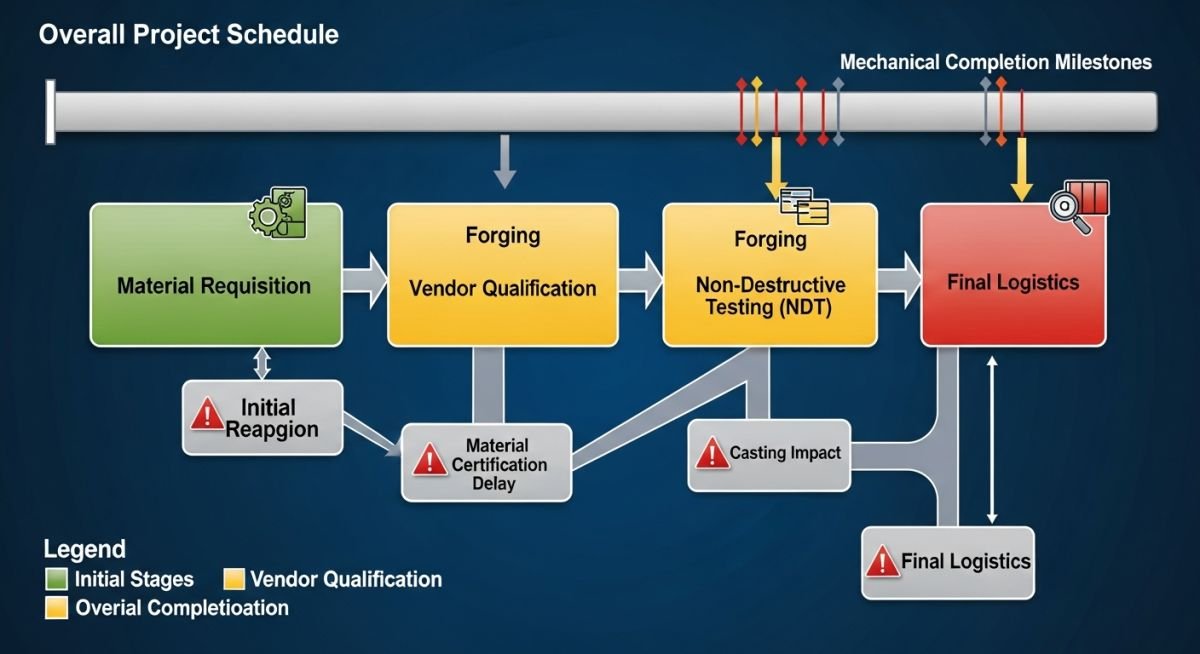
When we analyze long lead items, we are essentially performing a risk assessment on the project schedule. The primary drivers for long lead times are typically specialized metallurgy, complex casting requirements, and non-standard pressure ratings. For instance, a valve body requiring Inconel 625 cladding or a specialized cryogenic service rating often requires raw material sourcing that can take months before fabrication even begins.
From a stress analysis perspective, the interaction between the piping system and these components is critical. If a valve is identified as a long lead item, the piping stress engineer must finalize the nozzle loads and thermal expansion requirements early. If the valve design changes due to a late-stage stress analysis update, the procurement cycle resets, potentially adding 40 weeks to the schedule. I always mandate that the “Hold” status on these items be cleared only after the piping stress report is verified against the vendor’s certified drawing.
Field Warning: The Specification Trap
Never finalize a purchase order for a long lead item based on preliminary data sheets. In my experience, the most common cause of site rework is the mismatch between the piping class specification and the actual valve trim or bonnet material provided by the vendor. Always cross-reference the ASTM material grade with the ASME B16.34 pressure-temperature ratings before signing off on the technical bid.
To calculate the impact of these items, we use a simple lead-time variance formula: Total Schedule Impact equals (Vendor Lead Time plus Inspection Duration plus Logistics Buffer) minus (Available Project Float). If this value is positive, the item is a critical path component. We must then apply rigorous quality control measures, including third-party inspection (TPI) at the foundry or fabrication shop, to ensure that the material chemistry meets the required ASME Section II standards.
Furthermore, consider the impact of non-destructive examination (NDE) requirements. For high-pressure piping, the radiographic testing (RT) or ultrasonic testing (UT) requirements specified in ASME B31.3 can add significant time to the fabrication schedule. When procuring these items, I insist that the vendor provides a detailed Quality Control Plan (QCP) that includes these NDE hold points, ensuring that we do not discover a casting defect after the item has arrived at the site.
Strategic Procurement Evaluation: A comparative analysis of the operational and financial trade-offs involved in the early acquisition of critical piping components within complex industrial infrastructure projects.
Advantages
- Schedule Certainty: Securing manufacturing slots early mitigates the risk of global supply chain volatility.
- Cost Escalation Protection: Locking in prices early protects the project budget from raw material price spikes.
- Technical Alignment: Early engagement allows for detailed design integration between the piping system and the component.
- Quality Assurance: More time for vendor audits and TPI ensures compliance with ASME standards.
Disadvantages
- Design Lock-in: Early procurement limits the flexibility to change piping layouts if process requirements evolve.
- Storage Costs: Large components require specialized, climate-controlled storage if they arrive before the site is ready.
- Capital Tie-up: Significant upfront cash flow is required, which can impact the project’s internal rate of return.
- Obsolescence Risk: If the project scope changes, the pre-purchased item may become redundant or require expensive modifications.
Industrial Procurement Implementation: The practical application of long lead item management across diverse sectors, focusing on high-pressure, high-temperature, and corrosive service environments.
Cryogenic LNG Processing Facilities
In LNG plants, the procurement of stainless steel valves and specialized piping components for cryogenic service is a primary critical path activity. These items must meet stringent ASME B31.3 requirements for low-temperature toughness, necessitating early vendor qualification and long-duration metallurgical testing.
High-Pressure Steam Power Generation
For supercritical power plants, the main steam piping and associated high-pressure valves are classic long lead items. The design must account for extreme thermal cycling, requiring the early procurement of forged fittings and high-alloy steel components that comply with ASME B31.1 power piping codes.
Offshore Oil and Gas Platforms
Space and weight constraints on offshore platforms make the procurement of custom-engineered, compact piping manifolds and subsea valves essential. These items are often manufactured to bespoke specifications, requiring a 12-to-18-month lead time to ensure structural integrity and corrosion resistance in harsh marine environments.
Chemical Plant Revamp Projects
During plant turnarounds, replacing legacy piping systems with modern, high-alloy materials requires precise procurement planning. The integration of new, long lead control valves into existing piping runs demands early site surveys and 3D laser scanning to ensure that the new components fit within the constrained brownfield footprint.
In my two decades of managing complex piping projects, I have observed that the procurement of specialized components often dictates the critical path of the entire construction schedule. Understanding the inherent lead times for high-alloy materials, custom-engineered valves, and complex expansion joints is not merely a logistical exercise; it is a fundamental requirement for project success. When we analyze these items, we must account for raw material availability, forging capacity, and the rigorous testing cycles mandated by ASME and API standards.
The following table outlines typical procurement durations for critical piping assets. These estimates assume standard market conditions and do not account for force majeure events or global supply chain disruptions. Engineers must utilize these figures as a baseline for scheduling, adjusting for specific project complexity and vendor-specific manufacturing backlogs. Always verify these timelines against current mill production schedules before finalizing your project execution plan.
| Component Category | Typical Lead Time (Weeks) | Primary Standard |
|---|---|---|
| High-Alloy Seamless Pipe | 24 – 40 | ASME B36.10M |
| Specialty Control Valves | 30 – 52 | API 6D |
| Forged Flanges (Large Bore) | 16 – 28 | ASME B16.5 |
| Expansion Joints (Metallic) | 12 – 20 | EJMA Standards |
Effective procurement requires a deep understanding of the technical entities involved in the supply chain. This matrix maps critical components to their respective regulatory frameworks and physical parameters, ensuring that procurement teams and engineering leads remain aligned on quality expectations. By standardizing these definitions, we minimize the risk of non-conformance during the inspection and installation phases.
The matrix below highlights the intersection of material science, dimensional standards, and testing requirements. Each entry represents a critical node in the procurement lifecycle where technical oversight is mandatory. I recommend that project managers use this mapping to develop their Quality Assurance and Quality Control (QA/QC) plans, ensuring that every long lead item is vetted against these specific industry benchmarks before it leaves the manufacturer’s facility.
| Entity | Standard Reference | Key Parameter |
|---|---|---|
| Pressure Vessels | ASME BPVC Section VIII | MAWP / Temperature |
| Piping Components | ASME B31.3 | Wall Thickness / Rating |
| Valve Actuators | API 600 | Torque / Cycle Life |
Procurement Verification Protocol: Ensuring that long lead items meet project requirements requires a systematic approach to site verification and documentation review. Before any component is released for shipment, it must undergo a rigorous validation process to confirm that it aligns with the original design specifications and applicable codes.
- Material Certification: Verify Mill Test Reports (MTRs) against ASTM material specifications.
- Dimensional Accuracy: Confirm component dimensions match the approved Issued for Construction (IFC) drawings.
- Pressure Testing: Ensure hydrostatic or pneumatic test results are documented and witnessed per ASME B31.3.
- Coating Integrity: Inspect surface preparation and coating thickness against project-specific painting specifications.
- Documentation Package: Compile the final Data Book, including all NDT reports, heat numbers, and compliance certificates.
Site verification is the final line of defense against schedule slippage. If a component arrives on-site with missing documentation or non-conforming dimensions, the resulting rework can delay project completion by weeks. I always insist on a pre-shipment inspection at the vendor’s facility whenever possible. This proactive step allows for the identification and resolution of issues before the item is crated and transported, saving significant time and resources during the critical construction phase.
The Challenge: Delayed Delivery of High-Pressure Forged Valves
A major refinery expansion project faced a critical delay when the primary supplier of high-pressure forged valves failed to meet the delivery schedule due to raw material shortages.
- Unforeseen global supply chain constraints affecting raw forging billets.
- Inadequate communication regarding production milestones during the manufacturing phase.
- Lack of secondary vendor qualification for critical path components.
The Outcome: Mitigation and Schedule Recovery
By implementing an aggressive recovery plan, the project team successfully mitigated the impact and avoided a total shutdown of the construction site.
- Secured alternative forging billets from a secondary source within 14 days.
- Expedited the machining process through a 24/7 production shift at the valve facility.
- Utilized air freight for the final delivery to the site, bypassing standard sea transit.
The recommendation from this experience is clear: never rely on a single source for critical path items. Always maintain a list of pre-qualified secondary vendors and ensure that your procurement contracts include clear penalties for schedule non-compliance. Furthermore, maintain constant visibility into the vendor’s production floor through regular, independent third-party inspections.
Frequently Asked Engineering Questions
How do I define a long lead item in a project?
- Items requiring specialized raw materials or unique forging processes.
- Equipment subject to extensive third-party inspection and testing cycles.
- Custom-engineered components that cannot be sourced from standard stock.
What role does ASME B31.3 play in procurement?
- Mandates material traceability through heat numbers and MTRs.
- Defines the requirements for pressure testing and NDT.
- Ensures that all piping components are compatible with the system’s design conditions.
How can I mitigate risks associated with vendor delays?
- Implement a rigorous Expediting Plan that tracks milestones weekly.
- Require detailed production schedules from the vendor at the time of bid.
- Include liquidated damages clauses in contracts to incentivize timely delivery.
- Maintain a secondary vendor list for all critical path items.
Why is third-party inspection critical for long lead items?
- Verifies that NDT results are accurate and meet code requirements.
- Confirms that material certifications are authentic and traceable.
- Ensures that dimensional tolerances are within the specified limits.
What documentation is required for long lead items?
- Mill Test Reports (MTRs) for all pressure-retaining parts.
- Certified drawings and final inspection reports.
- Hydrostatic test certificates and NDT records.
- Certificates of Conformance (CoC) signed by the manufacturer’s QA manager.
How do I handle non-conforming items upon arrival?
- Document the deviation clearly with photographs and measurements.
- Notify the vendor immediately and request a formal root cause analysis.
- Evaluate the impact on the project schedule and determine if repair or replacement is the most efficient path forward.
- Ensure that all corrective actions are verified by the project engineering team before the item is released for installation.
📚 Recommended Resources: Long Lead Items
Read these Guides
🎓 Advanced Training
Complete Course on
Piping Engineering
Check Now
Key Features
- 125+ Hours Content
- 500+ Recorded Lectures
- 20+ Years Exp.
- Lifetime Access
Coverage
- Codes & Standards
- Layouts & Design
- Material Eng.
- Stress Analysis
