What is Inconel Material? Composition, Properties, Grades, and Applications
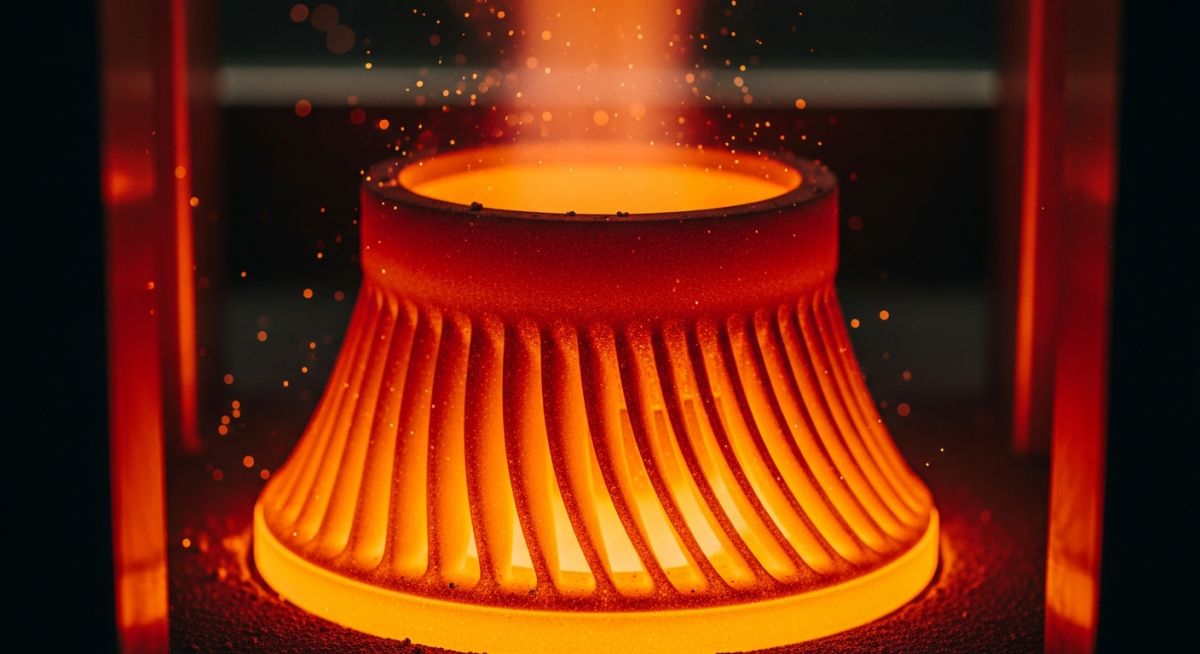
Imagine a propulsion system screaming at 800°C or a subsea valve submerged in a corrosive chloride brine for decades. Ordinary stainless steel would vanish or shatter under these loads. This is the exact pain point where Inconel Material becomes non-negotiable. As a family of nickel-chromium-based superalloys, it is engineered specifically to maintain structural integrity where other metals oxidize or lose their mechanical strength.
In this technical breakdown, you will gain a deep understanding of why this superalloy dominates the aerospace and nuclear sectors. We will analyze the metallurgical shift from 600-series to 718-series and provide the data needed for your next material selection process.
Key Takeaways
- Unmatched Thermal Stability: Inconel Material retains high tensile strength at temperatures where aluminum and steel become plastic.
- Oxidation Resistance: The high chromium content forms a thick, stable, protective oxide layer that prevents further internal degradation.
- Versatile Grading: From the weldability of 625 to the precipitation-hardened strength of 718, there is a specific grade for every extreme environment.
What is Inconel Material?
Inconel Material is a specialized family of nickel-chromium-based superalloys characterized by exceptional resistance to oxidation, corrosion, and high temperatures. It maintains high mechanical strength under extreme thermal stress, making it the primary choice for gas turbine blades, rocket engines, nuclear reactors, and high-pressure chemical processing equipment.
“While many engineers look at cost first, choosing Inconel Material is an investment in safety and longevity. In my 20 years of EPC project management, I’ve seen Inconel 625 outlast stainless steel by a factor of 10 in sour gas environments. It isn’t just a metal; it’s an insurance policy against catastrophic failure.”
— Atul Singla
Table of Contents
Complete Course on
Piping Engineering
Check Now
Key Features
- 125+ Hours Content
- 500+ Recorded Lectures
- 20+ Years Exp.
- Lifetime Access
Coverage
- Codes & Standards
- Layouts & Design
- Material Eng.
- Stress Analysis
Inconel Material Technical Quiz
1. Which primary element distinguishes Inconel Material from standard stainless steels?
What is Inconel Material?
Inconel Material belongs to a group of austenitic nickel-chromium-based superalloys known specifically for their high-performance characteristics in environments that would destroy structural steels. While standard metals rely on an iron matrix, Inconel utilizes a nickel-chromium matrix, often enhanced with elements like molybdenum, niobium, and iron. This unique metallurgy creates a material that does not just resist heat; it thrives in it.
When Inconel Material is heated, it forms a thick, stable, passivating oxide layer that protects the surface from further attack. This makes it an essential material for the ASME Boiler and Pressure Vessel Code applications, where maintaining mechanical strength at red-hot temperatures is a safety requirement. Unlike stainless steel, which may undergo grain growth or sensitization, Inconel maintains its face-centered cubic (FCC) crystal structure, providing excellent creep resistance and toughness from cryogenic temperatures up to 2000°F (1093°C).
Chemical Composition of Inconel Material
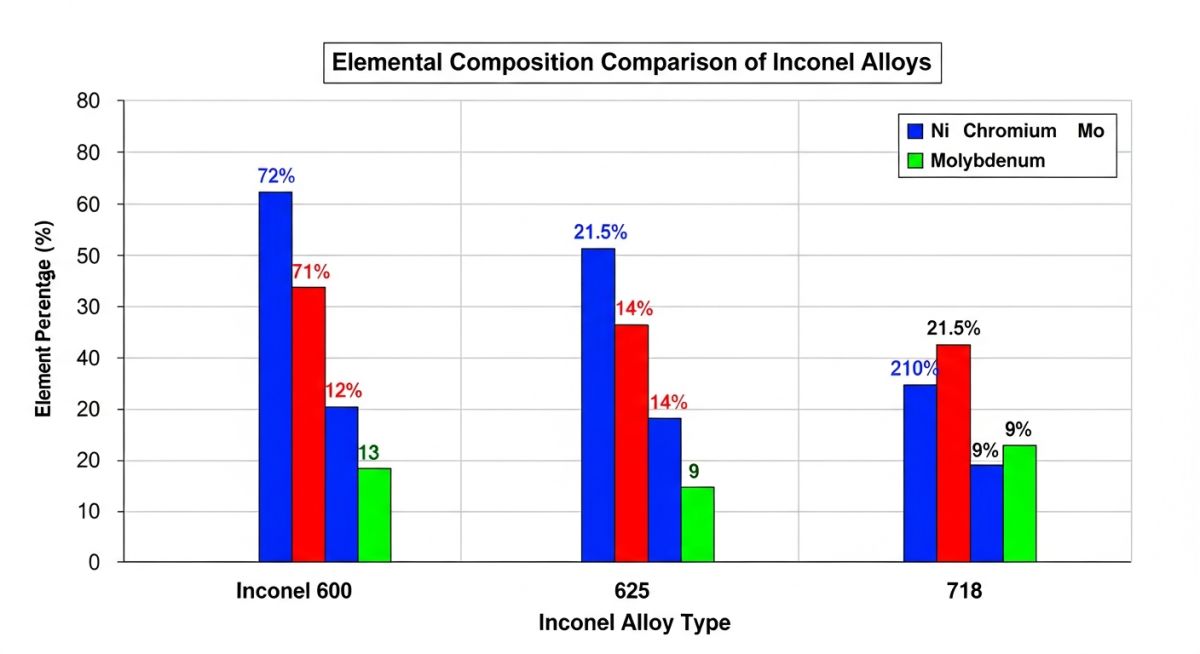
The specific “recipe” of Inconel Material varies by grade, but the foundational architecture remains consistent. Nickel serves as the primary solvent, providing the matrix for the alloy’s corrosion resistance. Chromium is the second most critical component, usually ranging between 15% and 30%, which provides the necessary oxidation resistance.
Secondary alloying elements define the personality of each grade. For instance, the addition of Molybdenum and Niobium in Inconel Material Grade 625 enhances its resistance to pitting and crevice corrosion. In contrast, Grade 718 includes higher amounts of Iron, Niobium, and Tantalum, along with trace amounts of Aluminum and Titanium, to facilitate precipitation hardening—a process that significantly boosts tensile and yield strength.
Key Engineering Properties of Inconel Material
The mechanical and physical properties of Inconel Material make it a “problem-solver” alloy for design engineers. Its most significant trait is Creep-Rupture Strength. Creep is the tendency of a solid material to move slowly or deform permanently under the influence of persistent mechanical stresses. While carbon steel creeps significantly at 500°C, Inconel remains stable.
- Thermal Expansion: Inconel possesses a relatively low coefficient of thermal expansion compared to other high-temperature alloys, reducing the risk of thermal fatigue in cycling environments.
- Corrosion Resistance: It is exceptionally resistant to high-purity water, chloride-ion stress-corrosion cracking, and various organic and inorganic acids.
- Cryogenic Performance: Many alloys become brittle at sub-zero temperatures. Inconel Material, however, retains its ductility and impact strength even in liquid nitrogen or hydrogen storage environments.
- Fabricability: Despite its hardness, most Inconel grades are highly weldable using TIG or MIG methods, provided proper heat treatment protocols are followed.
Critical Inconel Material Grades
Understanding the distinction between Inconel Material grades is vital for engineering compliance with API 6A or ASME Section VIII standards. While there are dozens of variations, three specific grades dominate the global industrial landscape:
- Inconel 600: A solid-solution strengthened alloy used for furnace components and chemical processing. It provides excellent resistance to chloride-ion stress-corrosion cracking as outlined in ISO 15156.
- Inconel 625: Known for its incredible fatigue strength and resistance to pitting. It is the go-to Inconel Material for marine exhaust systems and flare stacks due to its high Molybdenum content.
- Inconel 718: A precipitation-hardenable grade. By utilizing Niobium to form gamma double prime precipitates, it achieves nearly double the tensile strength of Grade 625 while maintaining weldability.
| Property | Inconel 600 | Inconel 625 | Inconel 718 |
|---|---|---|---|
| Nickel Content | 72.0% min | 58.0% min | 50.0 – 55.0% |
| Tensile Strength (ksi) | 80 – 100 | 120 – 150 | 180 – 210 |
| Max Temp (°F) | 2150 | 1800 | 1300 |
| Primary Benefit | Oxidation Resistance | Corrosion Fatigue | High Yield Strength |
Comparative Analysis: Inconel Material vs Monel
A common point of confusion in material procurement is the choice between Inconel Material and Monel. While both are nickel-based, their performance envelopes differ significantly. Monel (Nickel-Copper) is specifically optimized for hydrofluoric acid and seawater applications at moderate temperatures. However, Monel fails where Inconel Material excels: extreme heat.
If your application exceeds 540°C (1000°F), Monel loses its structural utility, whereas Inconel continues to provide superior creep-rupture life. For high-pressure steam valves or aerospace manifolds, Inconel Material is the only viable technical choice.
Inconel Material: Thermal Expansion Calculator
Estimate the linear expansion of different Inconel Material grades based on temperature delta. (Approximate values for engineering estimation).
Estimated Linear Expansion
0.00 mm
Formula used: ΔL = L₀ × α × ΔT
EPCLand YouTube Channel
2,500+ Videos • Daily Updates
Engineering Case Study: Aerospace Propulsion
The Challenge: Post-Combustion Oxidation
A leading aerospace contractor faced recurring structural failure in rocket nozzle extensions. Standard 300-series stainless steels were experiencing “burn-through” within 45 seconds of engine ignition due to the intense 1,200°C exhaust gas and high-velocity oxygen particles.
The Solution: Implementation of Inconel 718
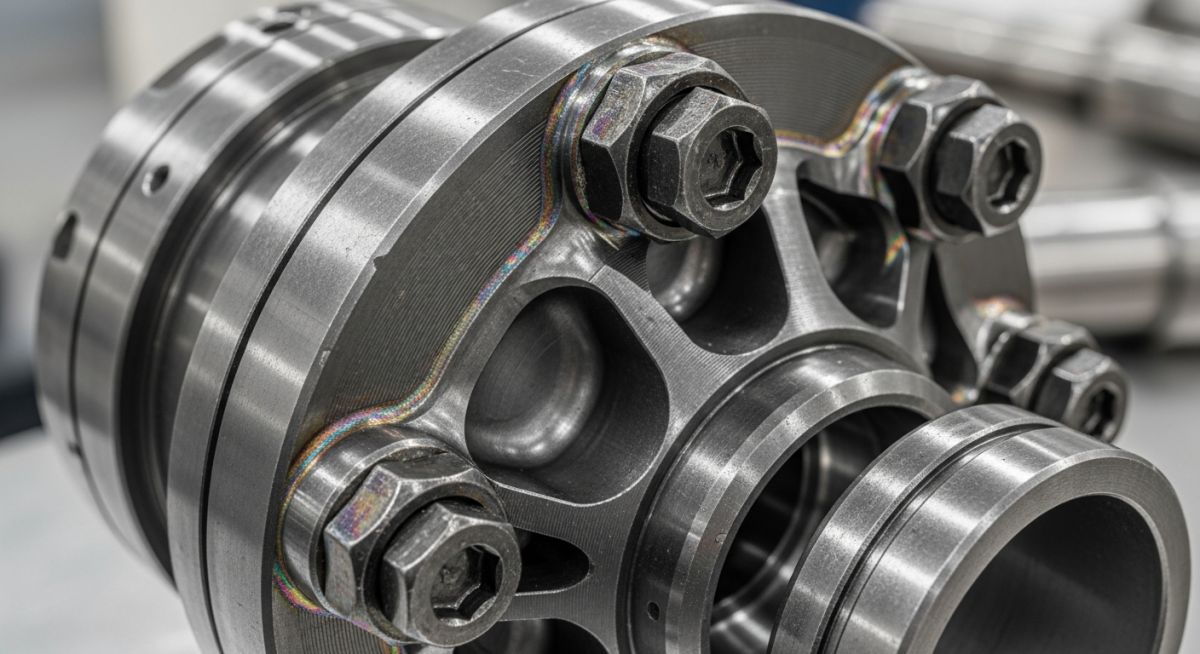
The engineering team transitioned the nozzle assembly to Inconel Material Grade 718. By utilizing a precipitation-hardening heat treatment (solution annealing followed by age hardening), the component achieved the required tensile strength of 180 ksi at elevated temperatures.
400%
Increase in Service Life
1,200°C
Thermal Threshold
Zero
Oxidation Failures
Result: The switch to Inconel Material allowed for multiple re-ignitions per mission, a critical factor for reusable launch vehicle technology in 2026.
Don’t miss this video related to Inconel Material
Summary: Master Piping Engineering with our complete 125+ hour Certification Course: ……
Expert Insights: Lessons from 20 years in the field
Selecting Inconel Material is only half the battle; the real engineering challenge lies in the execution of fabrication and heat treatment. Over two decades of managing EPC projects, here are the critical technical nuances often overlooked in the design phase:
- ● Work Hardening Awareness: Inconel hardens rapidly during machining. You must use heavy, constant feeds and rigid setups to stay beneath the work-hardened surface, or you will destroy your carbide tooling in minutes.
- ● Post-Weld Heat Treatment (PWHT): For precipitation-hardened grades like 718, PWHT is not optional. Skipping this step leads to residual stress gradients that can trigger premature stress-corrosion cracking in sour gas environments.
- ● Contamination Risks: Never use tools that have previously touched carbon steel on Inconel Material. Embedded iron particles will compromise the chromium-oxide layer, leading to localized pitting even in high-performance alloys.
- ● Grade Over-Engineering: Don’t specify 718 if 625 will suffice. The increased cost and machining complexity of 718 are only justified if high tensile strength at temperature is the primary failure mode.
References & Standards
- ASME BPVC Section II, Part B: Nonferrous Material Specifications
- API Specification 6A: Material Requirements for Wellhead and Christmas Tree Equipment
- ISO 15156-3: Materials for use in H2S-containing environments in oil and gas production
- ASTM B166: Standard Specification for Nickel-Chromium-Iron Alloys
Frequently Asked Questions: Inconel Material
What is the difference between Inconel Material and Stainless Steel? ▼
Is Inconel Material magnetic? ▼
Why is Inconel Material so expensive? ▼
Can I weld Inconel 718 to 316L Stainless Steel? ▼
Does Inconel Material rust in seawater? ▼
Which grade should I choose for a high-pressure furnace liner? ▼
📚 Recommended Resources: Inconel Material
Read these Guides



Related posts:
![High-grade industrial Wing Nut Types and Applications for mechanical assemblies.]()
Wing Nut Types and Applications: The 2026 Engineering Guide
![Industrial Monorail Crane Systems installed in a modern manufacturing plant 2026.]()
Monorail Crane Systems: Design, Types & 2026 Standards Guide
![Lead engineer performing a Factory Acceptance Test FAT on an industrial skid system 2026]()
Factory Acceptance Test FAT: The 2026 Engineering Guide to Zero-Defect Delivery
![Professional engineering workspace showing a Basis of Design document layout for a 2026 project.]()
Basis of Design: How to Write a BOD for Engineering Projects in 2026
![Industrial Flare Knockout Drum Sizing and installation in a refinery relief system.]()
Flare Knockout Drum Sizing: Design & API 521 Standards (2026 Guide)
![Advanced Reboiler Control Systems in a modern petrochemical refinery 2026.]()
Reboiler Control Systems: Engineering Guide to Precision Control 2026