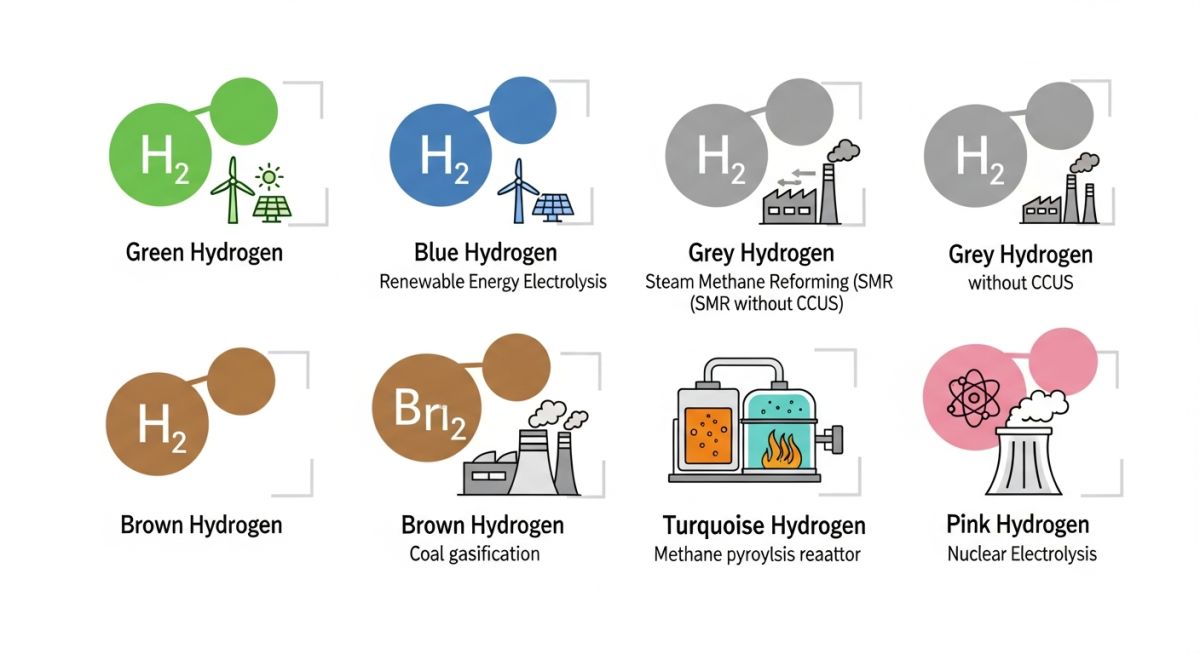
Hydrogen Colors Explained with Production Methods and Industrial Applications
In my 20+ years of working across refineries, petrochemical plants, and EPC projects, I have seen one recurring source of confusion: hydrogen “colors.” Engineers, project managers, and even clients often use terms like green hydrogen or blue hydrogen without fully understanding their technical implications.
I’ve personally handled audits where incorrect hydrogen classification led to emission reporting issues and design rework. This guide will help you avoid those mistakes by giving both conceptual clarity and field-level insights.
Key Takeaways from Field Experience:
- Hydrogen “colors” are not physical properties but production-based classifications
- Grey hydrogen dominates industrial usage despite high carbon emissions
- Green hydrogen is the only truly sustainable long-term solution
- Blue hydrogen depends heavily on carbon capture efficiency
- Incorrect classification can impact compliance, ESG reporting, and contracts
Quick Answer: What are Hydrogen Colors?
Hydrogen colors classify hydrogen based on how it is produced and its environmental impact. Green hydrogen is produced using renewable-powered electrolysis, grey hydrogen from fossil fuels, and blue hydrogen combines fossil fuels with carbon capture technology to reduce emissions.
Interactive Engineering Quiz
Complete Course on
Piping Engineering
Check Now
Key Features
- 125+ Hours Content
- 500+ Recorded Lectures
- 20+ Years Exp.
- Lifetime Access
Coverage
- Codes & Standards
- Layouts & Design
- Material Eng.
- Stress Analysis
What are hydrogen colors classifications?
Hydrogen colors classification: Hydrogen colors define production pathways and lifecycle emissions of hydrogen rather than its physical properties. This classification is widely used in EPC projects, ESG reporting, and compliance alignment with standards such as ISO energy frameworks.
In my field experience, hydrogen is never “colored” in reality—it is the production method that dictates environmental impact, cost, and engineering complexity. Understanding this is critical when working on hydrogen pipelines, storage systems, or plant integration designs.
How is green hydrogen produced?
Green hydrogen production: Green hydrogen is produced through water electrolysis powered by renewable energy sources like solar or wind, ensuring near-zero carbon emissions. Compliance is often aligned with renewable certification norms and sustainability reporting guidelines.
Electrolysis splits water into hydrogen and oxygen. The entire process becomes environmentally neutral only if the electricity source is renewable. I’ve seen projects fail audits where “green hydrogen” was produced using grid electricity dominated by fossil fuels.
How does grey hydrogen formation work?
Grey hydrogen process: Grey hydrogen is produced using Steam Methane Reforming where natural gas reacts with steam to produce hydrogen and carbon dioxide as a by-product. This process follows industrial practices governed under API standards for refinery operations.
This is the most common hydrogen type used in refineries today. However, it produces significant CO₂ emissions. In one refinery I audited, over 85 percent hydrogen usage was grey hydrogen, yet ESG reporting labeled it incorrectly.
What makes blue hydrogen different?
Blue hydrogen concept: Blue hydrogen is produced similarly to grey hydrogen but incorporates carbon capture and storage systems to reduce emissions. Its effectiveness depends heavily on capture efficiency validated under emission monitoring systems.
In practice, blue hydrogen varies widely. Some facilities capture only partial emissions. During one EPC review, I found a client claiming blue hydrogen while capturing less than half of CO₂, which significantly impacted sustainability reporting.
What are other hydrogen color types?
Extended hydrogen classifications: Additional hydrogen colors include brown, black, turquoise, and pink hydrogen, each tied to specific feedstocks such as coal, methane pyrolysis, or nuclear-powered electrolysis. These classifications help in project feasibility and environmental impact assessment.
- Brown/Black Hydrogen: Produced from coal gasification with the highest emissions
- Turquoise Hydrogen: Produced via methane pyrolysis, generating solid carbon instead of CO₂
- Pink Hydrogen: Produced using nuclear energy-powered electrolysis
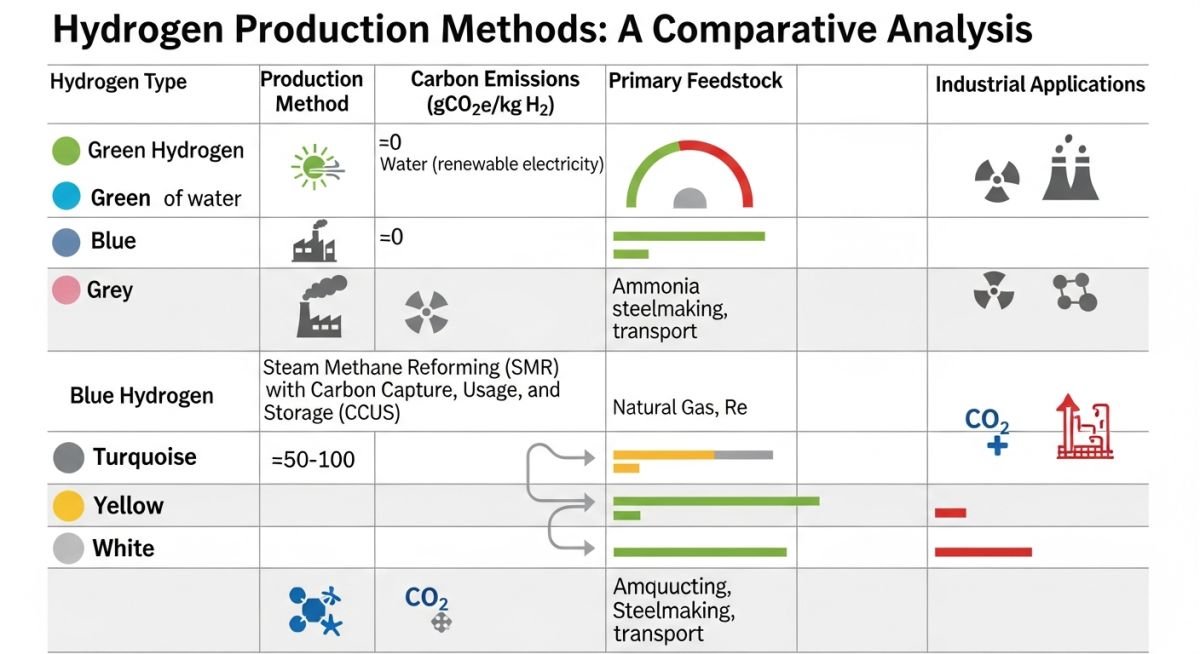
| Hydrogen Type | Production Method | Feedstock | Carbon Emissions | Industrial Usage |
|---|---|---|---|---|
| Green | Electrolysis | Water + Renewable Energy | Near Zero | Future energy, mobility |
| Grey | SMR | Natural Gas | High | Refineries, ammonia plants |
| Blue | SMR + CCS | Natural Gas | Moderate (depends on capture) | Transition energy systems |
| Brown/Black | Coal Gasification | Coal | Very High | Legacy operations |
| Turquoise | Methane Pyrolysis | Methane | Low | Emerging technology |
What should you verify on-site?
Site verification checklist: Hydrogen color verification on-site requires systematic validation of production pathways, documentation traceability, and emissions alignment with applicable industry codes such as ISO energy standards and API refinery guidelines. Engineers must focus on evidence-based confirmation rather than assumptions or labeling.
In my experience, most hydrogen classification errors don’t happen in design—they happen during execution and reporting. I’ve seen contractors simply label pipelines as “green hydrogen” without validating the upstream energy source. That is where real audit risks emerge.
Whether you’re screening candidates (like in your role, Neha) or evaluating vendor claims, this checklist mirrors what experienced engineers actually look for in EPC audits.
✅ Hydrogen Color Verification Checklist
- Production Method Confirmation: Verify whether hydrogen is produced via electrolysis, SMR, or coal gasification. Do not rely on labels alone.
- Feedstock Validation: Confirm input source such as water, natural gas, or coal. This directly determines hydrogen classification.
- Energy Source Traceability: For green hydrogen, ensure renewable energy origin is certified and verifiable through documentation.
- Carbon Emission Records: Review emission logs and compare with expected benchmarks under GHG Protocol standards.
- Carbon Capture Efficiency Check: For blue hydrogen, validate CO₂ capture percentage and storage method effectiveness.
- Pipeline Tagging Accuracy: Ensure pipelines and P&IDs correctly reflect hydrogen type and source.
- Material Compatibility Assessment: Check whether materials used are compatible with hydrogen purity and pressure levels.
- Project Contract Alignment: Cross-check hydrogen classification with project specifications and EPC contract clauses.
- Audit Documentation Completeness: Confirm all reports include production method, emission data, and certification evidence.
- Operational Consistency: Ensure actual plant operation matches documented process flows and declared hydrogen color.
Why hydrogen purity levels matter?
Hydrogen purity classification: Hydrogen purity defines contamination limits and directly affects pipeline integrity, catalyst performance, and end-use efficiency in accordance with ISO standards. Engineering decisions must align hydrogen type with required purity levels across applications.
In refinery hydrotreating units, even small impurities can poison catalysts. I’ve seen cases where improper hydrogen sourcing caused premature catalyst failure, costing millions. Green hydrogen often requires additional purification before use, while grey hydrogen typically requires conditioning based on plant standards.
How emissions impact project feasibility?
Emission evaluation principle: Hydrogen project feasibility depends heavily on lifecycle carbon emissions analysis aligned with GHG Protocol frameworks. Engineers must quantify emissions across production, transport, and storage stages to ensure compliance.
For example, blue hydrogen projects often appear attractive on paper, but if carbon capture efficiency falls below acceptable thresholds, total emissions remain high. I always recommend validating actual operating data instead of relying on theoretical efficiency claims.
How choose right hydrogen type?
Hydrogen selection strategy: Choosing hydrogen type depends on project objectives, energy availability, cost constraints, and environmental regulations defined under API standards. Engineers must balance sustainability targets with operational feasibility.
In early-stage feasibility studies, I advise teams to compare at least three scenarios—grey, blue, and green hydrogen—with clear emission and cost benchmarks. This eliminates decision bias and ensures long-term viability.
Field Case Study: Real-World Application
My direct recommendation: never finalize hydrogen classification without operational validation. Always cross-check plant performance data against declared values. This one step can protect both engineering integrity and project compliance.
Frequently Asked Engineering Questions
What is the cleanest hydrogen type?
Why is grey hydrogen widely used?
Is blue hydrogen truly sustainable?
What is turquoise hydrogen process?
How verify hydrogen classification correctly?
Why hydrogen colors important in EPC?
