What is Hastelloy Material? Properties, Types, and Applications
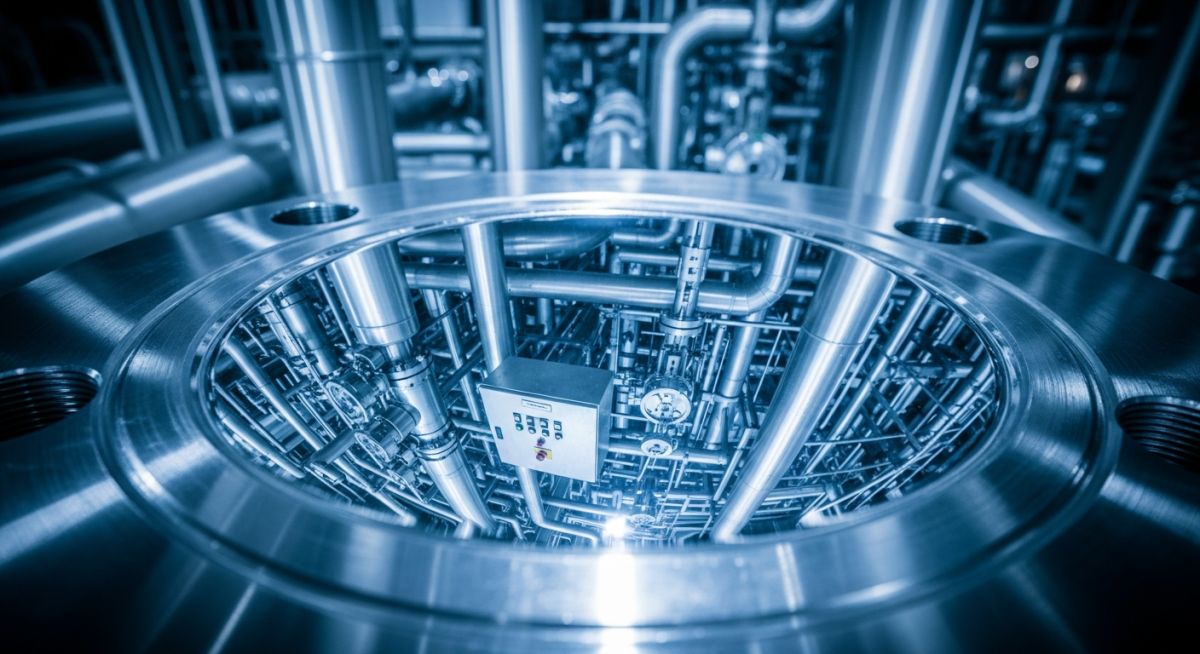
Imagine a chemical reactor failing mid-cycle because a standard stainless steel valve literally dissolved in a 20% hydrochloric acid bath. For reliability engineers, this isn’t just a nightmare—it is a million-dollar downtime reality. When 316L and even duplex steels hit their electrochemical limits, Hastelloy Material becomes the non-negotiable solution for survival in highly oxidizing and reducing environments.
In this guide, we break down the metallurgical DNA of this nickel-based superalloy, ensuring you select the correct grade to prevent catastrophic pitting, stress-corrosion cracking, and intergranular attack.
Key Engineering Takeaways
- Unmatched Versatility: High resistance to both oxidizing and reducing agents across extreme temperature gradients.
- Metallurgical Stability: Excellent weldability without the immediate risk of carbide precipitation in the heat-affected zone.
- Grade Specificity: Choosing between C-type (universal) and B-type (reducing acids) is critical for cost-to-performance ratios in 2026 designs.
What is Hastelloy Material?
Hastelloy Material is a high-performance nickel-based superalloy primarily composed of nickel, molybdenum, and chromium. Engineered for extreme corrosion resistance, it excels in preventing pitting, crevice corrosion, and stress-cracking in harsh environments like chemical processing and aerospace. Common grades include C276, B3, and X, each optimized for specific acidic or high-temperature conditions.
“In my two decades of plant design, I’ve seen ‘cost-saving’ substitutes for Hastelloy Material lead to catastrophic pipe bursts. If your pH is below 3 and your temperature is above 150°C, don’t gamble—specify the nickel-molybdenum-chromium chemistry and sleep better at night.”
— Atul Singla, Founder of EPCLand
Table of Contents
- What is Hastelloy Material? (Defining the Alloy)
- Critical Engineering Properties of Hastelloy Material
- Hastelloy Material Alloy Types and Grades
- Industrial Applications of Hastelloy Material
- Material Comparison: Hastelloy Material vs Monel
- Conclusion: Why Hastelloy Material Dominates Harsh Environments
Complete Course on
Piping Engineering
Check Now
Key Features
- 125+ Hours Content
- 500+ Recorded Lectures
- 20+ Years Exp.
- Lifetime Access
Coverage
- Codes & Standards
- Layouts & Design
- Material Eng.
- Stress Analysis
Engineering Knowledge Check: Hastelloy Material
1. Which element is primarily responsible for Hastelloy Material’s exceptional resistance to pitting and crevice corrosion?
What is Hastelloy Material? (Defining the Alloy)
Hastelloy Material represents a premier family of nickel-based superalloys specifically engineered to withstand the most aggressive industrial environments. Developed originally by Haynes International, these alloys are characterized by their high nickel content, typically supplemented with significant percentages of molybdenum and chromium. Unlike standard stainless steels that rely on a thin chromium-oxide layer for protection, Hastelloy Material leverages a complex metallurgical synergy that remains stable under extreme thermodynamic stress.
The designation of these alloys often follows specific ASTM and ASME standards, such as ASME BPVC Section II Part B for nonferrous materials. By precisely controlling the balance of tungsten, iron, and cobalt, metallurgists have created a material that prevents the formation of grain-boundary precipitates during welding. This ensures that the fabricated components maintain their structural integrity and corrosion resistance in the heat-affected zone (HAZ), a critical factor for pressure vessel longevity in 2026.
Critical Engineering Properties of Hastelloy Material
The engineering superiority of Hastelloy Material is rooted in its versatile chemical resistance. It is one of the few materials capable of handling both reducing and oxidizing acids within the same process cycle. For instance, the inclusion of chromium provides resistance to oxidizing media like ferric ions and wet chlorine, while the molybdenum content provides the primary defense against reducing environments like hydrochloric and phosphoric acids.
Beyond chemical inertness, the mechanical properties of Hastelloy Material are remarkable. It exhibits high ductility and toughness, allowing for complex cold-forming operations. Furthermore, its resistance to stress-corrosion cracking (SCC) makes it the preferred choice for offshore applications where chloride-rich sea spray would cause 300-series stainless steels to fail via transgranular cracking.
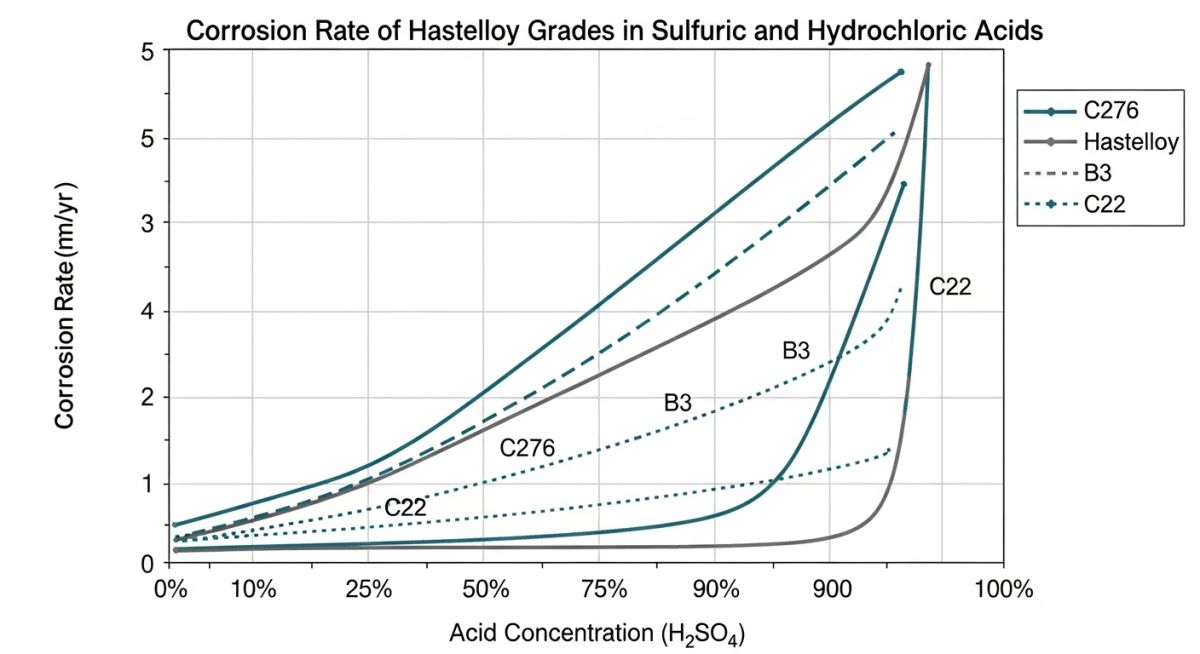
Hastelloy Material Alloy Types and Grades
Selection of the specific grade of Hastelloy Material is dictated by the primary corrosive agent and the operating temperature. The family is broadly categorized into several series, each with a distinct metallurgical focus.
B-Type Alloys (N10001 / N10665)
The B-series, specifically Hastelloy B-2 and B-3, are nickel-molybdenum alloys designed primarily for service in pure reducing acids. They are exceptionally resistant to hydrochloric acid at all concentrations and temperatures up to the boiling point. However, engineers must be cautious: B-type Hastelloy Material has significantly low chromium, meaning it will fail rapidly if even trace amounts of oxidizing salts (like Ferric Chloride) are present in the stream.
C-Type Alloys (C276 / C22)
The C-series is the “workhorse” of the chemical processing industry. Hastelloy Material C276 is perhaps the most versatile alloy available today. It contains high levels of chromium and molybdenum, along with tungsten. This combination makes it nearly immune to pitting and crevice corrosion. Grade C22 offers even better protection in highly oxidizing environments where C276 might reach its limits.
G-Type Alloys (G30 / G35)
The G-series of Hastelloy Material is specifically engineered for high-performance service in phosphoric acid and highly oxidizing environments. Grade G-35, for instance, was developed to resist “wet process” phosphoric acid, which is notorious for its impurity-driven corrosion. By optimizing the chromium-nickel-molybdenum ratio, these alloys prevent the localized attack often seen in lower-grade stainless steels used in fertilizer production and chemical waste treatment.
X-Type Alloys (N06002)
When mechanical strength at temperatures exceeding 800°C is required, Hastelloy Material X becomes the standard. This nickel-chromium-iron-molybdenum alloy provides an exceptional balance of oxidation resistance, fabricability, and high-temperature strength. It is frequently specified under AMS 5536 standards for aerospace components like tailpipes and cabin heaters because it maintains its structural integrity even after prolonged exposure to cyclic heating and cooling.
Hastelloy N (UNS N10003)
Originally developed for the Molten Salt Reactor Experiment, Hastelloy Material N is unique for its resistance to fluoride salts. In 2026, as interest in next-generation nuclear energy grows, this grade is vital for its low thermal expansion and resistance to embrittlement at elevated temperatures.
Industrial Applications of Hastelloy Material
The versatility of Hastelloy Material ensures its presence in critical infrastructure across the globe. In the Oil & Gas sector, it is the primary material for downhole components in sour gas wells containing H2S and CO2. In the Pharmaceutical industry, it is used for high-purity agitators and centrifuges where product contamination from corrosion must be zero.
Material Comparison: Hastelloy Material vs Monel
While both are nickel-based, Hastelloy Material and Monel serve distinct purposes. Monel (Nickel-Copper) is excellent for seawater and hydrofluoric acid but lacks the chromium/molybdenum depth to handle the oxidizing acids where Hastelloy excels.
| Feature | Hastelloy C-276 | Monel 400 |
|---|---|---|
| Primary Chemistry | Ni-Mo-Cr-W | Ni-Cu |
| Oxidizing Acid Resistance | Excellent | Poor |
| Pitting Resistance (PREN) | High (~45) | Low (~10) |
| Best Application | Mixed Acids / Chemical Processing | Marine / Brine Services |
Hastelloy Material Pitting Resistance (PREN) Calculator
Estimate the Pitting Resistance Equivalent Number (PREN) to evaluate Hastelloy Material performance in chloride environments. Higher values indicate superior resistance.
Formula: PREN = Cr + 3.3(Mo + 0.5W). Standards based on 2026 metallurgical guidelines.
EPCLand YouTube Channel
2,500+ Videos • Daily Updates
Case Study: 2026 Chemical Reactor Reliability
The Challenge
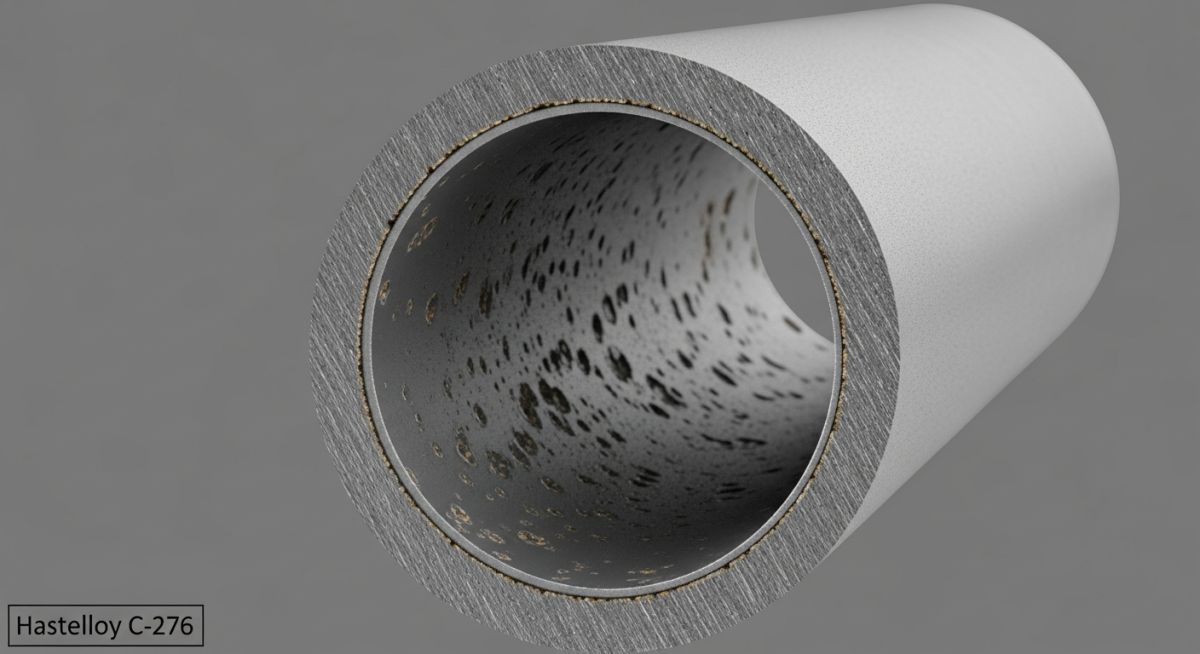
A major petrochemical facility in 2026 faced recurring 14-day shutdowns due to the failure of 316L Stainless Steel heating coils. The process involved a high-concentration Sulfuric Acid solution at 180°C, which caused severe pitting and localized wall thinning within 3 months of operation.
The Solution
The engineering team performed a metallurgical audit and replaced the coils with Hastelloy Material Grade C-276. This specific grade was selected for its high molybdenum (16%) and chromium (15.5%) content, providing a dual-defense mechanism against both reducing and oxidizing impurities.
The Result: 5X Lifecycle Extension
“After 24 months of continuous service, ultrasonic testing (UT) revealed less than 0.01mm of wall loss. By switching to Hastelloy Material, the facility eliminated four unscheduled maintenance cycles, resulting in a total cost-avoidance of $1.2M USD.”
Don’t miss this video related to PIping Materials
Summary: Master Piping Engineering with our complete 125+ hour Certification Course: ……
Expert Insights: Lessons from 20 years in the field
- ● Avoid Over-Specification: While Hastelloy Material C22 is superior to C276 in highly oxidizing environments, using it for simple brine service is an engineering “gold-plating” error. Always match the alloy’s PREN to your specific chloride concentration to optimize CAPEX.
- ● Welding Precision: When fabricating Hastelloy Material, ensure the use of matching filler metals (e.g., ERNiCrMo-4 for C276). Using lower-grade fillers negates the alloy’s benefits, leading to preferential weld-decay in acidic service.
- ● Thermal Management: In 2026 high-temperature designs, remember that Hastelloy X exhibits excellent ductility even after 10,000 hours of service. This makes it far superior to cobalt-based alloys for components requiring periodic inspection and repair.
- ● Surface Contamination: Never use carbon steel brushes on Hastelloy Material. Iron contamination from tools can trigger localized galvanic corrosion cells that compromise the passivity of the nickel-chromium matrix.
References & Standards
The data presented in this guide adheres to the following 2026 industrial specifications:
Common Questions About Hastelloy Material
What is the primary difference between Hastelloy Material C276 and C22?
Can Hastelloy Material be used in high-temperature applications?
Is Hastelloy Material magnetic?
Why did my Hastelloy Material B-3 fail in a nitric acid wash?
What is the risk of using “standard” welding rods on Hastelloy Material?
How do 2026 ASME standards view Hastelloy Material for pressure vessels?
📚 Recommended Resources: Piping Materials
Read these Guides
🎓 Advanced Training



Related posts:
![High-grade industrial Wing Nut Types and Applications for mechanical assemblies.]()
Wing Nut Types and Applications: The 2026 Engineering Guide
![Industrial Monorail Crane Systems installed in a modern manufacturing plant 2026.]()
Monorail Crane Systems: Design, Types & 2026 Standards Guide
![Lead engineer performing a Factory Acceptance Test FAT on an industrial skid system 2026]()
Factory Acceptance Test FAT: The 2026 Engineering Guide to Zero-Defect Delivery
![Professional engineering workspace showing a Basis of Design document layout for a 2026 project.]()
Basis of Design: How to Write a BOD for Engineering Projects in 2026
![Industrial Flare Knockout Drum Sizing and installation in a refinery relief system.]()
Flare Knockout Drum Sizing: Design & API 521 Standards (2026 Guide)
![Advanced Reboiler Control Systems in a modern petrochemical refinery 2026.]()
Reboiler Control Systems: Engineering Guide to Precision Control 2026