Table of Contents
Gas Processing Plant Optimization Strategies for Maximizing Efficiency and Profit
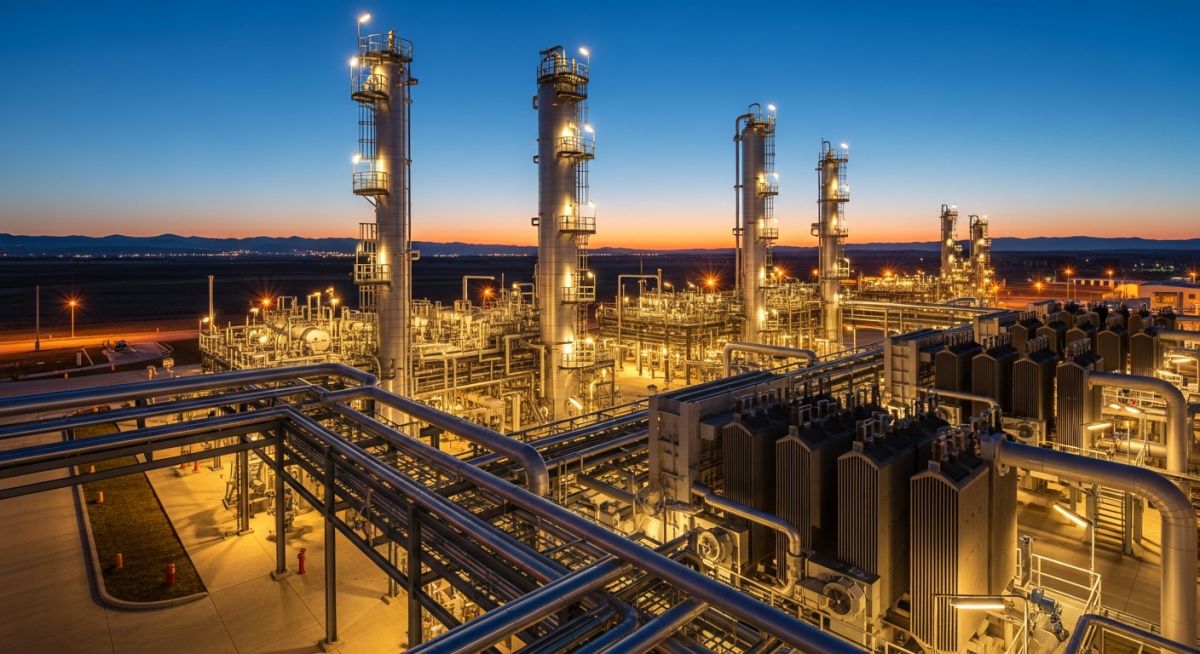
In my 20 years of commissioning and troubleshooting gas processing facilities across the Permian Basin and the Middle East, I have seen millions of dollars slip through the cracks of inefficient operations. Optimization is not a theoretical exercise; it is a daily battle against thermodynamic inefficiencies, equipment degradation, and shifting feed gas compositions. When we look at a modern midstream facility, we are looking at a highly integrated network of thermal, mechanical, and chemical processes. A minor bottleneck in the dehydration unit can cascade into a catastrophic hydrate blockage in the cryogenic cold box, halting production entirely.
To achieve true operational excellence, we must move away from the “set-and-forget” mentality. We need to leverage real-time thermodynamic modeling, understand the physical limitations of our piping and vessels under ASME B31.3 design codes, and implement control strategies that dynamically adapt to ambient conditions and feed fluctuations. This guide breaks down the exact engineering methodologies I use to audit, de-bottleneck, and optimize gas processing plants for maximum profitability.
Key Takeaways for Field Engineers
- Amine solvent selection and circulation rate tuning can reduce reboiler duty by up to 20% without compromising acid gas removal targets.
- Maintaining molecular sieve dehydration outlet moisture below 0.1 ppmv is mandatory to prevent cryogenic hydrate blockages.
- Turboexpander isentropic efficiency directly dictates NGL recovery rates; even a 2% drop can severely impact propane yield.
- Implementing Model Predictive Control (MPC) on fractionation trains stabilizes product purity and reduces reboiler steam consumption.
- Regular thermal imaging and pressure drop monitoring across cold boxes prevent costly unscheduled shutdowns.
Complete Course on
Piping Engineering
Check Now
Key Features
- 125+ Hours Content
- 500+ Recorded Lectures
- 20+ Years Exp.
- Lifetime Access
Coverage
- Codes & Standards
- Layouts & Design
- Material Eng.
- Stress Analysis
How Gas Processing Plant Optimization Drives Plant Profitability
Amine systems are notorious energy consumers in gas processing facilities. The reboiler duty (Q_R) is the sum of sensible heat required to raise the amine temperature to boiling, the heat of vaporization of water, and the heat of reaction required to strip the acid gas (CO2 and H2S) from the amine.
The thermodynamic relationship governing reboiler heat duty can be expressed as:
Where:
– Q_R is the reboiler heat duty (Btu/hr)
– m is the solvent mass flow rate (lb/hr)
– C_p is the specific heat of the amine solution (Btu/lb-°F)
– T_reb and T_feed are the reboiler and feed temperatures (°F)
– m_water_evap is the mass flow of evaporated water (lb/hr)
– H_vap is the latent heat of vaporization of water (Btu/lb)
– m_acid_gas is the mass flow of stripped acid gas (lb/hr)
– H_rxn is the heat of reaction for amine-acid gas dissociation (Btu/lb)
In my experience, operators often over-circulate amine to maintain a “safe” margin. This practice wastes massive amounts of thermal energy. By optimizing the lean amine loading and matching the circulation rate to the incoming acid gas load, we can slash reboiler steam consumption. Transitioning from Monoethanolamine (MEA) or Diethanolamine (DEA) to formulated Methyl Diethanolamine (MDEA) mixtures allows for higher acid gas loading (up to 0.7 mol/mol) and significantly lower heats of reaction, directly reducing Q_R.
Advanced Controls for Gas Processing Plant Optimization Projects
Cryogenic turboexpanders are the heart of deep ethane and propane recovery. The expansion process is close to isentropic, converting the pressure energy of the gas into shaft work, which drives the residue gas compressor.
The isentropic efficiency (eta_s) of the turboexpander is defined as:
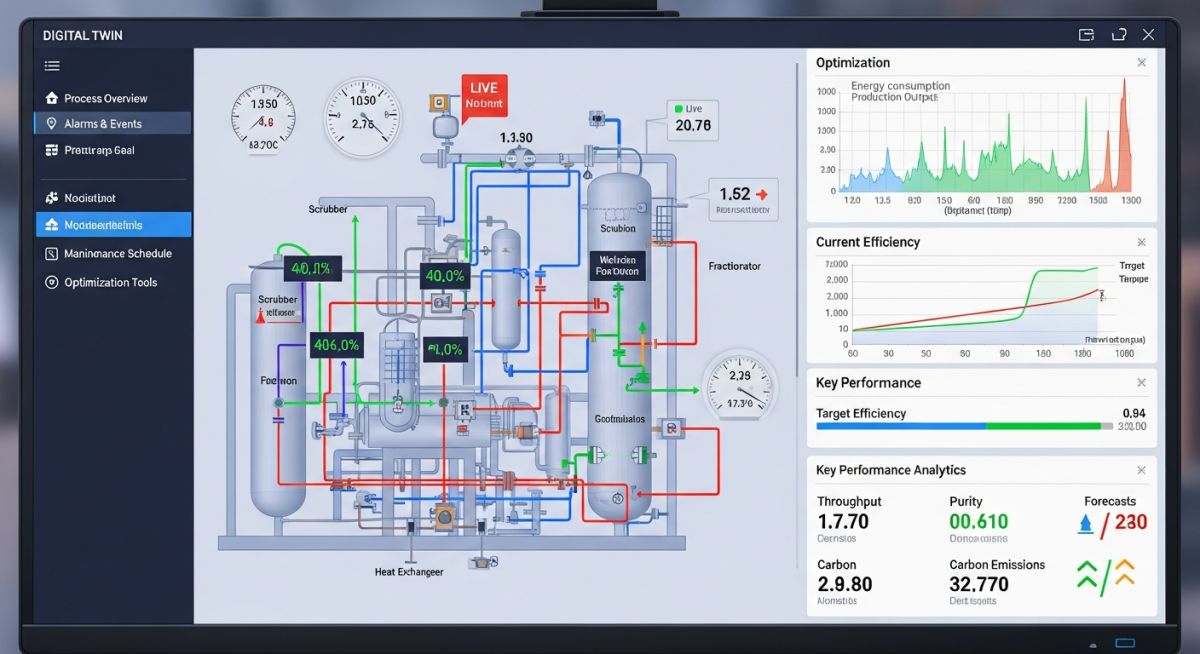
Where h represents the specific enthalpy of the gas stream. A drop in expander efficiency leads to higher exhaust temperatures, reducing liquid recovery in the Low-Temperature Separator (LTS) or Demethanizer. By implementing Model Predictive Control (MPC) on the fractionation train (Deethanizer, Depropanizer, Debutanizer), we can dynamically adjust reflux ratios and reboiler duties based on real-time feed composition. This stabilizes product purity and prevents product giveaway while minimizing utility consumption.
| Solvent Type | Typical Conc. (wt%) | Rich Loading Limit (mol/mol) | Reboiler Heat Duty (Btu/gal) | Corrosion Risk | Primary Application |
|---|---|---|---|---|---|
| MEA | 15 – 20 | 0.30 – 0.35 | 1,000 – 1,200 | High | Low-pressure CO2 removal |
| DEA | 25 – 35 | 0.35 – 0.40 | 800 – 1,000 | Moderate | Medium-pressure H2S/CO2 |
| MDEA | 40 – 50 | 0.45 – 0.50 | 550 – 750 | Low | Selective H2S removal |
| Formulated MDEA | 45 – 55 | 0.50 – 0.70 | 450 – 600 | Very Low | High-pressure bulk acid gas |
| Process Unit | Core Entity | Key Physical Parameter | Optimization Target | Reference Standard |
|---|---|---|---|---|
| Acid Gas Removal | Amine Regenerator | Reboiler Duty (Btu/lb acid gas) | Minimize steam consumption | API 521 |
| Dehydration | Molecular Sieve Bed | Water Content (ppmv) | Prevent hydrate formation (< 0.1 ppmv) | GPA Midstream |
| NGL Recovery | Turboexpander | Isentropic Efficiency (%) | Maximize liquid recovery (> 85%) | API 617 |
| Fractionation | Demethanizer Column | Bottoms C1/C2 Ratio | Maintain product specification | ASME Sec VIII |
Site Verification Checklist for Plant Optimization
Before adjusting any process setpoints or solvent concentrations, field engineers must verify the mechanical and instrumentation baseline of the plant. Operating outside of design limits can lead to catastrophic equipment failure or severe piping vibration.
Field Verification Steps
-
Flow Meter Calibration: Verify calibration of all feed gas and product flow meters (differential pressure, ultrasonic) to ensure mass balance accuracy within +/- 0.5%.
-
Dew Point Analysis: Perform dew point analysis of the dry gas leaving the molecular sieve beds to confirm water content is strictly below 0.1 ppmv.
-
Turboexpander Bearings: Inspect and test the turboexpander active magnetic bearings and seal gas system to prevent oil contamination of the cryogenic process.
-
Amine Concentration: Validate the amine solvent concentration using laboratory titration before adjusting circulation rates.
-
Anti-Surge Valves: Check the operation of all anti-surge valves on the residue gas compressors to prevent aerodynamic instability during flow transitions.
-
Relief Valve Configuration: Verify that all relief valves are sized and configured in accordance with API 520/521 for overpressure protection during upset conditions.
-
Steam Trap Audit: Audit the steam trap network in the amine reboiler and fractionation reboilers to ensure efficient condensate removal and prevent water hammer.
Field Case Study: Real-World Application
The Problem: High Energy Consumption and Propane Loss
A 250 MMSCFD gas processing plant in the Delaware Basin was experiencing severe propane recovery losses (dropping below 82%) during hot summer months. The amine unit reboiler was operating at maximum steam capacity, consuming excessive fuel gas, while the turboexpander was limited by high discharge pressure from the residue gas compressor. The plant was on the verge of violating product specifications due to poor fractionation control.
The Solution & Outcome: Multi-Unit Optimization
I led an engineering team to audit the facility. We implemented a three-pronged optimization strategy: first, we transitioned the amine solvent from standard MDEA to a high-performance formulated solvent, reducing the required circulation rate by 18% and reboiler duty by 22%. Second, we cleaned the residue gas compressor aerial coolers, dropping the compressor suction temperature by 12°F and lowering the turboexpander discharge pressure. Finally, we deployed a multivariable predictive control system on the Demethanizer. Propane recovery surged to 91%, fuel gas consumption decreased by 14%, and the plant realized an annual profit increase of 1.85 million.
This case study proves that optimizing individual units in isolation is insufficient. A holistic approach that addresses thermodynamic limitations, heat exchange efficiency, and advanced process control is required to unlock the full economic potential of a gas processing facility.
Frequently Asked Engineering Questions
What is the impact of feed gas composition changes on turboexpander performance?
How does amine degradation affect the efficiency of the acid gas removal unit?
Why is molecular sieve regeneration temperature critical for dehydration performance?
What are the primary causes of foaming in amine absorbers, and how can it be mitigated?
How does residue gas bypass affect the overall economics of NGL recovery?
What is the role of the Joule-Thomson valve in a cryogenic gas plant?

📚 Recommended Resources: gas processing plant optimization
Read these Guides



Related posts:
![Industrial worker welding a large structural steel I-beam in a fabrication facility.]()
What is Structural Steel Fabrication and How Does It Work?
![A heavy-duty stainless steel turnbuckle tensioning a structural cable.]()
What is a Turnbuckle and How to Install It?
![Stack of newly manufactured galvanized steel pipes in an industrial warehouse]()
Understanding the Galvanized Pipe Meaning in Modern Piping Systems
![Industrial Alloy 625 piping components in a manufacturing plant]()
What is Alloy 625? Properties, Grades, and Applications of Alloy 625
![Close-up of a fractured steel shaft showing metal fatigue beach marks and failure zones.]()
What is Metal Fatigue and How Do Engineers Prevent It?
![Industrial machinery fitted with smart sensors displaying real-time condition-based maintenance data on a digital overlay.]()
What is Condition-Based Maintenance and How Does It Work?