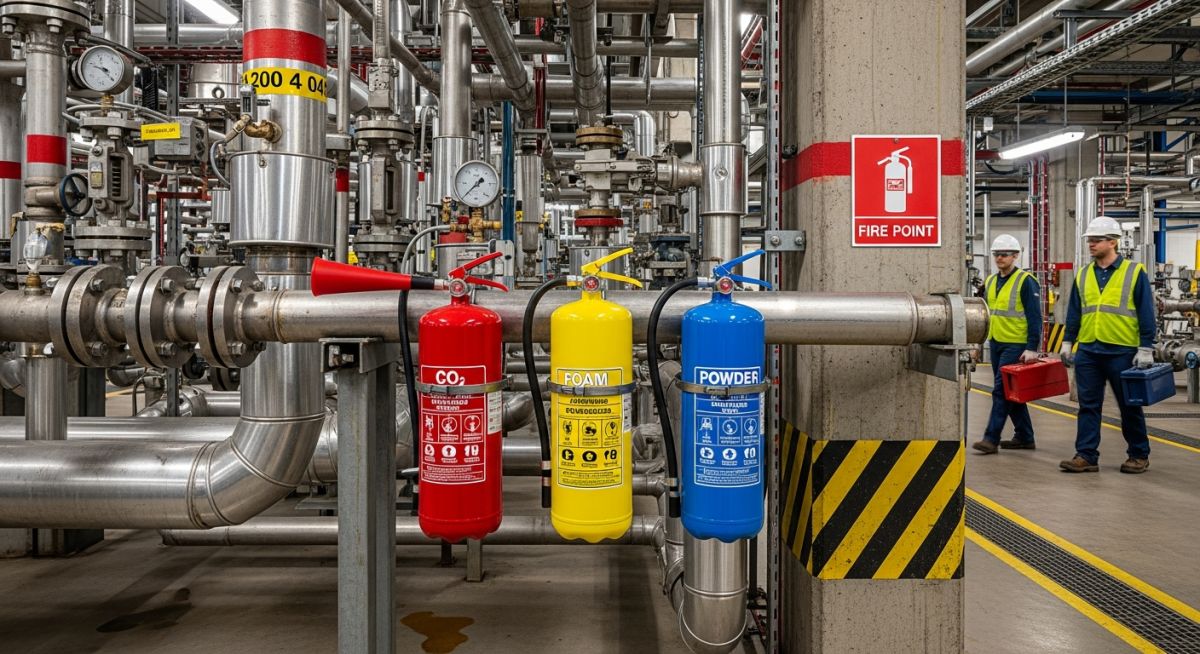
Fire Extinguisher: Meaning, Classes, Types, Selection, Use & Inspection
In my 20+ years of experience in piping and industrial project execution, I have seen that fire extinguishers are often installed everywhere—but rarely understood properly. A wrong extinguisher in a high-risk hydrocarbon zone can turn a controllable fire into a major incident within seconds.
Whether you are working in a refinery, power plant, or construction site, understanding the correct fire extinguisher type, its application, and inspection requirements is not optional—it is a critical engineering responsibility.
✅ Key Engineering Takeaways
- Fire extinguishers must be selected based on fire class—not availability
- Each extinguisher type serves a specific industrial hazard
- Incorrect use can escalate fire risk or damage equipment
- Routine inspection is mandatory as per NFPA standards
- Training in PASS method is essential for all site personnel
📘 Quick Answer
A fire extinguisher is a portable device used to control small fires by discharging extinguishing agents like water, foam, CO₂, or powder. Different fire classes (A, B, C, D, K/F) require specific types. Proper selection, correct usage, and regular inspection ensure effectiveness and compliance with industrial safety standards.
Interactive Engineering Quiz
Q1: Which fire extinguisher is suitable for electrical fires?
Complete Course on
Piping Engineering
Check Now
Key Features
- 125+ Hours Content
- 500+ Recorded Lectures
- 20+ Years Exp.
- Lifetime Access
Coverage
- Codes & Standards
- Layouts & Design
- Material Eng.
- Stress Analysis
Fire Extinguisher Meaning (Engineering Perspective)
In my field experience across refineries and EPC piping projects, a fire extinguisher is not just a safety device—it is the first line of defense during an emergency. It is a portable pressurized vessel designed to discharge an extinguishing agent to suppress or control small fires before escalation.
As defined by NFPA (National Fire Protection Association), fire extinguishers are categorized based on fire classes and must be selected according to hazard type and environment.
Fire Extinguisher Parts
- Cylinder: Stores extinguishing agent under pressure
- Pressure Gauge: Indicates readiness (green/red zone)
- Safety Pin: Prevents accidental discharge
- Hose & Nozzle: Directs extinguishing agent
- Handle/Trigger: Controls discharge mechanism
Classes of Fire Extinguisher
Understanding fire classes is the most critical step in safe extinguisher selection:
- Class A: Solid combustibles (wood, paper)
- Class B: Flammable liquids (diesel, petrol)
- Class C: Electrical fires
- Class D: Combustible metals
- Class K/F: Cooking oils and fats
Types of Fire Extinguishers
Water Fire Extinguishers:
Used for Class A fires; not suitable for electrical or flammable liquid fires.
Foam Fire Extinguishers:
Ideal for Class B fires; creates a blanket that prevents oxygen supply.
Dry Powder Fire Extinguishers:
Multi-purpose; widely used in oil & gas facilities.
CO₂ Fire Extinguishers:
Best for electrical fires; non-conductive and leaves no residue.
Wet Chemical Fire Extinguishers:
Used in kitchens and for Class K fires.
Clean Agent Fire Extinguishers:
Suitable for sensitive equipment like control panels and servers.
Automatic Fire Extinguishers
Automatic fire extinguishers operate using temperature-sensitive bulbs or sensors and discharge without manual intervention. These are widely used in enclosed critical systems like compressor skids and electrical cabinets.
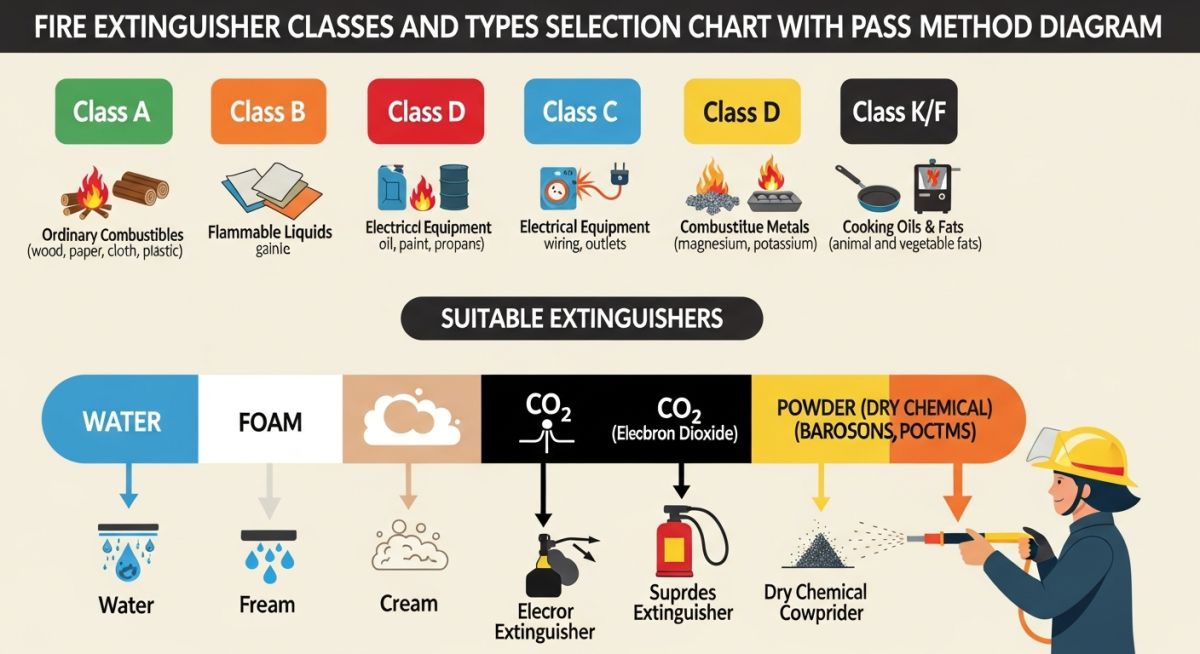
| Fire Class | Fuel Type | Recommended Extinguisher | Avoid Using |
|---|---|---|---|
| Class A | Wood, Paper | Water, Foam | CO₂ (limited effect) |
| Class B | Flammable Liquids | Foam, Dry Powder | Water |
| Class C | Electrical | CO₂, Dry Powder | Water, Foam |
| Class D | Metals | Special Dry Powder | Water, Foam, CO₂ |
| Class K/F | Cooking Oils | Wet Chemical | Water, CO₂ |
Selection must always align with codes like NFPA 10 Standard for Portable Fire Extinguishers and OSHA Fire Safety Regulations.
Field Case Study: Real-World Application
During a site audit in a hydrocarbon processing zone, I observed that water-type fire extinguishers were installed near diesel transfer pumps (Class B fire risk).
This was a serious hazard because:
- Water can spread flammable liquid fires
- Improper labeling confused operators
- No training had been conducted on fire classes
Based on engineering review and alignment with NFPA 10 Standards, we implemented:
- Replaced water extinguishers with foam and dry chemical types
- Installed clear fire classification labels
- Conducted PASS method training for all operators
🔧 Result: Improved audit compliance, reduced fire response time, and increased site safety confidence.
Engineering Recommendation: Always perform a hazard-based fire extinguisher selection study during project design and site reviews. Never rely on “standard placement” without evaluating actual fire load and risk zones.
Frequently Asked Engineering Questions
What is the most commonly used fire extinguisher in industry?
How often should fire extinguishers be inspected?
Can CO₂ extinguishers be used on all types of fires?
What is the PASS method in fire extinguisher use?
How do I select the right fire extinguisher for my site?
What are common mistakes during fire extinguisher usage?
- Using wrong extinguisher type
- Aiming at flames instead of base
- Not checking pressure gauge
- Poor training and awareness
