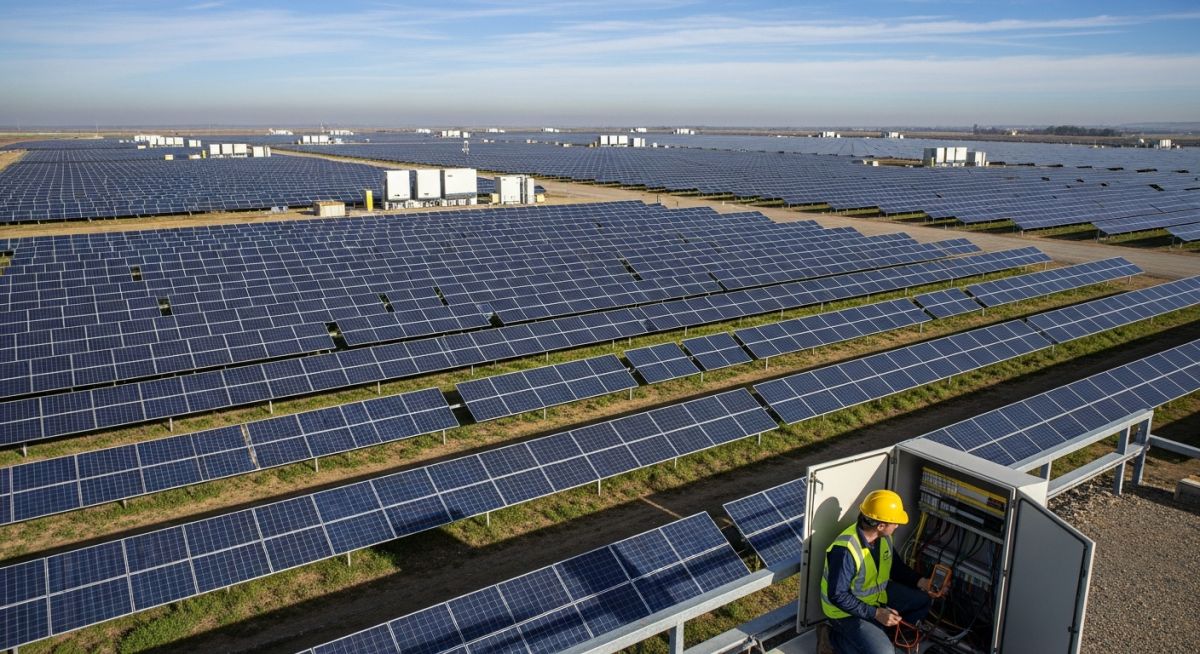
Solar Power Plants O&M: Maximizing Energy Yield and Asset Longevity
In my two decades of engineering experience, I have observed that the difference between a high-performing solar asset and a failing one rarely comes down to the initial hardware selection. Instead, it is the rigor of the Operation and Maintenance (O&M) strategy that dictates the Levelized Cost of Energy (LCOE) over a twenty-five-year lifecycle. As solar power plants age, environmental degradation, component fatigue, and inverter drift become inevitable realities that require a proactive, data-driven approach rather than a reactive “fix-it-when-it-breaks” mentality.
This guide explores the technical nuances of maintaining utility-scale and commercial PV systems. We will dissect the critical balance between preventive maintenance schedules and the necessity of rapid corrective responses to minimize downtime. By integrating advanced monitoring systems with field-proven maintenance protocols, engineers can effectively mitigate yield losses and extend the operational life of critical electrical infrastructure.
Key Takeaways for O&M Success
- Prioritize predictive analytics to identify inverter efficiency drops before total failure occurs.
- Implement standardized cleaning cycles based on local soiling rates rather than fixed calendar intervals.
- Ensure strict adherence to IEC 62446 for documentation and testing protocols.
- Utilize thermal imaging to detect hot spots in modules and loose connections in combiner boxes.
Technical Strategies for Solar Power Plants O&M
Solar Power Plants O&M: The technical framework for maintaining electrical integrity and energy conversion efficiency through rigorous inspection, data analysis, and component lifecycle management.
Effective O&M requires a deep understanding of the electrical and mechanical stressors acting on a PV array. In my experience, the most common failure points are not the modules themselves, but the balance-of-system (BOS) components. We must focus on the degradation of DC cabling insulation, the oxidation of crimped connections, and the thermal stress on inverter power electronics. According to ASME and IEEE guidelines for electrical maintenance, periodic testing of insulation resistance (Megger testing) is non-negotiable for long-term reliability.
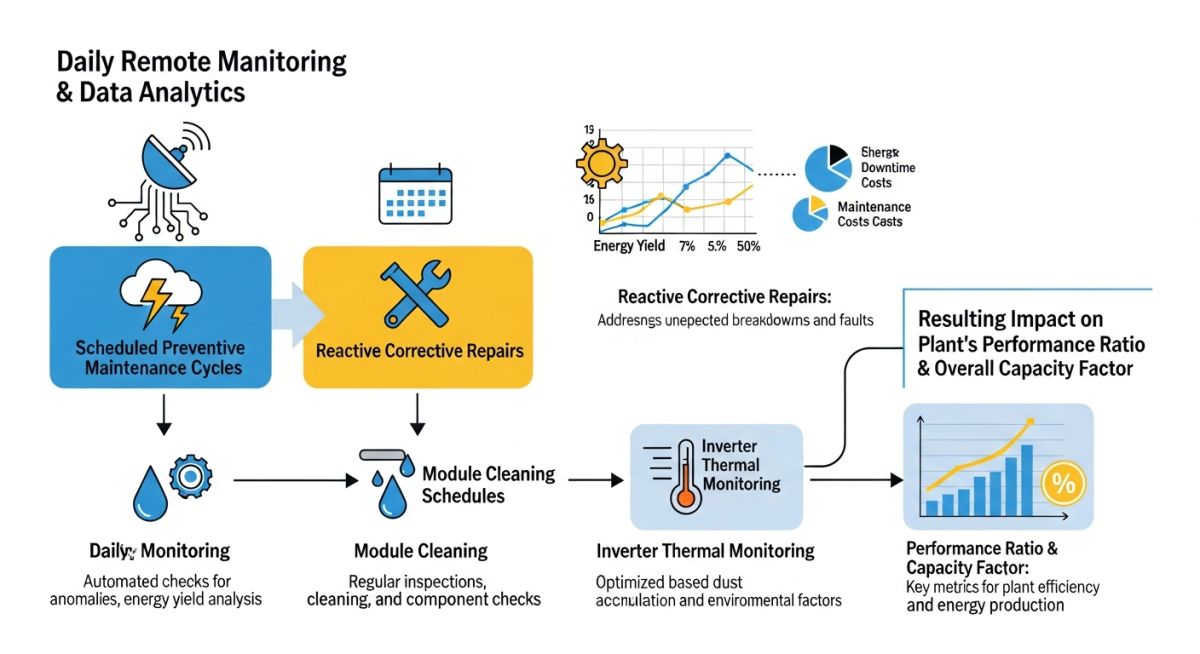
Preventive Maintenance and Thermal Analysis
Preventive maintenance (PM) is the backbone of asset management. A robust PM program includes quarterly inspections of mounting structures for corrosion, torque verification of structural bolts, and infrared (IR) thermography of electrical cabinets. When performing IR scans, we look for temperature differentials exceeding 10 degrees Celsius compared to ambient or adjacent components, which often indicates high-resistance connections or failing bypass diodes.
Field Warning: Thermal Imaging Limitations
Do not rely solely on IR thermography during low irradiance periods. To obtain accurate data, the system must be operating at at least 600 Watts per square meter of solar irradiance. Low-light conditions mask thermal signatures of faulty connections, leading to false negatives in your maintenance reporting.
Inverter Maintenance and Performance Optimization
Inverters are the “brains” of the plant and typically have the highest failure rate among major components. Maintenance here involves cleaning air filters, checking cooling fans for bearing wear, and verifying firmware updates. From a performance perspective, we monitor the Maximum Power Point Tracking (MPPT) efficiency. If the MPPT tracking shows significant oscillation, it often points to partial shading or string-level mismatching that requires immediate corrective action.
Calculation of the Performance Ratio (PR) is the ultimate metric for O&M success. The PR is defined as the ratio of the actual energy output to the theoretical energy output based on measured irradiance. A drop in PR below the expected threshold (typically 0.75 to 0.85 depending on technology) triggers a root cause analysis, which may involve string current-voltage (I-V) curve tracing to isolate degraded modules or faulty bypass diodes.
O&M Implementation Strategy: The comparative analysis of proactive maintenance investments versus the operational risks of reactive failure management in utility-scale solar assets.
Advantages of Proactive O&M
- Significant reduction in long-term LCOE by preventing catastrophic component failure.
- Enhanced energy yield through consistent module cleaning and string optimization.
- Extended asset lifespan, often exceeding the original 25-year design life.
- Improved safety profile for site personnel through regular electrical integrity testing.
- Higher investor confidence due to transparent, data-backed performance reporting.
Disadvantages of O&M Complexity
- High initial overhead costs for specialized monitoring software and diagnostic tools.
- Requirement for highly skilled technical labor, which can be scarce in remote regions.
- Potential for “over-maintenance” where the cost of inspection exceeds the value of prevented downtime.
- Logistical challenges in managing spare parts inventory for legacy inverter models.
- Data fatigue from excessive monitoring alerts that may lead to alarm desensitization.
Solar Asset Management Deployment: The strategic application of O&M protocols across diverse industrial, commercial, and utility-scale energy environments to ensure grid-compliant power delivery.
Utility-Scale Solar Farms
In large-scale installations exceeding 50MW, O&M focuses on automated drone-based thermography and centralized SCADA monitoring. These systems allow engineers to pinpoint specific string failures across hundreds of acres, drastically reducing the time required for manual troubleshooting and field repairs.
Commercial Rooftop PV Systems
For commercial buildings, O&M is constrained by roof access and safety regulations. Maintenance here emphasizes structural integrity of the mounting system and ensuring that roof drainage is not impeded by the array, preventing water pooling that could lead to structural degradation or electrical shorting.
Off-Grid Microgrid Maintenance
In remote microgrid applications, O&M is critical because the system is often the sole power source. Maintenance protocols prioritize battery state-of-health (SoH) monitoring and inverter redundancy, ensuring that the system can handle peak loads without triggering a total blackout in the absence of grid support.
Effective management of utility-scale solar assets requires a rigorous adherence to standardized performance metrics. In my two decades of experience, I have observed that the difference between a high-performing plant and a failing one often lies in the granularity of the data collected during routine inspections. We must monitor specific electrical and environmental variables to ensure the system operates within the design parameters defined by IEC 62446 standards.
The following table outlines the essential monitoring parameters that every O&M engineer must track to identify degradation or component failure early. By establishing these baselines, we can differentiate between expected seasonal output fluctuations and actual technical faults that require immediate intervention. Always ensure that your sensors are calibrated annually to maintain the integrity of your performance ratio calculations.
The complexity of modern photovoltaic infrastructure demands a structured approach to asset management. When we map the various subsystems of a solar power plant, we must account for the interplay between hardware longevity and software-driven diagnostic tools. This matrix serves as a foundational reference for engineers to categorize components based on their maintenance requirements and regulatory compliance needs.
By utilizing this matrix, site managers can streamline their procurement of spare parts and schedule technician deployments more efficiently. It is important to note that while some components like mounting structures require minimal intervention, electrical balance-of-system components demand strict adherence to NFPA 70 (National Electrical Code) guidelines. Use this mapping to ensure that your O&M strategy remains aligned with the original design intent of the facility.
| Entity | Acronym | Primary Risk | Standard |
|---|---|---|---|
| Photovoltaic Module | PV | Soiling/Micro-cracks | IEC 61215 |
| Power Conversion System | PCS | Thermal Overload | IEC 62109 |
| Data Acquisition System | DAS | Signal Latency | Modbus/TCP |
| Grounding/Earthing | GND | Corrosion | IEEE 80 |
Site verification is the backbone of a reliable O&M program. Before any technician touches a string or an inverter, they must verify the site conditions against the safety protocols established during the commissioning phase. My experience dictates that skipping these preliminary checks often leads to avoidable downtime or, worse, safety incidents. Use this checklist to ensure your team is prepared for both routine and emergency maintenance tasks.
- PPE Compliance: Verify all personnel are equipped with arc-flash rated clothing and insulated tools per OSHA standards.
- Lockout/Tagout (LOTO): Confirm that all DC disconnects and AC breakers are locked and tagged before opening inverter cabinets.
- Environmental Assessment: Check local weather conditions; avoid maintenance during high-wind events or potential lightning storms.
- Grounding Integrity: Inspect the main grounding bus bar for signs of oxidation or loose connections that could compromise fault protection.
- Documentation Review: Ensure the latest single-line diagram (SLD) is available on-site for reference during troubleshooting.
Once these checks are completed, document the findings in your Computerized Maintenance Management System (CMMS). Consistent documentation is not just for compliance; it is a vital tool for predictive analytics. By tracking the frequency of specific faults, you can transition from reactive repairs to a proactive maintenance schedule, significantly reducing the Levelized Cost of Energy (LCOE) over the project’s lifespan.
Field Case Study: Real-World Application
Problem: Persistent Inverter Derating in High-Ambient Conditions
A 50MW utility-scale plant experienced significant power output drops during peak summer months, specifically when ambient temperatures exceeded 40 degrees Celsius.
- Inadequate ventilation in the inverter station housing.
- Accumulation of dust on heat sink fins reducing thermal dissipation efficiency.
- Incorrect set-points in the inverter firmware for temperature-based derating.
- Degradation of cooling fan bearings leading to reduced airflow.
Outcome: Restored Performance and Optimized Thermal Management
By implementing a targeted maintenance intervention, the site recovered 4.5% of its annual energy yield within the first quarter post-repair.
- Installed high-capacity industrial exhaust fans to improve air circulation.
- Established a monthly heat-sink cleaning schedule using compressed air.
- Updated firmware to optimize the derating curve based on real-time component temperature.
- Reduced unplanned downtime by 60% through predictive fan health monitoring.
My recommendation for similar sites is to prioritize thermal management as a core component of your preventive maintenance strategy. Do not wait for the inverter to trigger a fault code; monitor the internal temperature trends during the hottest hours of the day to identify cooling system inefficiencies before they impact your bottom line.
Frequently Asked Engineering Questions
What is the ideal frequency for module cleaning?
- High-dust environments (e.g., deserts) may require monthly cleaning.
- Coastal or high-rainfall regions might only require semi-annual maintenance.
- Always use demineralized water to prevent mineral deposits that cause permanent glass etching.
- Follow NREL guidelines for evaluating soiling impacts on PV performance.
How do I differentiate between module degradation and soiling?
- Use a control module that is cleaned manually to establish a baseline for comparison.
- Analyze the I-V curve characteristics; soiling usually affects the short-circuit current (Isc) while leaving the open-circuit voltage (Voc) relatively stable.
- Degradation often manifests as a reduction in both Isc and Voc due to internal cell damage or encapsulant browning.
- Consult IEC 61730 for safety and performance testing standards.
What are the risks of ignoring inverter maintenance?
- Component failure due to thermal stress, leading to costly board replacements.
- Increased risk of fire hazards from loose electrical connections or arcing.
- Loss of communication with the monitoring system, leaving the plant “blind” to faults.
- Voiding of manufacturer warranties, which often require proof of annual maintenance.
How does monitoring system latency affect O&M?
- Latency often stems from poor network infrastructure or overloaded communication gateways.
- Implement edge computing solutions to process data locally before sending it to the cloud.
- Ensure that your monitoring platform supports automated alerts for critical thresholds.
- Regularly test the end-to-end communication path from the sensor to the dashboard.
Why is grounding inspection critical for safety?
- Corrosion at the grounding rod connection is a common, hidden failure point.
- Use earth resistance testers to verify that the system impedance meets IEEE 80 standards.
- Ensure that all metallic structures are bonded together to maintain an equipotential plane.
- Document all ground resistance measurements in your annual site audit report.
What is the role of predictive analytics in O&M?
- Identify inverter degradation by tracking efficiency trends over time.
- Predict soiling losses based on local weather forecasts and historical accumulation rates.
- Optimize technician scheduling by grouping maintenance tasks based on predicted failure windows.
- Reduce overall operational costs by extending the useful life of critical components.
Complete Course on
Piping Engineering
Check Now
Key Features
- 125+ Hours Content
- 500+ Recorded Lectures
- 20+ Years Exp.
- Lifetime Access
Coverage
- Codes & Standards
- Layouts & Design
- Material Eng.
- Stress Analysis
