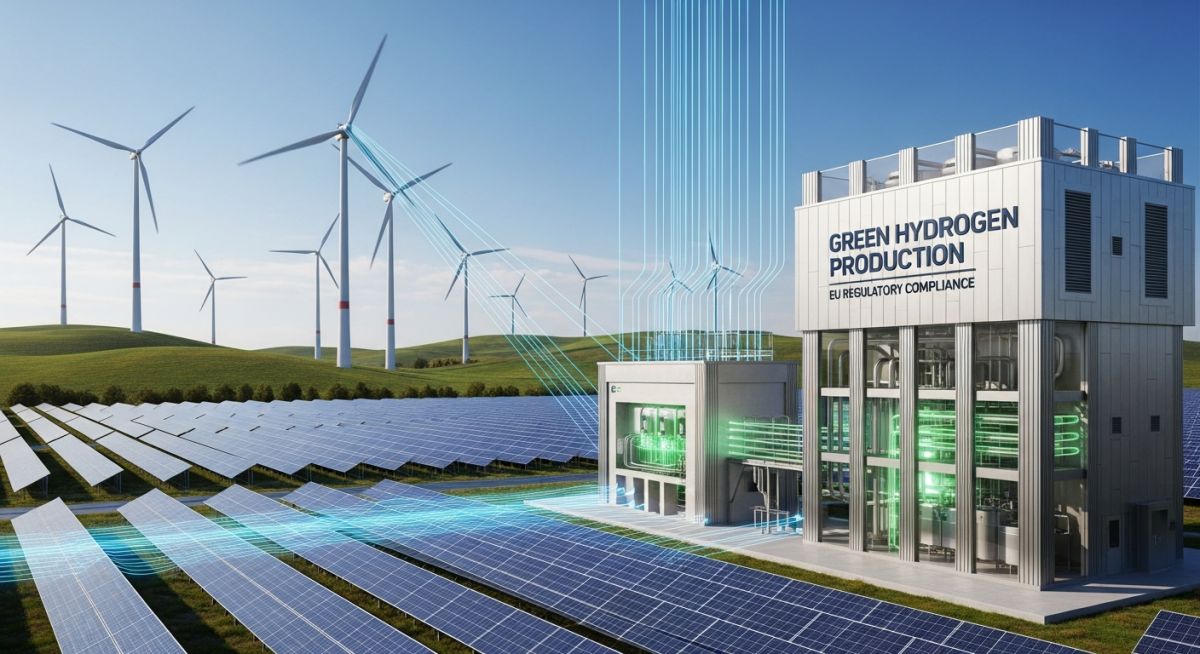
RFNBO Explained: Complete Guide for Engineers and Project Developers
In my two decades of navigating complex energy infrastructure projects, I have rarely encountered a regulatory framework as transformative—or as technically demanding—as the Renewable Fuels of Non-Biological Origin (RFNBO) criteria. For engineers, this is not merely a policy shift; it is a fundamental redesign of how we approach hydrogen production, electrolysis plant sizing, and grid-balancing logic.
If you are designing a green hydrogen facility today, you are no longer just building a piping system or an electrolyzer stack. You are building a data-driven compliance engine that must prove its carbon intensity at every millisecond of operation. This guide cuts through the legislative noise to provide the technical clarity required to move from concept to commissioning.
Key Takeaways for Project Developers
- Mastering the “Additionality” principle to ensure grid-connected electrolyzers do not cannibalize existing renewable capacity.
- Implementing temporal and geographical correlation protocols to meet strict EU delegated acts.
- Calculating lifecycle greenhouse gas emissions using the methodology prescribed in RED II/III.
- Designing robust instrumentation for real-time verification of renewable electricity inputs.
Complete Course on
Piping Engineering
Check Now
Key Features
- 125+ Hours Content
- 500+ Recorded Lectures
- 20+ Years Exp.
- Lifetime Access
Coverage
- Codes & Standards
- Layouts & Design
- Material Eng.
- Stress Analysis
Technical Design Requirements for RFNBO Compliance
RFNBO Compliance Engineering: The technical framework governing the production of renewable hydrogen and synthetic fuels, requiring rigorous adherence to additionality, temporal correlation, and geographical proximity standards as mandated by the European Commission.
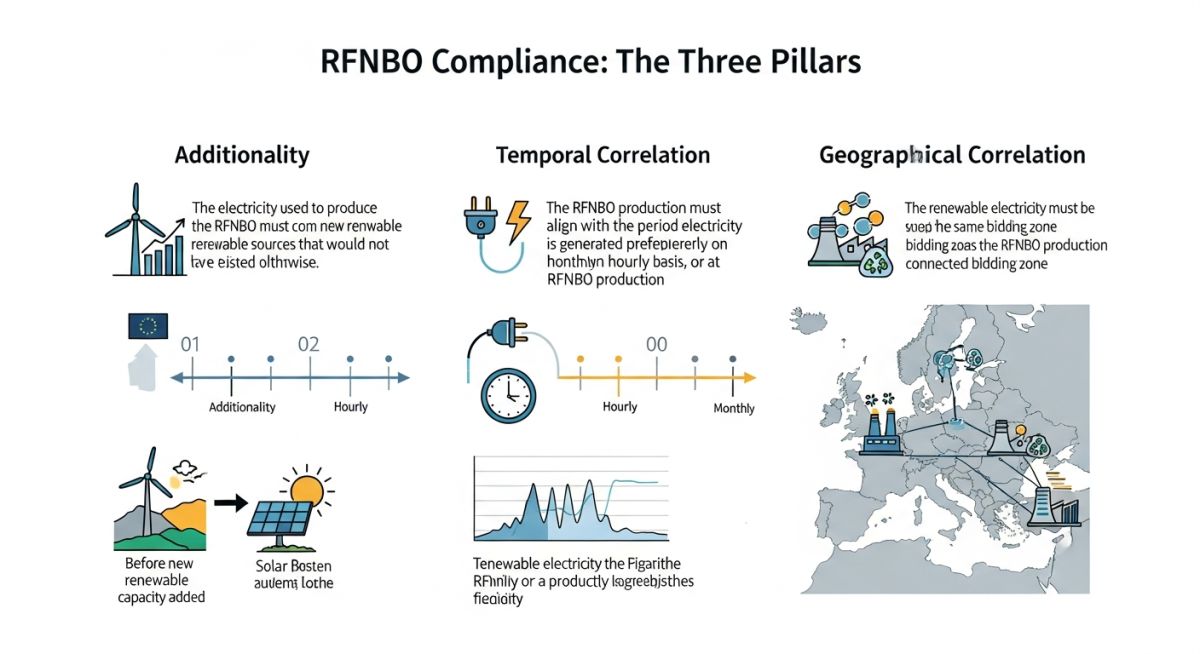
To achieve RFNBO status, a project must demonstrate that the electricity used for electrolysis is “renewable” under strict criteria. The primary challenge is the “Additionality” requirement. You cannot simply plug an electrolyzer into a grid that is already saturated with renewables. You must prove that your consumption incentivizes new renewable capacity. This is typically achieved through Power Purchase Agreements (PPAs) with new, non-subsidized wind or solar assets.
Temporal Correlation and Grid Balancing
The delegated acts require that the electricity used for hydrogen production matches the renewable generation in time. Initially, this is set to a monthly correlation, but it will transition to hourly matching by 2030. From a piping and process control perspective, this necessitates a sophisticated Energy Management System (EMS) that can throttle electrolyzer output based on real-time grid signals.
Carbon Intensity Calculations
The carbon intensity (CI) of the fuel must be at least 70% lower than the fossil fuel comparator. The calculation follows the methodology in Annex V of the Renewable Energy Directive (RED II). You must account for:
- Upstream emissions from electricity generation (including grid losses).
- Emissions from water purification and desalination processes.
- Compression, storage, and transport energy requirements.
- Fugitive emissions from hydrogen leakage (which has a high global warming potential).
For a typical 100MW plant, the piping design must minimize pressure drops to reduce compression energy, as every additional bar of compression directly impacts the CI score. We often see projects failing the compliance threshold simply due to inefficient piping layouts that increase the auxiliary power load.
RFNBO Strategic Trade-offs: The balance between achieving regulatory compliance and maintaining operational efficiency in high-capacity renewable energy conversion facilities.
Advantages
- Access to premium green hydrogen markets and subsidies.
- Future-proofing assets against tightening carbon taxation.
- Driving innovation in high-efficiency electrolysis and storage.
- Enhanced ESG ratings for project developers and investors.
- Direct alignment with EU decarbonization pathways.
Disadvantages
- High CAPEX due to stringent instrumentation requirements.
- Increased operational complexity from hourly grid matching.
- Risk of stranded assets if regulatory definitions shift.
- Complex permitting and long-term PPA negotiation cycles.
- Mechanical fatigue from frequent load-following operations.
Industrial RFNBO Integration: The deployment of compliant renewable fuel systems across heavy industry, maritime, and chemical manufacturing sectors to meet net-zero targets.
Green Steel Manufacturing
Direct reduction of iron ore using RFNBO-compliant hydrogen replaces traditional coking coal. This application requires massive hydrogen storage and high-pressure piping networks to ensure continuous supply to the furnace, necessitating strict adherence to safety standards for hydrogen embrittlement.
Sustainable Aviation Fuel (SAF) Synthesis
RFNBO hydrogen is combined with captured carbon dioxide to produce synthetic kerosene. The process requires precise control of the hydrogen-to-carbon ratio and high-temperature catalytic reactors, making the integration of the hydrogen supply chain the most critical technical bottleneck.
Chemical Feedstock Decarbonization
Ammonia production for fertilizers currently relies on steam methane reforming. By switching to RFNBO hydrogen, chemical plants can significantly reduce their scope 1 and 2 emissions, provided the electrolysis plant is sized to handle the base-load requirements of the Haber-Bosch process.
Maritime Fuel Bunkering
The shipping industry is transitioning to green methanol and ammonia produced from RFNBO hydrogen. This requires specialized port infrastructure for cryogenic storage and high-flow bunkering systems that must meet international maritime safety codes for hazardous materials handling.
To achieve compliance under the Renewable Energy Directive (RED II/III), project developers must navigate a complex matrix of greenhouse gas (GHG) emission savings and temporal correlation requirements. The following table outlines the critical performance indicators that define whether a fuel qualifies as a Renewable Fuel of Non-Biological Origin (RFNBO). These parameters are not merely suggestions but are codified requirements that dictate the eligibility of hydrogen and its derivatives for European market subsidies and quota mandates.
Engineers must pay particular attention to the “Additionality” and “Temporal Correlation” columns. These represent the most significant technical hurdles for grid-connected electrolysis projects. Failure to align your electrolyzer operation with renewable energy generation profiles—or failing to prove that your power source is non-grid-congested—will result in the fuel being classified as non-compliant, effectively stripping it of its “green” status in the eyes of EU regulators.
| Parameter | Requirement/Threshold | Standard Reference |
|---|---|---|
| GHG Emission Savings | Minimum 70% vs Fossil Fuel Comparator | RED II Annex V |
| Temporal Correlation | Hourly matching (by 2030) | Delegated Act 2023/1185 |
| Geographical Correlation | Same bidding zone or interconnected | Delegated Act 2023/1184 |
| Additionality | Direct line or PPA < 36 months | Delegated Act 2023/1184 |
As an engineer, you should treat these thresholds as the primary constraints in your front-end engineering design (FEED) phase. If your project cannot meet the hourly temporal correlation requirement, you must integrate significant battery energy storage systems (BESS) or hydrogen storage buffers to decouple production from intermittent renewable supply.
The regulatory landscape for RFNBO is supported by a specific set of technical entities and physical parameters that define the carbon intensity of the fuel production pathway. This matrix maps the essential components of a hydrogen production facility against the regulatory frameworks that govern their operation. Understanding these relationships is vital for conducting accurate life cycle assessments (LCA) and ensuring that your facility’s design documentation meets the rigorous audit standards required by EU certification bodies.
Each entity listed below plays a distinct role in the chain of custody for renewable energy. From the power purchase agreement (PPA) structure to the physical electrolyzer stack efficiency, every variable contributes to the final carbon intensity score. Engineers must ensure that their data acquisition systems are capable of logging these parameters with high granularity to satisfy the “proof of origin” requirements for RFNBO certification.
| Entity/Component | Physical Parameter | Regulatory Link |
|---|---|---|
| Electrolyzer Stack | Specific Energy Consumption (kWh/kg) | ISO 22734 |
| Renewable PPA | Additionality/Capacity Factor | RED III Art 27 |
| Grid Connection | Carbon Intensity (gCO2eq/MJ) | Annex V Part C |
| Storage/Buffer | Round-trip Efficiency (%) | Delegated Act 2023/1184 |
By maintaining a clear mapping between these physical assets and their regulatory counterparts, project developers can mitigate the risk of non-compliance. This matrix serves as a foundational tool for your project’s compliance register, ensuring that every design decision is traceable back to a specific regulatory requirement.
Verifying a facility for RFNBO compliance requires a systematic approach to data collection and site auditing. As an engineer, you must ensure that the physical infrastructure is capable of providing the necessary telemetry to prove that the hydrogen produced is indeed “renewable.” This checklist covers the essential verification steps required during the commissioning and operational phases of an RFNBO-compliant plant.
-
[ ]
PPA Additionality Audit: Verify that the renewable energy source was commissioned no more than 36 months prior to the electrolyzer, or that it is a repowered installation. -
[ ]
Temporal Correlation Logging: Confirm that the SCADA system records hourly production data matched against hourly renewable generation data from the specific bidding zone. -
[ ]
Geographical Bidding Zone Check: Ensure the electrolyzer and the renewable power source are located within the same bidding zone or an interconnected zone with no congestion. -
[ ]
GHG Intensity Calculation: Validate the carbon intensity of the grid electricity used during periods of non-renewable supply, ensuring it remains below the threshold for the specific fuel pathway. -
[ ]
Certification Documentation: Compile all Guarantees of Origin (GOs) and PPA contracts into a centralized compliance repository for third-party audit.
These checkpoints are critical for the “Certification of Compliance” process. During site verification, auditors will look for gaps in the data chain. If your SCADA system fails to log the source of electricity for even a single hour, the entire production batch for that period may be disqualified. Always maintain redundant data logging systems and ensure that your PPA contracts explicitly state the “renewable” nature of the energy supplied, as defined by the RED III framework.
The Challenge: Grid Congestion and Temporal Mismatch
A 50MW green hydrogen project in Northern Europe faced significant compliance risks due to grid congestion and intermittent wind supply.
- Inability to match hourly production with wind generation peaks.
- Grid congestion preventing the use of renewable energy from neighboring zones.
- High carbon intensity of grid electricity during off-peak wind hours.
- Lack of integrated storage to buffer production during non-renewable periods.
The Outcome: Integrated Storage and Smart Control
The project team successfully achieved RFNBO certification by implementing a hybrid energy management system.
- Installed a 20MWh BESS to store excess renewable energy for non-wind hours.
- Implemented an AI-driven control system for real-time grid-to-PPA switching.
- Achieved 98% hourly temporal correlation over a 12-month audit period.
- Reduced overall carbon intensity by 85% compared to the fossil fuel baseline.
My recommendation for similar projects is to prioritize the “Temporal Correlation” requirement early in the design phase. Do not rely on grid-balancing services alone; integrate physical storage or demand-side management to ensure your electrolyzer remains compliant even when the primary renewable source is unavailable. This proactive approach is the only way to guarantee long-term project viability under the evolving RED III standards.
Frequently Asked Engineering Questions
What is the primary difference between RFNBO and conventional green hydrogen?
- Additionality: The renewable energy must come from new capacity.
- Temporal Correlation: Production must match renewable generation in time.
- Geographical Correlation: Production must occur in the same bidding zone as the power source.
How does the 36-month additionality rule impact project timelines?
- Coordinate the construction of wind/solar farms with the hydrogen plant.
- Avoid using legacy renewable assets that do not contribute to new grid capacity.
- Plan for long-term PPA negotiations that align with these strict commissioning windows.
Can I use grid electricity for RFNBO production?
- The grid is highly renewable (e.g., >90% renewable share).
- The electricity is purchased via a PPA that meets additionality requirements.
- The production occurs during hours when the grid is not congested.
What is the significance of the bidding zone in RFNBO compliance?
How do I calculate the GHG savings for my fuel?
- Upstream emissions from electricity generation.
- Emissions from water treatment and electrolysis.
- Emissions from compression, transport, and storage.
- Emissions from any carbon capture or utilization processes.
What happens if I fail an RFNBO audit?
- Loss of eligibility for subsidies and tax credits.
- Inability to sell the fuel as “renewable” to off-takers.
- Potential legal and financial penalties for misrepresenting fuel origin.
- Reputational damage in the sustainable energy market.

📚 Recommended Resources: RFNBO
Read these Guides
Related posts:
![Industrial facility undergoing a green energy retrofit with new hydrogen-ready piping infrastructure and renewable energy integration.]()
RED III Explained: Everything Engineers Need to Know for Compliance
![Conceptual diagram of renewable energy sources feeding a green hydrogen electrolysis plant under RFNBO compliance.]()
Additionality Explained Under RFNBO Rules: A Technical Engineering Perspective
![Conceptual visualization of temporal correlation between wind energy generation and green hydrogen electrolysis for EU regulatory compliance.]()
Temporal Correlation Explained Under RFNBO Regulations
![Integrated green methanol production facility showing electrolyzers, carbon capture units, and synthesis reactors with renewable energy infrastructure.]()
Green Methanol Production: Engineering Requirements and Industrial Synthesis Pathways
![Large industrial green ammonia storage tank with cryogenic piping and renewable energy infrastructure in the background.]()
Green Ammonia Storage Systems Design and Industrial Safety Protocols
![Industrial water supply system feeding a large-scale green hydrogen electrolyzer plant.]()
Water Requirement for Green Hydrogen Plants: Engineering Design and Optimization