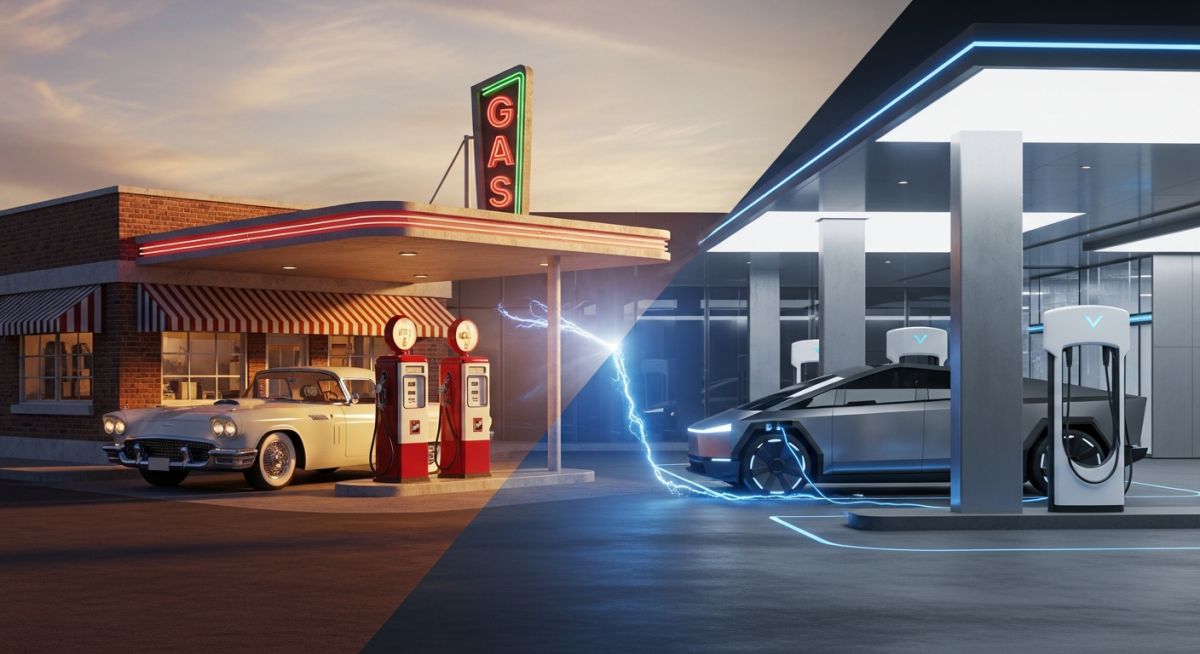
How Electric Vehicles Impact on Oil Demand Reshapes Global Infrastructure
In my 20 years of designing piping systems, refinery units, and midstream transport networks, I have watched the energy landscape undergo several tectonic shifts. None, however, match the sheer scale of what we are witnessing today. The rapid penetration of electric vehicles is no longer a futuristic projection; it is an active engineering challenge. As a piping specialist, my focus has always been on the physical movement of molecules. Today, those molecules are changing. The decline in light-duty distillate demand is forcing us to re-evaluate how we design, operate, and decommission the very infrastructure that has powered the modern world for a century.
When we look at the numbers, the transition is stark. Every electric vehicle that rolls off the assembly line represents a direct, quantifiable reduction in the volumetric flow of refined petroleum products. This shift does not just impact oil company balance sheets; it fundamentally alters the hydraulics of our pipelines, the operating envelopes of our refineries, and the structural integrity of our storage terminals.
Key Engineering Takeaways
- Refinery Reconfiguration: Fluid Catalytic Cracking (FCC) units must shift from gasoline maximization to petrochemical feedstocks to maintain operational viability.
- Pipeline Hydraulics: Lower throughput in crude and product lines leads to laminar flow regimes, increasing the risk of wax deposition and localized microbial corrosion.
- Asset Repurposing: Existing terminal storage tanks designed under API 650 are increasingly being converted for biofuels and chemical storage.
Analyzing Electric Vehicles Impact on Oil Demand Dynamics
To understand the physical reality of this transition, we must look at the thermodynamic and volumetric displacement calculations. A standard internal combustion engine (ICE) vehicle operates with an average thermal efficiency of 20% to 25%. In contrast, an electric vehicle (EV) converts over 75% of its electrical energy from the grid into tractive power. This massive efficiency gap means that the displacement of oil is not a simple one-to-one energy swap.
Let us calculate the volumetric displacement of crude oil per vehicle. Consider an average passenger vehicle driving 12,000 miles per year:
1. ICE Gasoline Consumption:
Annual Mileage = 12,000 miles
Average Fuel Economy = 25 miles per gallon (mpg)
Annual Gasoline Consumed = 12,000 / 25 = 480 gallons
2. Crude Oil Equivalent:
Average Refinery Yield = 45% gasoline per barrel of crude
1 Barrel of Crude = 42 gallons
Gasoline Yield per Barrel = 42 * 0.45 = 18.9 gallons
Required Crude Oil per Year = 480 / 18.9 = 25.4 barrels of crude oil per vehicle
When we scale this calculation to a fleet of 10 million electric vehicles, the displacement equals approximately 254 million barrels of crude oil annually, or roughly 700,000 barrels per day. For midstream engineers, this represents a massive reduction in the required capacity of transport pipelines designed under ASME B31.4.
As volumetric throughput declines in crude oil pipelines, flow velocities frequently drop below the critical threshold required to maintain turbulent flow (Reynolds number, Re < 2100). This transition to laminar flow allows suspended solids, water, and heavy waxes to settle along the bottom of the pipe, drastically accelerating Under-Deposit Corrosion (UDC) and Microbiologically Influenced Corrosion (MIC). Operating teams must implement aggressive pigging schedules and chemical biocide treatments to mitigate these risks.
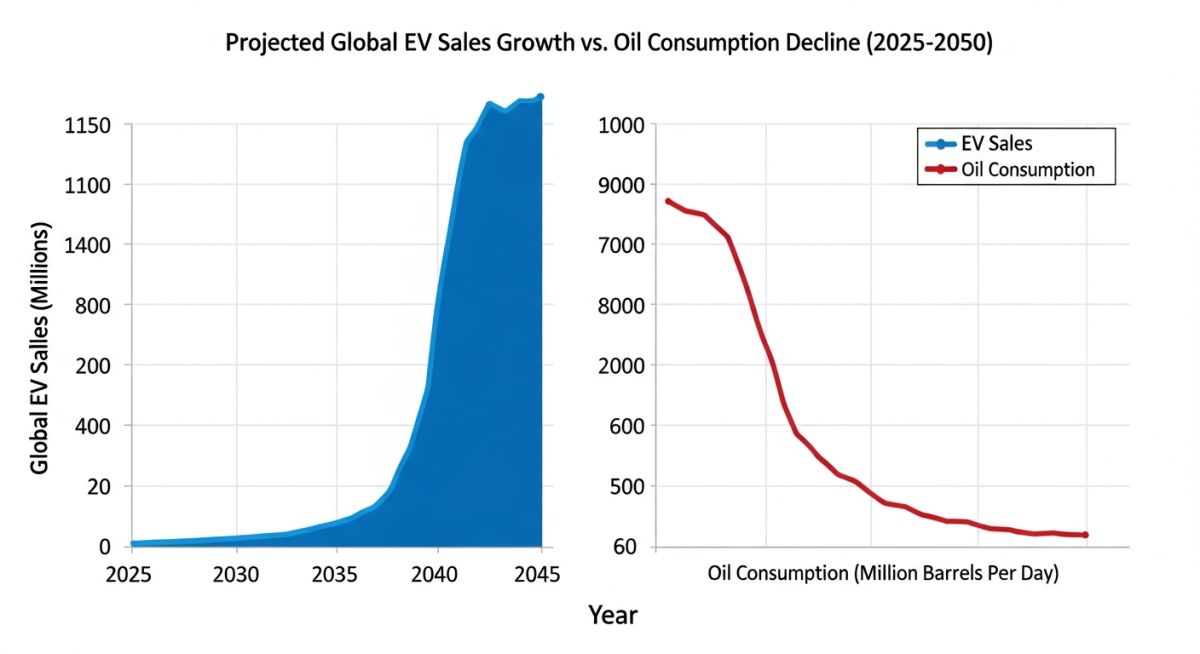
The impact of this displacement is not uniform across the refined product barrel. Refineries are highly complex, integrated chemical plants. They cannot simply stop producing gasoline while maintaining production of diesel, jet fuel, and petrochemical feedstocks without major capital modifications.
When gasoline demand drops, the Fluid Catalytic Cracking (FCC) unit—the heart of gasoline production in most refineries—must be reconfigured. Engineers are forced to adjust operating temperatures and catalyst formulations to favor light olefins like propylene and ethylene over gasoline-range hydrocarbons. This shift requires significant modifications to downstream gas recovery units and piping systems to handle the higher vapor pressures of these lighter products.
The following data tables outline the operational adjustments required within refining and midstream transport systems as EV market penetration increases. These values are based on typical complex refinery configurations and pipeline hydraulic models.
| EV Fleet Penetration (%) | Gasoline Demand Reduction (%) | FCC Unit Operating Mode | Pipeline Velocity (ft/s) | Recommended Mitigation |
|---|---|---|---|---|
| 5% to 10% | 4% to 8% | Standard Gasoline Max | 4.5 to 5.5 | Routine operational monitoring |
| 15% to 25% | 12% to 20% | Distillate/Petrochemical Shift | 3.0 to 4.0 | Increased pigging frequency, VFD adjustments |
| 30% to 50% | 25% to 42% | Petrochemical Max / FCC Turndown | 1.5 to 2.5 | Batching operations, drag reducing agents (DRA) |
| > 50% | > 45% | Unit Decommissioning / Bio-conversion | < 1.5 | Asset repurposing, nitrogen purging, mothballing |
This matrix maps the core technical entities, structural acronyms, and physical parameters affected by the shifting demand dynamics, along with their governing industry standards.
| System Component | Physical Parameter Affected | Governing Code / Standard | Engineering Impact Description |
|---|---|---|---|
| Refinery Piping Manifolds | Fluid Velocity & Pressure Drop | ASME B31.3 | Low-flow velocities lead to product stagnation and localized corrosion in carbon steel piping. |
| Storage Tank Farms | Vapor Pressure & Tank Breathing | API 650 / API 653 | Conversion of gasoline tanks to chemical or biofuel storage requires seal modifications and structural re-rating. |
| Transmission Pipelines | Reynolds Number & Shear Stress | ASME B31.4 | Transition from turbulent to laminar flow regimes increases wax deposition rates along pipe walls. |
| Pumping Stations | NPSH Available vs. NPSH Required | API 610 | Reduced flow rates require pump impeller trimming or installation of variable frequency drives to prevent cavitation. |
Mitigating Electric Vehicles Impact on Oil Demand Risks
As oil demand declines, many midstream assets will face underutilization or temporary mothballing. Leaving a pipeline or storage tank idle without proper preservation is a recipe for catastrophic failure. Internal corrosion can destroy millions of dollars of steel infrastructure in a matter of months if moisture and oxygen are allowed to enter the system.
To prevent this, engineering teams must implement a rigorous, standardized decommissioning and preservation protocol. The checklist below outlines the necessary steps to maintain asset integrity during periods of low throughput or complete shutdown.
Site Verification & Preservation Protocol
-
Hydraulic Modeling Verification: Perform transient hydraulic analysis to determine the minimum stable flow rate for each pipeline segment. Verify that operating velocities remain above the critical deposition velocity for waxes and solids.
-
Nitrogen Purging and Blanketing: For pipelines taken completely out of service, execute a full displacement pig run using nitrogen gas. Maintain a positive nitrogen pressure of 5 to 15 psi to prevent oxygen ingress.
-
Cathodic Protection (CP) Adjustment: Conduct close-interval potential surveys (CIPS) to ensure that cathodic protection levels remain within the -850 mV to -1200 mV polarized potential range, even as soil conditions change around underutilized lines.
-
Dead-Leg Isolation: Identify and physically isolate all dead-legs created by reduced manifold routing. Install blind flanges or execute hot taps to remove stagnant piping segments that cannot be actively swept.
-
Tank Bottom Inspection: For storage tanks experiencing low turnover, perform acoustic emission testing or out-of-service inspections in accordance with API 653 to detect localized pitting corrosion on the tank floor.
Field Case Study: Real-World Application
The Problem: Declining Throughput and Asset Degradation
A major midstream terminal operator in the Midwest experienced a 35% drop in crude oil and refined product throughput over a three-year period. This decline was driven by regional refinery scale-backs and rapid local adoption of electric vehicles. The reduced flow rates caused severe wax deposition in a 12-inch, 50-mile transmission pipeline, leading to a 20% increase in operating pressure due to restricted flow area. Stagnant product in several terminal storage tanks also led to microbial growth and off-specification fuel batches.
The Outcome: Successful Repurposing and Hydraulic Optimization
Our engineering team was brought in to redesign the system. We implemented a multi-phase transition plan:
- We converted the 12-inch pipeline to a batched operation, running high-velocity sweeps twice a week rather than continuous low-flow pumping. This restored turbulent flow (Re > 4000) during runs, clearing the wax deposits.
- We repurposed four of the ten terminal storage tanks for renewable diesel and ethanol storage, modifying the internal floating roofs and seals to comply with API 650 Annex H.
- We installed variable frequency drives (VFDs) on the main shipping pumps, allowing them to operate efficiently at lower flow rates without bypassing product or causing cavitation.
As a result, the operator avoided over 15 million in decommissioning costs, reduced pipeline operating pressures back to baseline levels, and established a new revenue stream from biofuel logistics.
This case study highlights a critical lesson: the decline in oil demand does not have to mean the end of midstream assets. With creative hydraulic engineering and rigorous adherence to design codes, we can transition our existing infrastructure to support the next generation of energy carriers.
Frequently Asked Engineering Questions
How does low flow velocity in pipelines accelerate internal corrosion?
What modifications are required to convert a gasoline storage tank to ethanol or biofuel service?
How do refineries adjust their FCC units when gasoline demand declines?
What is the role of Drag Reducing Agents (DRAs) in underutilized pipelines?
How does nitrogen blanketing protect idle piping systems?
What are the primary structural risks when mothballing a storage tank?
===FAQ_BLOCK===

Complete Course on
Piping Engineering
Check Now
Key Features
- 125+ Hours Content
- 500+ Recorded Lectures
- 20+ Years Exp.
- Lifetime Access
Coverage
- Codes & Standards
- Layouts & Design
- Material Eng.
- Stress Analysis
📚 Recommended Resources: electric vehicles impact on oil demand
Read these Guides
- 📄 Colors of Hydrogen: The Ultimate Engineering Guide to 10+ Production Pathways (2026)
- 📄 HFO Refrigerants: Low GWP, Superior Performance, and 2026 Applications.
- 📄 Green Methanol Production Economics: India Strategy & Cost Analysis 2026
- 📄 A Comprehensive Guide to Hydrogen Refueling Stations: Operations, Components, and Technologies