Gas Turbines: Definition, Applications, Working, Components, Types, Design, Advantages
In my 20+ years of experience in EPC projects and heavy industries like steel plants and power systems, I have seen gas turbines play a critical role in ensuring reliable and efficient energy generation. Whether it’s a captive power plant in a steel facility like JSPL or a compressor station in oil & gas, gas turbines are the backbone of high-performance operations.
Unlike traditional steam systems, gas turbines offer faster startup, compact footprint, and excellent power-to-weight ratio. However, their design, operation, and maintenance demand deep engineering understanding—which I will break down practically in this guide.
Key Engineering Takeaways
- Gas turbines operate on the Brayton cycle using compressed air and combustion gases.
- Widely used in power plants, aviation, and oil & gas mechanical drive systems.
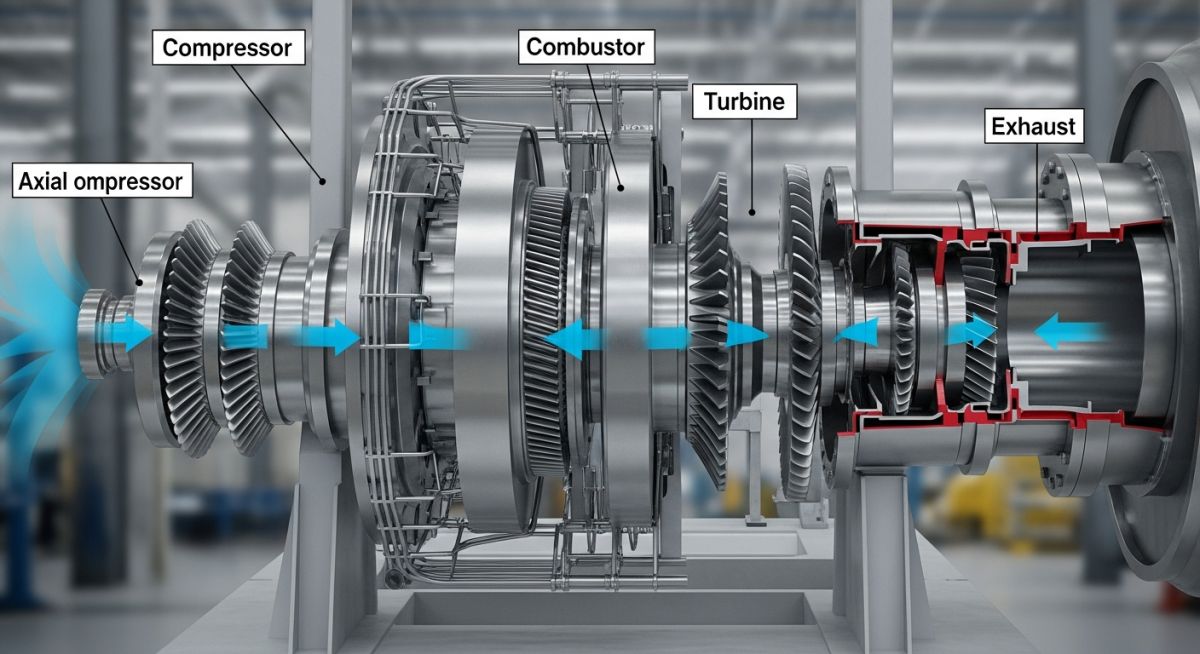
- Main components include compressor, combustor, turbine, and exhaust system.
- Performance heavily depends on ambient conditions and maintenance practices.
- Design considerations involve efficiency, emissions, and operational flexibility.
A gas turbine is a high-speed rotating machine that converts fuel energy into mechanical or electrical power using compressed air and combustion gases. It operates on the Brayton cycle and is widely used in power generation, aviation, and oil & gas industries due to its high efficiency and rapid operational capability.
Interactive Engineering Quiz
1. What thermodynamic cycle does a gas turbine operate on?
Complete Course on
Piping Engineering
Check Now
Key Features
- 125+ Hours Content
- 500+ Recorded Lectures
- 20+ Years Exp.
- Lifetime Access
Coverage
- Codes & Standards
- Layouts & Design
- Material Eng.
- Stress Analysis
Applications of a Gas Turbine
In my EPC experience across steel plants and power facilities like JSPL-type setups, gas turbines are deployed primarily for high-reliability and rapid-response applications. Their versatility makes them indispensable across industries.
- Power Plants: Used in simple cycle and combined cycle power generation
- Oil & Gas: Compressor drives and pipeline boosting systems
- Steel Plants: Captive power units ensuring continuous production
- Aviation: Jet engines and propulsion systems
- Marine: High-speed naval propulsion systems
Working Principle of a Gas Turbine
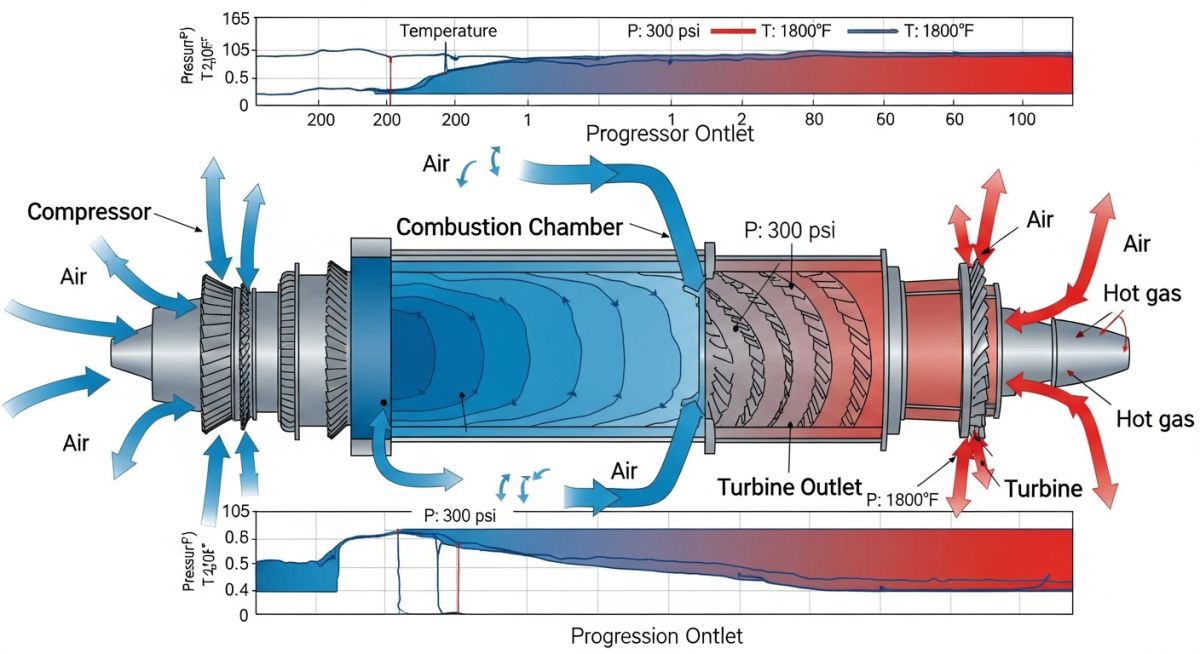
Gas turbines operate on the Brayton Cycle, which consists of three main thermodynamic processes:
- Air compression (pressure increase)
- Constant pressure combustion
- Gas expansion (power generation)
Working principle of a gas turbine in a power plant is as follows:
- Air is drawn into the compressor and pressurized.
- Fuel is injected into the combustion chamber.
- Combustion generates high-temperature gases.
- These gases expand through the turbine, generating power.
- Exhaust gases are discharged or used in HRSG (combined cycle).
Working principle of a gas turbine in the oil and gas industry
In pipeline compressor stations, gas turbines convert fuel energy into mechanical power to drive compressors. I’ve seen efficiency losses occur when intake air filtration is compromised—leading to fouling and performance degradation.
Components of a Gas Turbine
Air Compressor:
Increases air pressure before combustion. Typically axial or centrifugal type.
Combustion Chamber:
Fuel is burned to produce high-energy gases under controlled conditions.
Turbine:
Expands hot gases to generate mechanical energy. Part of this energy drives the compressor.
Exhaust Module:
Directs exhaust gases and may integrate with waste heat recovery units.
Other Gas Turbine Parts are
- Fuel system
- Cooling system
- Lubrication system
- Control system
Types of Gas Turbine
Open-cycle gas turbine
Most common type where air enters and exhaust leaves freely.
Closed cycle gas turbine:
Working fluid is recirculated instead of being exhausted.
Aero derivatives gas turbine:
Derived from aircraft engines; compact and high efficiency.
Scale jet engines:
Miniaturized turbines used for research and UAVs.
Auxiliary gas turbine:
Used for backup or auxiliary power generation.
Design of a Gas Turbine
Designing a gas turbine involves balancing efficiency, emissions, and thermal limits. In EPC projects, the selection depends heavily on site conditions such as ambient temperature and load profile.
- Thermal efficiency optimization
- Blade cooling technology
- Material selection (superalloys)
- Emission compliance (NOx control)
Codes and Standards
Gas turbine design and operation follow strict international standards. Some key references include:
- ASME Codes — Mechanical design and pressure systems
- ISO Standards — Performance and testing
- API Standards — Oil & gas turbine applications
Gas Turbine Performance
Performance of a gas turbine is highly sensitive to:
- Ambient temperature
- Air pressure
- Humidity
- Fuel quality
In my projects, turbines in hot climates like Haryana often show reduced output during peak summers. This needs to be accounted for during selection.
| Parameter | Typical Value | Remarks |
|---|---|---|
| Efficiency | 30–40% | Up to 60% in combined cycle |
| Operating Temperature | 1100–1500°C | Depends on blade materials |
| Pressure Ratio | 10:1 – 40:1 | Higher ratio improves efficiency |
| Startup Time | 10–20 minutes | Faster than steam turbines |
| Applications | Power, Oil & Gas, Aviation | Highly versatile equipment |
Field Case Study: Real-World Application
During peak summer in North India (ambient > 45°C), gas turbine output dropped significantly (~12–15%). Operators reported high exhaust temperature alarms and reduced compressor efficiency. Frequent shutdowns started impacting steel production continuity.
After diagnostic analysis, we identified intake air density reduction and compressor fouling as root causes. We implemented:
- High-efficiency inlet air filtration upgrade
- Evaporative cooling system installation
- Online compressor washing schedule
Result: Power output improved by ~10%, and turbine reliability stabilized across seasons.
✅ Engineering Recommendation: Always size gas turbines considering worst-case ambient conditions (IS site data) and include performance correction factors during FEED stage.
Advantages of a Gas Turbine
- Fast startup and shutdown capability
- Compact size with high power-to-weight ratio
- Lower water consumption compared to steam systems
- Flexibility in fuel usage (natural gas, diesel, etc.)
- Ideal for peak load and backup power generation
Disadvantages of a Gas Turbine
- Reduced efficiency in simple cycle operation
- Sensitive to ambient conditions
- High operating temperatures demand advanced materials
- Maintenance complexity for precision components
Gas Turbine vs Steam Turbine
| Parameter | Gas Turbine | Steam Turbine |
|---|---|---|
| Startup Time | Fast | Slow |
| Efficiency | Moderate (High in combined cycle) | High (Rankine cycle) |
| Water Requirement | Very Low | High |
| Application | Peaking & aviation | Base load power plants |
Frequently Asked Engineering Questions
What is the efficiency of a gas turbine?
Why is gas turbine output lower in summer?
What fuels can gas turbines use?
What are the main losses in gas turbines?
Which standard governs gas turbine testing?
How do you improve gas turbine efficiency?

