What is a Basis of Design (BOD)? How to Write a Basis of Design for a Project in 2026

Imagine you are midway through the commissioning of a $500 million LNG terminal, only to realize the cryogenic piping was designed for an ambient temperature range that never accounted for the record-breaking heatwaves of the last decade. This catastrophic misalignment isn’t just a technical failure; it is a failure of the Basis of Design.
In the high-stakes world of EPC (Engineering, Procurement, and Construction), the Basis of Design serves as the “North Star.” Without a clearly defined BOD, projects succumb to scope creep, massive cost overruns, and safety violations. This guide provides the exact framework used by lead engineers to document design assumptions, regulatory requirements, and project-specific constraints that ensure a project survives from concept to 2026 operational reality.
Key Takeaways
- Single Source of Truth: The Basis of Design centralizes all technical assumptions to prevent cross-disciplinary conflicts.
- Risk Mitigation: A robust BOD protects the engineer of record by documenting the specific codes and site conditions used for calculations.
- Lifecycle Efficiency: Properly written BODs streamline the transition from Front-End Engineering Design (FEED) to Detailed Engineering.
What is a Basis of Design?
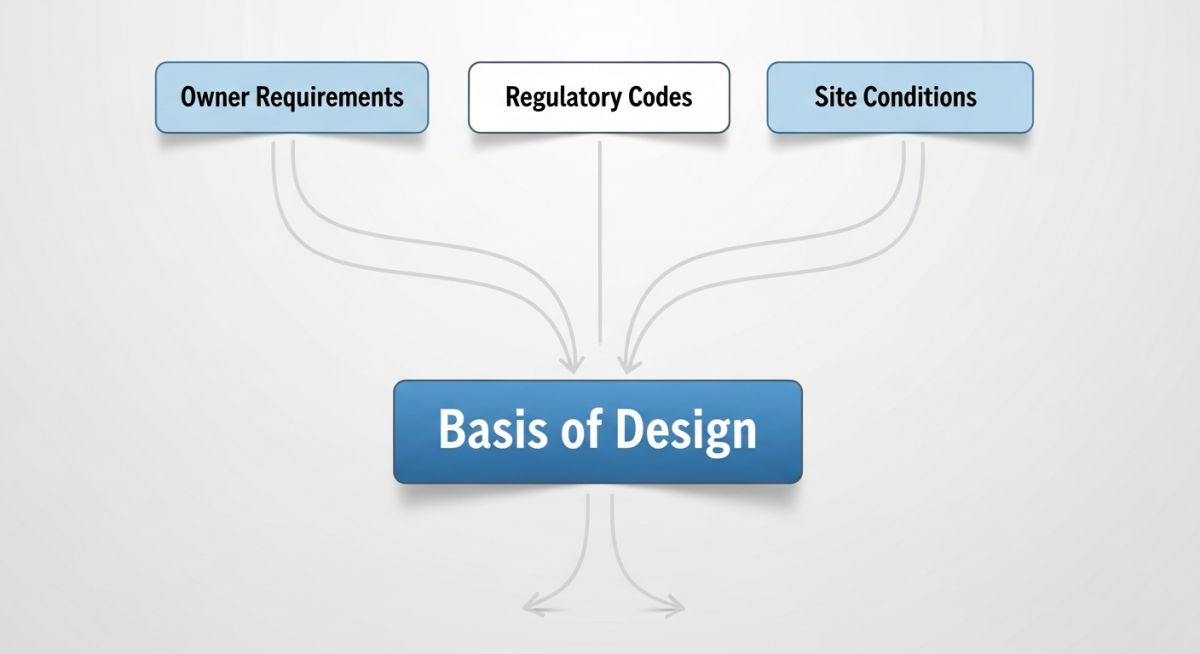
A Basis of Design (BOD) is a comprehensive document that records the concepts, calculations, decisions, and product selections used to meet the owner’s project requirements and applicable regulatory codes. It serves as the primary technical reference for all engineering disciplines throughout the project lifecycle in 2026.
Founder’s Insight
“In my 20 years of handling complex EPC projects, I’ve seen more money lost due to a vague Basis of Design than through actual construction errors. If your BOD doesn’t explicitly state what you are not designing for, you’ve already lost control of your scope.”
— Atul Singla
Complete Course on
Piping Engineering
Check Now
Key Features
- 125+ Hours Content
- 500+ Recorded Lectures
- 20+ Years Exp.
- Lifetime Access
Coverage
- Codes & Standards
- Layouts & Design
- Material Eng.
- Stress Analysis
Engineering Knowledge Check: Basis of Design (BOD)
Test your understanding of 2026 project documentation standards.
When is the primary Basis of Design document typically finalized?
What is a Basis of Design Document and Why Is It Critical?
In the 2026 engineering landscape, the Basis of Design (BOD) serves as the foundational contract between the client's vision and the engineer's execution. It is a live document that encapsulates the "Why" behind every "What." While a Piping and Instrumentation Diagram (P&ID) shows what is being built, the Basis of Design explains why a specific material, pressure rating, or redundancy level was chosen based on the project's unique constraints.
Without a rigorous Basis of Design, engineering teams often fall into the trap of "design by habit," using outdated standards that may not apply to current environmental or regulatory shifts. The BOD forces a disciplined review of site-specific data—such as ambient temperature extremes, seismic activity, and soil resistivity—ensuring that the final asset is both safe and optimized for cost. It acts as the primary defense against professional liability for the Engineer of Record (EOR).
Defining the Primary Purpose of a Basis of Design
The primary purpose of the Basis of Design is to eliminate ambiguity. In massive EPC projects, thousands of decisions are made daily. The BOD ensures these decisions are harmonized across disciplines. For instance, if the Process department assumes a certain fluid viscosity, the Mechanical department must use that same data to size pumps, and the Electrical department must use it to calculate motor loads.
Furthermore, the Basis of Design facilitates the "Design Intent" verification. According to guidelines provided by the ASHRAE Standards and various international engineering bodies, a well-structured BOD should clearly define the criteria for success so that commissioning agents can verify that the installed systems actually perform as intended.
Key Responsibilities in Managing the Basis of Design Document
Managing the Basis of Design is a collaborative effort, but the ultimate accountability lies with the Project Lead or the Lead Design Engineer. The Basis of Design is not a "set-and-forget" file; it requires constant maintenance as the project matures from FEED to detailed design.
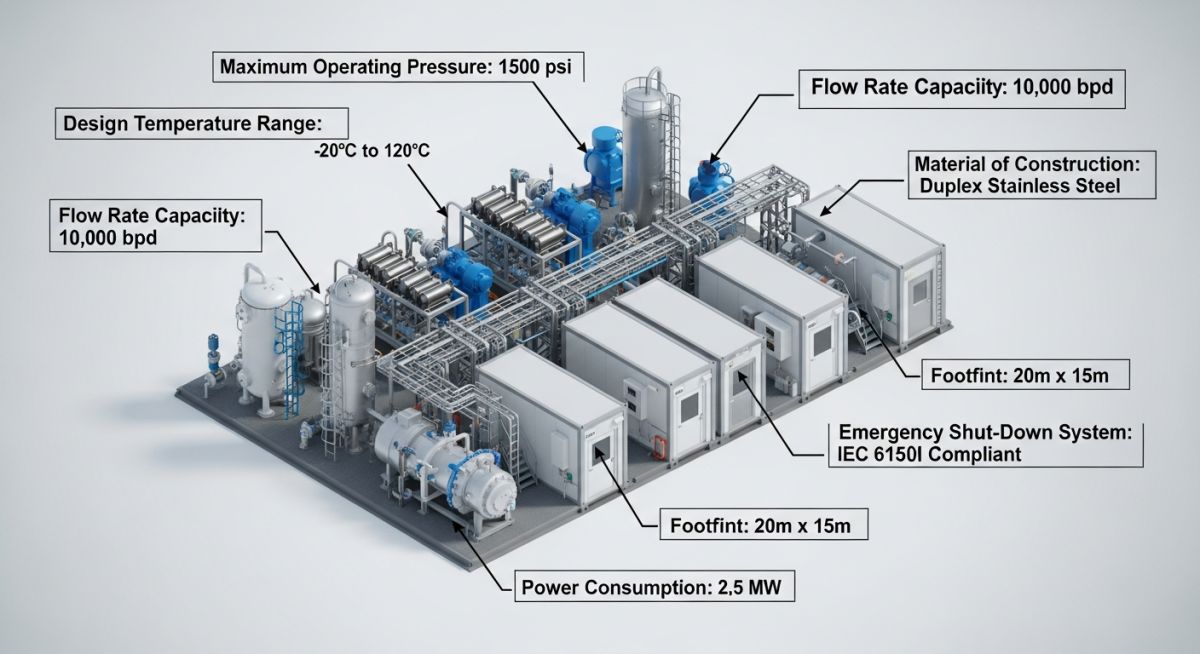
Lead Engineer Responsibilities: They must ensure that any deviations from the original Basis of Design are flagged immediately. For example, if a client requests a capacity increase mid-way through the project, the Lead Engineer must update the BOD to reflect new flow rates and pressures before any drafting continues. This prevents the "ripple effect" of errors where one discipline works off old data while another uses the new requirements.
Step-by-Step Guide: How to Write a Basis of Design (BOD)
Writing a professional Basis of Design in 2026 requires a structured approach that moves from global project parameters to discipline-specific technicalities. The document must be written with the assumption that a third-party auditor or a future plant operator will need to understand the logic behind every engineering decision made during the FEED phase.
The process begins with the Project Design Philosophy. This section defines the intended design life—typically 25 to 30 years for industrial assets—and the environmental envelope. For instance, according to the ASME Codes and Standards, pressure vessel and piping design must account for the most severe coincident pressure and temperature. Your Basis of Design must explicitly state these design margins to ensure the Basis of Design aligns with international safety benchmarks.
Essential Contents of a Basis of Design for Oil and Gas Projects
In the Oil and Gas sector, the Basis of Design is significantly more complex due to the hazardous nature of the fluids and the extreme operating environments. A compliant Basis of Design for a 2026 energy project must reference specific industry standards like API 610 for centrifugal pumps or API 520/521 for pressure-relieving systems.
| BOD Section | Critical Data Points | Applicable Standard (2026) |
|---|---|---|
| Process Basis | Fluid composition, flow rates, GOR, H2S content. | GPSA Data Book / API RP 14E |
| Civil/Structural | Seismic loads, wind speeds (100-year storm), soil bearing. | ASCE 7-22 / ISO 19901 |
| Piping Design | Corrosion allowance, insulation types, stress limits. | ASME B31.3 / API 570 |
| Safety & Fire | Firewater demand, blast overpressure, ESD levels. | NFPA 20 / API RP 752 |
Furthermore, your Basis of Design must address the Redundancy Philosophy. Will the facility use 2x100% pumps or 3x50%? This decision impacts the entire electrical and piping footprint. Referencing the API Standards Library ensures your Basis of Design meets the latest reliability-centered maintenance (RCM) criteria.
Finally, the Basis of Design must include a "Hierarchy of Documents" section. This clarifies that in the event of a conflict between the Basis of Design and a local code, which document takes precedence. This is the ultimate "safety net" for the project manager, preventing legal disputes during the procurement and construction phases.
Piping Design Margin Calculator (2026 Standards)
A critical step in writing your Basis of Design is determining the Design Pressure and Temperature margins based on ASME B31.3 and API 521 recommendations.
Calculated Basis of Design Values
Note: Per 2026 Basis of Design best practices, the Design Pressure should be the greater of the Operating Pressure + 25 psig OR Operating Pressure x 110%. The Design Temperature typically adds a minimum of 25°F-50°F to the maximum operating temperature.
Case Study: The $40M Recovery via Basis of Design Alignment
The Challenge: Brownfield Refinery Expansion
In early 2026, a major Southeast Asian refinery began a brownfield expansion to integrate a new Hydrocracker unit. The initial engineering phase suffered from clashing data sets: the Process team used 1990s meteorological data, while the Structural team used updated 2026 seismic codes.
Without a unified Basis of Design, the cooling water system was undersized by 18%, and foundation piles were over-engineered by 25%. This misalignment threatened a 6-month delay and $40 million in rework costs.
The BOD Solution
-
1
Centralized Parameters: A single Basis of Design was frozen, mandating the use of 2026 climate models for all heat exchange calculations.
-
2
Code Hierarchy: Established that ISO Standards would take precedence over legacy plant standards for new tie-ins.
-
3
Result: The project recovered 4 months of the schedule by eliminating discipline-level assumptions and reducing material waste by 12%.
EPCLand YouTube Channel
2,500+ Videos • Daily Updates
Expert Insights: Lessons from 20 years in the field
Avoid "Copy-Paste" BODs: Many engineers reuse a Basis of Design from a previous project. In 2026, with shifting climate data and updated seismic maps, this leads to significant professional liability. Always validate site-specific ambient conditions.
Document "Exclusions" Early: A robust Basis of Design is just as much about what you are NOT designing for. If you aren't designing for H2S service or 100-year flood levels, state it explicitly to prevent future scope creep.
Dynamic Reference Logic: Ensure your Basis of Design references the "Latest Edition" of codes like ASME B31.3 rather than a specific year, unless a specific project vintage is required for legal compliance.
Inter-Disciplinary Freeze: The Basis of Design must be signed off by all lead discipline engineers. A Process-only BOD is a recipe for structural failures and electrical overloads during the construction phase.
References & Standards
To ensure your Basis of Design meets global regulatory requirements for 2026, consult the following official authorities: