What is a Shut-Off Valve? It’s Working, Function, Types, and Selection

Imagine a high-pressure steam line rupture in a power plant or a sudden leak in a main water supply at a residential complex. In these high-stakes moments, the only thing standing between a controlled maintenance window and a catastrophic failure is the reliability of your Shut-Off Valve. This isn’t just about stopping flow; it’s about positive isolation—ensuring that downstream systems are safe for human intervention even under maximum system pressure.
In this guide, we dive deep into the engineering standards of the Shut-Off Valve, moving beyond basic definitions to explore bubble-tight sealing, seat leakage classes, and the specific selection criteria required for modern piping systems.
Key Takeaways
- Positive Isolation: Unlike control valves, a Shut-Off Valve is designed specifically for full closure with zero downstream leakage.
- Standard Compliance: Selection must align with ASME B16.34 for pressure-temperature ratings and API 598 for leakage testing.
- Mechanism Diversity: Choosing between quarter-turn (ball/butterfly) and multi-turn (gate/globe) depends on speed requirements and fluid viscosity.
What is the Primary Purpose of a Shut-Off Valve?
A Shut-Off Valve is a mechanical device used in piping systems to completely stop the flow of fluid or gas with a bubble-tight seal. Its primary function is safety and isolation, allowing operators to safely block pressure and isolate equipment for maintenance, repair, or emergency shutdown procedures.
Founder’s Insight
“In 20 years of EPC project management, I’ve seen that the most common failure point isn’t the valve body itself, but the selection of an incorrect seat material for the service fluid. A Shut-Off Valve is only as good as its ability to maintain a seal under thermal cycling.”
— Atul Singla
Table of Contents
Complete Course on
Piping Engineering
Check Now
Key Features
- 125+ Hours Content
- 500+ Recorded Lectures
- 20+ Years Exp.
- Lifetime Access
Coverage
- Codes & Standards
- Layouts & Design
- Material Eng.
- Stress Analysis
Engineering Knowledge Check: Shut-Off Valve Mastery
Question 1 of 5Which standard is primarily used to define the leakage testing requirements for an industrial Shut-Off Valve?
How the Shut-Off Valve Working Principle Ensures Safety
The fundamental mechanics of a Shut-Off Valve revolve around the concept of mechanical obstruction. Unlike control valves that modulate flow through a variable orifice, a Shut-Off Valve operates in a binary state: fully open or fully closed. When the valve is engaged, a closure member—such as a disc, gate, or ball—is pressed against a stationary seat. This physical contact creates a seal that must withstand the differential pressure of the system. For high-integrity applications, engineers refer to American Petroleum Institute (API) Standards to define acceptable leakage rates, often aiming for "Class VI" or "Bubble-Tight" performance.
The internal sealing force is generated either through torque (in multi-turn valves like gate valves) or through the precision alignment of polished surfaces (in quarter-turn valves like ball valves). In a Shut-Off Valve, the stem transmits the operator's force to the closure element. For automated systems, this force is provided by pneumatic or electric actuators designed to "fail-safe," ensuring the valve closes automatically during a power loss or emergency signal. This reliability is why the Shut-Off Valve is the backbone of Safety Instrumented Systems (SIS) globally.

Critical Factors in Shut-Off Valve Selection
Selecting the correct Shut-Off Valve is a multidimensional engineering challenge. It is not merely about matching the pipe size; it requires a deep dive into the chemical compatibility of the media, the operating temperature gradients, and the required speed of closure. A common mistake is overlooking the Pressure-Temperature (P-T) Rating. According to the ASME B16.34 Standard, the material strength of the valve body degrades as temperature increases, meaning a valve rated for 1000 PSI at ambient temperature might only handle 600 PSI at 400°F.
Furthermore, the "Seat Material" determines the longevity of the Shut-Off Valve. Soft seats (PTFE/Teflon) provide excellent bubble-tight sealing for gases but fail quickly in abrasive slurry services or high-heat environments. For these extreme conditions, engineers must specify metal-seated designs, which utilize hardened alloys like Stellite to maintain a Shut-Off Valve seal despite the presence of particulates or thermal expansion.
Lastly, consider the "Flow Coefficient" (Cv) even for an isolation valve. While the Shut-Off Valve is intended for closure, when it is open, it should ideally offer minimal resistance. Full-bore ball valves and gate valves are preferred in systems where pressure drop must be kept to an absolute minimum to maintain process efficiency.
Primary Shut-Off Valve Types for Industrial Use
The architecture of a Shut-Off Valve is dictated by the specific requirements of the process fluid and the mechanical constraints of the piping layout. Engineering standards such as API 600 for gate valves and API 608 for metal ball valves provide the blueprint for heavy-duty industrial applications.
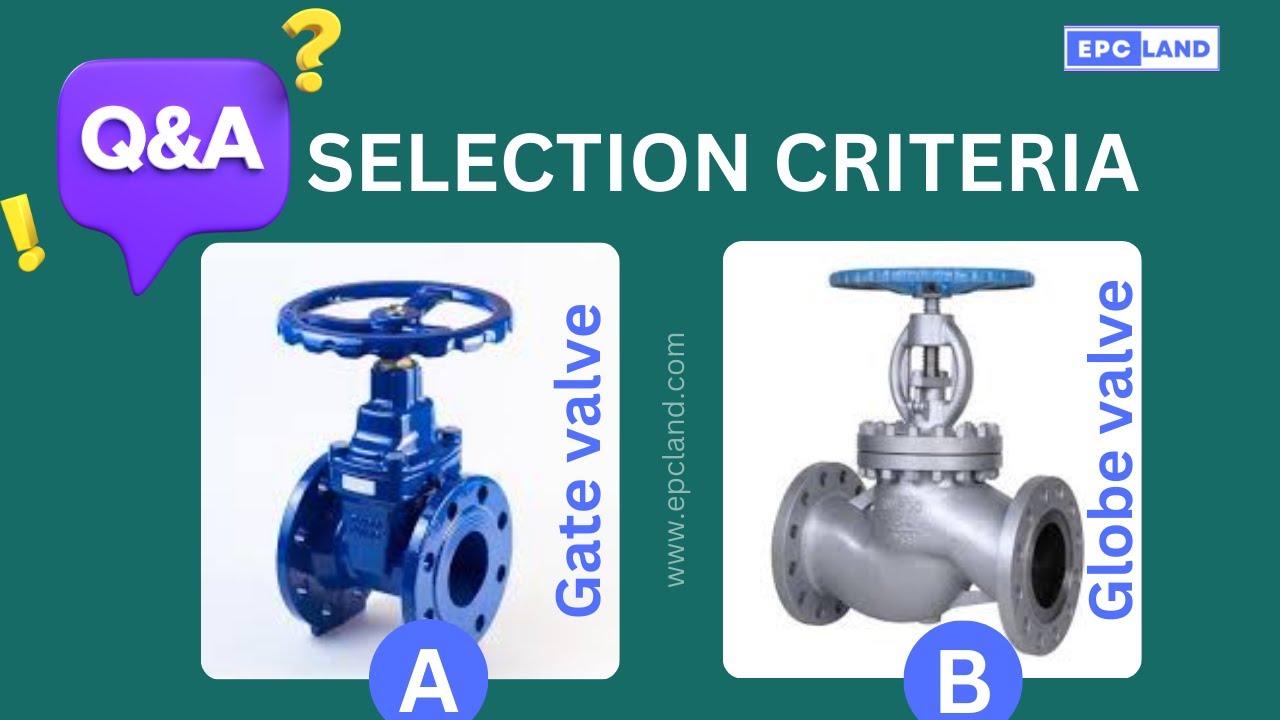
- Gate Valves: The workhorse of isolation. These provide a straight-through flow path with minimal pressure drop. However, they are multi-turn, making them slow to operate and unsuitable for quick-action emergency Shut-Off Valve needs.
- Ball Valves: Preferred for high-integrity sealing. Utilizing a 90-degree turn, they offer rapid isolation. Per ASME B16.10, their face-to-face dimensions are standardized, allowing for easy replacement in existing lines.
- Butterfly Valves: Best for large-diameter lines where space and weight are critical. High-performance double or triple-offset designs can achieve a Shut-Off Valve seal that meets ISO 5208 leakage rates.
- Globe Valves: While primarily used for throttling, they serve as excellent Shut-Off Valve units in high-pressure steam service due to the perpendicular seating force, though they suffer from high pressure drops.
Core Engineering Functions of a Shut-Off Valve
Beyond simple fluid stoppage, a Shut-Off Valve performs critical safety functions. In a Double Block and Bleed (DBB) configuration, two Shut-Off Valve units are used in series with a bleed valve in between. This setup ensures that if the first valve leaks, the fluid is vented safely before reaching the maintenance zone, fulfilling the highest safety integrity levels (SIL).
| Feature | Gate Valve | Ball Valve | Butterfly Valve |
|---|---|---|---|
| Operation Speed | Slow (Multi-turn) | Fast (Quarter-turn) | Fast (Quarter-turn) |
| Pressure Drop | Extremely Low | Very Low | Moderate |
| Primary Standard | API 600 / API 603 | API 608 / API 6D | API 609 |
| Best Application | Main Line Isolation | Emergency Shut-Off | Cooling Water / HVAC |
Detailed dimensional requirements for these components are frequently referenced in the ISO 10423 Standards for petroleum and natural gas industries. Understanding these data points is vital for ensuring that a Shut-Off Valve integrates perfectly with existing flange connections and bolting patterns.
Shut-Off Valve Selection: Pressure-Temperature (P-T) Calculator
Estimate the maximum allowable working pressure (MAWP) for a Shut-Off Valve based on ASME B16.34 Class 150 ratings (Carbon Steel Group 1.1).
Estimated MAWP
285 PSIGEPCLand YouTube Channel
2,500+ Videos • Daily Updates
Optimizing Refinery Safety: Retrofitting ESD Shut-Off Valve Systems

The Challenge
A major Gulf Coast refinery faced persistent leakage class failures in their high-pressure hydrogen lines using legacy gate valves.
The Solution
Engineering teams specified a triple-offset Shut-Off Valve upgrade with pneumatic fail-closed actuators per API 609 standards.
The Result
Achieved Zero-Leakage (Class VI) performance, reducing emergency downtime by 14% annually.
The core of this project involved the transition from manual multi-turn isolation to automated quarter-turn technology. The primary Shut-Off Valve requirement was to ensure that in the event of a fire, the valve would maintain its seal integrity even if the external soft components were destroyed.
By implementing fire-safe tested valves compliant with API 607, the refinery successfully enhanced its Safety Integrity Level (SIL-2). This case underscores the importance of matching the Shut-Off Valve type not just to the fluid, but to the potential emergency scenarios of the facility.
Don't miss this video related to Shut-Off Valve
Summary: Master Piping Engineering with our complete 125+ hour Certification Course: ......
Expert Insights: Lessons from 20 years in the field
Prioritize Cavity Relief: When using a Shut-Off Valve like a double-seated ball valve in liquid service, always specify internal cavity relief. Thermal expansion of trapped liquid can cause internal pressure spikes that deform the seats or prevent operation.
Don't Throtttle with Gates: Never use a gate-style Shut-Off Valve for flow regulation. The high-velocity "wire-drawing" effect will erode the seating surfaces, making the valve useless for its primary function of positive isolation.
Verify Stem Packing: For Shut-Off Valve performance in fugitive emission-sensitive areas, ensure the packing design meets API 622 or ISO 15848-1 to prevent hazardous leaks to the atmosphere.
References & Standards
- ASME B16.34 - Valves: Flanged, Threaded, and Welding End
- API Standard 598 - Valve Inspection and Testing
- API Standard 600 - Steel Gate Valves for Petroleum and Natural Gas Industries
- ISO 10423 - Petroleum and natural gas industries: Drilling and production equipment
- ISO 5208 - Industrial valves: Pressure testing of metallic valves


