What is a Temperature Control Valve? It’s Working, Applications, and Types
A Temperature Control Valve is a critical mechanical or electromechanical device designed to regulate the temperature of a process fluid by modulating the flow of a heating or cooling medium. In modern industrial systems, the [Temperature Control Valve](https://www.spiraxsarco.com) serves as the primary final control element to ensure thermal stability and safety in heat exchangers, boilers, and cooling towers.
Quick Answer: What is a Temperature Control Valve?
A Temperature Control Valve is a valve used to maintain a specific temperature setpoint by varying the flow of fluids like water, steam, or thermal oil. It operates by sensing temperature changes and adjusting its internal plug position to mix fluids or throttle flow, ensuring precise thermal management in industrial processes.
“Precision in thermal regulation isn’t just about the valve; it’s about the response time of the sensing element. Choosing between a wax-element and an electronic PID loop is the first step in engineering system reliability.”
— Atul Singla, Founder of Epcland
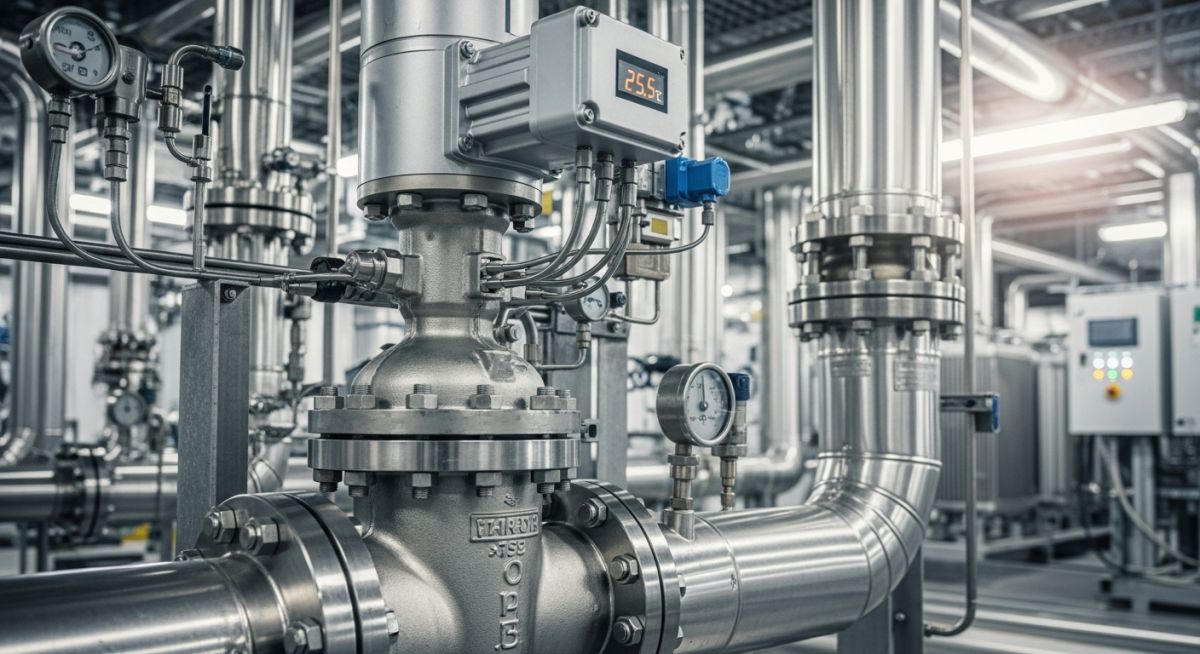
Knowledge Check: Temperature Control Basics
Table of Contents
- 1. What is a Temperature Control Valve? (Technical Definition)
- 2. How does a Temperature Control Valve Work? (The Mechanical Principle)
- 3. Types of Temperature Control Valves and Actuation Methods
- 4. Temperature Control Valve Applications in Modern Industry
- 5. Advanced Engineering Standards: ASME B16.34 and API 609 Compliance
- 6. Advantages and Disadvantages of Temperature Control Valve Systems
- 7. Case Study: Temperature Control Valve Failure in Industrial Boiler Systems
Complete Course on
Piping Engineering
Check Now
Key Features
- 125+ Hours Content
- 500+ Recorded Lectures
- 20+ Years Exp.
- Lifetime Access
Coverage
- Codes & Standards
- Layouts & Design
- Material Eng.
- Stress Analysis
What is a Temperature Control Valve? (Technical Definition)
In the realm of fluid mechanics and process engineering, a Temperature Control Valve is defined as a final control element used to maintain a process fluid at a desired temperature setpoint. Unlike standard isolation valves, these devices are designed for continuous modulation, adjusting the opening of the valve plug in response to temperature fluctuations detected by a sensing element.
The engineering complexity of a Temperature Control Valve lies in its ability to balance thermal loads. Whether it is a self-contained unit or part of a complex [Distributed Control System (DCS)](https://www.emerson.com), the valve must handle specific pressure drops and flow coefficients (Cv) to ensure system stability. These valves are essential in preventing thermal runaway in exothermic reactions and protecting sensitive equipment from overheating.
How does a Temperature Control Valve Work? (The Mechanical Principle)
The core operation of a Self-acting temperature regulator relies on the principle of thermal expansion. Most autonomous valves utilize a “thermal actuator” containing a wax or liquid-filled element. As the process temperature rises, the medium inside the element expands, exerting mechanical force on a piston that moves the valve stem.
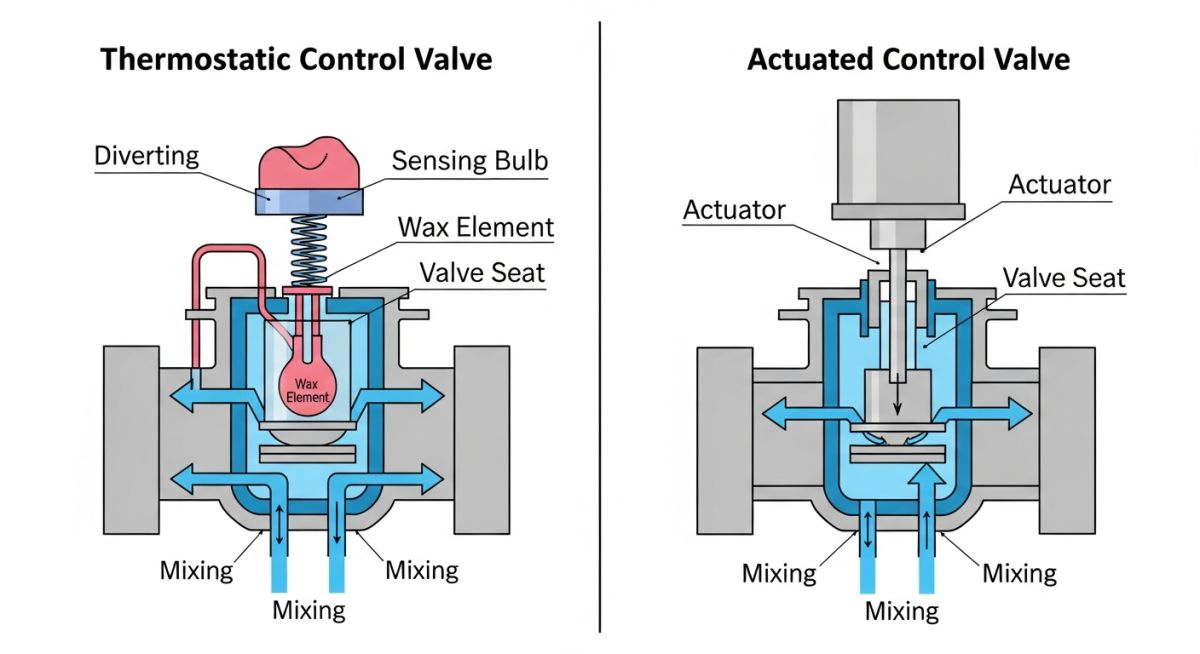
Mixing of hot and cold process liquids: (3-way Mixing Service)
In a 3-way mixing configuration, the Temperature Control Valve features two inlets and one outlet. This setup is common in domestic hot water systems and industrial cooling loops. The valve receives a “Hot” stream and a “Cold” stream, blending them in real-time within the valve body. By modulating the ratio of these two streams, the valve ensures the outlet temperature remains constant, even if the supply temperatures vary.
Heat exchange between hot and cold process liquids: (2-way Regulation)
In 2-way applications, the Temperature Control Valve is typically installed on the primary side of a heat exchanger (e.g., the steam supply or chilled water line). The valve throttles the flow of the heating/cooling medium based on the secondary side’s temperature. This ensures that the [Heat Exchanger](https://www.alfalaval.com) only consumes the exact amount of energy required to meet the thermal demand, significantly improving energy efficiency.
Types of Temperature Control Valves and Actuation Methods
Selecting the correct Temperature Control Valve depends largely on the required precision and the available power source. Engineers typically categorize these valves into two primary families: self-powered and externally powered units.
Thermostatic Control Valves (Self-Powered Wax Elements)
A Thermostatic valve element is the defining feature of self-acting valves. These are “set and forget” devices that require no external electricity or compressed air. The wax element is calibrated to a specific temperature range; when the temperature hits the “crack point,” the wax begins to melt and expand, moving the valve. These are highly reliable for engine cooling and basic HVAC loops where a ±3 to 5 degree tolerance is acceptable.
Actuated Control Valves (Pneumatic & Electric PID Loops)
For high-precision industrial processes, an Actuated Temperature Control Valve is utilized. These systems separate the sensing and acting functions. A temperature transmitter (RTD or Thermocouple) sends a signal to a controller, which then commands a pneumatic or electric actuator. This allows for complex [PID Control](https://www.ni.com) (Proportional-Integral-Derivative) logic, achieving sub-degree temperature accuracy and rapid response to process upsets.
Temperature Control Valve Applications in Modern Industry
The versatility of the Temperature Control Valve makes it indispensable across diverse sectors. In the Oil & Gas industry, these valves manage the temperature of crude oil during separation to prevent hydrate formation. In HVAC systems, they regulate chilled water flow to maintain building climate control. Furthermore, in Food & Beverage processing, precise thermal regulation ensures pasteurization temperatures are met without compromising product integrity.
Advanced Engineering Standards: ASME B16.34 and API 609 Compliance
When specifying a Temperature Control Valve, adherence to international standards is paramount for safety and interchangeability. The [ASME B16.34 Standard](https://www.asme.org) dictates the pressure-temperature ratings and wall thickness requirements for flanged and threaded valves. Additionally, for butterfly-style control valves, the [API 609 Standard](https://www.api.org) ensures the design meets rigorous industrial leakage and fire-safety criteria.
| Feature | Thermostatic (Self-Acting) | Actuated (PID Control) |
|---|---|---|
| Power Source | None (Internal Wax/Liquid) | Pneumatic / Electric |
| Precision | Moderate (±3°C to ±5°C) | High (±0.1°C to ±1°C) |
| Cost | Lower Initial Investment | Higher (Includes Controllers) |
| Typical Use | Engine Cooling, Sterilizers | Chemical Reactors, Boilers |
The Sizing Equation for Liquid Flow
To ensure your Temperature Control Valve is properly sized, engineers calculate the Flow Coefficient (Cv) using the following simplified formula for non-compressible liquids:
- Q = Flow rate in Gallons Per Minute (GPM)
- G = Specific Gravity of the fluid (Water = 1.0)
- ΔP = Pressure drop across the valve in PSI (P1 – P2)
Advantages and Disadvantages of Temperature Control Valve Systems
Advantages of Temperature Control Valve Systems
Implementing a high-quality Temperature Control Valve provides several operational benefits:
- Energy Efficiency: By throttling flow based on demand, steam and fuel consumption are minimized.
- Equipment Protection: Prevents thermal shock and stress in heat exchangers and piping.
- Process Consistency: Ensures repeatable results in manufacturing by stabilizing thermal variables.
Disadvantages of Temperature Control Valve Systems
However, engineers must account for potential drawbacks:
- Maintenance Requirements: Mechanical Thermostatic valve elements can degrade due to scale buildup.
- Response Lag: Self-acting valves may have a slower response time compared to high-speed electronic PID loops.
- Complexity: Actuated systems require calibration and a reliable power/air supply to function correctly.
Temperature Control Valve Sizing Calculator (Cv)
Calculate the required Flow Coefficient (Cv) for your Temperature Control Valve based on flow rate and pressure drop. Ideal for preliminary sizing under [ISA 75.01.01 standards](https://www.isa.org).
Note: Selection should typically include a 20-30% safety margin over this value.
Temperature Control Valve Failure Case Study
Operational Failure: Thermal Fatigue in Industrial Boiler Systems
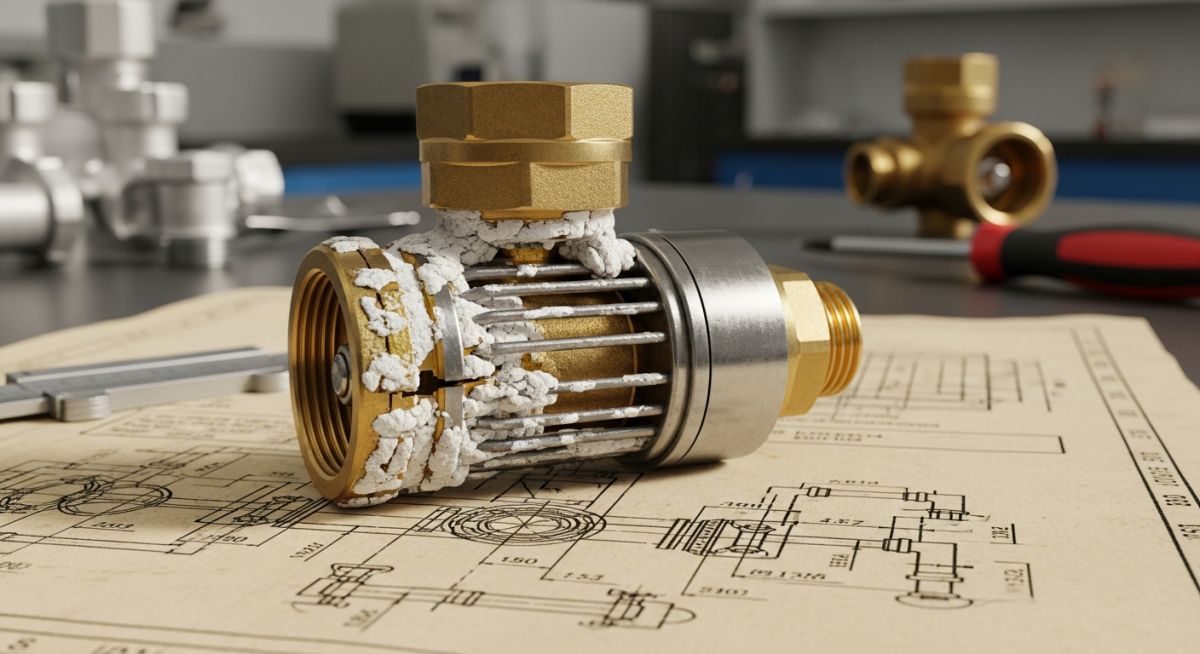
Project Data
- Industry: District Heating Plant
- Equipment: 3-Way Mixing Temperature Control Valve
- Service Fluid: Treated Superheated Water
- Standard: ASME B16.34 compliant body
Failure Analysis
The facility experienced rapid temperature fluctuations (hunting) in the supply line. Upon disassembly, the Thermostatic valve element was found to be seized. Forensic analysis revealed that high mineral concentration led to calcium carbonate buildup on the piston sleeve, causing the wax actuator to exert force against a jammed stem, ultimately rupturing the internal seal.
Engineering Fix & Lessons Learned
The Solution
Replaced the self-acting valve with an Actuated Temperature Control Valve featuring a PTFE-coated stem to resist scaling and integrated a secondary fine-mesh strainer upstream.
The Lesson
Self-acting valves are robust but sensitive to fluid chemistry. In systems with high hardness, periodic descaling of the Thermostatic valve element is mandatory per [API 622 standards](https://www.api.org).
EPCLand YouTube Channel
2,500+ Videos • Daily Updates
Frequently Asked Questions
What is the difference between a mixing and diverting Temperature Control Valve? ▼
In a mixing service, the valve combines two fluid streams of different temperatures into one. In a diverting service, the valve takes a single inlet stream and splits it between two different outlets based on temperature needs. Both configurations utilize the same internal Thermostatic valve element but differ in port arrangement.
How often should a Self-acting temperature regulator be maintained? ▼
Maintenance frequency depends on water quality. For standard closed-loop systems, an annual inspection is recommended. However, if mineral content is high, the Thermostatic valve element should be inspected every 6 months for scale buildup to prevent seizing and ensure accurate thermal response.
Can I use an ASME B16.34 valve for steam applications? ▼
Yes, ASME B16.34 establishes the pressure and temperature limits for various materials. As long as the material class (e.g., WCB Carbon Steel or CF8M Stainless) is rated for your specific steam pressure and temperature, the valve is compliant for steam service.
Is a PID Control Loop necessary for all temperature valves? ▼
No. For simple systems like engine cooling or domestic hot water, a self-contained Temperature Control Valve with a wax element is sufficient. A PID Control Loop is only required for high-precision industrial processes where tight tolerances (±1°C) and remote monitoring are mandatory.
Final Engineering Perspective
The Temperature Control Valve is the heart of any thermal management system. Whether you opt for a robust, self-acting thermostatic regulator or a sophisticated pneumatic PID-controlled unit, understanding the fluid dynamics and material standards like ASME B16.34 is critical. Selecting the right valve not only protects your equipment but also drives significant energy savings across the plant lifecycle.
Atul Singla
Lead Content & Dev Architect, Epcland


