Tank Pad Foundation: The 2026 Engineering Guide to API 650 Standards
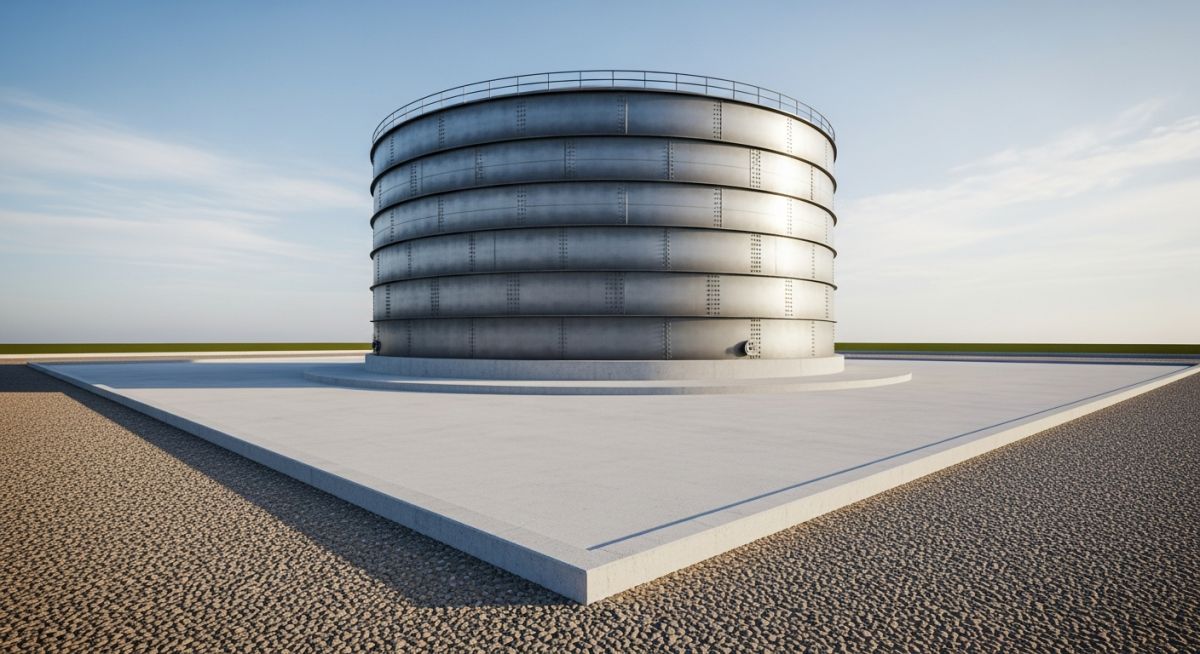
The structural integrity of a heavy-duty storage system begins with a properly engineered Tank Pad Foundation. Designed primarily to support vertical loads and prevent catastrophic differential settlement, these foundations must comply with rigorous standards such as API 650. In 2026, modern storage facilities utilize sophisticated layering—including reinforced concrete ring beams and asphaltic sand cushions—to ensure long-term stability in diverse geotechnical conditions.
What is a Tank Pad Foundation?
A Tank Pad Foundation is a specialized civil structure designed to distribute the massive hydrostatic and dead loads of a storage tank to the underlying soil. It typically consists of a reinforced concrete ring beam for shell support, a compacted granular core, and a protective asphaltic sand layer to prevent bottom-plate corrosion.
Table of Contents
- Core Components of a Tank Pad Foundation System
- Technical Tank Pad Foundation Functions and Structural Requirements
- Critical Design Parameters for Storage Tank Pad Foundations
- Engineering the Tank Pad Foundation Shoulders and Drainage Slopes
- Specified Materials for Durable Tank Pad Foundation Construction
- Tank Pad Foundation Finishes and Corrosion Protection Barriers
Civil Engineering Quiz: Tank Foundation Design
1. Which layer is typically placed directly beneath the tank bottom plate to provide corrosion protection and uniform support?
Complete Course on
Piping Engineering
Check Now
Key Features
- 125+ Hours Content
- 500+ Recorded Lectures
- 20+ Years Exp.
- Lifetime Access
Coverage
- Codes & Standards
- Layouts & Design
- Material Eng.
- Stress Analysis
Core Components of a Tank Pad Foundation System
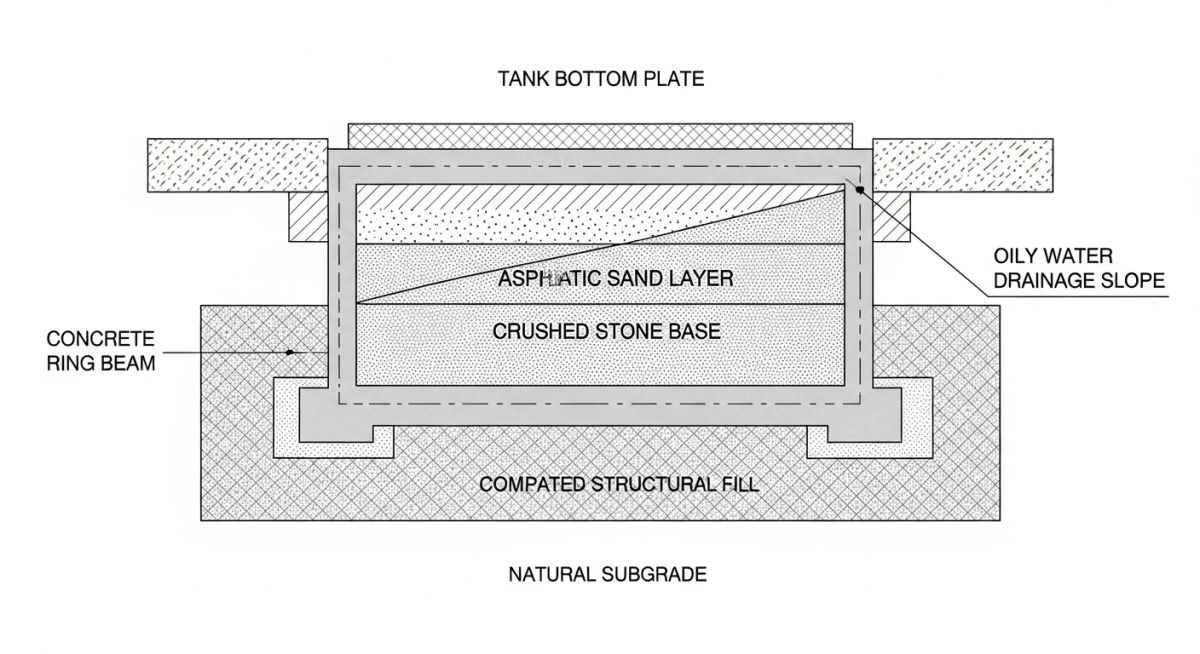
A Tank Pad Foundation is not a single slab of concrete but a multi-layered engineering system designed to interface between the massive weight of the storage medium and the variable strength of the earth. In 2026, the selection of components is governed primarily by the API 650 Foundation Design standards, which emphasize load distribution and moisture management to prevent underside corrosion.
Reinforced Concrete Ring Beam vs. Crushed Stone Bases
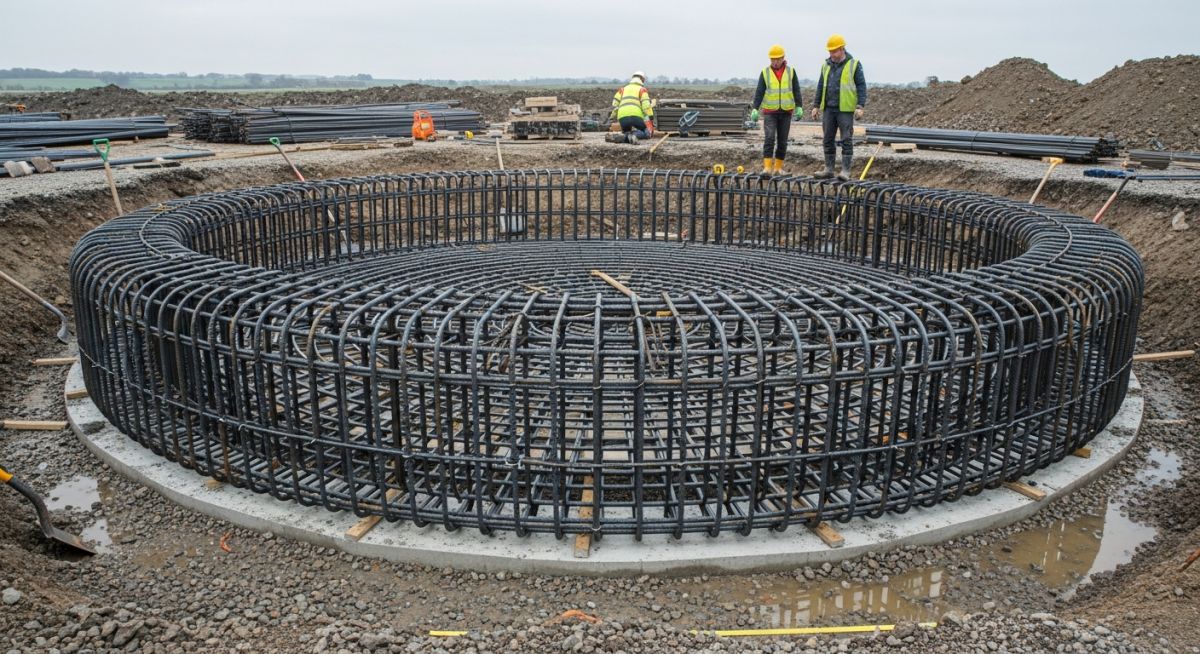
The most critical structural element in a modern Tank Pad Foundation is the Reinforced Concrete Ring Beam. This circular beam is positioned directly under the tank shell, where the highest concentrated loads occur due to the weight of the steel plates and the roof. While crushed stone bases are more economical, the ring beam provides superior stability against “edge settlement” and offers a secure anchoring point for the tank.
- Ring Beam: Prevents the lateral migration of the internal soil or crushed stone core.
- Crushed Stone Core: Provides a well-drained, compacted center that supports the hydrostatic pressure of the stored liquid.
- Geotextile Fabric: Often placed between the subgrade and the foundation layers to prevent the mixing of soil fines with structural fill.
The Role of the Asphaltic Sand Layer
Directly beneath the steel bottom plates, a 50mm to 100mm Asphaltic Sand Layer is installed. This layer serves two vital purposes in Tank Pad Foundation engineering: it provides a compliant, non-corrosive cushion that conforms to the minor irregularities of the tank floor and acts as a moisture barrier to prevent groundwater from contacting the steel.
Technical Tank Pad Foundation Functions and Structural Requirements
The primary function of any Tank Pad Foundation is to transfer the total weight of the tank and its contents (hydrostatic load) to the ground without exceeding the Geotechnical Soil Bearing Capacity. In 2026, design engineers focus on three non-negotiable requirements to ensure structural longevity.
Uniform Support
Ensures the tank bottom remains flat to prevent high-stress concentrations in the weld seams of the floor plates.
Settlement Control
Limits Storage Tank Differential Settlement, which can lead to shell buckling or roof jamming in floating-roof tanks.
Leak Detection
Integrates Tell-Tale pipes or specialized liners within the foundation to identify bottom-plate leaks before soil contamination occurs.
Structural requirements also include the management of internal “bulge” forces. When a tank is filled, the liquid exerts outward pressure. The Tank Pad Foundation must be designed so that the compacted core and the ring beam act together as a contained unit, preventing any lateral shifting of the foundation material that could compromise the shell’s verticality.
Critical Design Parameters for Storage Tank Pad Foundations
Designing a Tank Pad Foundation requires a multi-disciplinary approach combining structural and geotechnical engineering. In 2026, engineers must account for the maximum hydrostatic load during hydrotesting, which often exceeds the operational load of the tank. The foundation must be capable of supporting the total vertical pressure Pmax without exceeding the Geotechnical Soil Bearing Capacity.
Soil Bearing Capacity and Settlement Analysis
Before breaking ground, a comprehensive geotechnical report is mandatory. The Tank Pad Foundation design is limited by the allowable Storage Tank Differential Settlement. According to API 653, the maximum out-of-plane settlement must be strictly monitored to prevent the shell from tilting or the floor plates from over-stressing.
Core Load Calculation Formula
The total pressure exerted on the Tank Pad Foundation core is calculated as follows:
Ptotal = [Wshell + (rholiquid * g * Hmax)] / Abase
- Wshell: Total dead load of the steel tank and roof.
- rholiquid: Density of the stored product (or water during hydrotest).
- g: Acceleration due to gravity (9.81 m/s2).
- Hmax: Maximum design liquid level.
Seismic and Wind Load Considerations
For tanks located in high seismic zones, the Tank Pad Foundation must include an anchor bolt system embedded into the Reinforced Concrete Ring Beam. This prevents “uplift” or sliding during lateral seismic acceleration. In 2026, Finite Element Analysis (FEA) is standard for modeling how the liquid sloshing wave impacts the foundation stability.
Engineering the Tank Pad Foundation Shoulders and Drainage Slopes
The “Shoulder” refers to the part of the foundation extending beyond the tank shell. Proper engineering of this area is vital for the Oily Water Drainage Slope and erosion control. Without a well-designed shoulder, rainwater can pool at the base of the tank, accelerating crevice corrosion at the shell-to-bottom joint.
| Design Element | Requirement | Engineering Purpose |
|---|---|---|
| Shoulder Width | Minimum 900mm to 1500mm | Allows for maintenance access and piping support. |
| Shoulder Slope | 1:20 (5%) minimum | Ensures rapid runoff of rainwater and spilled product. |
| Sealant Joint | Flexible Bituminous Filler | Prevents water ingress under the tank bottom plate. |
Specified Materials for Durable Tank Pad Foundation Construction
Material selection in 2026 for a Tank Pad Foundation is focused on chemical resistance and compaction density. Typical concrete grades for the ring beam range from C30/37 to C40/50, depending on the corrosivity of the soil.
- Structural Fill: Clean, crushed stone or gravel with less than 5 percent fines to ensure high permeability and stability.
- Asphaltic Sand Layer: A mix of hot-mix asphalt and sand (8 percent to 10 percent bitumen) provides the ultimate API 650 Foundation Design cushion.
- Vapor Barrier: A heavy-duty HDPE liner (usually 1.5mm to 2.0mm) is often placed under the entire foundation to provide secondary containment.
Tank Pad Foundation Finishes and Corrosion Protection Barriers
The final “Finish” of the Tank Pad Foundation determines how well it interacts with the facility’s environmental safety systems. In modern refineries, the foundation surface is often coated with a chemical-resistant epoxy or polyurethane finish to prevent oil penetration into the concrete.
Additionally, Corrosion Protection Barriers such as Volatile Corrosion Inhibitors (VCIs) can be injected into the sand layer via the ring beam. This technology protects the steel floor from “soil-side” corrosion, which is a leading cause of tank failure. A smooth, sloped finish integrated with the Oily Water Drainage Slope ensures that any liquid at the tank base is directed to a safe collection point.
Don’t miss this video related to Tank Pad Foundation
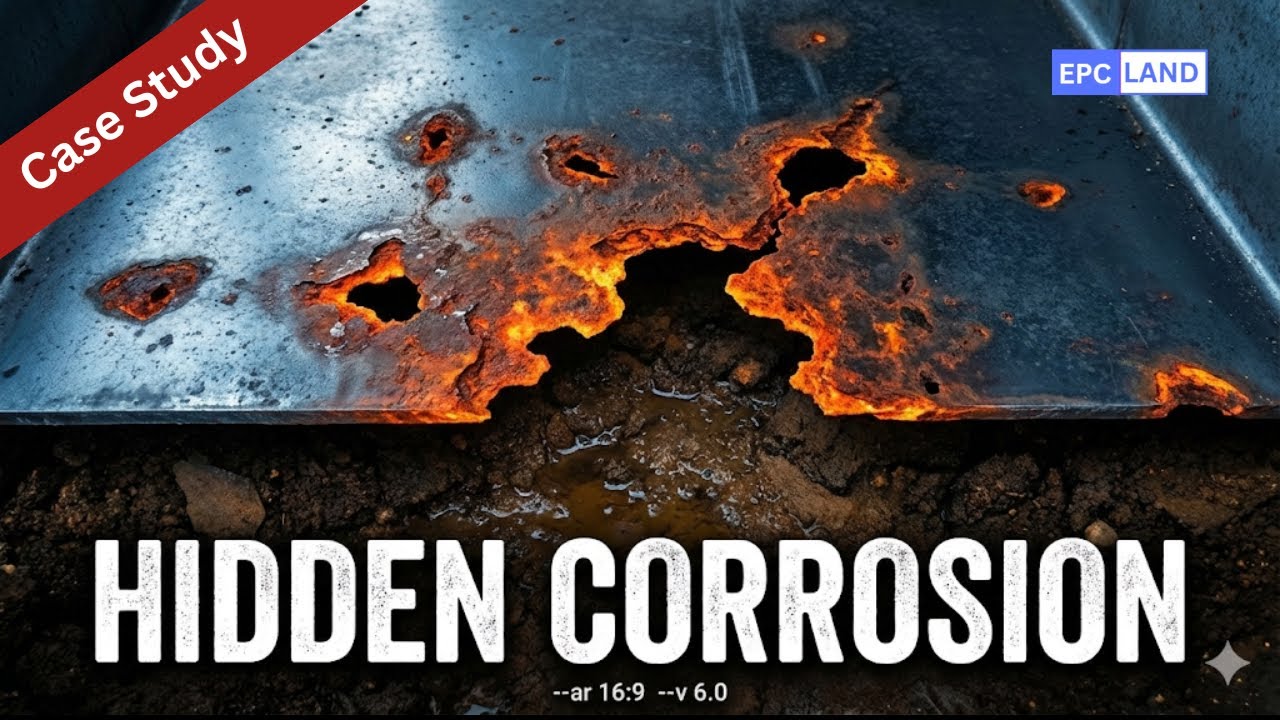
Summary: Introduction: Out of Sight, Out of Mind? The most dangerous part of a storage tank is the part you cannot see. “Soil-Side” corrosion ……
Tank Pad Foundation Pressure Calculator
Estimate the vertical pressure exerted on your Tank Pad Foundation based on tank dimensions and fluid properties. This tool helps determine if the foundation design meets the Geotechnical Soil Bearing Capacity.
Foundation Loading Results
Note: These values are for preliminary estimation only. A full geotechnical analysis is required for final Tank Pad Foundation design.
Case Study: Remediation of Tank Pad Foundation Settlement in Coastal Regions
Project Data
- Asset Type: 50,000 m3 Crude Oil Storage Tank
- Foundation Type: Original Earth-Foundation with Crushed Stone
- Soil Profile: Soft marine clay with high water table
- Project Location: Coastal Industrial Hub
- Estimated Retrofit Cost: 450,000 USD
Failure Analysis
Following three years of operation, the tank exhibited Storage Tank Differential Settlement exceeding 150mm across the diameter. The lack of a Reinforced Concrete Ring Beam allowed the internal structural fill to migrate laterally into the soft surrounding soil. This led to visible shell “ovality,” causing the internal floating roof to jam during filling operations, presenting a severe fire and operational risk.
The Engineering Fix
The remediation involved jacking the tank shell and installing a new Tank Pad Foundation system. The team implemented deep soil mixing (DSM) to stabilize the clay subgrade, followed by the construction of a heavy-duty reinforced concrete ring beam. A fresh Asphaltic Sand Layer was applied to the core to ensure a perfectly level interface for the tank bottom plates.
Lessons Learned
- Soil Context is Critical: In soft coastal soils, an earth-only foundation is insufficient for large-diameter tanks. A ring beam is mandatory for lateral containment.
- Early Detection: Regular settlement monitoring during the first 12 months (post-hydrotest) can identify trends before structural damage occurs.
- Long-term ROI: The 450,000 USD investment in a robust Tank Pad Foundation retrofit saved the operator an estimated 2.5 million USD in potential lost production and shell repair costs.
Frequently Asked Questions: Tank Pad Foundation
Why is an asphaltic sand layer essential for a Tank Pad Foundation?
The asphaltic sand layer serves as both a corrosion barrier and a leveling cushion. In Tank Pad Foundation design, this layer prevents groundwater from reaching the steel bottom plates, reducing the risk of underside pitting. It also provides a flexible surface that conforms to the shape of the tank plates under heavy hydrostatic loads, ensuring uniform pressure distribution.
What are the standard settlement limits for a storage tank foundation?
While uniform settlement is manageable, Storage Tank Differential Settlement is highly restricted. API 650 and API 653 provide specific guidelines, but generally, the out-of-plane deflection should not exceed 1/100th of the tank height or specific arc-length measurements to prevent shell buckling. A well-designed Tank Pad Foundation with a ring beam helps keep these values within safe engineering limits.
When should a concrete ring beam be used instead of an earth foundation?
A reinforced concrete ring beam is recommended for tanks with large diameters (greater than 15 meters), tanks in high-seismic areas, or facilities located on soft soils. It provides better lateral containment for the Tank Pad Foundation core and offers a stable, level surface for the shell, which is critical for floating-roof tank operation.
How is the foundation finish related to environmental safety?
The Tank Pad Foundation finish must include a proper Oily Water Drainage Slope. This ensures that any spilled product or contaminated rainwater is directed toward the plant’s drainage system rather than soaking into the soil. In 2026, many foundations also incorporate an HDPE liner for secondary containment to meet stringent environmental regulations.
📚 Recommended Resources: Tank Pad Foundation
Read these Guides
- 📄 Solving the Impossible: How We Achieved OISD 118 Fire Water Compliance Brownfield in an Aging Plant
- 📄 Refinery Upgrade: How We Met OISD 118 Inter-Distance Rules in a Live, Space-Constrained CDU
- 📄 Piping Design Course: 75 free Online Piping courses
- 📄 Comprehensive Guide to Feed Contracts for Oil and Gas Projects: Key Clauses Explained




Related posts:
![High-grade industrial Wing Nut Types and Applications for mechanical assemblies.]()
Wing Nut Types and Applications: The 2026 Engineering Guide
![Industrial Monorail Crane Systems installed in a modern manufacturing plant 2026.]()
Monorail Crane Systems: Design, Types & 2026 Standards Guide
![Lead engineer performing a Factory Acceptance Test FAT on an industrial skid system 2026]()
Factory Acceptance Test FAT: The 2026 Engineering Guide to Zero-Defect Delivery
![Professional engineering workspace showing a Basis of Design document layout for a 2026 project.]()
Basis of Design: How to Write a BOD for Engineering Projects in 2026
![Industrial Flare Knockout Drum Sizing and installation in a refinery relief system.]()
Flare Knockout Drum Sizing: Design & API 521 Standards (2026 Guide)
![Advanced Reboiler Control Systems in a modern petrochemical refinery 2026.]()
Reboiler Control Systems: Engineering Guide to Precision Control 2026