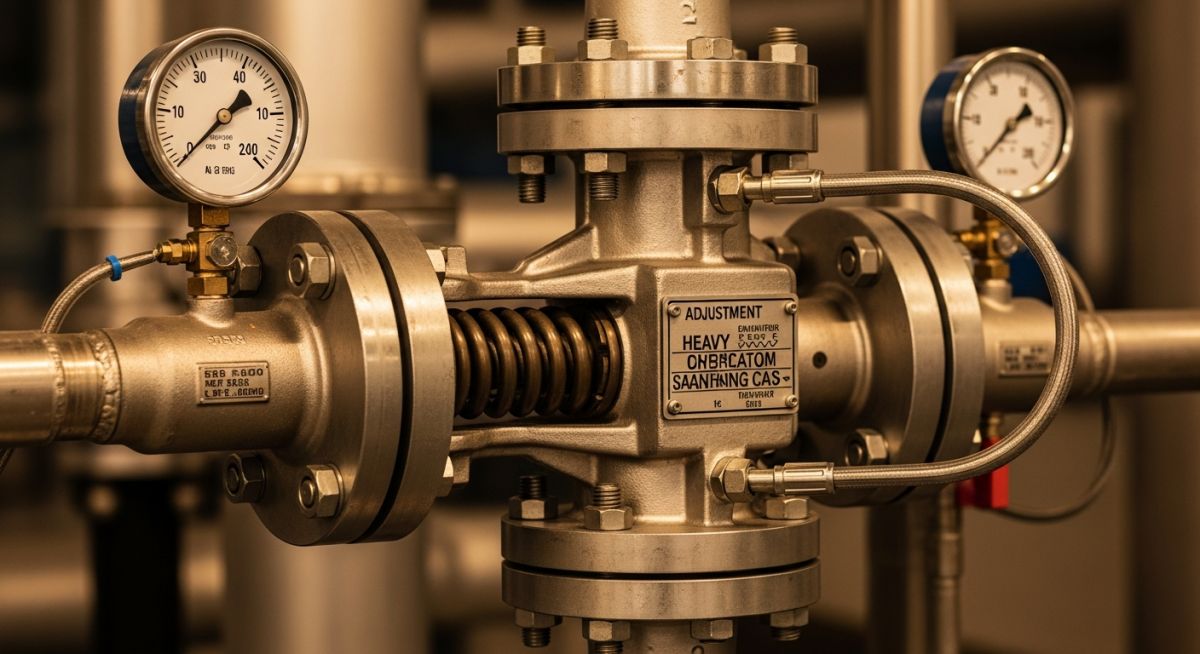
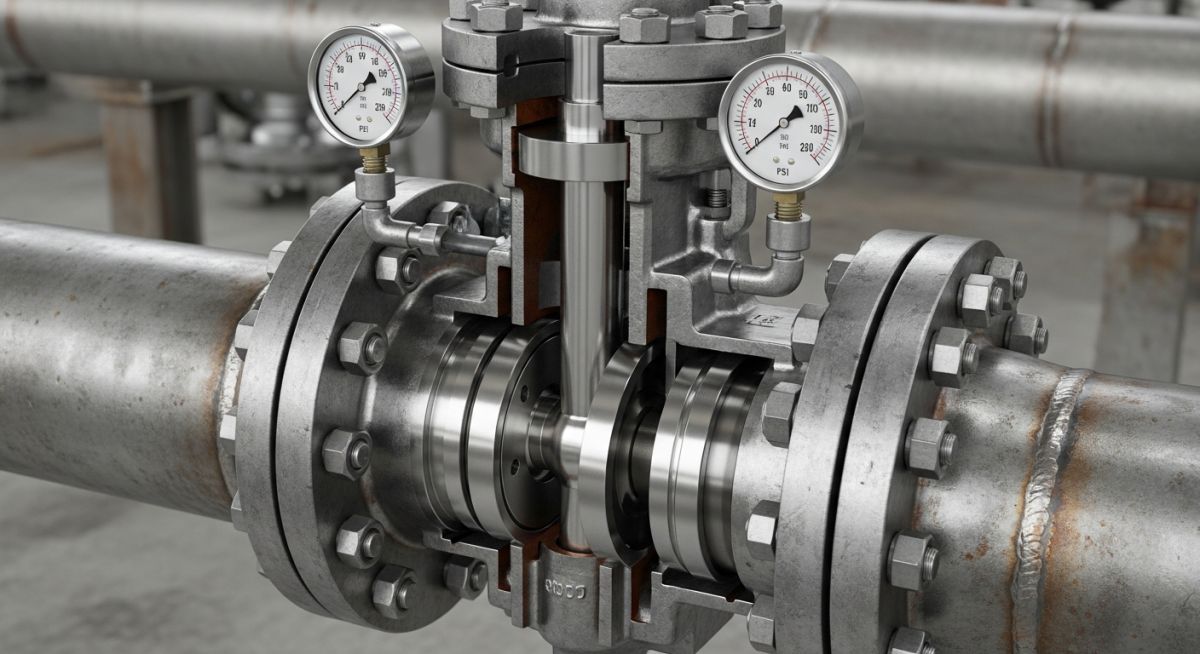
SEO Block Focus Keyword Pressure Reducing Valve Title What is a Pressure Reducing Valve? Types, Working, Applications, and PRV vs PSV Slug pressure-reducing-valve-types-working-applications Meta Description Learn what a pressure reducing valve is, how it works, its types, applications, advantages, and the key difference between a pressure reducing valve and a pressure relief valve in piping systems. Tags Pressure Reducing Valve, PRV Valve, Pressure Regulator, Direct Acting PRV, Pilot Operated PRV, PRV vs PSV, Piping Engineering, Valve Working Principle Field-Tested Engineering Insight by Atul Singla What is a Pressure Reducing Valve? Types, Applications, and Advantages A pressure reducing valve may look like a simple inline component, but in actual plant piping it plays a direct role in protecting downstream equipment, stabilizing pressure, and preventing operators from fighting the system manually. https://epcland.com/wp-content/uploads/2026/05/pressure-reducing-valve-industrial-piping-system.jpg The Human Hook I have seen this many times on projects: the upstream line pressure looks fine, the line size looks acceptable, and still the downstream users keep complaining about unstable pressure. Then somebody starts cracking open a manual bypass, somebody else adjusts the setpoint without understanding the flow range, and the original design intent is lost. In my experience, that is exactly where a properly selected Pressure Reducing Valve makes the difference. Its job is to take a higher inlet pressure and maintain a lower, controlled outlet pressure so that the downstream system operates the way it was meant to operate. But here is the catch, I never treat a pressure reducing valve as a safety valve. It is a control device for normal operation. If downstream overpressure is possible, the protection philosophy still needs a separate engineering check. Key Takeaways What it does A pressure reducing valve lowers high inlet pressure and maintains a stable downstream pressure within its control range. Where it is used You will commonly find it in steam systems, compressed air headers, water lines, fuel gas systems, and utility piping networks. My field preference I prefer pilot-operated pressure reducing valves where flow varies heavily because they usually hold outlet pressure more steadily than small direct-acting designs. Common confusion A pressure reducing valve controls pressure during normal service. A pressure relief valve protects the system during abnormal overpressure conditions. Featured Snippet Answer What is a Pressure Reducing Valve? A pressure reducing valve is a self-acting or pilot-operated valve that reduces high inlet pressure to a lower, controlled outlet pressure. It senses downstream pressure and throttles flow automatically to protect equipment, improve process stability, and supply pressure-sensitive users with a steady operating pressure. Table of Contents #what-is-pressure-reducing-valveWhat is a Pressure Reducing Valve? #functions-of-pressure-reducing-valveFunctions of Pressure Reducing Valves #types-of-pressure-reducing-valvesTypes of Pressure Reducing Valves #direct-acting-pressure-reducing-valveDirect-Acting Pressure Reducing Valve #pilot-operated-pressure-reducing-valvePilot Operated Pressure Reducing Valve #applications-of-pressure-reducing-valvesApplications of Pressure-Reducing Valves #advantages-of-pressure-reducing-valvesAdvantages of Pressure Reducing Valves #pressure-reducing-valve-vs-pressure-relief-valvePressure Reducing Valve vs Pressure Relief Valve #pressure-reducing-valve-case-studyField Case Study #pressure-reducing-valve-faqsPressure Reducing Valve FAQs Pressure Reducing Valve Quiz I built this as a pure CSS quiz because many CMS setups strip JavaScript. You can move question by question, click one option, and see the correct answer with the explanation instantly. 1 2 3 4 Question 1 of 4 Core Function What is the main function of a pressure reducing valve in a piping system? A It vents excess process fluid directly to atmosphere during overpressure B It reduces high inlet pressure to a lower controlled downstream pressure during normal operation C It completely isolates downstream piping whenever upstream pressure increases D It measures pressure only and sends a signal to the control room Incorrect. That is closer to the function of a pressure relief or safety valve in an overpressure event. Correct Answer: B — It reduces high inlet pressure to a lower controlled downstream pressure during normal operation. Explanation: A pressure reducing valve is a control device. I treat it as part of normal pressure regulation, not as the final emergency pressure protection layer. Correct. A pressure reducing valve lowers high inlet pressure and holds a lower downstream pressure within its control range. Explanation: This is the basic reason we use PRVs in steam, compressed air, gas, and utility systems where downstream equipment needs stable pressure. Incorrect. A pressure reducing valve throttles to control pressure; it does not act as a shutoff valve for rising upstream pressure. Correct Answer: B — It reduces high inlet pressure to a lower controlled downstream pressure during normal operation. Explanation: In the field, confusing throttling duty with isolation duty leads to poor valve selection. Incorrect. A pressure reducing valve is not just an instrument transmitter or gauge element. Correct Answer: B — It reduces high inlet pressure to a lower controlled downstream pressure during normal operation. Explanation: It actively regulates downstream pressure by modulating flow through the valve internals. Next Question Question 2 of 4 Valve Type Selection In which situation would I usually prefer a pilot-operated pressure reducing valve over a direct-acting valve? A When the service has very low pressure differential and no flow demand B When the valve is being selected only because it matches the line size C When flow varies widely and tighter downstream pressure control is needed D When the goal is to replace all downstream pressure protection devices Incorrect. If there is no real flow demand, the issue is not about choosing a pilot-operated valve for control stability. Correct Answer: C — When flow varies widely and tighter downstream pressure control is needed. Explanation: I usually prefer pilot-operated PRVs where the load swings significantly and the process still needs stable outlet pressure. Incorrect. Line size alone is a weak basis for PRV selection. Correct Answer: C — When flow varies widely and tighter downstream pressure control is needed. Explanation: I start with inlet pressure, outlet pressure, turndown, and operating cases before I even look at matching line size. Correct. Pilot-operated PRVs are usually better when service conditions vary and downstream pressure needs to stay tighter. Explanation: In real plants, I lean toward pilot-operated designs for steam stations and utility headers where direct-acting valves can struggle with load variation. Incorrect. A pilot-operated PRV still remains a control device, not a substitute for downstream overpressure protection. Correct Answer: C — When flow varies widely and tighter downstream pressure control is needed. Explanation: Better pressure control does not remove the need for relief review and protection philosophy. Previous Next Question Question 3 of 4 Protection Philosophy Which statement correctly explains the difference between a pressure reducing valve and a pressure relief valve? A Both valves perform the same function, so either one can be used in place of the other B A pressure reducing valve controls normal downstream pressure, while a pressure relief valve protects against abnormal overpressure C A pressure reducing valve always opens fully when downstream pressure rises D A pressure relief valve is used only for pressure measurement and has no protection function Incorrect. This is one of the most common and risky misunderstandings in piping systems. Correct Answer: B — A pressure reducing valve controls normal downstream pressure, while a pressure relief valve protects against abnormal overpressure. Explanation: I always separate control function from safety protection during design review because mixing them can create a serious gap in downstream protection. Correct. A PRV manages downstream pressure during normal service, while a relief valve handles protection during abnormal overpressure conditions. Explanation: That distinction is fundamental. I never allow a pressure reducing valve to be treated as the final pressure safety device without a proper protection study. Incorrect. A pressure reducing valve modulates to maintain set pressure; it does not simply open fully because downstream pressure rises. Correct Answer: B — A pressure reducing valve controls normal downstream pressure, while a pressure relief valve protects against abnormal overpressure. Explanation: The valve action depends on sensing downstream pressure and adjusting flow through throttling. Incorrect. A pressure relief valve exists specifically to protect the system from excessive pressure. Correct Answer: B — A pressure reducing valve controls normal downstream pressure, while a pressure relief valve protects against abnormal overpressure. Explanation: Control and protection are related, but they are not the same engineering function. Previous Next Question Question 4 of 4 Installation Practice What is one of the best standard field practices before a pressure reducing valve? A Install a strainer upstream to protect the valve trim from debris B Remove all upstream filtration so the valve sees the full process condition C Use the manual bypass as the normal operating route and keep the PRV shut D Skip upstream and downstream pressure gauges because the setpoint is enough Correct. A strainer upstream is one of the best protection practices for a pressure reducing valve. Explanation: I treat the upstream strainer as essential in most PRV stations because dirt in the trim quickly leads to leakage, unstable control, and maintenance calls. Incorrect. Removing filtration makes debris damage more likely, not less. Correct Answer: A — Install a strainer upstream to protect the valve trim from debris. Explanation: Dirty service is one of the fastest ways to create seat leakage and poor downstream pressure control. Incorrect. A bypass should never be treated casually as the normal route unless the design philosophy specifically permits and controls it. Correct Answer: A — Install a strainer upstream to protect the valve trim from debris. Explanation: In real plants, an uncontrolled bypass can defeat the whole pressure control concept. Incorrect. Pressure gauges are very useful for operation, troubleshooting, and confirming actual performance. Correct Answer: A — Install a strainer upstream to protect the valve trim from debris. Explanation: I always prefer having both upstream and downstream pressure indication around a PRV station. Previous Back to Start What is a Pressure Reducing Valve? A Pressure Reducing Valve is a control valve that takes a higher inlet pressure and automatically delivers a lower, controlled downstream pressure. I usually explain it in simple plant language: upstream pressure may be available in excess, but the downstream equipment should only see the pressure it was designed to handle during normal operation. In my experience, this valve becomes critical in steam headers, compressed air systems, fuel gas lines, water networks, and utility stations where different users need different operating pressures from the same source. If you do not manage that pressure properly, the plant starts fighting itself. Gauges fluctuate, control becomes unstable, valve trims wear out faster, and operators lose confidence in the system. I do not treat a pressure reducing valve as a decorative inline component. I treat it as part of the pressure control philosophy of the piping system. How Does a Pressure Reducing Valve Work? The basic idea is straightforward. The valve senses the downstream pressure, not the upstream pressure. When the downstream pressure falls below the set value, the valve opens more to allow additional flow. When the downstream pressure rises toward or above the set value, the valve throttles and restricts flow. Most pressure reducing valves use a spring, diaphragm, piston, or pilot arrangement to balance forces and position the plug. The valve does not just snap open and shut like an isolation valve. It modulates. That is the part many fresh engineers miss in the beginning. In the field, I like to describe it this way: the valve keeps negotiating between flow demand and outlet pressure. If the downstream user starts consuming more fluid, the pressure tends to drop, and the valve responds by opening further. If the demand reduces, the downstream pressure rises, and the valve starts closing to hold the set pressure. https://epcland.com/wp-content/uploads/2026/05/pressure-reducing-valve-working-principle-infographic.jpg Field Warning A pressure reducing valve only works well when the operating Direct-Acting vs Pilot-Operated Pressure Reducing Valve This is where selection becomes practical. I do not choose a Pressure Reducing Valve by habit or by what was used in the last project. I choose it based on how the system actually behaves. If the downstream demand is stable and the duty is modest, a direct-acting valve can do the job well. If the load moves around all day and the outlet pressure has to stay tighter, I usually move toward a pilot-operated design. In the field, engineers get into trouble when they only ask, “What is the line size?” That is not enough. I always look at inlet pressure, required outlet pressure, minimum and maximum flow, fluid phase, turndown, and what happens if the valve seat leaks or the bypass is opened when nobody is watching. Parameter Direct-Acting Pressure Reducing Valve Pilot-Operated Pressure Reducing Valve Operating principle Spring force acts directly on the sensing element and main trim. A pilot controls the main valve for more sensitive regulation. Best use case Small to moderate flows with limited load variation. Variable flows where tighter downstream pressure control is needed. Control accuracy Moderate Better than direct-acting in most fluctuating services Complexity Simple Higher because of pilot arrangement and impulse paths Initial cost Usually lower Usually higher Maintenance focus Seat condition, spring setting, cleanliness of trim Pilot tuning, sensing lines, main trim, and cleanliness My preference Good for straightforward utility duties My first choice for steam stations and variable utility headers Standards Note I always connect valve selection back to the governing piping code and pressure protection philosophy. For process piping, https://www.asme.org/codes-standards/find-codes-standards/b31-3-process-pipingASME B31.3 sets the design framework. For steam and power piping, I check https://www.asme.org/codes-standards/find-codes-standards/b31-1-power-pipingASME B31.1. If downstream overpressure scenarios exist, I do not stop at control selection. I review the protection logic against https://www.api.org/products-and-services/standards/important-standards-announcements/api-std-520API 520 and https://www.api.org/products-and-services/standards/important-standards-announcements/api-std-521API 521. Applications of Pressure-Reducing Valves A pressure reducing valve is useful anywhere the source pressure is higher than what the downstream equipment should see. That sounds broad because it is broad. But not every service behaves the same, and I do not select the same valve style for steam, air, water, and fuel gas without checking the service details. Steam Pressure Reducing Stations I see this application all the time. A plant may distribute steam at one pressure, but traced lines, heat exchangers, or process users need lower pressure. The PRV station then becomes a complete assembly with strainer, isolation valves, gauges, bypass philosophy, and downstream relief review. Compressed Air Systems Different users often need different air pressures. A PRV helps keep the air header useful without oversupplying sensitive instruments or end devices. Water Distribution and Utility Networks Water systems can be deceptively simple. If the pressure reduction is large, I check cavitation, noise, and trim suitability before finalizing the valve. Fuel Gas Supply to Burners or Skids Fuel gas service needs tighter discipline. I review failure mode, lock-up behavior, shutoff arrangement, venting, and the plant protection philosophy very carefully here. Nitrogen and Inert Gas Services PRVs are often used where a stable blanket or low-pressure utility supply is required. Small instability can create unnecessary operating issues. HVAC and Building Utility Applications The same logic applies even outside heavy process plants. The valve still exists to make downstream pressure manageable and dependable. Advantages of Pressure Reducing Valves I like pressure reducing valves because they solve a real operating problem without forcing the whole plant to run at the lowest pressure requirement. That gives design flexibility. Stable outlet pressure for downstream users This is the obvious benefit, but it is also the most valuable one when multiple users share one source. Protection of lower-pressure equipment during normal service A PRV helps keep normal operating pressure inside the intended envelope of the downstream system. Better process consistency Burners, exchangers, tracing circuits, air tools, and instruments tend to behave better when the pressure is not wandering all the time. Less operator intervention I would rather trust a correctly selected control device than ask operators to manually “balance” a pressure line for weeks. Improved system flexibility One high-pressure source can support several lower-pressure users without redesigning the upstream network each time a new user is added. Pressure Reducing Valve vs Pressure Relief Valve This is the comparison I insist on clarifying early. A Pressure Reducing Valve is a control device. A Pressure Relief Valve is a protection device. If somebody mixes these functions in a review meeting, I stop the conversation and fix that before moving on. Aspect Pressure Reducing Valve Pressure Relief Valve Main purpose Reduce and control downstream pressure during normal operation Protect equipment and piping during abnormal overpressure Operating mode Modulates continuously according to downstream pressure Opens when set pressure is reached and relieves excess pressure Normal service role Active control component Normally closed standby protection component Applicable standards focus Piping code, valve selection, station design, operating philosophy Relief sizing and overpressure protection per API 520, API 521, and related practices My field note Do not call it a safety valve just because it lowers pressure Do not size it casually; protection cases must be credible and documented Critical Warning If the upstream pressure source can exceed the downstream design pressure, I always review whether a relief device or another protective measure is required downstream. For that protection side, I align the philosophy with https://www.api.org/products-and-services/standards/important-standards-announcements/api-std-520API 520, https://www.api.org/products-and-services/standards/important-standards-announcements/api-std-521API 521, and where applicable https://www.iso.org/standard/27779.htmlISO 4126. Pressure Reducing Valve Selection Criteria This is where I see the most expensive mistakes. Engineers sometimes pick the valve based on pipe size or a rough pressure number and assume the vendor will somehow make the rest work. I do not work that way. I define the duty first. Pressure Data Maximum inlet pressure, normal inlet pressure, required outlet pressure, and the downstream design pressure must all be clear. Flow Range I always ask for minimum, normal, and maximum flow. A valve that behaves well at one point may behave poorly across the full turndown. Fluid Type and Condition Steam, gas, liquid, and condensable fluids each create different control and damage risks. Noise, Cavitation, and Flashing For liquids I watch cavitation and flashing. For gases and steam I keep an eye on noise and high velocity trim damage. Material Compatibility Body material, trim material, soft parts, corrosion allowance, and temperature class must suit the service. Maintainability I always think about how the valve will be isolated, inspected, and put back into service. Good maintenance access saves real money later. Seat leakage expectations matter too. When I review valve testing or shutoff expectations, I often align the conversation with recognized valve test practices such as https://www.api.org/products-and-services/standards/important-standards-announcements/api-std-598API 598 and https://www.iso.org/standard/29858.htmlISO 5208 so the project team is not using vague words like “tight shutoff” without a real basis. Pressure Reducing Valve Installation Guidelines Even the right valve can behave badly when the station layout is careless. I have seen excellent valves blamed for problems that were actually caused by poor installation detailing. Install an upstream strainer Dirt in the trim is one of the fastest ways to create seat leakage and unstable control. Provide upstream and downstream pressure gauges Without local pressure indication, troubleshooting becomes guesswork. Follow the correct flow direction This sounds obvious, but reverse installation still shows up in real plants. Use a bypass only under controlled philosophy An uncontrolled bypass can quietly defeat the full pressure control concept. Check downstream protection needs If upstream pressure can overpressure the downstream system, I review relief or equivalent protective measures. I do not skip that review. Common Pressure Reducing Valve Problems When a PRV misbehaves, I try to diagnose the symptom first and only then move to the root cause. Random setpoint adjustment is usually the wrong first step. Outlet Pressure Creep Often linked to seat leakage, dirty trim, damaged internals, or wrong valve selection. Hunting or Oscillation Usually points to poor sizing, unstable demand, incorrect tuning, or poor station arrangement. Noise and Vibration Large pressure drops, high velocity, cavitation, flashing, or unsuitable trim are common triggers. Low Downstream Pressure This can happen when the upstream pressure is insufficient, the valve is undersized, the strainer is blocked, or the setpoint is wrong. My Troubleshooting Rule I first check actual inlet pressure, actual outlet pressure, and the cleanliness of the station. Only after that do I start questioning the internals. Too many teams jump straight to replacement when the real issue is upstream dirt or a partially open bypass. Pressure Reducing Valve Selection Calculator This quick calculator is not a replacement for vendor sizing software, but it is useful for an early engineering check. I use this type of sanity check to see whether the requested outlet pressure makes sense, how aggressive the pressure drop is, and whether I should start thinking about direct-acting or pilot-operated control. Inlet Pressure Required Outlet Pressure Downstream Design Pressure Flow Variation Low Variation Moderate Variation High Variation Service Type Steam Gas Compressed Air Liquid / Water Calculate Reset Calculated Engineering Check Pressure Drop - Reduction Ratio - Initial Valve Direction Enter your values and run the calculator. Risk Review I use this block to flag early concerns like downstream overpressure margin, large pressure drop, or liquid service risk. Atul's Field Note A calculator gives direction. Final valve sizing still needs detailed flow data, service conditions, trim review, and vendor confirmation. Field Case Study by Atul Singla Field Case Study: Pressure Reducing Valve in a Steam Distribution Header When I was working on a utility steam distribution arrangement, we had a main steam header operating at a higher pressure, while one downstream user block needed a much lower and steadier steam pressure. On paper, the case looked simple. A pressure reducing valve had already been considered, the line size looked reasonable, and the team expected the station to behave as soon as commissioning started. But that is rarely how the field behaves. https://epcland.com/wp-content/uploads/2026/05/steam-pressure-reducing-valve-station-case-study.jpg The Situation I Faced on Site The upstream steam pressure was healthy and stable enough from the main header, but the downstream section kept showing pressure fluctuations. Operators were seeing unstable readings on the downstream gauge, and the end users were complaining that the steam supply was not behaving consistently. The first reaction from the site team was predictable: they suspected the valve itself. I did not jump to that conclusion. In my experience, a pressure reducing valve station should never be judged by the valve body alone. I always inspect the full station logic: upstream strainer, isolation arrangement, sensing point, bypass condition, pressure indication, downstream protection, and the actual operating pattern of the connected users. What Caught My Attention First The downstream pressure was not failing randomly. It was drifting during changes in steam demand. That told me I was looking at a control behavior problem, not just a mechanical failure. What I Found During My Check Once I reviewed the station in detail, the real picture started becoming clear. The pressure reducing valve was installed in the correct flow direction, but the station had three weak points that were working together against stable operation. 1. The upstream strainer had collected debris The strainer was present, which was good, but it was no longer clean enough to ignore. That meant the valve was not seeing the service the way the design basis assumed. 2. The bypass had not been treated with enough discipline The bypass was supposed to remain isolated except during controlled maintenance or startup conditions. In practice, it had been used too casually. That immediately weakens the full pressure control philosophy. 3. The valve selection was acceptable, but the actual load variation was wider than the team expected This was the deeper issue. The station was facing real operating swings, and the control response needed tighter handling than the original expectation. How I Approached the Fix I prefer solving these cases in a controlled sequence rather than making random adjustments. First, I had the strainer condition addressed and made sure the station was clean enough to evaluate honestly. After that, I checked that the bypass was returned to the intended operating position and that the team understood it was not a casual balancing tool. Then I focused on the valve behavior against the actual demand pattern. I reviewed the operating range, the expected downstream pressure requirement, and the way the steam users were consuming load during real plant conditions. This is where I became firm in my view: for this kind of fluctuating service, I prefer a pilot-operated pressure reducing valve arrangement over a basic direct-acting approach. But I did not stop there. I also checked the downstream protection philosophy. A pressure reducing valve should control normal service pressure, but if the upstream source can still threaten the downstream design pressure, I always want that risk reviewed separately against the project’s overpressure protection basis. My Hard Rule on Steam PRV Stations I never sign off on a steam pressure reducing station just because the valve tag exists on the P&ID. I want to see the station logic, the maintenance practicality, and the downstream protection thinking all lined up. What Changed After Correction Once the station discipline improved and the control approach matched the real duty, the downstream pressure became far more stable. The complaints from the user side reduced quickly because the steam supply stopped wandering the way it had during variable demand periods. What I liked most was not just the improved gauge reading. It was the restored confidence of the operating team. They were no longer forced to keep interfering manually. That is usually the clearest sign that the pressure reducing valve station is finally doing its job properly. I have seen similar stories repeat across steam, compressed air, and fuel gas systems. The names change, the line numbers change, the plant changes, but the lesson stays the same: pressure control becomes reliable only when the whole station is engineered as a system. What I Want Young Engineers to Learn from This If you are evaluating a pressure reducing valve problem, do not begin with blind setpoint adjustment. Start with the station basics. Check the strainer, confirm the bypass condition, verify the sensing logic, review the actual flow variation, and compare the operating case with the original design intent. In my experience, the valve is often blamed first and understood last. I prefer doing the opposite. Author Box About Atul Singla I am Atul Singla, a Piping Engineering Expert with more than 20 years of experience. I write from a project and field perspective because I have seen how small misunderstandings in piping design, valve selection, and code interpretation turn into costly site problems later. On EPCLAND, I focus on making piping engineering easier to understand without diluting the technical depth. My goal is simple: help freshers, working engineers, and project teams connect theory, codes, and field logic in a way that actually improves engineering decisions. LinkedIn Profile Follow on LinkedIn support@epcland.com Email EPCLAND Community Block Join the EPCLAND Engineering Community I do not believe engineers grow only through articles. We grow faster when we stay connected with active technical communities, daily updates, case-based discussions, and practical learning channels. That is exactly why I keep EPCLAND connected across LinkedIn, WhatsApp, Telegram, email, and YouTube. If you want regular piping engineering updates, jobs, technical explainers, and course announcements, these are the channels I recommend following first. WhatsApp Community Join the EPCLAND WhatsApp community for technical discussions, updates, and shared learning. Telegram Jobs Get regular job alerts and hiring opportunities relevant to engineers and EPC professionals. Telegram News Stay updated with EPCLAND news, announcements, and important technical releases. Telegram Blogs Follow Oil and Gas Fundas for technical blogs, quick insights, and engineering learning content. https://www.youtube.com/c/OilGasFundas?sub_confirmation=1 YouTube Subscribe Subscribe to the EPCLAND YouTube channel for piping engineering videos, standards explainers, and practical lessons. support@epcland.com Email Support Reach out directly for course support, platform help, or technical learning queries. References When I write about pressure reducing valves, pressure control, and downstream protection, I prefer anchoring the discussion to recognized codes, standards, and official technical bodies. These are the first references I would point an engineer toward. https://www.asme.org/ ASME Official Website https://www.asme.org/codes-standards/find-codes-standards/b31-3-process-piping ASME B31.3 Process Piping https://www.asme.org/codes-standards/find-codes-standards/b31-1-power-piping ASME B31.1 Power Piping https://www.api.org/ API Official Website https://www.api.org/products-and-services/standards/important-standards-announcements/api-std-520 API Standard 520 https://www.api.org/products-and-services/standards/important-standards-announcements/api-std-521 API Standard 521 https://www.api.org/products-and-services/standards/important-standards-announcements/api-std-598 API Standard 598 https://www.iso.org/ ISO Official Website https://www.iso.org/standard/27779.html ISO 4126 https://www.iso.org/standard/29858.html ISO 5208