Small Modular Reactors (SMRs): The Future of Scalable Low-Carbon Energy
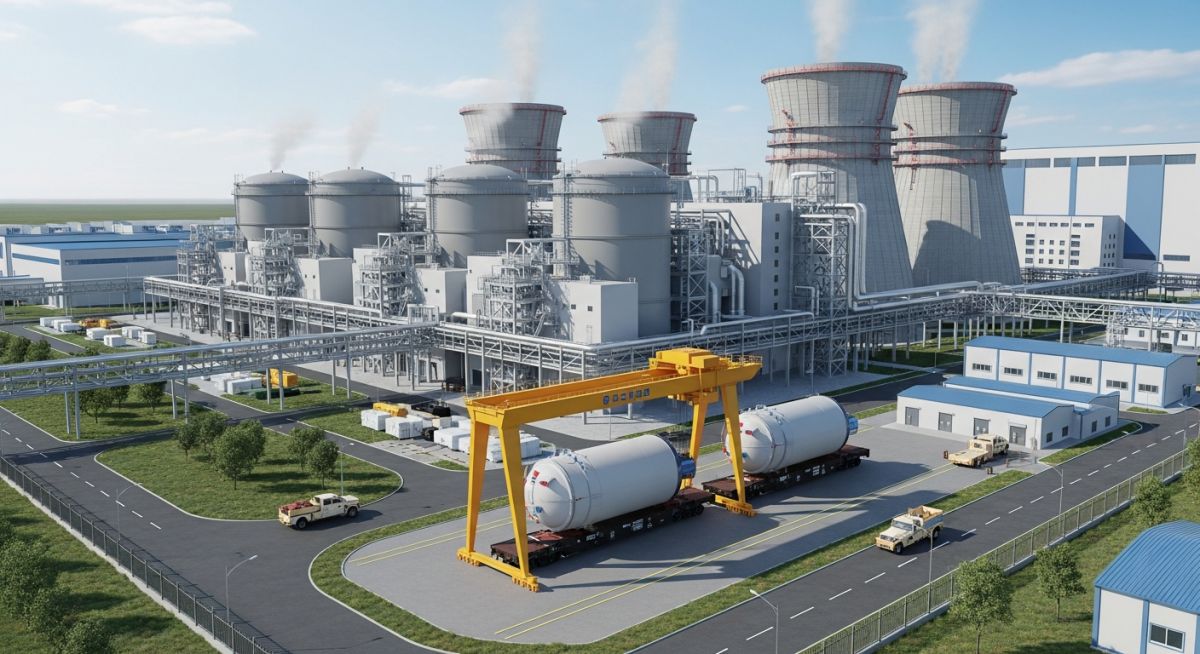
Why are global energy leaders pivoting away from gigawatt-scale behemoths toward compact, factory-built units? Imagine a nuclear plant that doesn’t require a decade of site-specific civil engineering or massive external pumps to prevent a meltdown. For many engineers, the challenge isn’t just generating 300 MWe; it is solving the “First-of-a-Kind” (FOAK) cost trap while meeting stringent ASME Section III nuclear codes.
Key Engineering Takeaways
- Modularity: Shift from complex site-construction to standardized factory assembly lines.
- Passive Safety: Utilization of natural convection and gravity-fed cooling systems to eliminate human error.
- Grid Resilience: Ability to provide load-following power and process heat for industrial desalination.
Small Modular Reactors (SMRs) are advanced nuclear reactors with a power capacity of up to 300 MWe per unit. Unlike traditional plants, Small Modular Reactors (SMRs) feature factory-fabricated modules transported to sites for installation. They leverage passive safety systems, significantly reducing the physical footprint and capital risk compared to conventional 1,000+ MWe reactors.
“The real breakthrough in Small Modular Reactors (SMRs) isn’t just the physics—it is the supply chain. By moving nuclear construction from a ‘project’ mindset to a ‘product’ mindset, we finally address the historical cost overruns of the nuclear industry.”
— Atul Singla, Founder, Epcland
Complete Course on
Piping Engineering
Check Now
Key Features
- 125+ Hours Content
- 500+ Recorded Lectures
- 20+ Years Exp.
- Lifetime Access
Coverage
- Codes & Standards
- Layouts & Design
- Material Eng.
- Stress Analysis
SMR Engineering Proficiency Quiz
Question 1 of 5What is the maximum power output typically used to define a Small Modular Reactor (SMR) unit?
What are Small Modular Reactors (SMRs)? Defining the 300 MWe Threshold
In the hierarchy of nuclear power generation, Small Modular Reactors (SMRs) represent a fundamental shift in design philosophy. Historically, nuclear engineering pursued “economies of scale,” leading to massive 1,000+ MWe pressurized water reactors (PWRs). However, Small Modular Reactors (SMRs) focus on “economies of multiples.” By definition, an SMR is a nuclear reactor with a power output typically up to 300 MWe per unit. This compact sizing allows the entire Nuclear Steam Supply System (NSSS) to be integrated into a single vessel that can be manufactured in a controlled factory environment and transported via rail, truck, or barge.
The term “Modular” refers to the ability to combine these individual units into a larger plant configuration. For instance, a facility might start with two Small Modular Reactors (SMRs) and scale up to twelve as the local grid demand increases. This scalability addresses the high upfront capital costs that have plagued the nuclear industry for decades. By 2026, the global engineering consensus emphasizes that these reactors are not just smaller versions of old designs; they utilize Generation IV principles, including advanced fuel cycles and simplified cooling loops that reduce the total number of valves, pumps, and pipes by over 60% compared to traditional plants.
Core Engineering: How Small Modular Reactors (SMRs) Differ from Large Scale Plants
The architectural hallmark of Small Modular Reactors (SMRs) is the “Integral Design.” In a conventional large-scale reactor, the steam generators, pumps, and pressurizers are located in separate loops outside the reactor vessel. In many Small Modular Reactors (SMRs) designs, such as the NuScale Power Module or the GE-Hitachi BWRX-300, these components are housed within the Reactor Pressure Vessel (RPV) itself. This integration eliminates the risk of large-break loss-of-coolant accidents (LOCA) because there are no large primary coolant pipes to fail.
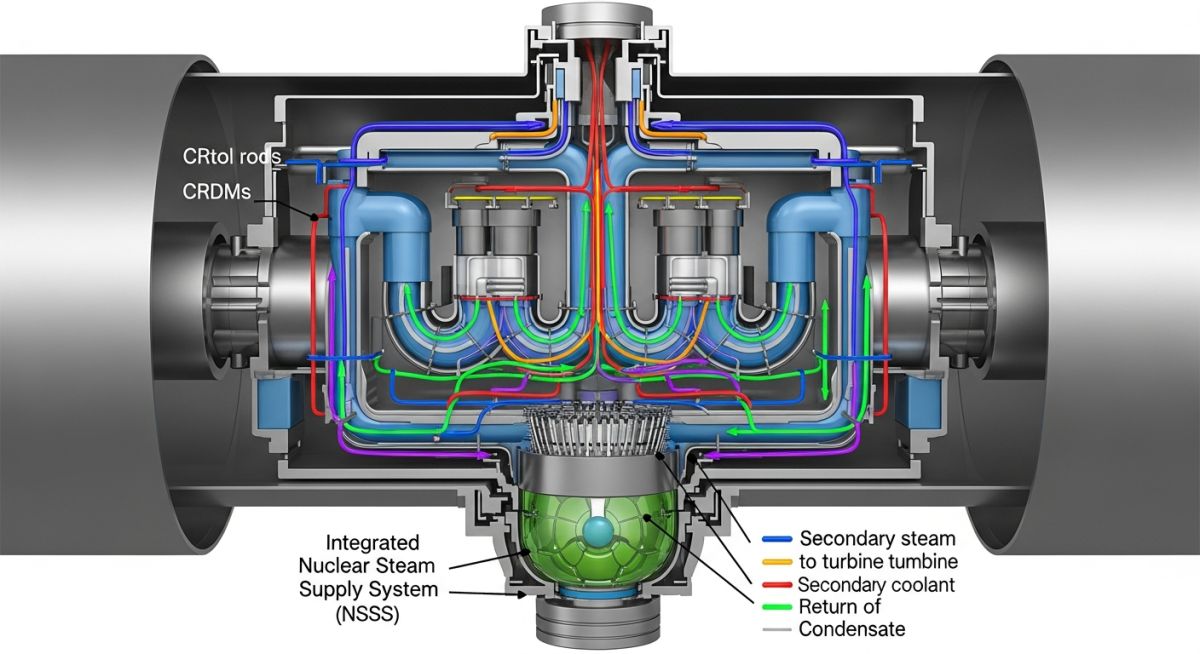
From a thermodynamics perspective, Small Modular Reactors (SMRs) often operate at lower pressures and temperatures than their larger counterparts, which simplifies the requirements for materials specified under ASME Section II. However, the higher surface-area-to-volume ratio of the smaller core makes Small Modular Reactors (SMRs) exceptionally well-suited for natural circulation. In the event of a shutdown, decay heat is removed through physical phenomena like gravity and buoyancy, rather than relying on active diesel generators or manual intervention. This inherent safety profile is what allows Small Modular Reactors (SMRs) to be sited closer to population centers or industrial complexes.
Furthermore, the instrumentation and control (I&C) systems in Small Modular Reactors (SMRs) are increasingly digital and modular. This allows for rapid replacement of components and easier integration with smart grids. The shift toward Small Modular Reactors (SMRs) also involves specialized shielding techniques, where the entire module is often submerged in an underground pool of water, providing an ultimate heat sink that can last for weeks without replenishment, a critical engineering evolution post-Fukushima.
| Feature | Conventional Nuclear | Small Modular Reactors (SMRs) |
|---|---|---|
| Power Output | 1,000 – 1,600 MWe | 10 – 300 MWe |
| Primary Cooling | Active (Pump-driven) | Passive (Natural Circulation) |
| Construction Lead Time | 8 – 12 Years | 3 – 5 Years |
| Regulatory Standard | ASME Section III, Div 1 | ASME Section III, Div 5 |
| Emergency Planning Zone | ~16 km Radius | Often limited to Site Boundary |
Passive Safety Features in Small Modular Reactors (SMRs)
The “inherent safety” of Small Modular Reactors (SMRs) relies on physics rather than mechanical intervention. For instance, the [NuScale Power Module](
EPCLand YouTube Channel
2,500+ Videos • Daily Updates
SMR LCOE Estimator (2026 Model)
Estimate the Levelized Cost of Electricity (LCOE) for a Small Modular Reactor project based on NREL and IAEA economic benchmarks.
Global Deployment Challenges for Small Modular Reactors (SMRs)
Despite the technical promise, Small Modular Reactors (SMRs) face significant hurdles. Regulatory bodies like the US NRC are adapting decades-old frameworks designed for gigawatt reactors to these unique designs. This process is time-consuming and expensive. Furthermore, while factory production promises cost savings, the current few operational units (e.g., in Russia and China) haven't yet demonstrated true economic competitiveness. Waste management also remains a concern; some analyses suggest certain Small Modular Reactors (SMRs) designs might actually generate a higher volume of waste per MWh than conventional reactors, creating complex transport and disposal challenges that require adherence to [IAEA](https://www.iaea.org) guidelines.
Small Modular Reactors (SMRs) Failure Case Study: The NuScale Withdrawal
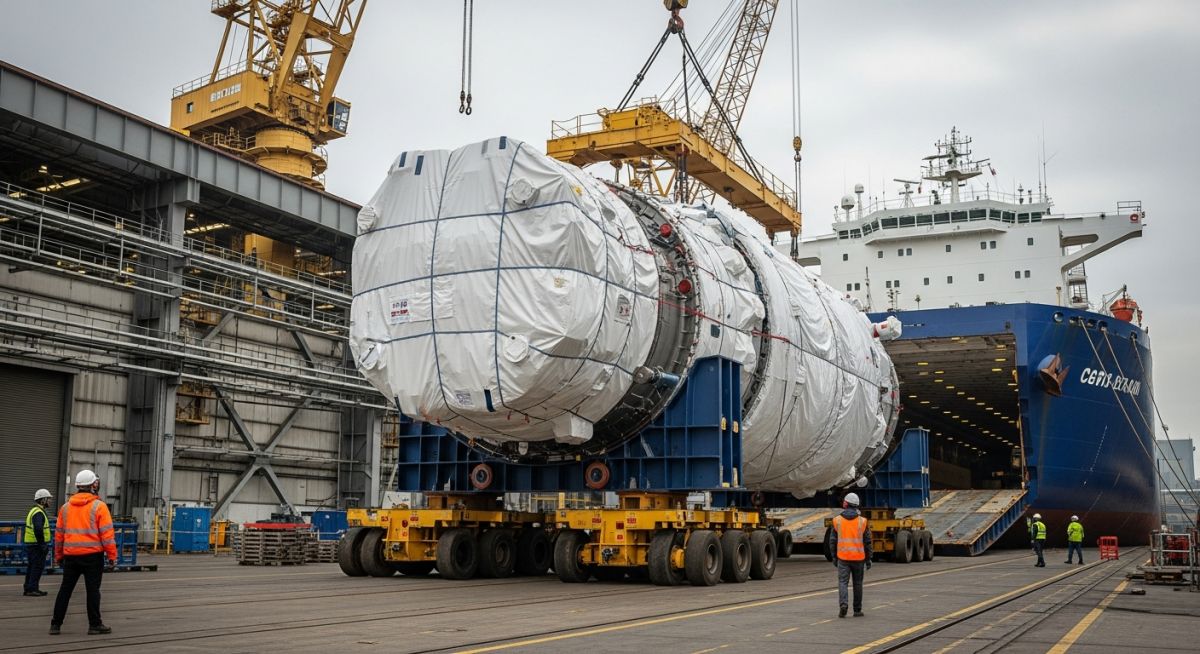
The Carbon Free Power Project (CFPP) Termination
A significant setback for the commercialization of Small Modular Reactors (SMRs) occurred in November 2023 when the Carbon Free Power Project (CFPP) in Utah—intended to be the flagship deployment of NuScale Power's SMR technology—was canceled. This was not a technical failure, but an economic one.
Analysis of the Economic Failure
The project's estimated Levelized Cost of Electricity (LCOE) rose sharply from an initial projection of ~$58/MWh to over $89/MWh. The primary "failure" was the inability to sign enough power purchase agreements (PPAs) at that elevated price point. This highlights a crucial engineering-economic interface: the most advanced Small Modular Reactors (SMRs) design in the world cannot compete if the final price per MWh exceeds utility tolerance thresholds. This case study underscores the high risks associated with "First-of-a-Kind" (FOAK) engineering projects and the necessity of robust financial modeling that accounts for regulatory uncertainty and supply chain risks in 2026. The industry is actively working to ensure the next wave of Small Modular Reactors (SMRs) deployments mitigate these commercial risks.
Expert Insights: Lessons from 20 years in the field
- Design Simplification: The elimination of external coolant loops in Small Modular Reactors (SMRs) isn't just a safety boost; it reduces the ASME Section XI in-service inspection workload by nearly 40%.
- The "N+1" Redundancy: Engineering modular fleets allows for staggered refueling outages, ensuring the site continues to provide base-load power even when one module is offline.
- Supply Chain Readiness: The success of Small Modular Reactors (SMRs) hinges on the NQA-1 certification of sub-tier suppliers. Without a robust nuclear-grade supply chain, factory speed is a myth.