Corrosion Under Insulation (CUI): Engineering Mitigation and Standards
Corrosion Under Insulation (CUI) remains one of the most significant and costly challenges in the petrochemical and power industries, often remaining hidden until a catastrophic failure occurs. This electrochemical degradation occurs when water becomes trapped between the surface of the equipment and its insulation, creating a localized environment for rapid metal loss or stress corrosion cracking.
What is Corrosion Under Insulation?
Corrosion Under Insulation (CUI) is a form of external corrosion that occurs on vessels and piping made of carbon steel or stainless steel that have been thermally insulated. It is primarily driven by moisture ingress through the insulation cladding, leading to oxidation (rusting) in carbon steel or chloride-induced stress corrosion cracking in stainless steel alloys.
Quick Navigation
CUI Engineering Quiz
Question 1 of 5Which temperature range is historically considered the highest risk zone for CUI in carbon steel systems?
Complete Course on
Piping Engineering
Check Now
Key Features
- 125+ Hours Content
- 500+ Recorded Lectures
- 20+ Years Exp.
- Lifetime Access
Coverage
- Codes & Standards
- Layouts & Design
- Material Eng.
- Stress Analysis
Theoretical Framework: Why Corrosion Under Insulation Occurs
The mechanism behind Corrosion Under Insulation (CUI) is essentially a “crevice corrosion” environment on a macro scale. When water (from rain, wash-downs, or condensation) permeates the outer cladding, the insulation acts as a sponge, holding the electrolyte against the pipe wall. This is particularly dangerous in cyclic temperature service corrosion scenarios, where the system fluctuates between ambient and high temperatures, repeatedly concentrating corrosive salts and moisture.

Figure 1: Cross-sectional mechanics of moisture entrapment and metal loss.
Engineering standards have evolved significantly to combat this. For instance, ASTM C1101 thermal insulation standards provide the baseline for classifying insulation materials by their physical properties, ensuring they do not contribute to moisture retention or mechanical damage. Furthermore, the NACE SP0198 corrosion control standard is the globally recognized roadmap for selecting protective coating systems that can withstand the harsh immersion-like conditions found under lagging.
Material Risk & Temperature Sensitivity
| Material Type | Primary Risk Zone | Failure Mechanism | Standard Reference |
|---|---|---|---|
| Carbon Steel | -4°C to 175°C | Uniform Oxidation / Pitting | API 570 / NACE SP0198 |
| 300 Series SS | 50°C to 150°C | Stress Corrosion Cracking (CISCC) | ASTM G30 / API RP 583 |
| Duplex SS | > 140°C | Localized Pitting / Cracking | ISO 21457 |
Inspection Strategies: Non-Destructive Testing
Modern asset integrity programs no longer rely solely on “visual inspection by stripping insulation.” Instead, they utilize a CUI risk assessment framework to prioritize high-risk locations. Within these zones, CUI inspection non-destructive testing (NDT) techniques such as Pulsed Eddy Current (PEC) and Computed Radiography (CR) allow engineers to screen miles of piping without removing a single inch of cladding.
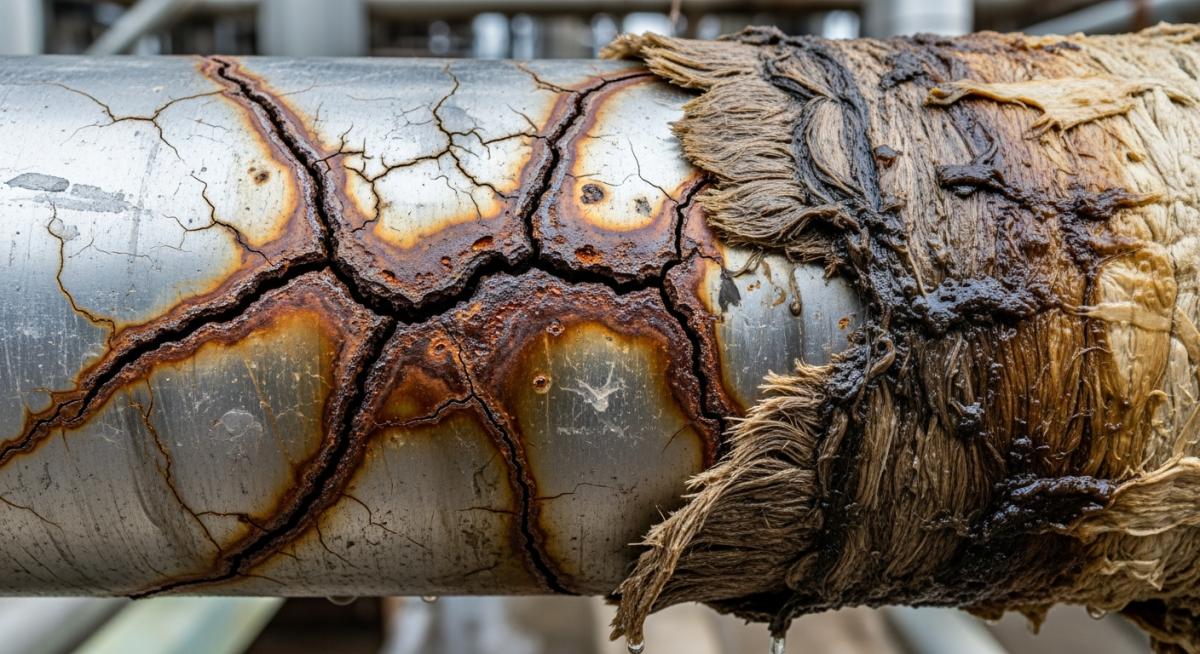
Figure 2: Pulsed Eddy Current (PEC) being used for wall loss screening through insulation.
Mathematical Context: Wall Loss Rate
To estimate the remaining life of a pipe affected by CUI, engineers calculate the Corrosion Rate (CR) as follows:
- CR = Corrosion Rate (mm/year or mpy)
- T-initial = Initial wall thickness measured during baseline (mm)
- T-actual = Current wall thickness measured via NDT (mm)
- Time-interval = Exposure time between measurements (Years)
Best Practices for Prevention in 2026
The shift in 2026 has moved toward “Active Prevention.” This includes the deployment of the best coatings for CUI prevention 2026, such as Thermal Spray Aluminum (TSA) or advanced Inertial Multipolymeric Matrix (IMM) coatings. These coatings provide both a physical barrier and, in the case of TSA, sacrificial protection to the underlying steel substrate, ensuring that even if moisture enters, the pipe remains protected.
Future Outlook: Smart Monitoring & Market Trends for 2026
The landscape of Corrosion Under Insulation (CUI) management has undergone a digital transformation in 2026. The CUI monitoring equipment market, now valued at over $10 billion, has shifted toward real-time, data-driven integrity assessments. Engineers are increasingly moving away from manual “guesswork” to AI-assisted predictive models that can “see” through solid cladding using advanced electromagnetic sensors and thermal imaging.
The 2026 CUI Scoping & Risk Matrix
| Risk Level | Temp Range | Environmental Factors | 2026 Inspection Action |
|---|---|---|---|
| CRITICAL | -12°C to 120°C | Near cooling towers or coastal splash zones | PEC Array (100% Coverage) + Wireless Moisture Sensors |
| HIGH | 121°C to 175°C | Cyclic service (frequent start/stops) | PEC Spot Checks (50% coverage) at supports & valves |
| LOW | > 250°C | Constant high heat (dry conditions) | Visual Cladding Audit; NDT only for dead legs |
Smart Sensing: Beyond NDT
In 2026, the Wi-Corr® CUI and similar wireless retrofittable systems have become standard for critical assets. These systems utilize patent-pending technology to turn an entire pipe structure into a sensing “cable.” Radio waves travel along the pipe to detect corrosive environments and moisture build-up long before physical wall loss begins, allowing for a truly proactive CUI risk assessment framework.
2026 Tech Trend
Accuracy increase in anomaly detection via AI-assisted PEC software.
Note: For engineering teams looking to implement these strategies, refer to the AMPP (NACE) SP0198-2026 updates for the latest in coating-insulation compatibility.
EPCLand YouTube Channel
2,500+ Videos • Daily Updates
Case Study: Corrosion Under Insulation (CUI) Failure Analysis
In early 2026, a major petrochemical refinery experienced an unplanned shutdown due to a pinhole leak in a high-pressure, insulated 304L stainless steel transfer line. This analysis explores how a robust CUI risk assessment framework was retroactively applied to identify the root cause: Chloride-Induced Stress Corrosion Cracking (CISCC).
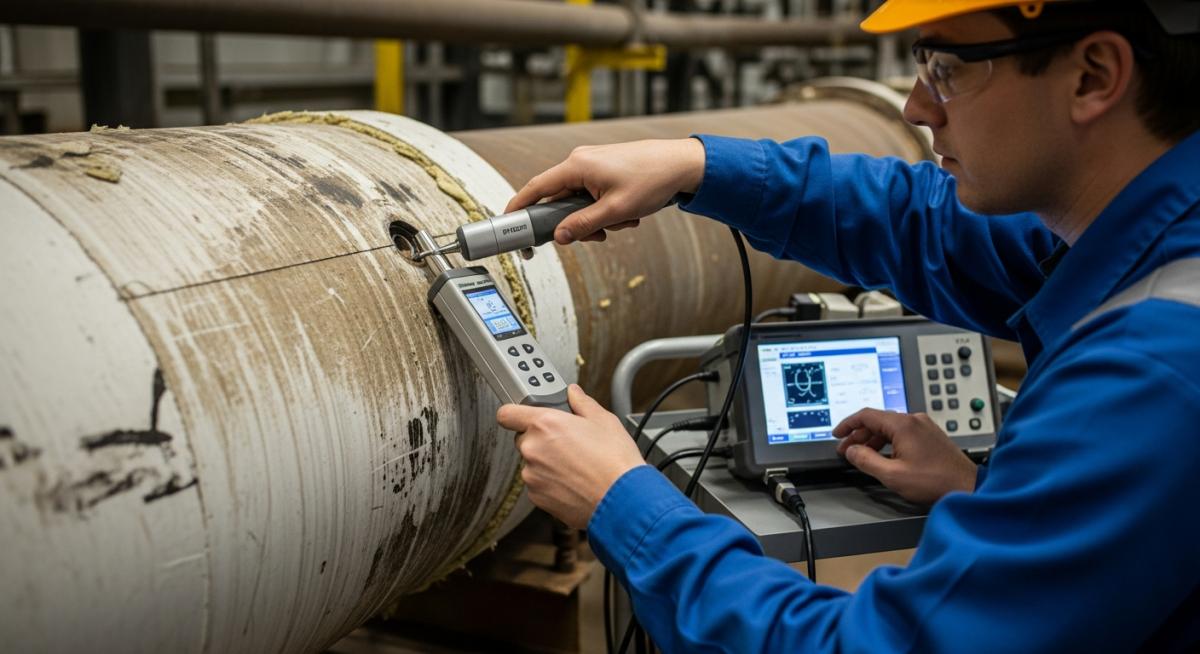
Figure 3: Macro-view of branched CISCC cracks discovered beneath mineral wool insulation.
Project Metadata
- Location: Gulf Coast Refinery (Marine Environment)
- Equipment: 304L Stainless Steel Piping (12-inch)
- Operating Temp: 85°C (Continuous)
- Insulation: Standard Mineral Wool with Aluminum Cladding
Failure Conditions
- Electrolyte: Rainwater mixed with marine chlorides
- Failure Mode: Transgranular Cracking (CISCC)
- Time to Failure: 4.5 Years of service
- Detection Method: Visual leak after cladding bulge
The Problem & Root Cause Analysis
The investigation revealed that the aluminum cladding had sustained mechanical damage during a routine maintenance walk-down two years prior. This breach allowed salt-laden moisture to penetrate the mineral wool. At the operating temperature of 85°C, the moisture evaporated, leaving behind concentrated chloride deposits. As the pipe cooled during a brief maintenance cycle, the moisture re-condensed, creating a highly corrosive “brine” that triggered stress corrosion cracking in the 304L substrate.
Engineering Solution & ROI
The facility implemented a two-fold mitigation strategy to prevent recurrence. First, the 304L piping was replaced with a more resistant alloy in critical zones. Second, they adopted a modern prevention protocol:
- Coating Upgrade: Applied Thermal Spray Aluminum (TSA) as per NACE SP0198 to provide a barrier and cathodic protection.
- Insulation Upgrade: Replaced mineral wool with hydrophobic Pyrogel to minimize moisture retention.
- Inspection Frequency: Integrated Pulsed Eddy Current (PEC) screening every 24 months.
- Financial Impact: The initial investment of $240,000 for the upgrade prevented a projected $1.2M loss in future emergency downtime and material replacement.
Technical FAQ: Corrosion Under Insulation
How does a CUI risk assessment framework improve maintenance efficiency?
By utilizing a risk-based approach, engineers can prioritize inspection resources on “high-consequence” areas. Instead of stripping 100% of the insulation, the framework identifies zones with cyclic temperatures or poor drainage, allowing for targeted CUI inspection non-destructive testing that reduces labor costs by up to 40%.
Are there specific ASTM C1101 thermal insulation standards for moisture resistance?
While ASTM C1101 thermal insulation standards primarily focus on the flexibility and handling of mineral fibers, they serve as the foundation for material selection. To address moisture, engineers typically pair these with ASTM C1617 to evaluate the chemical corrosivity of the insulation itself on carbon steel and stainless steel substrates.
What are the best coatings for CUI prevention 2026 for high-temperature lines?
In 2026, the industry has shifted toward Thermal Spray Aluminum (TSA) and high-build Inertial Multipolymeric Matrix (IMM) coatings. These technologies are specified under NACE SP0198 corrosion control guidelines for their ability to maintain mechanical integrity during thermal expansion cycles.
Why is cyclic temperature service corrosion more aggressive than constant heat?
Cyclic temperature service corrosion is aggressive because it creates a “pumping” effect. As the pipe cools, it draws in moisture-laden air through cladding gaps. When it heats back up, the water evaporates but leaves behind concentrated salts (chlorides/sulfates), which rapidly accelerate the electrochemical corrosion rate during the next wet cycle.
Summary for 2026 Asset Integrity
Effectively managing Corrosion Under Insulation requires a multi-layered defense strategy. By combining modern NACE SP0198 compliant coatings with hydrophobic insulation and advanced NDT screening, facilities can move from reactive repairs to predictive maintenance. As we move through 2026, the integration of digital twins and real-time moisture sensors within the cladding will further refine our ability to prevent CUI-related failures.

Related posts:
![High-grade industrial Wing Nut Types and Applications for mechanical assemblies.]()
Wing Nut Types and Applications: The 2026 Engineering Guide
![Industrial Monorail Crane Systems installed in a modern manufacturing plant 2026.]()
Monorail Crane Systems: Design, Types & 2026 Standards Guide
![Lead engineer performing a Factory Acceptance Test FAT on an industrial skid system 2026]()
Factory Acceptance Test FAT: The 2026 Engineering Guide to Zero-Defect Delivery
![Professional engineering workspace showing a Basis of Design document layout for a 2026 project.]()
Basis of Design: How to Write a BOD for Engineering Projects in 2026
![Industrial Flare Knockout Drum Sizing and installation in a refinery relief system.]()
Flare Knockout Drum Sizing: Design & API 521 Standards (2026 Guide)
![Advanced Reboiler Control Systems in a modern petrochemical refinery 2026.]()
Reboiler Control Systems: Engineering Guide to Precision Control 2026