Butterfly Valve vs Ball Valve: Major Differences and Engineering Selection Guide
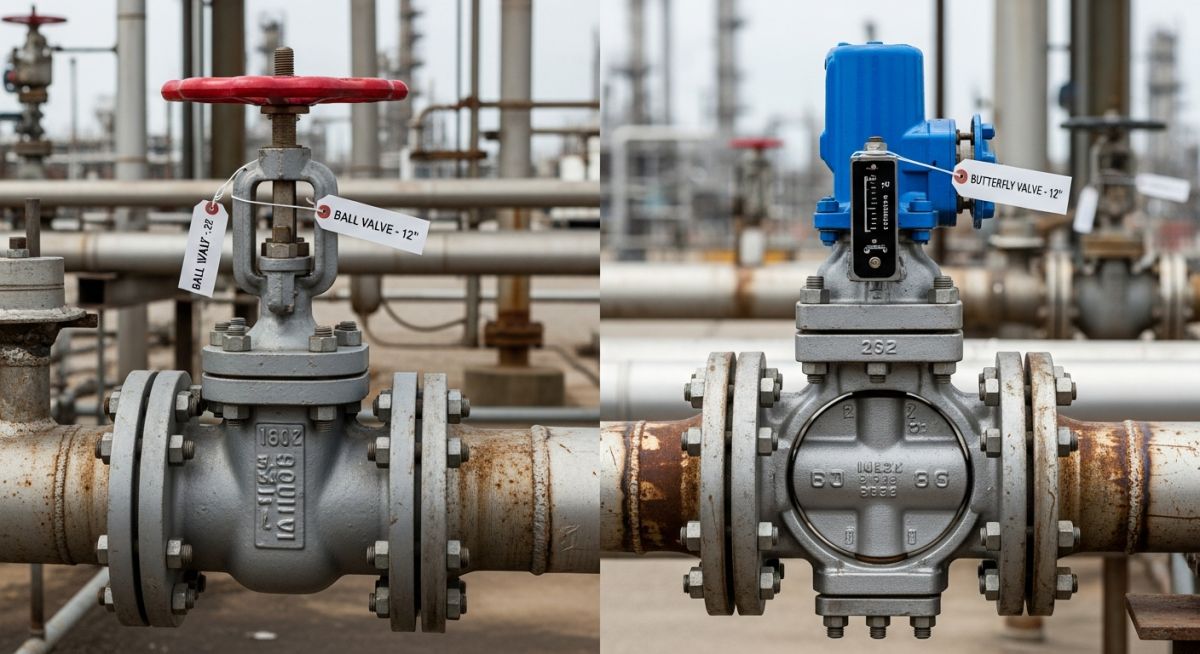
Imagine you are finalizing the Bill of Materials (BOM) for a 24-inch cooling water line, and your budget is already 15% over. You need bubble-tight shutoff, but the weight of a standard floating ball valve would require additional structural pipe supports that you simply didn’t account for. This is the classic Butterfly Valve vs Ball Valve dilemma: one offers a robust, unobstructed flow path for high-pressure reliability, while the other provides a compact, lightweight profile that slashes capital expenditure in large-diameter applications.
In this guide, we break down the critical performance metrics—from Cv values to API testing standards—to help you determine exactly which quarter-turn valve belongs in your P&ID.
Key Takeaways
- Application Scale: Ball valves are superior for high-pressure, small-bore applications, whereas Butterfly valves become the economic standard for sizes above 12 inches.
- Sealing Performance: Soft-seated ball valves typically offer better “zero-leakage” performance (API 598) compared to standard concentric butterfly valves.
- Maintenance & Weight: Butterfly valves require significantly less installation space and structural support due to their narrow wafer or lug design.
What is the difference between a Butterfly Valve and a Ball Valve?
The primary difference between a Butterfly Valve vs Ball Valve lies in design and pressure handling. A ball valve uses a rotating sphere with a hole to provide unobstructed, high-pressure shutoff. A butterfly valve uses a rotating disc on a shaft, offering a lighter, more cost-effective solution for large-diameter, lower-pressure systems.
“In my 20 years of EPC project management, I’ve seen more cost overruns from ‘over-specifying’ ball valves where a high-performance triple-offset butterfly valve would have sufficed. Always look at the total weight of the valve assembly, including the actuator, before making your final selection.”
— Atul Singla, Founder
Table of Contents
- Critical Engineering Differences: Butterfly Valve vs Ball Valve
- Anatomy of a Ball Valve for High-Pressure Service
- Mechanics of a Butterfly Valve in Large Bore Piping
- Design Trade-offs: Butterfly Valve vs Ball Valve Comparison
- Performance Selection Matrix: Butterfly Valve vs Ball Valve
- Summary: Choosing Between a Butterfly Valve vs Ball Valve
- References and Industrial Standards (ASME/API)
Complete Course on
Piping Engineering
Check Now
Key Features
- 125+ Hours Content
- 500+ Recorded Lectures
- 20+ Years Exp.
- Lifetime Access
Coverage
- Codes & Standards
- Layouts & Design
- Material Eng.
- Stress Analysis
Valving Knowledge Check
Question 1 of 5Which valve type is generally preferred for high-pressure service in small-bore piping (e.g., NPS 2 and below)?
Critical Engineering Differences: Butterfly Valve vs Ball Valve
When evaluating a Butterfly Valve vs Ball Valve for industrial piping, the decision hinges on the mechanical interaction between the closure element and the flow stream. A ball valve utilizes a spherical plug with a bored-out center; when rotated 90 degrees, it either aligns the bore with the pipe (full flow) or positions the solid face against the seats (complete shutoff). This design is inherently robust, making it the industry standard for high-pressure isolation in oil and gas upstream facilities, often governed by API Standard 608.
Conversely, a butterfly valve employs a disc mounted on a central shaft. The disc remains within the flow path even when fully open, which introduces a slight turbulence and a higher pressure drop compared to a full-port ball valve. However, in large-diameter systems (NPS 12 and above), the material savings of a butterfly valve are staggering. The narrow face-to-face dimensions, defined by API Standard 609, allow for a significantly lighter installation, reducing the need for heavy-duty pipe hangers and complex structural supports.
Anatomy of a Ball Valve for High-Pressure Service
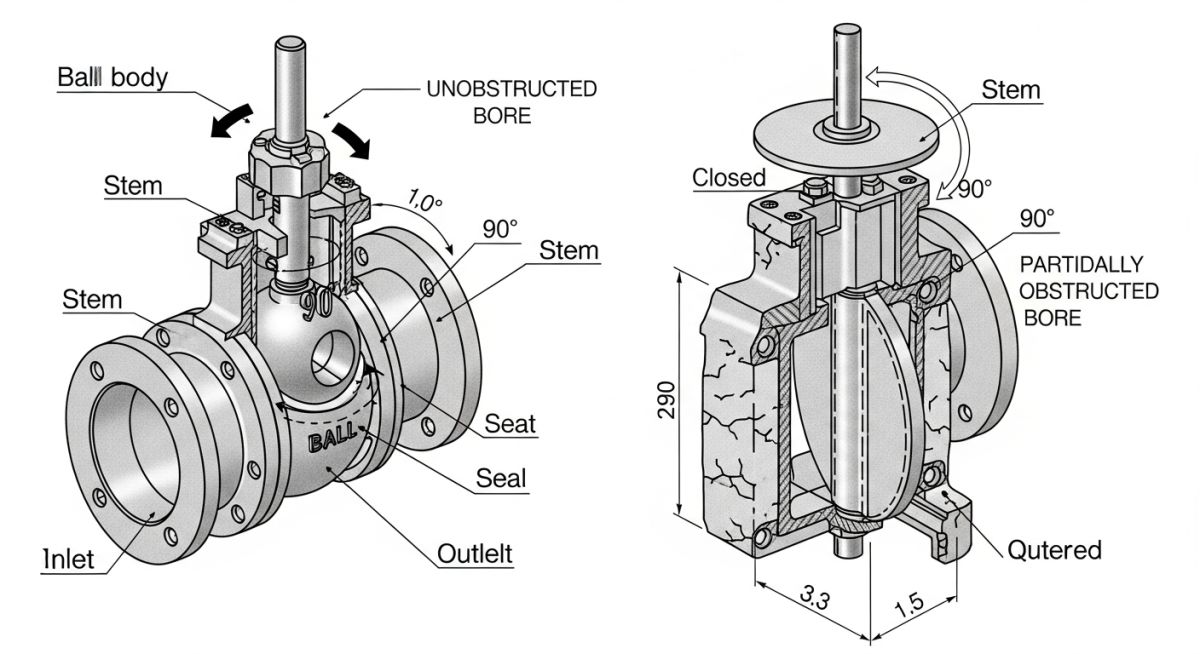
The internal architecture of a ball valve is designed for “Bubble-Tight” shutoff. In a floating ball design, the upstream pressure pushes the ball against the downstream seat to create a seal. For larger sizes or higher pressures, a trunnion-mounted design is utilized, where the ball is fixed on bearings, and the seats are spring-loaded to move against the ball. This reduces operating torque and prevents seat deformation under extreme loads.
One of the most significant advantages in the Butterfly Valve vs Ball Valve comparison is the ball valve’s ability to handle “pigging” operations. Because a full-bore ball valve provides an unobstructed circular path, maintenance pigs can pass through the valve without obstruction—a feat impossible for butterfly valves due to the central stem and disc.
Mechanics of a Butterfly Valve in Large Bore Piping
Butterfly valves are categorized by their offset design: concentric, double-offset, and triple-offset. Concentric valves use a resilient (rubber) liner and are typically found in low-pressure water utility services. As we move into high-performance territory, the triple-offset butterfly valve (TOV) emerges as a viable competitor to the ball valve. The TOV uses a cam-like action to “wedge” the metal disc into a metal seat, providing a friction-free seal that can handle high temperatures and pressures that would normally destroy a standard rubber-lined valve.
In the debate of Butterfly Valve vs Ball Valve, the “face-to-face” dimension is the butterfly’s greatest weapon. A 24-inch butterfly valve might be only 6 inches wide, whereas a comparable ball valve could exceed 40 inches in length. This compactness is critical in offshore modular construction or crowded refinery manifolds where every square inch of “real estate” carries a high premium.
Design Trade-offs: Butterfly Valve vs Ball Valve Comparison
When conducting a Butterfly Valve vs Ball Valve technical audit, engineers must evaluate the Flow Coefficient (Cv). A ball valve typically offers a higher Cv because the fluid moves through a straight, unobstructed bore. This is vital in high-velocity gas lines where pressure drop leads to energy loss. However, for throttling applications, a high-performance butterfly valve with a profiled disc can offer better control linearity than a standard ball valve, which often suffers from “hunting” near the closed position.
Weight and size:
A 12-inch Butterfly Valve weighs approximately 70% less than a 12-inch Ball Valve of the same pressure class. This weight reduction extends to the actuator requirements, allowing for smaller, faster-acting pneumatic or electric drives.
Leakage Performance:
According to ISO 5208 standards, ball valves are the gold standard for “Rate A” (zero-leakage) performance. While triple-offset butterfly valves achieve this, they require much higher precision in installation and torque seating.
Performance Selection Matrix: Butterfly Valve vs Ball Valve
The table below provides a side-by-side comparison of Butterfly Valve vs Ball Valve characteristics based on ASME B16.34 pressure-temperature ratings and industrial field data.
| Feature | Ball Valve | Butterfly Valve |
|---|---|---|
| Primary Application | High pressure, small bore isolation | Low/Med pressure, large bore, cooling water |
| Pressure Drop | Minimal (Full Port) | Moderate (Disc in flow stream) |
| Size Range | NPS 1/2 to NPS 48+ (Very heavy) | NPS 2 to NPS 100+ (Compact) |
| Maintenance | Harder (Requires line removal) | Easier (Wafer/Lug design) |
| Cost Factor | High (Material intensive) | Low to Moderate |
Summary: Choosing Between a Butterfly Valve vs Ball Valve
In summary, the Butterfly Valve vs Ball Valve decision is a balance of mechanical integrity and capital efficiency. For critical isolation, high-cycling natural gas, or slurry services where the disc could be eroded, the ball valve remains king. For general utility, large water transmission, and weight-sensitive offshore environments, the butterfly valve offers an unbeatable economic profile without sacrificing necessary performance.
⚙️ Valve Selection & Weight Estimator
Compare the estimated weight and suitability of a Butterfly Valve vs Ball Valve based on your line size (Class 150).
Ball Valve (Floating)
Butterfly Valve (Wafer)
For small bore utility service, both are viable, but the ball valve offers superior longevity.
EPCLand YouTube Channel
2,500+ Videos • Daily Updates
Optimizing a Municipal Water Intake: The Butterfly Valve Advantage
The Challenge
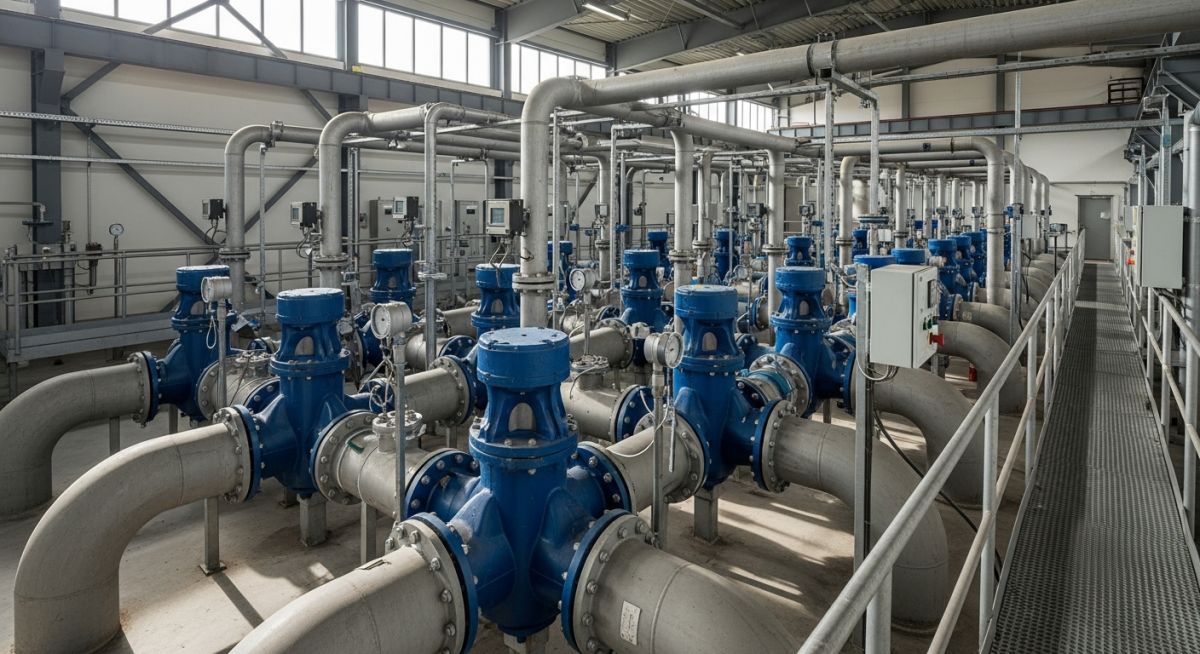
A major municipal water treatment plant expansion in 2026 required the installation of 12 isolation valves on a 48-inch (DN1200) raw water intake manifold. The original front-end engineering design (FEED) specified full-port ball valves to minimize pressure drop. However, the structural team discovered that the combined weight of 12 ball valves (approx. 18,000 kg each) would require a massive reinforced concrete foundation and specialized heavy-lift cranes for installation.
The Solution: Re-evaluating Butterfly Valve vs Ball Valve
The project team performed a Butterfly Valve vs Ball Valve trade-off study. By switching to high-performance double-offset butterfly valves, the weight per unit dropped from 18,000 kg to just 2,400 kg. While the butterfly valves introduced a slightly higher head loss, the pump capacity was sufficient to compensate without increasing motor size.
Project Results
- ✔ CAPEX Savings: $1.2M reduction in valve and piping costs.
- ✔ Structural Weight: 85% total weight reduction on the manifold.
- ✔ Install Time: Installation completed in 4 days vs. an estimated 14 days for ball valves.
Conclusion: In large-scale water infrastructure, the Butterfly Valve vs Ball Valve debate is often settled by structural and logistical constraints rather than just flow coefficients.
Don’t miss this video related to Butterfly Valve vs Ball Valve

Summary: Master Piping Engineering with our complete 125+ hour Certification Course: ……
Expert Insights: Lessons from 20 years in the field
-
Beware of Cavitation in Throttling: While many engineers use a Butterfly Valve vs Ball Valve for flow control, butterfly valves are significantly more susceptible to cavitation at low opening angles (below 30 degrees). If you must throttle with a butterfly valve, ensure a cavitation-control trim or a triple-offset design is utilized.
-
Stem Torque Factors: In the Butterfly Valve vs Ball Valve comparison, remember that ball valves often require much higher “break-to-open” torque after sitting idle. This necessitates larger, more expensive actuators. Always factor in the “Run Torque” versus “Seating Torque” when sizing your automation package.
-
Fire-Safe Design: For hydrocarbon service, ensure your selection (whether Ball or Butterfly) is certified to API Standard 607. While ball valves are naturally easier to make fire-safe, modern high-performance butterfly valves now meet these rigorous thermal requirements.


