Table of Contents
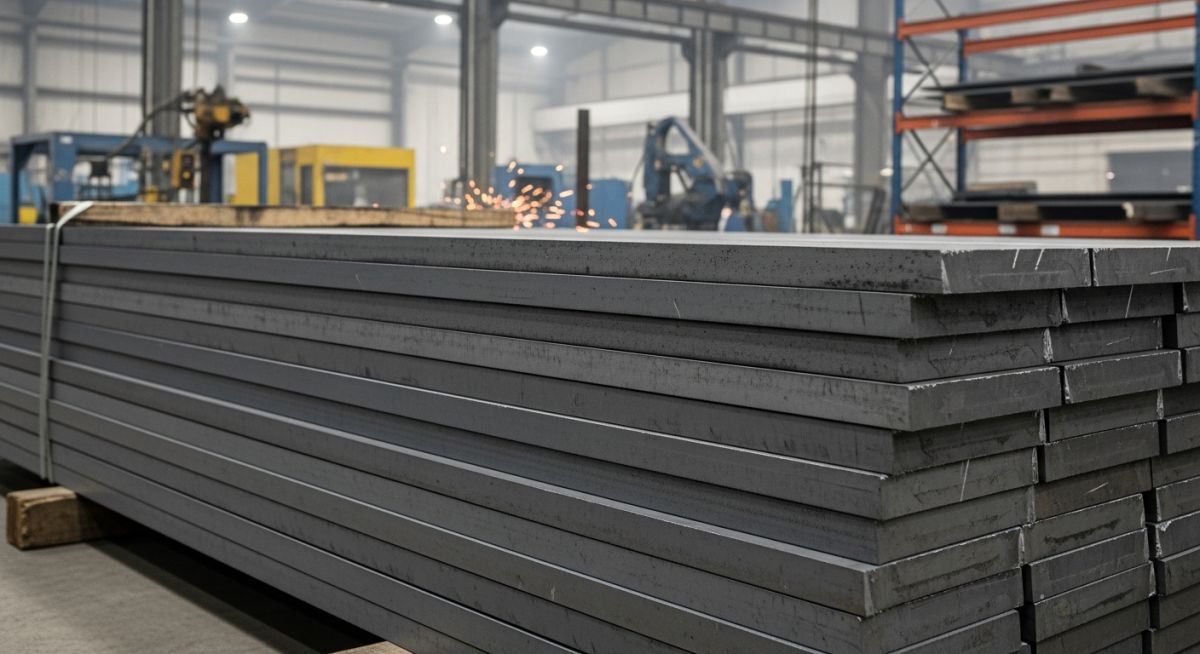
What is ASTM A516? Its Grades, Properties, and Applications
In my 20+ years of piping and pressure vessel engineering, I have reviewed hundreds of material test reports (MTRs) and specified countless steel plates for heavy industrial applications. When it comes to medium-to-lower temperature service in pressurized systems, one material stands out as the absolute workhorse of the industry: ASTM A516. Whether you are designing a high-pressure boiler, a chemical reactor, or a massive storage terminal, understanding the nuances of this carbon steel specification is critical to ensuring structural integrity and code compliance.
This specification, governed by the American Society for Testing and Materials (ASTM), is highly favored because it balances excellent weldability, high tensile strength, and superior notch toughness. In this comprehensive guide, I will break down the technical details of ASTM A516, compare its four distinct grades, analyze its chemical and mechanical properties, and share real-world engineering insights from the field.
Key Engineering Takeaways
- Four Distinct Grades: Available in Grades 55, 60, 65, and 70, with Grade 70 being the most widely specified due to its superior tensile strength.
- Notch Toughness Focus: Specifically designed for low-to-moderate temperature service where brittle fracture is a major design risk.
- ASME Equivalence: Often dual-certified as ASME SA516, making it fully compliant with ASME Section VIII Division 1 design codes.
- Weldability: Low carbon equivalent values ensure excellent weldability using standard industrial processes like SMAW, SAW, and FCAW.
- Heat Treatment Options: Normalizing is mandatory for plates thicker than 1.5 inches (40 mm) to refine grain structure and maximize impact resistance.
Complete Course on
Piping Engineering
Check Now
Key Features
- 125+ Hours Content
- 500+ Recorded Lectures
- 20+ Years Exp.
- Lifetime Access
Coverage
- Codes & Standards
- Layouts & Design
- Material Eng.
- Stress Analysis
Why Engineers Specify ASTM A516 Steel
ASTM A516 Design Criteria: The selection of specific grades within this standard depends on the minimum design metal temperature and the corresponding impact testing requirements mandated by ASME Section VIII.
When designing pressure vessels under ASME Section VIII Division 1, the choice of plate material is one of the first decisions we make. ASTM A516 is categorized into four grades based on minimum tensile strength: Grade 55, Grade 60, Grade 65, and Grade 70. The numbers represent the minimum tensile strength in ksi (kilopounds per square inch).
In my project experience, Grade 70 is the default choice for most process equipment because it allows for thinner shell walls, reducing overall vessel weight and shipping costs. However, lower grades like Grade 60 are specified when superior ductility or specific low-temperature impact properties are required without resorting to expensive alloying elements.
The Role of Heat Treatment: As-Rolled vs. Normalized
Heat treatment is a critical variable in the manufacturing of ASTM A516 plates. According to the specification, plates 1.5 inches (40 mm) and under in thickness are normally supplied in the as-rolled condition. However, they can also be ordered as normalized, stress-relieved, or both. For plates thicker than 1.5 inches, normalizing is mandatory.
Normalizing involves heating the steel plate to an austenitic phase temperature (typically around 1650°F or 900°C) and then cooling it in still air. This process refines the grain structure, which significantly improves the material’s notch toughness and lowers its ductile-to-brittle transition temperature. If your vessel operates in cold climates or handles low-temperature fluids, always specify normalized plates, even for thicknesses below 1.5 inches.
Using as-rolled ASTM A516 plates in low-temperature service without verifying Charpy V-notch impact properties can lead to catastrophic brittle fracture. Always consult ASME Section VIII Div 1 Paragraph UCS-66 (Impact Test Exemption Curves) to determine if impact testing is mandatory for your specific design temperature and thickness.
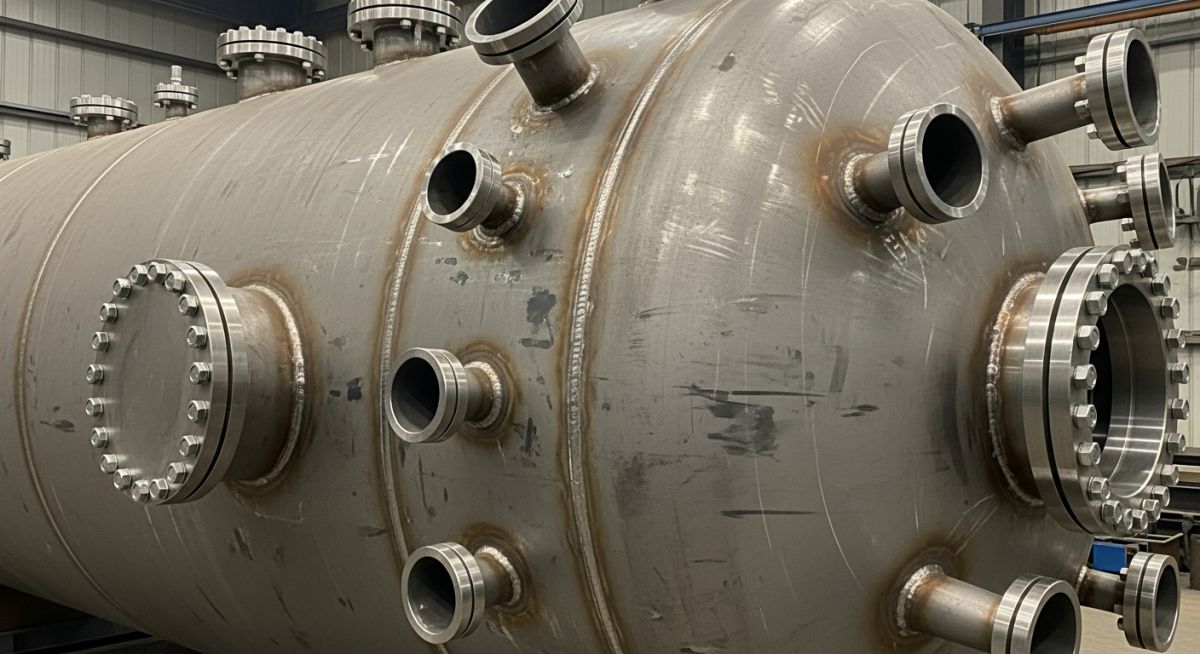
ASME Section VIII Shell Thickness Calculation
To illustrate how the choice of ASTM A516 grade directly impacts the physical design of a pressure vessel, let us look at the standard ASME Section VIII Division 1 shell thickness formula for internal pressure:
Where:
- t: Minimum required shell thickness (inches)
- P: Internal design pressure (psi)
- R: Inside radius of the shell course (inches)
- S: Maximum allowable stress value of the material (psi) from ASME Section II Part D
- E: Joint efficiency of the longitudinal weld (dimensionless, typically 0.85 to 1.0)
- Ca: Corrosion allowance (inches)
Let us compare ASTM A516 Grade 70 and ASTM A516 Grade 60 for a vessel course with the following design parameters:
- Design Pressure (P) = 350 psi
- Inside Radius (R) = 48 inches
- Joint Efficiency (E) = 1.0 (Fully radiographed)
- Corrosion Allowance (Ca) = 0.125 inches
- Design Temperature = 500°F
From ASME Section II Part D Table 1A, the allowable stress values (S) at 500°F are:
- ASTM A516 Grade 70: S = 20,000 psi
- ASTM A516 Grade 60: S = 17,100 psi
Calculation for Grade 70:
t_70 = 16800 / (20000 – 210) + 0.125
t_70 = 16800 / 19790 + 0.125
t_70 = 0.849 + 0.125 = 0.974 inches
Calculation for Grade 60:
t_60 = 16800 / (17100 – 210) + 0.125
t_60 = 16800 / 16890 + 0.125
t_60 = 0.995 + 0.125 = 1.120 inches
By specifying Grade 70 instead of Grade 60, the required nominal plate thickness drops from 1.125 inches (1-1/8″) to 1.0 inch. On a large vessel, this thickness reduction translates to thousands of dollars saved in raw material costs, welding consumables, and non-destructive examination (NDE) time.
Mechanical Properties of ASTM A516 Grades
ASTM A516 Material Properties: The mechanical and chemical limits of these plates are strictly controlled to balance high tensile strength with excellent weldability and low-temperature impact resistance.
To select the correct grade for your design, you must understand the mechanical limits defined by the ASTM standard. Below is a comprehensive breakdown of the mechanical properties for all four grades of ASTM A516.
| Property | Grade 55 | Grade 60 | Grade 65 | Grade 70 |
|---|---|---|---|---|
| Tensile Strength (ksi) | 55 – 75 | 60 – 80 | 65 – 85 | 70 – 90 |
| Tensile Strength (MPa) | 380 – 515 | 415 – 550 | 450 – 585 | 485 – 620 |
| Min. Yield Strength (ksi) | 30 | 32 | 35 | 38 |
| Min. Yield Strength (MPa) | 205 | 220 | 240 | 260 |
| Min. Elongation in 2 in. (%) | 27 | 25 | 23 | 21 |
Chemical Composition Limits (Heat Analysis)
The chemical composition of ASTM A516 is carefully balanced to ensure high weldability while maintaining strength. As the grade increases, the carbon and manganese content also increases to achieve the higher tensile properties. Below is the chemical composition for plates up to 2 inches (50 mm) in thickness.
| Element (Max % unless range specified) | Grade 55 | Grade 60 | Grade 65 | Grade 70 |
|---|---|---|---|---|
| Carbon (C) | 0.18 | 0.21 | 0.24 | 0.27 |
| Manganese (Mn) | 0.60 – 1.20 | 0.60 – 1.20 | 0.85 – 1.20 | 0.85 – 1.20 |
| Phosphorus (P) | 0.025 | 0.025 | 0.025 | 0.025 |
| Sulfur (S) | 0.025 | 0.025 | 0.025 | 0.025 |
| Silicon (Si) | 0.15 – 0.40 | 0.15 – 0.40 | 0.15 – 0.40 | 0.15 – 0.40 |
To help you navigate the complex web of international standards and design codes, I have compiled this technical mapping matrix. It links ASTM A516 to its ASME equivalents, related standards, and primary design applications.
| Standard / Code | Designation / Role | Key Application Scope | Reference Link |
|---|---|---|---|
| ASME SA516 | Identical ASME Material Specification | Mandatory for ASME Section VIII stamped vessels | ASME BPVC |
| ASTM A20 / A20M | General Requirements for Steel Plates | Defines testing, tolerances, and heat treatment rules | ASTM A20 |
| NACE MR0175 / ISO 15156 | Sour Service Material Requirements | Limits hardness and chemistry for wet H2S environments | NACE Standards |
| EN 10028-3 | European Equivalent (e.g., P355NL1) | Pressure vessel plates used in European designs (PED) | CEN Equivalent |
Site Inspection Checklist for ASTM A516
ASTM A516 Quality Control: Verification of material test reports, heat numbers, and plate dimensions must be executed prior to any cutting or welding operations to ensure compliance with ASME Section VIII.
During my years supervising fabrication shops, I have seen how easily material mix-ups can occur. A plate of standard structural steel can look identical to a high-quality ASTM A516 Grade 70 plate. Implementing a rigorous site verification protocol is the only way to prevent costly field failures. Use this checklist on your next project before releasing plates to the cutting table.
Pre-Fabrication Plate Verification Checklist
-
MTR Verification: Cross-reference the plate’s stamped heat number with the Mill Test Report (MTR). Verify that chemical composition and mechanical properties meet ASTM A516 limits.
-
Heat Treatment Verification: Confirm if the plate was supplied in the normalized condition (marked with “N” on the plate stamp) if the thickness exceeds 1.5 inches or if low-temperature service is specified.
-
Ultrasonic Testing (UT): For critical high-pressure or sour service applications, verify that plates have undergone UT examination per ASTM A435 or ASTM A578 to detect internal laminations.
-
Thickness Tolerances: Measure plate thickness at multiple points using a calibrated ultrasonic thickness gauge. Ensure it complies with the undertolerance limits specified in ASTM A20.
-
Hardness Testing: For wet H2S (sour) service, perform field hardness testing to ensure the heat-affected zone (HAZ) and base metal do not exceed 22 HRC (237 HBW) per NACE MR0175 requirements.
Field Case Study: Real-World Application
ASTM A516 Case Study: Implementing normalized carbon steel plates with guaranteed low-temperature impact properties resolves brittle fracture risks in cold-climate process vessels.
The Problem: Brittle Fracture Risk in LPG Storage
During a winter shutdown inspection at a midstream gas plant in northern Alberta, Canada, our engineering team identified micro-cracking along the longitudinal weld seams of an older LPG storage vessel. The vessel, fabricated in the late 1970s using standard structural-grade carbon steel, operated at temperatures dropping to -40°F (-40°C) during winter. The original material lacked specified notch toughness, putting the entire facility at risk of a catastrophic brittle fracture failure.
The Solution: Replacement with ASTM A516 Grade 70N
I recommended replacing the vessel shell entirely. We specified ASTM A516 Grade 70 in the normalized condition (A516 Gr. 70N) with supplementary Charpy V-notch impact testing at -50°F (-46°C) to meet the strict requirements of ASME Section VIII Division 1 Paragraph UCS-66. The normalized grain structure provided the necessary fracture toughness to safely handle the low ambient temperatures and high pressure of the LPG.
The replacement vessel was fabricated, hydrotested, and commissioned ahead of schedule. Subsequent non-destructive testing (NDT) confirmed zero weld defects, and the vessel has operated safely through multiple extreme winter seasons without any signs of degradation. This case highlights why specifying the correct grade and heat treatment of ASTM A516 is not just a code requirement, but a fundamental safety measure.
Frequently Asked Engineering Questions
ASTM A516 Technical FAQs: Understanding the nuances of heat treatment, grade selection, and code compliance is critical for successful pressure vessel fabrication.
What is the difference between ASTM A516 and ASME SA516?
Why is ASTM A516 Grade 70 the most popular grade?
When is normalizing mandatory for ASTM A516 plates?
Can ASTM A516 be used in sour (wet H2S) service?
What is the maximum temperature limit for ASTM A516?
How does ASTM A516 compare to ASTM A36?
===

📚 Recommended Resources: ASTM A516 steel
Related posts:
![A mechanical sucker rod pumpjack operating in an oil field at sunset]()
What is Sucker Rod Pump System in Oil Production?
![Piping material engineer reviewing technical specifications on a tablet in an industrial plant.]()
How a Piping Material Engineer Drives Industrial Project Success
![Industrial refinery plant showing various types of static equipment]()
What is Static Equipment? Types and List of Static Equipments
![Side-by-side comparison of industrial process piping and power plant steam piping systems.]()
Differences Between ASME B31.3 and B31.1: B31.3 vs B31.1
![Large industrial steel storage tank under construction with cranes and scaffolding]()
Storage Tank Construction Method Statement: Step-by-Step Engineering Guide
![Cutaway diagram of a globe control valve highlighting the internal valve trim components]()
What is a Valve Trim? Types, Components, and Selection