
ASME B31.3 vs ASME B31.12: The 2026 Engineering Guide to Piping Selection
Determining the correct application of ASME B31.3 vs ASME B31.12 is critical for engineers working in the rapidly expanding hydrogen economy and traditional petrochemical sectors. As global energy infrastructure pivots toward decarbonization in 2026, understanding the regulatory boundaries between the Process Piping Code and the Hydrogen Piping and Pipelines standard is no longer optional—it is a safety and compliance mandate.
Quick Comparison: ASME B31.3 vs ASME B31.12
ASME B31.3 governs process piping for refineries and chemical plants, focusing on a wide range of fluids. ASME B31.12 is specialized for hydrogen service, addressing unique Material Embrittlement Risks through stricter design factors, mandatory fracture mechanics, and enhanced NDE to prevent hydrogen-induced cracking in high-pressure environments.
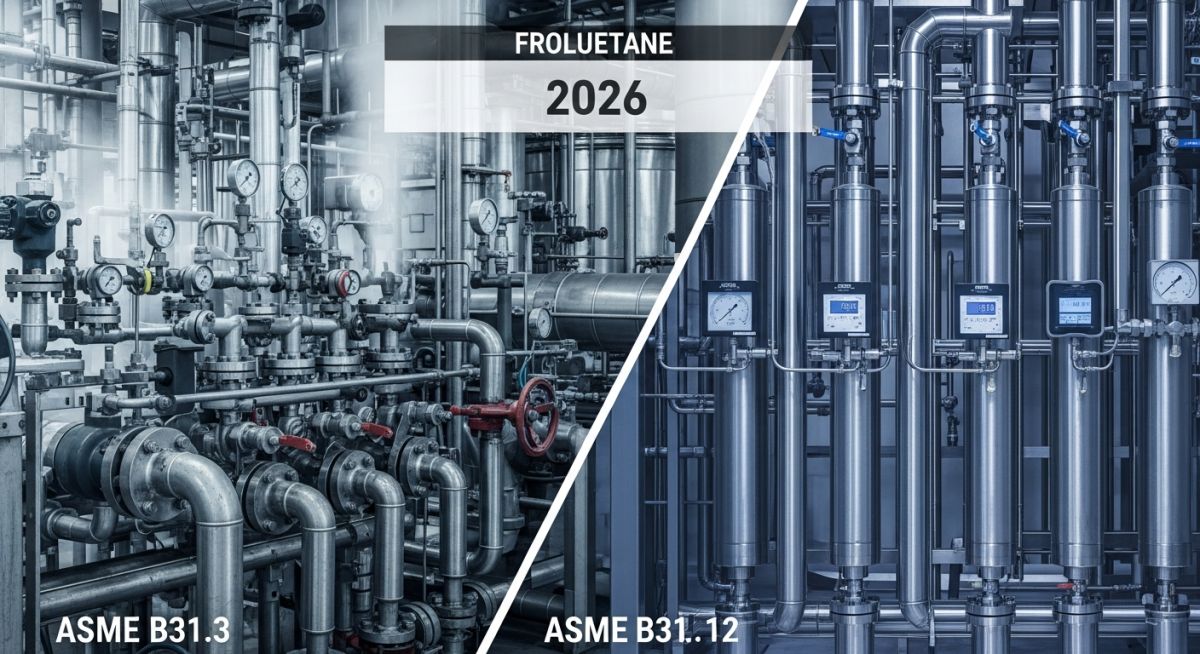
Table of Contents
- 1. Understanding the Scope of ASME B31.3 vs ASME B31.12
- 2. Material Selection and Hydrogen Embrittlement in ASME B31.12
- 3. How ASME B31.3 vs ASME B31.12 Handles Fatigue Design
- 4. Comparing Design Factors in ASME B31.3 vs ASME B31.12
- 5. Impact of LSI: Process Piping Code vs Hydrogen Piping and Pipelines
- 6. NDE and Weld Inspection Requirements for ASME B31.3 vs ASME B31.12
- 7. Impact of LSI: Material Embrittlement Risks in High-Pressure Systems
- 8. Practical Application: When to Switch from ASME B31.3 to ASME B31.12
Piping Code Competency Quiz
Question 1 of 5Quiz Complete!
Complete Course on
Piping Engineering
Check Now
Key Features
- 125+ Hours Content
- 500+ Recorded Lectures
- 20+ Years Exp.
- Lifetime Access
Coverage
- Codes & Standards
- Layouts & Design
- Material Eng.
- Stress Analysis
Understanding the Scope of ASME B31.3 vs ASME B31.12
The fundamental distinction in the ASME B31.3 vs ASME B31.12 debate lies in the specific fluid service and boundary limits. ASME B31.3 is the definitive Process Piping Code, designed for a vast array of chemical, petroleum, and pharmaceutical applications. However, as of 2026, ASME B31.12 has become the primary authority for Hydrogen Piping and Pipelines. While B31.3 can technically handle hydrogen under "Normal Fluid Service," B31.12 provides a specialized framework for high-pressure hydrogen (gaseous or liquid) that accounts for the molecular behavior of the smallest element in the periodic table.
Material Selection and Hydrogen Embrittlement in ASME B31.12
When evaluating ASME B31.3 vs ASME B31.12, material integrity is the most critical technical divergence. Material Embrittlement Risks are significantly amplified in hydrogen service because atomic hydrogen diffuses into the crystalline lattice of metals. This process leads to Hydrogen-Induced Cracking (HIC) and Stress Corrosion Cracking (SCC). Unlike the Process Piping Code (B31.3), which relies heavily on standard allowable stress tables, ASME B31.12 enforces strict toughness requirements and carbon equivalent limits to mitigate these risks in 2026 infrastructure.
How ASME B31.3 vs ASME B31.12 Handles Fatigue Design
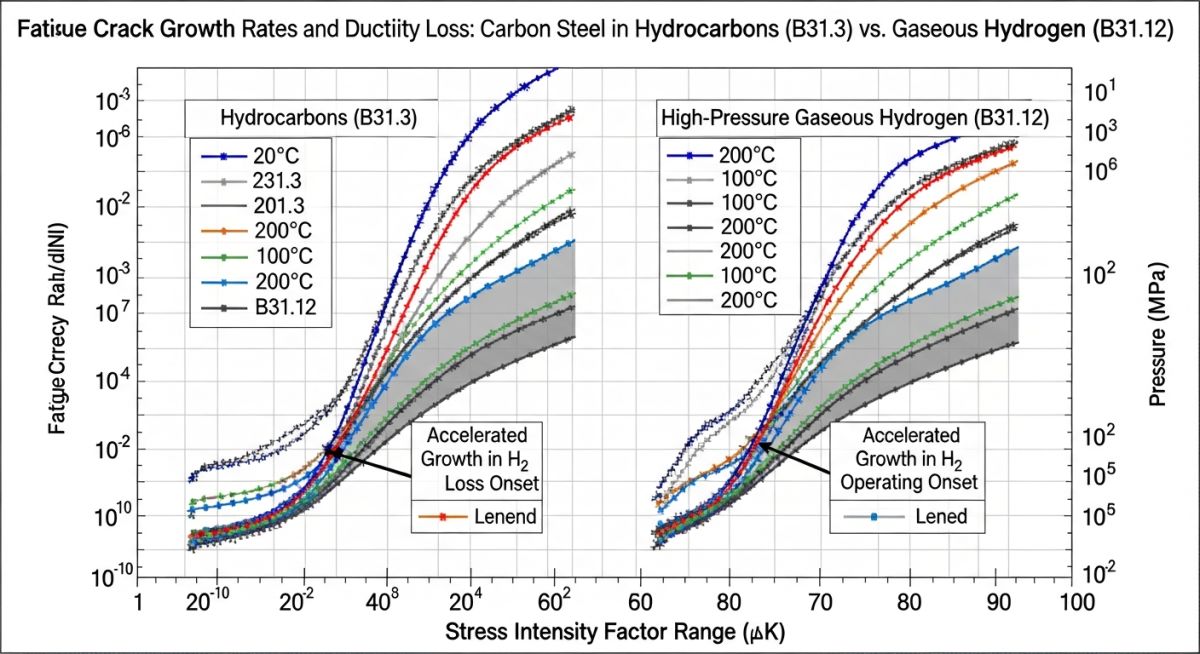
Fatigue management is another area where ASME B31.3 vs ASME B31.12 requirements differ. In Hydrogen Piping and Pipelines, cyclic loading combined with hydrogen exposure accelerates crack propagation. ASME B31.12 Part IP (Industrial Piping) and Part PL (Pipelines) incorporate Fracture Mechanics assessments (specifically Option B) which are rarely mandated in standard ASME B31.3 applications. In 2026, engineers must use fatigue curves specifically calibrated for hydrogen environments to ensure the 50-year design life of new green hydrogen facilities.
Comparing Design Factors in ASME B31.3 vs ASME B31.12
The safety margins used in ASME B31.3 vs ASME B31.12 reflect the different risk profiles of the fluids. While ASME B31.3 typically uses a design factor based on 1/3 of the ultimate tensile strength or 2/3 of the yield strength, ASME B31.12 introduces the Hydrogen Material Reliability Factor (Hf). This factor reduces the allowable stress further based on the material's susceptibility to Material Embrittlement Risks. This conservative approach ensures that even if a small surface flaw exists, the internal pressure will not trigger a catastrophic brittle failure.
Engineering Note: Per ASME B31.12-2023 (Active for 2026), the use of "Option B" performance-based design allows for higher stresses if rigorous fracture toughness testing is performed on the specific heat of material used in construction.
Impact of LSI: Process Piping Code vs Hydrogen Piping and Pipelines
In the landscape of 2026 energy systems, the distinction between the Process Piping Code and Hydrogen Piping and Pipelines is defined by the "Hydrogen Material Performance" requirements. While ASME B31.3 treats hydrogen as another flammable gas, ASME B31.12 acknowledges it as a unique metallurgical threat. This necessitates specialized Piping Stress Analysis that accounts for the reduction in fracture toughness (KIC) and the accelerated fatigue crack growth rate (da/dN) specifically caused by high-pressure gaseous hydrogen.
| Feature | ASME B31.3 (Process Piping) | ASME B31.12 (Hydrogen) |
|---|---|---|
| Primary Fluid focus | Hydrocarbons, Chemicals, Steam | Pure Hydrogen (>10% by volume) |
| Design Margin | Generally 3.0 on Tensile | Variable (includes Hydrogen Factor Hf) |
| Hardness Limits | Service dependent (e.g., NACE MR0175) | Strictly capped (typically <22 HRC) |
| Fracture Mechanics | Rarely required (Optional) | Mandatory for "Option B" Design |
NDE and Weld Inspection Requirements for ASME B31.3 vs ASME B31.12
The Weld Inspection Requirements for ASME B31.3 vs ASME B31.12 differ significantly in their acceptance criteria for volumetric flaws. In 2026, ASME B31.12 mandates 100% Radiographic Testing (RT) or Ultrasonic Testing (UT) for high-pressure hydrogen service (Class M equivalent), whereas ASME B31.3 may only require random 5% spot checks for normal fluid service. The goal in Hydrogen Piping and Pipelines is to eliminate even microscopic sharp notches that could serve as initiation points for hydrogen-assisted cracking.
Impact of LSI: Material Embrittlement Risks in High-Pressure Systems
Managing Material Embrittlement Risks requires a deep dive into the chemical composition of the steel. Under ASME B31.12, the Carbon Equivalent (CE) is strictly controlled to minimize the formation of hard martensitic zones in the Heat Affected Zone (HAZ). For 2026 projects, the Piping Stress Analysis must also consider the "Hydrogen Material Reliability Factor."
Engineering Calculation: Wall Thickness Adjustments
The required thickness (t) for Hydrogen Piping and Pipelines under ASME B31.12 involves the Material Reliability Factor (Hf):
t = (P × D) / (2 × (S × E × W × Hf) + 2 × Y × P)
- P = Internal Design Pressure
- D = Outside Diameter
- S = Basic Allowable Stress (from B31.3 or B31.12 tables)
- Hf = Hydrogen Material Reliability Factor (often 1.0 for stainless, <1.0 for carbon steel)
Practical Application: When to Switch from ASME B31.3 to ASME B31.12
The transition point in ASME B31.3 vs ASME B31.12 often occurs at the battery limit of a production unit. For example, inside a Steam Methane Reformer (SMR), the piping is typically designed to ASME B31.3. However, as soon as the purified hydrogen enters the transport pipeline or high-pressure storage (above 15 psig), ASME B31.12 becomes the legally and technically superior standard to mitigate Material Embrittlement Risks in 2026 infrastructure.
ASME B31.3 vs ASME B31.12 Wall Thickness Calculator
Note: This tool compares the theoretical wall thickness for Process Piping Code (B31.3) vs Hydrogen Piping and Pipelines (B31.12) using standard design formulas for 2026.
Foundational Design Requirements of ASME B31.3
Design Philosophy
The design requirements of ASME B31.3 are based on the principles of Piping Stress Analysis. The standard requires that the design of the piping system must ensure that the piping is safe against failure due to various loads and stresses. These include internal and external pressure, thermal expansion, earthquake loads, wind loads, and other critical environmental factors analyzed in 2026 engineering workflows.
Materials Selection
The Process Piping Code provides requirements for the selection of materials based on the properties required for intended service conditions, including temperature, pressure, and the corrosive nature of the fluid. It also defines the allowable stresses and fatigue design limits for materials used across process plants.
Fabrication and Installation
ASME B31.3 provides rigorous requirements for fabrication and installation, including procedures for welding, brazing, and joining methods. It governs the use of flanges, valves, and components while specifying the necessary Weld Inspection Requirements to meet the design intent.
Inspection and Testing
The standard requires that process piping systems be subject to inspection and testing, such as hydrostatic or pneumatic testing. These procedures ensure the system meets the design requirements based on the specific nature of the piping and its service conditions.
Core Features of ASME B31.12
ASME B31.12 is the specialized code for Hydrogen Piping and Pipelines. It applies to systems transporting hydrogen, encompassing both high-pressure pipelines and low-pressure facility piping.
Design Requirements of ASME B31.12
While similar to B31.3 in its stress analysis approach, the design requirements are specifically tailored to the properties of hydrogen. Because hydrogen is highly flammable and diffusive, the code mandates specialized safety margins to contain potential releases in 2026 infrastructure.
Materials as per ASME B31.12
Materials must be selected to combat Material Embrittlement Risks. The standard provides specific allowable stresses and fatigue design criteria that account for the unique relationship between hydrogen molecules and metal crystalline structures.
Fabrication and Installation
Procedures for welding and joining under B31.12 are more stringent than the Process Piping Code. It specifies components and joining methods that minimize the risk of hydrogen-related damage during the construction phase.
Inspection and Testing
B31.12 requires testing procedures designed to identify specific hydrogen risks, such as embrittlement or hydrogen-induced cracking. These Weld Inspection Requirements are crucial for ensuring high-pressure hydrogen systems remain leak-tight and structurally sound.
EPCLand YouTube Channel
2,500+ Videos • Daily Updates
Don't miss this video related to ASME B31.3 vs ASME B31.12
Summary: Master Piping Engineering with our complete 125+ hour Certification Course: ......
Key Differences between ASME B31.3 and ASME B31.12
Although ASME B31.3 vs ASME B31.12 share many similarities in their structural framework, there are critical technical divergences that engineers must recognize for 2026 projects. These differences ensure that Hydrogen Piping and Pipelines are equipped to handle the unique molecular challenges of hydrogen service that the standard Process Piping Code does not specifically isolate.
Material Requirements
ASME B31.12 includes specific requirements for the selection and use of materials in hydrogen piping systems. These requirements are based on the unique properties of hydrogen, such as its high diffusivity and potential for Material Embrittlement Risks. In contrast, ASME B31.3 provides more general requirements for material selection, based on the properties required for the intended service conditions without specific hydrogen-diffusion safeguards.
Welding Requirements
ASME B31.12 includes specific requirements for the welding of hydrogen piping systems, including the use of specialized welding procedures and the selection of appropriate filler materials. These Weld Inspection Requirements are intended to minimize the risk of hydrogen embrittlement and other types of hydrogen-related damage. ASME B31.3 also includes welding requirements, but these are more general in nature and tailored for hydrocarbon or steam service.
Testing Requirements
ASME B31.12 includes specific requirements for the testing of hydrogen piping systems, including procedures for detecting hydrogen-induced cracking and other types of damage. These requirements are intended to ensure that the piping system is safe against the unique risks associated with hydrogen in 2026. ASME B31.3 also includes testing requirements, but these do not specifically address the microscopic crack detection necessitated by hydrogen exposure.
Design Pressure
ASME B31.12 includes specific requirements for the design pressure of Hydrogen Piping and Pipelines, which are based on the flammability and explosivity of hydrogen. These requirements ensure that the piping system is designed to safely contain any potential leaks or releases of hydrogen. ASME B31.3 also includes design pressure requirements, but these are based on more general principles of Piping Stress Analysis and fluid volatility.
Summary for 2026: While both codes provide a path to safety, ASME B31.12 is the only standard that treats hydrogen as a primary metallurgical threat rather than just another flammable fluid.
Safety Protocol: Leak Detection and Venting in ASME B31.3 vs ASME B31.12
Beyond metallurgy, the Safety Protocol requirements represent a major operational divide between ASME B31.3 vs ASME B31.12. Because hydrogen is the lightest and most diffusive gas, its Leak detection and venting requirements are far more stringent than those for standard hydrocarbons in the Process Piping Code. In 2026, engineers must account for hydrogen's wide flammability limits and low ignition energy, which are not specifically addressed in the general provisions of B31.3.
1 Venting & Discharge
ASME B31.3: Generally allows for atmospheric venting of non-toxic vapors if they can be safely dispersed.
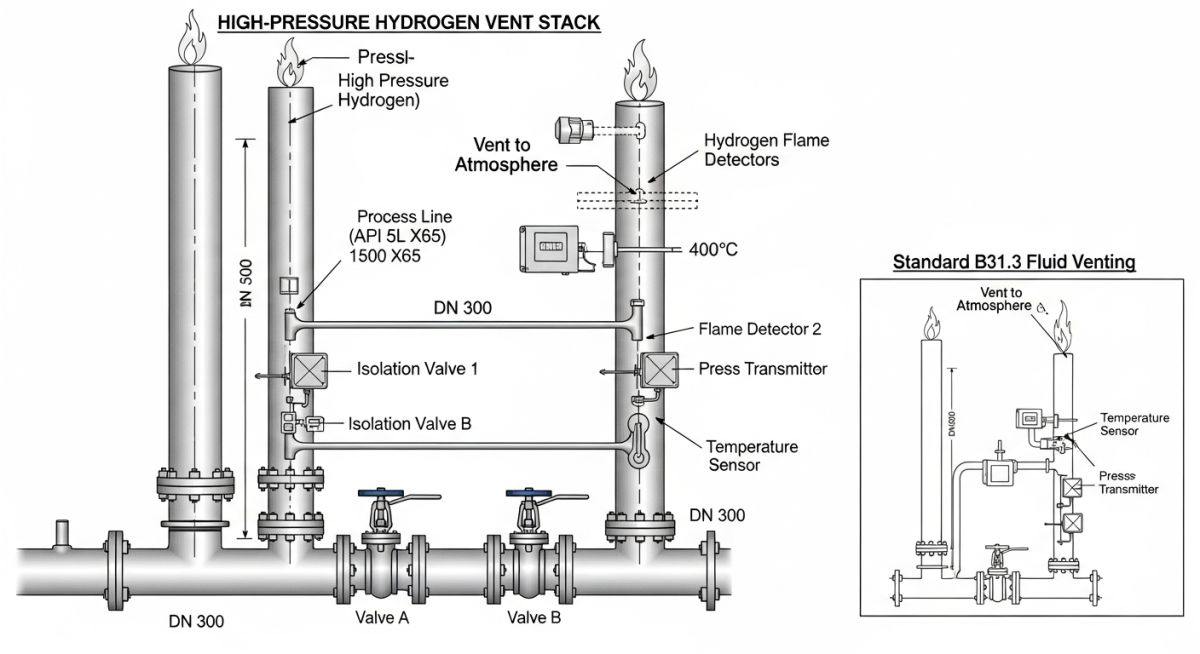
ASME B31.12: Mandates dedicated hydrogen vent stacks designed for high-velocity discharge to prevent "plume hang." It also requires specific grounding to prevent static ignition during emergency depressurization in Hydrogen Piping and Pipelines.
2 Leak Detection
ASME B31.3: Relies primarily on soap-bubble tests or conventional gas detectors for Weld Inspection Requirements during commissioning.
ASME B31.12: Recommends continuous ultrasonic leak detection or thermal imaging, as hydrogen flames are invisible to the naked eye. In 2026, many B31.12 facilities integrate localized Material Embrittlement Risks monitoring alongside gas sensing.
2026 Safety Warning: Invisible Flames
Under ASME B31.12, the Safety Protocol must emphasize that hydrogen leaks at high pressure can auto-ignite. Unlike ASME B31.3 fluids, a hydrogen fire provides no radiant heat warning until the technician is dangerously close, necessitating specialized flame-mapping detectors.
Material Comparison Table: AISI/ASTM Grade Suitability
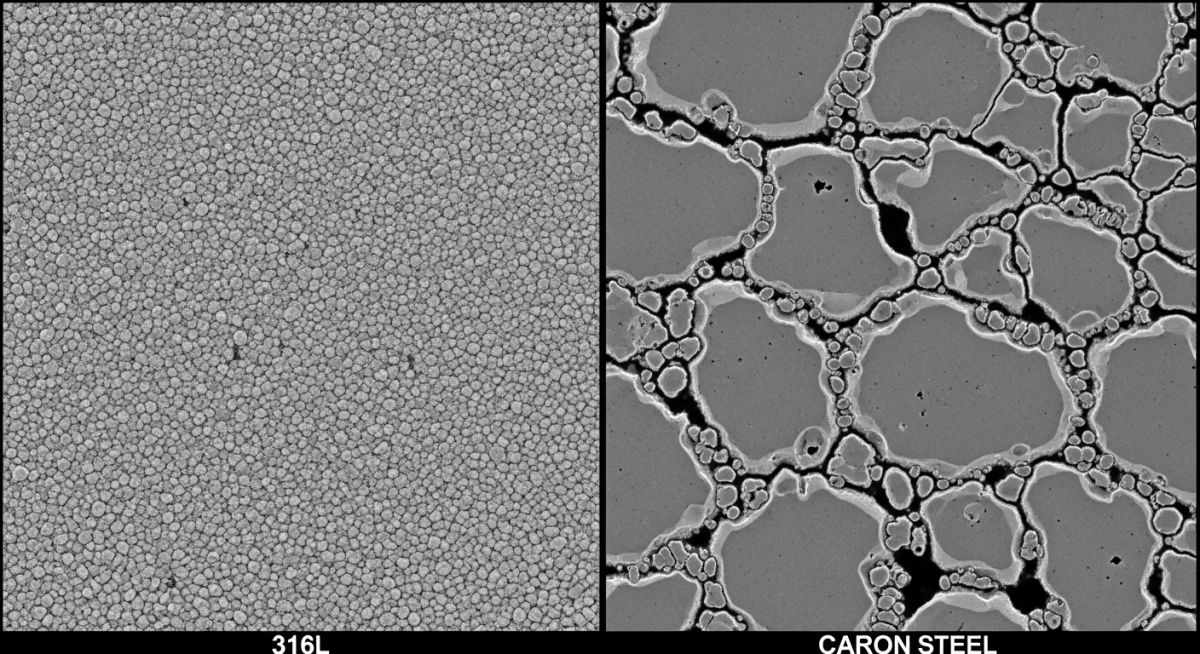
Selecting the correct metallurgy is the primary method for mitigating Material Embrittlement Risks. While ASME B31.3 allows for a broad spectrum of carbon steels, ASME B31.12 enforces strict nickel equivalents and chromium content for Hydrogen Piping and Pipelines to ensure long-term ductility in 2026 installations.
| ASTM/AISI Grade | ASME B31.3 Suitability | ASME B31.12 Suitability | 2026 Engineering Verdict |
|---|---|---|---|
| A106 Grade B | Excellent (Standard) | Conditional (Low Pressure) | Requires strict hardness control (<22 HRC). |
| A333 Grade 6 | High (Low Temp) | Preferred for Carbon Steel | Superior toughness for cold hydrogen service. |
| AISI 304L | Excellent | Moderate (Risk of Martensite) | Potential for strain-induced transformation. |
| AISI 316L | Excellent | Optimal (Gold Standard) | High Nickel content resists embrittlement. |
| API 5L X70 | Excellent (High Strength) | High Risk (B31.12 PL) | Requires specialized fracture mechanics (Option B). |
2026 Material Selection Tip
When comparing ASME B31.3 vs ASME B31.12, remember that B31.12 mandates a nickel equivalent (Nieq) of at least 12% for austenitic steels in high-pressure hydrogen to ensure phase stability and prevent Material Embrittlement Risks.
Maintenance Checklist: Post-Commissioning Inspection Intervals
The long-term reliability of ASME B31.3 vs ASME B31.12 systems is determined by the rigor of the 2026 Maintenance Checklist. While the Process Piping Code (B31.3) often relies on API 570 for inspection intervals based on corrosion rates, Hydrogen Piping and Pipelines (B31.12) require a fatigue-centric approach. Because Material Embrittlement Risks do not always result in thickness loss, traditional ultrasonic thickness (UT) gauging is insufficient for hydrogen service.
2026 Hydrogen Piping Maintenance Schedule
Quarterly (Visual & Leak)
Verification of Safety Protocol integrity. Laser-based gas imaging (OGI) for all flanged connections and Hydrogen Piping and Pipelines valves.
Biennial (NDE Scan)
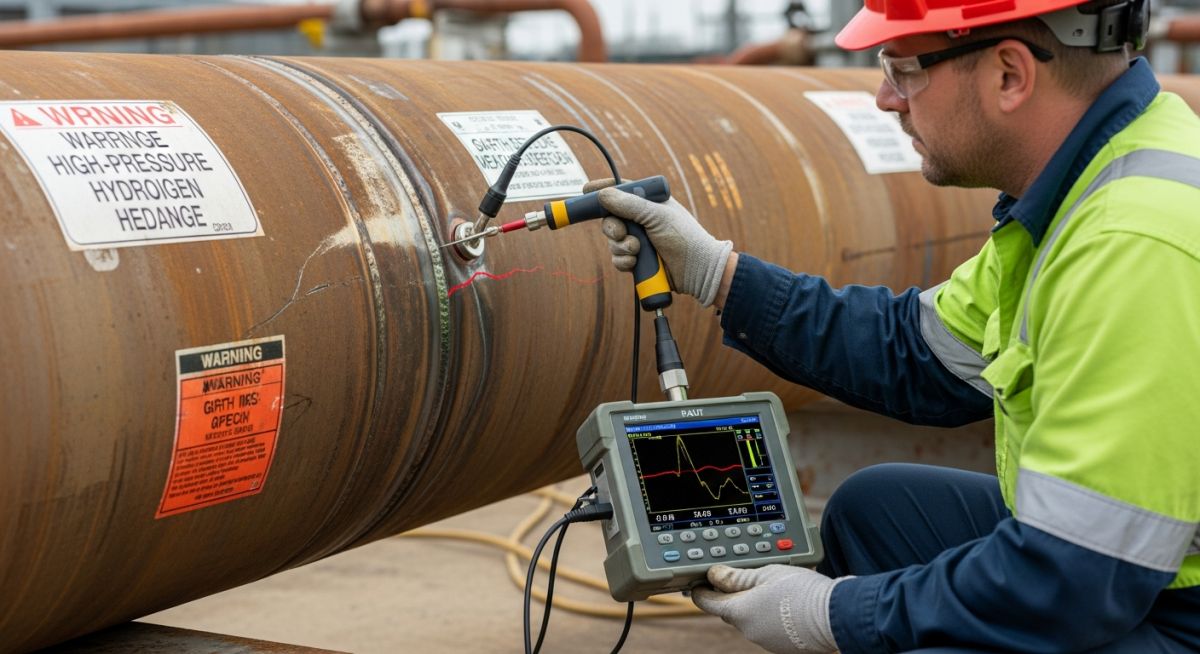
Phased Array UT (PAUT) on high-stress girth welds. Focus on detecting sub-surface Material Embrittlement Risks or fatigue crack initiation.
5-Year (Full Audit)
Re-evaluation of the Piping Stress Analysis based on actual pressure cycle counts versus the original design life in 2026.
Technical Reminder: Hardness Surveys
For assets originally built under ASME B31.3 and repurposed for hydrogen, the 2026 Maintenance Checklist must include field hardness testing. Any weldment exceeding 225 HBW (Brinell) should be flagged for immediate risk mitigation to prevent hydrogen-induced cracking.
ASME B31.3 vs ASME B31.12 Failure Case Study
Project Data: Blue Hydrogen Retrofit
In early 2026, a refinery in the Gulf Coast converted an existing hydrocarbon transport line to carry high-pressure gaseous hydrogen (2,500 psig). The system was originally designed under the Process Piping Code (ASME B31.3) using API 5L X52 carbon steel.
Failure Analysis
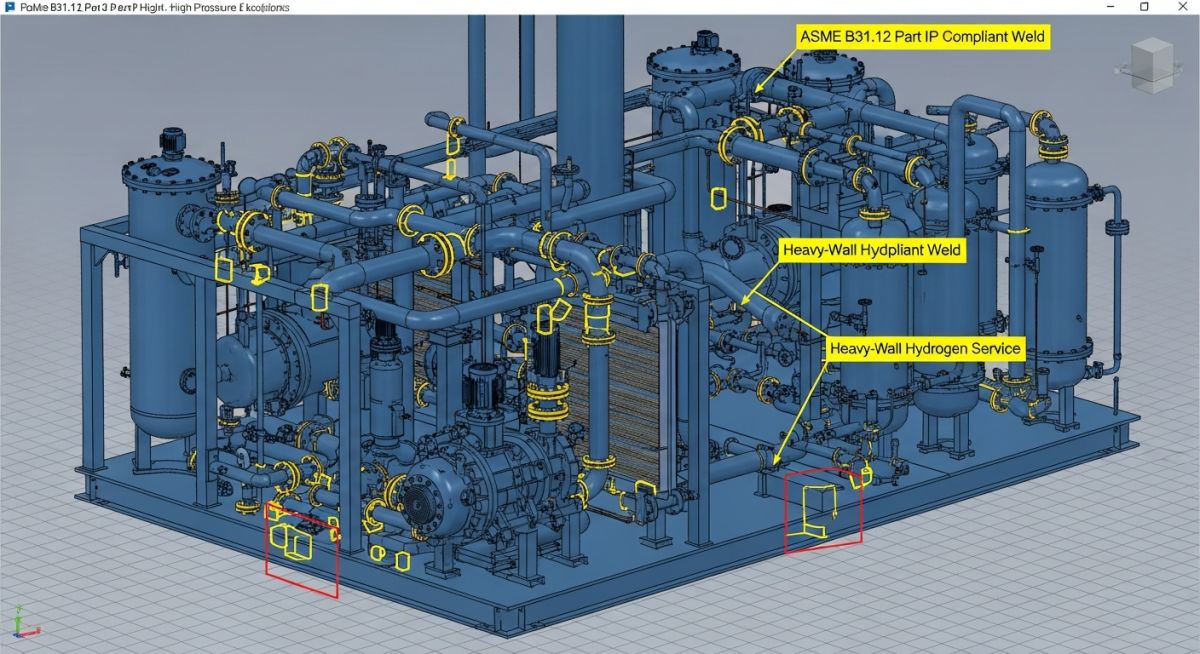
Within six months of operation, multiple Material Embrittlement Risks manifested as hairline cracks at the Heat Affected Zones (HAZ) of girth welds. Investigation revealed that the high hardness levels (exceeding 240 HV) permitted by ASME B31.3 were incompatible with the high-pressure hydrogen environment, which requires the stricter limits of ASME B31.12.
Engineering Fix
- Replacement of affected sections with normalized carbon steel meeting ASME B31.12 Table K-1 chemistry requirements.
- Mandatory Post-Weld Heat Treatment (PWHT) to reduce HAZ hardness below 22 HRC.
- Implementation of Piping Stress Analysis using "Option B" fracture mechanics.
Lessons Learned
The 2026 industry standard reinforces that Hydrogen Piping and Pipelines must not be treated as generic process piping. Even if ASME B31.3 allows a material, the specific fatigue and embrittlement criteria of ASME B31.12 must take precedence for gaseous hydrogen service over 15 psig.
ASME B31.3 vs ASME B31.12: Frequently Asked Questions
Can I use ASME B31.3 for hydrogen piping in 2026? ▼
What are the specific Weld Inspection Requirements for hydrogen? ▼
Is Piping Stress Analysis different between the two codes? ▼
Does ASME B31.12 cover both liquid and gaseous hydrogen? ▼
Final Verdict: ASME B31.3 vs ASME B31.12
In the 2026 engineering landscape, choosing between ASME B31.3 vs ASME B31.12 is a decision that impacts the multi-decade lifecycle of an asset. For traditional chemical processing, ASME B31.3 remains the gold standard. However, for any infrastructure dedicated to the hydrogen transition, ASME B31.12 provides the necessary metallurgical safeguards to prevent catastrophic failure.
Engineering Architecture 2026
📚 Recommended Resources: ASME B31.3 vs ASME B31.12
Read these Guides
🎓 Advanced Training




Related posts:
![refinery catalyst safety quiz]()
Test Your Knowledge: Refinery Catalyst Safety & CRU Operations Quiz
![CRU catalyst runaway reaction]()
Refinery Rescue: How We Quelled a CRU Catalyst Runaway Reaction and Lessons Learned
![refinery furnace quiz]()
Interactive Refinery Furnace Quiz: Test Your Coking & Downtime Troubleshooting Skills!
![furnace coking downtime]()
Real-World Fix: How We Overcame Unexpected Furnace Coking Downtime in Our Preheat Unit
![hydrotest troubleshooting quiz]()
Interactive Hydrotest Troubleshooting Quiz: Master Leak Detection Skills
![Hydrotest leak detection]()
Hydrotest Leak Detection: A Practical Case Study in On-Site Problem Solving


