Ultimate Guide to ASME B31.12 Classification (2026 Edition)
ASME B31.12 Classification serves as the global benchmark for the design, construction, and operation of piping and pipeline systems specifically dedicated to hydrogen service. As the world transitions toward a hydrogen economy in 2026, understanding the nuances between Industrial Piping and Pipelines within this standard is critical for structural integrity and process safety.

Quick Definition: What is ASME B31.12 Classification?
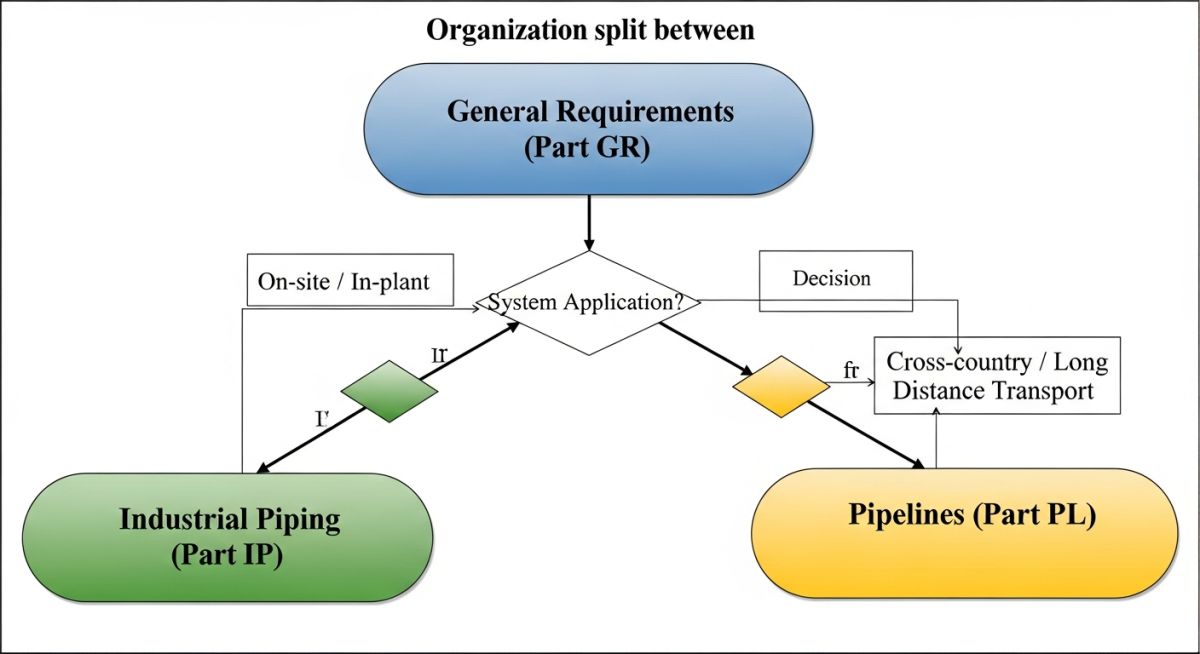
ASME B31.12 Classification is the systematic categorization of hydrogen systems into three primary sections: General Requirements (Part GR), Industrial Piping (Part IP), and Pipelines (Part PL). This classification determines the specific material performance factors, design safety margins, and inspection protocols required to mitigate hydrogen embrittlement and high-pressure fatigue.
In This Technical Guide
Engineering Knowledge Check
Question 1 of 5Which part of ASME B31.12 specifically covers hydrogen pipelines used for cross-country transport?
Quiz Complete!
Complete Course on
Piping Engineering
Check Now
Key Features
- 125+ Hours Content
- 500+ Recorded Lectures
- 20+ Years Exp.
- Lifetime Access
Coverage
- Codes & Standards
- Layouts & Design
- Material Eng.
- Stress Analysis
What is ASME B31.12 Classification in Hydrogen Service?
In the engineering landscape of 2026, ASME B31.12 Classification represents the specialized branch of the ASME B31 Code for Pressure Piping specifically dedicated to hydrogen. Unlike general process piping standards like ASME B31.3, this classification addresses the unique atomic behavior of hydrogen—specifically its ability to diffuse into metal lattices, leading to Hydrogen Embrittlement Standards compliance challenges.
The classification system is structured to manage risks associated with high-pressure gaseous hydrogen and cryogenic liquid hydrogen. By segregating requirements based on the system's physical location and intent—whether it is within an industrial plant boundary or part of a cross-country transport network—engineers can apply optimized safety factors that ensure structural integrity without prohibitive over-engineering.
Core Architecture: Industrial Piping (Part IP) vs. Pipelines (Part PL)
The most critical distinction within ASME B31.12 Classification is the separation between Industrial Piping Part IP and Pipeline Section Part PL. This division reflects the different operational environments and risk profiles of localized facilities versus expansive infrastructure.
Scoping the ASME B31.12 Classification for High-Pressure Systems
When evaluating Hydrogen Piping and Pipelines, the scope of the project dictates which sub-section applies. Part IP is generally applied to piping systems found in refineries, chemical plants, and hydrogen generation facilities (electrolyzers). In contrast, Part PL is utilized for Pipeline Section Part PL applications, covering the transport of hydrogen between facilities, often across public rights-of-way.
- Part GR (General Requirements): Common definitions, material requirements, and terminology applicable to all hydrogen services.
- Part IP (Industrial Piping): Focuses on high-cycle fatigue, localized stresses, and complex geometry typical of plant piping.
- Part PL (Pipelines): Emphasizes long-distance integrity, soil-to-pipe interaction, and fracture control for Hydrogen Piping and Pipelines.
Material Performance Factor in ASME B31.12 Classification
A hallmark of ASME B31.12 Classification is the introduction of the Material Performance Factor (denoted as Hf). This factor is used to derate the allowable stress of materials when they are exposed to high-pressure hydrogen environments, directly addressing Hydrogen Embrittlement Standards.
For many common carbon steels, the Hf value is determined based on the design pressure and the specific material grade. For example, in Industrial Piping Part IP, if the design pressure exceeds 13.8 MPa (2000 psi), the Hf can drop as low as 0.5, effectively doubling the required wall thickness compared to non-hydrogen service.
Managing Hydrogen Embrittlement Standards in Design
Adhering to Hydrogen Embrittlement Standards requires strict control over material chemistry. ASME B31.12 mandates specific limits on carbon equivalent (CE) values and hardness (typically maximum 22 HRC) to ensure that the material retains sufficient ductility. These requirements are integrated directly into the ASME B31.12 Classification to prevent catastrophic brittle fractures in both Hydrogen Piping and Pipelines.
Applying ASME B31.12 Design Factors for Safe Operations
In 2026, the application of ASME B31.12 Design Factors represents the pinnacle of hydrogen safety engineering. These factors are not static; they are dynamically calculated based on the ASME B31.12 Classification of the system. The fundamental design equation for wall thickness incorporates the Material Performance Factor (Hf) to account for the degradation of fracture toughness in hydrogen-rich environments.
| Classification Metric | Industrial Piping (Part IP) | Pipeline Section (Part PL) |
|---|---|---|
| Standard Reference | ASME B31.12, Part IP | ASME B31.12, Part PL |
| Design Factor (F) | Based on B31.3 Ratios | 0.72, 0.60, 0.50, or 0.40 (Location Class) |
| Hf Application | Mandatory for all Hydrogen Piping | Mandatory for Pipeline Section Part PL |
| Fatigue Analysis | High Priority (Cycle count > 7000) | Focus on Fracture Control Plan |
Classifying Gaseous vs. Liquid Hydrogen Piping and Pipelines
The ASME B31.12 Classification requirements diverge significantly when comparing gaseous transport to cryogenic liquid hydrogen (LH2). For liquid service, the primary engineering concern shifts from hydrogen-induced cracking to extreme thermal contraction and material ductility at temperatures as low as -253°C.
Calculation Insight: The hoop stress (Sh) for Pipeline Section Part PL is calculated as:
Sh = (P × D) / (2 × t × E × F × Hf)
Where:
P = Internal Design Pressure
D = Outside Diameter
t = Nominal Wall Thickness
E = Longitudinal Joint Factor
F = Design Factor (Location Class)
Hf = Material Performance Factor
Inspection and Testing Requirements for Each ASME B31.12 Classification
Validation of a system's ASME B31.12 Classification is not complete until rigorous inspection and testing are performed. In 2026, Non-Destructive Examination (NDE) protocols for hydrogen service are significantly more stringent than those for standard hydrocarbons.
-
1.
Industrial Piping Part IP: Requires 100% radiography (RT) or ultrasonic testing (UT) for all girth welds in high-pressure hydrogen service (over 10.3 MPa).
-
2.
Pipeline Section Part PL: Mandates the implementation of a Fracture Control Plan to manage the risk of rapid crack propagation, a critical element of Hydrogen Embrittlement Standards.
-
3.
Leak Testing: Pneumatic testing is often preferred over hydrostatic testing for hydrogen systems to avoid moisture contamination, which can accelerate Hydrogen Embrittlement.
ASME B31.12 Classification Calculator
Estimate required wall thickness (t) based on Material Performance Factors and ASME B31.12 Design Factors for Part PL (2026 Standards).
Material Selection Matrix: 316L Stainless vs. Carbon Steel in ASME B31.12 Classification
In 2026, the choice between austenitic stainless steels and high-strength carbon steels is the most significant cost driver in Hydrogen Piping and Pipelines. While 316L stainless steel offers superior resistance to Hydrogen Embrittlement Standards, its lower yield strength compared to API 5L grades often necessitates thicker walls for high-pressure Pipeline Section Part PL applications.

| Material Type | Hf Factor (2026) | Embrittlement Risk | Primary Application |
|---|---|---|---|
| 316L Stainless Steel | 1.0 (No Derating) | Negligible | Part IP (Plant Manifolds) |
| API 5L X52 (Carbon) | 0.85 - 0.70 | Moderate | Part PL (Transmission) |
| API 5L X70 (Carbon) | 0.50 (Conservative) | High | Specialized Part PL only |
Advanced Fatigue Analysis for Industrial Piping Part IP
Hydrogen accelerates fatigue crack growth rates by up to 10x compared to inert gases. Under ASME B31.12 Classification, any system subjected to more than 7,000 thermal or pressure cycles must undergo a detailed fatigue assessment.
Part IP Cycle Counting Calculator
Maintenance Checklist: Semi-Annual Protocols for Hydrogen Piping
Effective 2026, ASME B31.12 Classification integrity management programs recommend a semi-annual inspection frequency for critical Hydrogen Piping and Pipelines welds.
Weld Inspection Protocol (Part IP & PL)
-
Step 1:
Surface NDE: Conduct Magnetic Particle (MT) or Dye Penetrant (PT) testing on all external Heat Affected Zones (HAZ) to identify surface-breaking Hydrogen Embrittlement cracks.
-
Step 2:
Volumetric Analysis: Utilize Phased Array Ultrasonic Testing (PAUT) to detect sub-surface flaws. Specifically monitor for hydrogen-induced cracking (HIC) at weld roots.
-
Step 3:
Hardness Validation: Use portable hardness testers to ensure field welds do not exceed 22 HRC, as per ASME B31.12 Classification safety limits.
-
Step 4:
Leak Survey: Implement Laser-based standoff detection for high-pressure Hydrogen Piping and Pipelines to identify micro-leaks in flange gaskets.
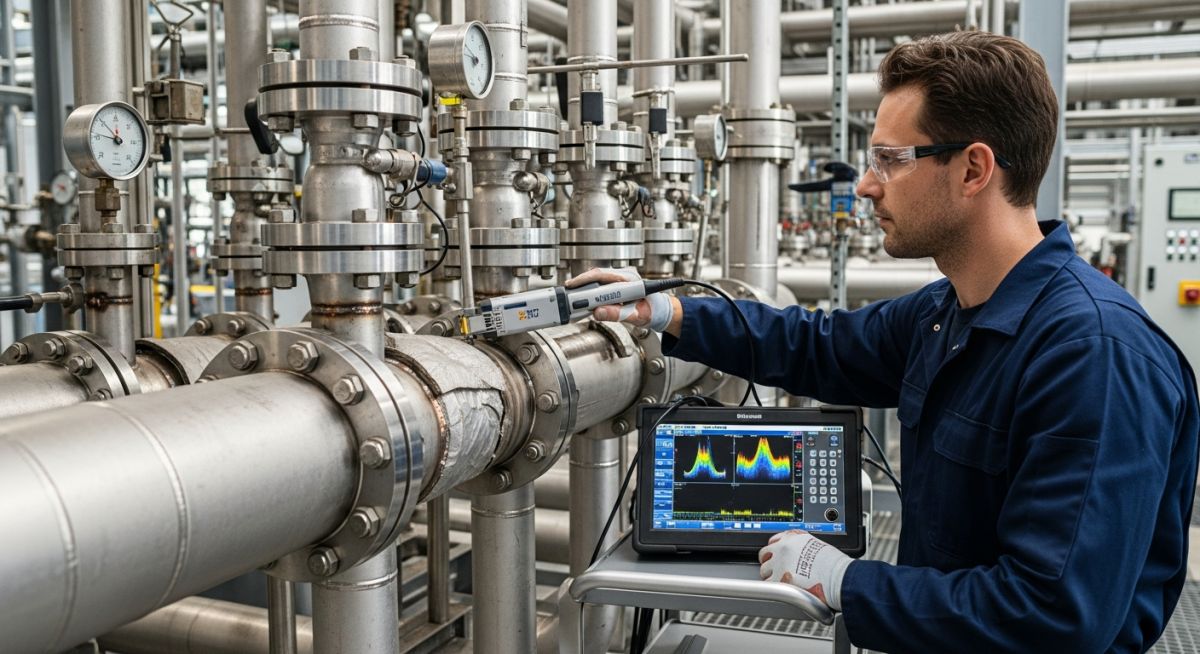
NDE Tech performing PAUT on a High-Pressure Hydrogen Manifold (2026).
Don't miss this video related to ASME B31.12 Classification
Summary: Master Piping Engineering with our complete 125+ hour Certification Course: ......
ASME B31.12 Classification Failure Case Study
Project Data: The Hydrogen Refinery Retrofit
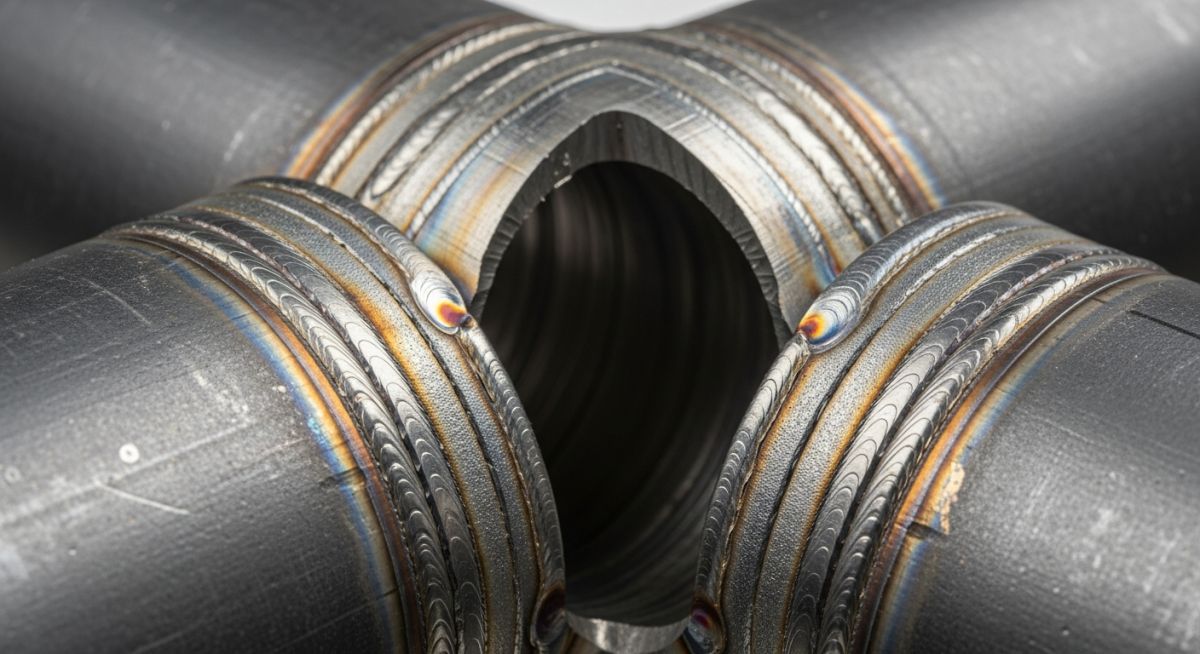
In early 2025, a European refinery attempted to repurpose an existing 12-inch Industrial Piping Part IP system for high-pressure hydrogen service (7.0 MPa). The original design followed ASME B31.3 standards, which lack the specific Material Performance Factor requirements essential for hydrogen safety.
Within six months of operation, the system experienced a through-wall crack at a Heat Affected Zone (HAZ) of a girth weld.
Failure Analysis & Engineering Fix
Post-failure metallurgical analysis confirmed that the carbon steel (API 5L X52) had succumbed to hydrogen-induced cracking. The root cause was identified as a failure to transition the system to the correct ASME B31.12 Classification during the retrofit, which would have mandated:
- A Material Performance Factor (Hf) of 0.85, requiring a 15% increase in wall thickness.
- Stricter Hydrogen Embrittlement Standards for weld hardness (limited to 22 HRC).
- Post-Weld Heat Treatment (PWHT) which was omitted in the original B31.3 build.
Lessons Learned for 2026
Retrofitting existing infrastructure for Hydrogen Piping and Pipelines must involve a full re-rating under ASME B31.12 Classification logic. Simply meeting "process piping" codes is insufficient for high-pressure hydrogen, as the ASME B31.12 Design Factors account for atomic-level degradation that other codes ignore.
Frequently Asked Questions: ASME B31.12 Classification
How does ASME B31.12 Classification handle Hydrogen Piping and Pipelines in 2026?
In 2026, the ASME B31.12 Classification utilizes a bifurcated approach. Hydrogen Piping and Pipelines are separated into Part IP (Industrial) and Part PL (Pipelines). This ensures that plant-specific localized stresses and long-distance transport risks are addressed with distinct Material Performance Factors and design safety margins.
What is the impact of Material Performance Factor on cost?
The Material Performance Factor (Hf) typically increases the required wall thickness for carbon steel by 15% to 50% in high-pressure service. While this increases initial capital expenditure, it is essential for meeting Hydrogen Embrittlement Standards and ensuring a 30+ year operational life in hydrogen service.
Does Industrial Piping Part IP require different welding procedures?
Yes. Under Industrial Piping Part IP, welding procedures must be qualified with specific hardness testing to prevent brittle zones. For 2026 projects, Post-Weld Heat Treatment (PWHT) is frequently mandated even for thinner wall sections to reduce residual stresses that contribute to hydrogen-induced cracking.
How do ASME B31.12 Design Factors differ for Pipeline Section Part PL?
For Pipeline Section Part PL, the design factors (F) are influenced by the population density (Location Class). When combined with the ASME B31.12 Design Factors for hydrogen, the resulting allowable stress is significantly more conservative than that of a standard natural gas pipeline under ASME B31.8.
Conclusion: Future-Proofing Hydrogen Infrastructure in 2026
Mastering ASME B31.12 Classification is no longer optional for mechanical engineers in 2026; it is a fundamental requirement for the safe deployment of hydrogen technology. By correctly identifying the boundary between Industrial Piping Part IP and Pipeline Section Part PL, and strictly applying the Material Performance Factor, organizations can build resilient infrastructure that mitigates the risks of hydrogen embrittlement.
As standards continue to evolve, staying compliant with ASME B31.12 Classification ensures that your hydrogen systems remain safe, insurable, and high-performing throughout their design life.
📚 Recommended Resources: ASME B31.12
Read these Guides
🎓 Advanced Training




Related posts:
![High-grade industrial Wing Nut Types and Applications for mechanical assemblies.]()
Wing Nut Types and Applications: The 2026 Engineering Guide
![Industrial Monorail Crane Systems installed in a modern manufacturing plant 2026.]()
Monorail Crane Systems: Design, Types & 2026 Standards Guide
![Lead engineer performing a Factory Acceptance Test FAT on an industrial skid system 2026]()
Factory Acceptance Test FAT: The 2026 Engineering Guide to Zero-Defect Delivery
![Professional engineering workspace showing a Basis of Design document layout for a 2026 project.]()
Basis of Design: How to Write a BOD for Engineering Projects in 2026
![Industrial Flare Knockout Drum Sizing and installation in a refinery relief system.]()
Flare Knockout Drum Sizing: Design & API 521 Standards (2026 Guide)
![Advanced Reboiler Control Systems in a modern petrochemical refinery 2026.]()
Reboiler Control Systems: Engineering Guide to Precision Control 2026