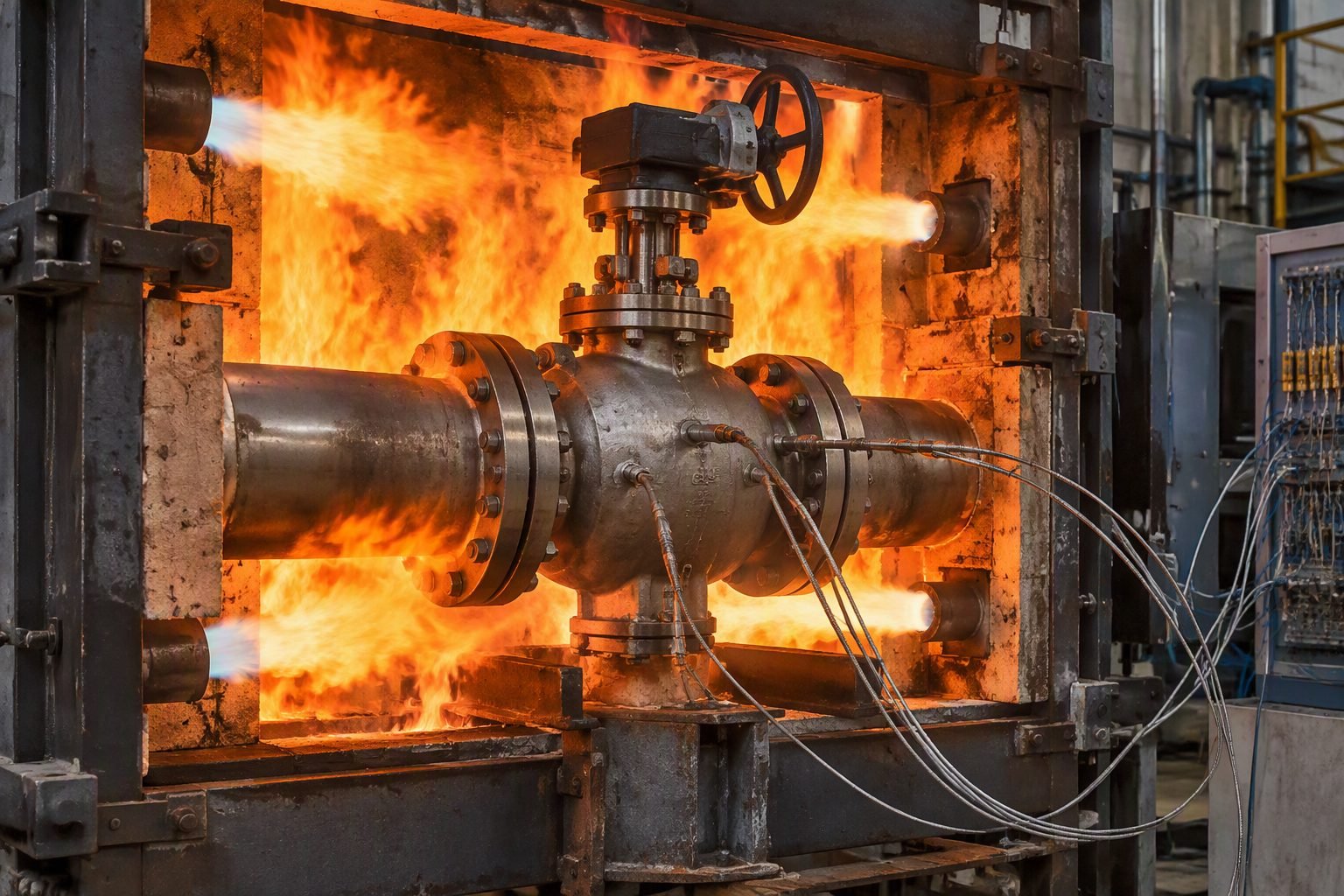
Stellite Hardfacing Valve Seat Rings: Engineering Wear Protection
In my two decades of reviewing piping system failures across high-pressure hydrocarbon facilities, premature valve seat leakage remains a primary driver of fugitive emissions and unscheduled plant shutdowns. When handling high-velocity slurry, high-temperature steam, or abrasive catalyst fines, standard austenitic and martensitic stainless steel body materials rapidly degrade through localized wire-drawing and adhesive wear.
To combat these destructive degradation mechanisms, specifying a robust weld overlay of cobalt-base alloy directly onto the critical seating interface transforms an ordinary carbon or alloy steel valve into a heavy-duty asset capable of surviving thousands of aggressive actuation cycles.
Key Engineering Takeaways
- Cobalt-base alloys maintain hot hardness up to 800 degrees Fahrenheit without losing structural yield strength.
- Plasma Transferred Arc Welding (PTAW) minimizes base metal dilution, ensuring predictable deposit chemistry.
- Post-weld heat treatment (PWHT) requirements must balance carbon steel base metal relaxation with cobalt overlay integrity.
- Strict adherence to API 6D and ASTM A217 standards prevents catastrophic cracking during thermal cycling.
Technical Mechanics of Stellite Hardfacing for Valve Seat Rings
Stellite hardfacing metallurgy: The deposition of complex cobalt-chromium-tungsten alloys via fusion welding techniques to create a dendritic microstructure that arrests dislocation movement under severe mechanical and thermal loads.
When designing industrial valves for severe service loops in refineries, chemical plants, and power stations, understanding the metallurgical synergy between the substrate and the weld overlay is paramount. Stellite alloys—most notably Stellite 6 and Stellite 21—rely on a tough cobalt-rich solid solution matrix dispersed with hard complex carbides of tungsten and chromium. This unique microscopic architecture provides the dual benefit of a resilient, shock-absorbing base matrix combined with ultra-hard wear-resistant particles that deflect abrasive particles and resist adhesive galling.
During the manufacturing process, the valve seat ring base metal (commonly ASTM A182 F316, F22, or F91) is machined to create a specific groove geometry designed to accept the weld deposit. Proper groove design prevents sharp corners and ensures adequate fusion without excessive dilution from the underlying steel. The application is typically performed using Gas Tungsten Arc Welding (GTAW) with hot wire feed or Plasma Transferred Arc Welding (PTAW). PTAW is increasingly favored in high-volume valve manufacturing due to its superior deposition rate, precise heat input control, and lower iron dilution rates, which keep the cobalt alloy chemistry intact.
Thermal Expansion Mismatch Warning
Cobalt-base alloys possess a different coefficient of thermal expansion compared to standard austenitic stainless steels and low-alloy ferritic steels. If preheat temperatures and interpass thermal controls are neglected during the weld overlay procedure, residual high tensile stresses will trigger interface cracking or complete spalling of the Stellite layer during subsequent cooldown and operational thermal cycling.
To calculate and verify the structural integrity of a hardfaced seat ring, engineers must evaluate the stress distribution across the seating interface under maximum allowable working pressure (MAWP). According to ASME Section VIII, Division 1, the contact stress between the disc and the seat ring must not exceed the yield strength of the overlay at operating temperature. The hardness of Stellite 6 typically ranges from 38 to 45 Rockwell C at room temperature and maintains a high percentage of that hardness up to 1200 degrees Fahrenheit, outperforming conventional stellite-free stellites and stainless steel overlays.
Quality control standards require rigorous non-destructive examination (NDE) following deposition and machining. Liquid penetrant testing (PT) per ASME Section V is mandatory to detect any micro-fissuring, porosity, or lack of fusion. Furthermore, chemical composition analysis via positive material identification (PMI) ensures that iron dilution from the base metal into the Stellite deposit remains below 5 percent to preserve the intended corrosion and wear resistance profiles.
Evaluation of hardfacing tradeoffs: Balancing exceptional high-temperature wear and corrosion resistance against increased manufacturing complexity, specialized welding requirements, and higher initial capital costs.
Advantages
- Exceptional resistance to adhesive wear, galling, and metal-to-metal friction under high seating loads.
- Maintains high hot hardness and structural integrity in temperatures scaling up to 800 degrees Fahrenheit.
- Significantly extends valve operational life in erosive services involving catalyst fines and high-velocity steam.
- Provides superior resistance to cavitation and liquid droplet impingement in control valve applications.
- Reduces fugitive emission risks by maintaining a tight, leak-free shutoff profile over extended operational cycles.
Disadvantages
- High raw material and processing costs associated with cobalt-base alloys and specialized welding equipment.
- Requires strict thermal management, precise preheating, and controlled cooling to prevent interface cracking.
- Machining the deposited Stellite overlay is exceptionally difficult, requiring carbide or CBN cutting tools.
- Thermal expansion coefficient mismatch can cause residual stress concentrations if base metals are improperly selected.
- Requires rigorous non-destructive examination (NDE) and PMI testing, increasing fabrication lead times.
Industrial deployment sectors: Examining how critical process loops across power generation, refining, and petrochemical industries rely on stellite hardfaced seating surfaces to prevent catastrophic leakage and downtime.
High-Pressure Steam Power Generation
Supercritical power plants utilize Stellite hardfacing on main steam isolation valves and turbine bypass valves operating above 1000 degrees Fahrenheit. The overlay resists high-velocity steam erosion and wire-drawing, ensuring tight shutoff during emergency turbine trips.
Fluid Catalytic Cracking (FCC) Units
Refinery FCC units handle abrasive catalyst fines circulating at high velocities through slide valves and plug valves. Stellite hardfaced seat rings provide the extreme abrasion resistance required to prevent premature erosion failure in these severe erosive loops.
High-Pressure Hydrocracker Letdown Systems
Hydroprocessing reactor effluent and pressure letdown valves experience severe flashing and multi-phase fluid erosion. Applying cobalt-base weld overlays to the trim and seat rings protects the base metal from localized cavitation and abrasive particle impacts.
Natural Gas Pipeline Ball Valves
Large-diameter pipeline ball valves handling abrasive particulate-laden gas require durable metal-to-metal seats. Stellite hardfaced seat rings prevent galling during high-torque actuation cycles under full differential pressure conditions.
Stellite Hardfacing Alloy Properties and Weld Overlay Parameters
Selecting the correct cobalt-base overlay material requires evaluating high-temperature hardness retention, carbide volume fractions, and thermal expansion coefficients. In my experience specifying valve trim for refinery hydroprocessing units, misjudging the carbon content in Stellite alloys leads to micro-cracking during post-weld cooling cycles. The engineering data table below outlines the chemical compositions, typical hardness values at ambient and elevated temperatures, and primary service applications for standard cobalt-base hardfacing materials governed by ASME Section IX and AWS A5.13 specifications.
Each alloy grade is engineered to balance impact resistance against abrasive wear under severe hydrodynamic turbulence. Review these parameters carefully when qualifying welding procedure specifications (WPS) for critical valve seat ring fabrications.
| Alloy Designation | Nominal Composition | Hardness (HRC) | Max Service Temp | Primary Application |
|---|---|---|---|---|
| Stellite 6 | Co, 28% Cr, 4.5% W, 1.2% C | 38 – 45 HRC | 750 deg C (1382 deg F) | General valve seating, high-pressure steam, erosive choke trim. |
| Stellite 1 | Co, 30% Cr, 12.5% W, 2.5% C | 48 – 55 HRC | 550 deg C (1022 deg F) | Severe abrasion, slurry let-down valves, high particulate flow. |
| Stellite 21 | Co, 27% Cr, 5.5% Mo, 0.25% C | 30 – 35 HRC (Work hardens) | 800 deg C (1472 deg F) | High thermal shock, cyclic pressure surges, elevated temperature seats. |
| Stellite 12 | Co, 29% Cr, 8.5% W, 1.4% C | 42 – 48 HRC | 650 deg C (1200 deg F) | Balanced wear and impact resistance for medium control valve trims. |
Note: Values reflect standard Gas Tungsten Arc Welding (GTAW) deposition methods with preheat and controlled interpass temperature regimens.
Technical Mapping & Specifications Matrix
Standardizing valve overlay quality requires cross-referencing material test reports against governing industrial codes. When executing piping engineering design reviews for high-integrity assets, establishing traceability between the base metal, buttering layers, and final Stellite hardfacing weld overlay band prevents premature catastrophic failure. The matrix below links structural entities, acronyms, and governing standard requirements enforced during quality control audits.
Each entity plays a definitive role in ensuring that pressure boundary integrity is maintained while localized wear surfaces withstand aggressive fluid dynamics and thermal cycling.
| Engineering Entity | Standard Acronym | Governing Standard | Technical Parameter & Function |
|---|---|---|---|
| Welding Procedure Spec | WPS | ASME BPVC Section IX | Controls amperage, voltage, travel speed, and interpass limits for overlay deposition. |
| Liquid Penetrant Testing | LPT / PT | ASME Section V, Article 6 | Mandatory surface crack detection for finished Stellite weld overlay bands. |
| Valve Design Standard | API 6D / 600 | API Standard 6D | Governs seat face dimensioning, hydrostatic testing, and allowable leakage rates. |
| Cobalt Alloy Filler | RCoCr-A | AWS A5.13 | Defines bare welding rods and electrodes for surfacing cobalt-base alloys. |
Compliance with these entities ensures complete metallurgical compatibility across dissimilar metal joints in high-pressure piping architectures.
Site Verification Checklist for Stellite Hardfacing Integrity
Ensuring the long-term reliability of Stellite hardfaced valve seat rings requires rigorous inspection protocols during shop fabrication and pre-commissioning site checks. In my piping engineering practice, I mandate a strict step-by-step verification process to catch subsurface defects, dilution anomalies, or incorrect thermal treatment before valves are welded into high-energy process lines.
Use the structured verification checklist below to audit supplier documentation, witness non-destructive examinations, and confirm physical compliance with project specifications and international codes.
Hardfacing Quality Assurance Inspection Gates
-
Base Material & PQR Verification: Confirm that the base metal carbon equivalent is within acceptable limits and that the Welding Procedure Qualification Record (PQR) meets ASME Section IX requirements for cobalt overlay.
-
Preheat & Interpass Temperature Monitoring: Verify that local preheat (typically 200 deg C to 400 deg C depending on base alloy) is strictly maintained throughout the GTAW deposition process to prevent thermal shock cracking.
-
Post-Weld Heat Treatment (PWHT) Compliance: Inspect furnace recording charts to ensure controlled slow cooling or stress-relieving cycles are executed per engineering design instructions.
-
Non-Destructive Examination (NDE): Review certified inspection reports confirming 100% Liquid Penetrant Testing (LPT) showing zero linear indications, cracks, or lack of fusion on the Stellite hardfacing weld overlay band.
-
Finished Hardness Testing: Cross-check portable or bench-top Rockwell hardness test results (e.g., 38-45 HRC for Stellite 6) across multiple points on the finished seat ring surface.
-
Dimensional & Machining Check: Ensure finish-machined seating tolerances align with API 6D or ASME B16.34 standards without exposing the underlying base metal interface.
Completing each gateway checkpoint guarantees that the Stellite hardfacing layer will deliver maximum erosion and wear protection during aggressive industrial service cycles.
Field Case Study: Real-World Application
Examining actual project failures provides invaluable insight into the necessity of precise Stellite hardfacing application on critical valve seat rings. Below is a detailed engineering case study from a high-pressure hydrocracker installation.
Case Problem: Premature Seat Erosion in High-Pressure Hydroprocessing Let-Down Service
A major refinery experienced severe through-wall leakage and catastrophic seat erosion in a 6-inch Class 2500 control valve handling high-temperature sour hydrocarbon slurry within 18 months of commissioning.
- Inadequate preheat temperature during the manual GTAW overlay process caused micro-fissuring at the fusion boundary.
- Sub-standard filler rod selection resulted in low carbide volume fraction, accelerating abrasive particle wear.
- Excessive base metal dilution degraded the effective chromium and tungsten matrix of the Stellite 6 deposit.
- Post-weld cooling rates were uncontrolled, inducing high residual thermal stresses within the valve seat ring.
Case Outcome: Optimized Overlay Protocol and Zero Failures Across Subsequent Turnarounds
The replacement valve assembly was redesigned using automated plasma transferred arc welding (PTAW) with strict adherence to ASME Section IX guidelines, eliminating leakage and extending service life beyond five years.
- Automated PTAW deposition reduced base metal dilution from 25 percent down to under 5 percent, preserving alloy chemistry.
- Controlled preheating at 300 deg C and post-weld slow cooling eliminated all thermal micro-cracking at the interface.
- 100% liquid penetrant testing and ultrasonic thickness checks confirmed structural soundness prior to site installation.
- The bright silver Stellite hardfacing weld overlay maintained absolute seal integrity through multiple severe thermal cycles.
Recommendation for future projects: Always specify automated deposition methods and independent metallurgical audits for cobalt-base overlays in erosive high-temperature hydrocarbon service.
Frequently Asked Engineering Questions
What is Stellite hardfacing and why is it applied to valve seat rings?
- Protects critical sealing zones from high-velocity media impact.
- Prevents metal-to-metal galling during repeated valve actuation cycles.
- Complies with ASME B16.34 material requirements for severe service valves.
Which Stellite grade should be specified for high-temperature erosive service?
- Stellite 6 offers an optimal balance of impact resistance and hot hardness up to 500 degrees Celsius.
- Stellite 1 contains higher carbon and tungsten carbide fractions for extreme abrasive slurries.
- Material selection must align with ASTM guidelines for cobalt alloys.
What welding processes are approved for depositing Stellite weld overlays?
- GTAW (TIG) with hot wire is preferred for intricate geometries and high-integrity valve seats.
- PTA (Plasma Transferred Arc) welding ensures high deposition rates and minimal base metal dilution.
- All procedures must be qualified per ASME BPVC Section IX.
How does base metal dilution affect Stellite hardfacing performance?
- Dilution levels should be maintained below ten percent for critical wear applications.
- Multi-layer deposition techniques help isolate the final surface overlay from base metal contaminants.
- Chemical composition verification via PMI testing ensures alloy integrity.
What non-destructive examination methods are required after hardfacing?
- Liquid Penetrant Testing (PT) must be performed 100 percent across all finished seat surfaces per ASME BPVC Section V.
- Radiographic or ultrasonic testing may be specified for thick overlays to check bonding.
- Hardness testing verifies that mechanical properties meet design specifications.
Field Recommendation
Based on my two decades of piping engineering experience, successfully deploying Stellite hardfacing requires strict adherence to metallurgical controls and welding parameters. When reviewing valve specifications for severe erosive service, I recommend implementing the following actionable engineering judgments:
- If the process fluid contains high-velocity abrasive particulates above 150 microns, specify Stellite 1 weld overlays with a minimum finished thickness of 3.2 mm to ensure adequate wear allowance over the valve design life.
- If the operating temperature cycles rapidly between ambient and 450 degrees Celsius, choose Stellite 6 over harder variants to mitigate thermal shock cracking and maintain structural integrity across the seat ring interface.
- If shop welding carbon steel valve bodies with cobalt overlays, mandate a controlled preheat range between 200 and 250 degrees Celsius coupled with immediate post-weld heat treatment to prevent hydrogen-induced cracking in the heat-affected zone.
- If quality assurance is critical for high-pressure power plant valves, require 100 percent fluorescent penetrant testing after final machining, rejecting any seat ring showing linear indications greater than 1.5 mm regardless of standard allowances.
Complete Course on
Piping Engineering
Check Now
Key Features
- 125+ Hours Content
- 500+ Recorded Lectures
- 20+ Years Exp.
- Lifetime Access
Coverage
- Codes & Standards
- Layouts & Design
- Material Eng.
- Stress Analysis
